
(Caroline Legg)
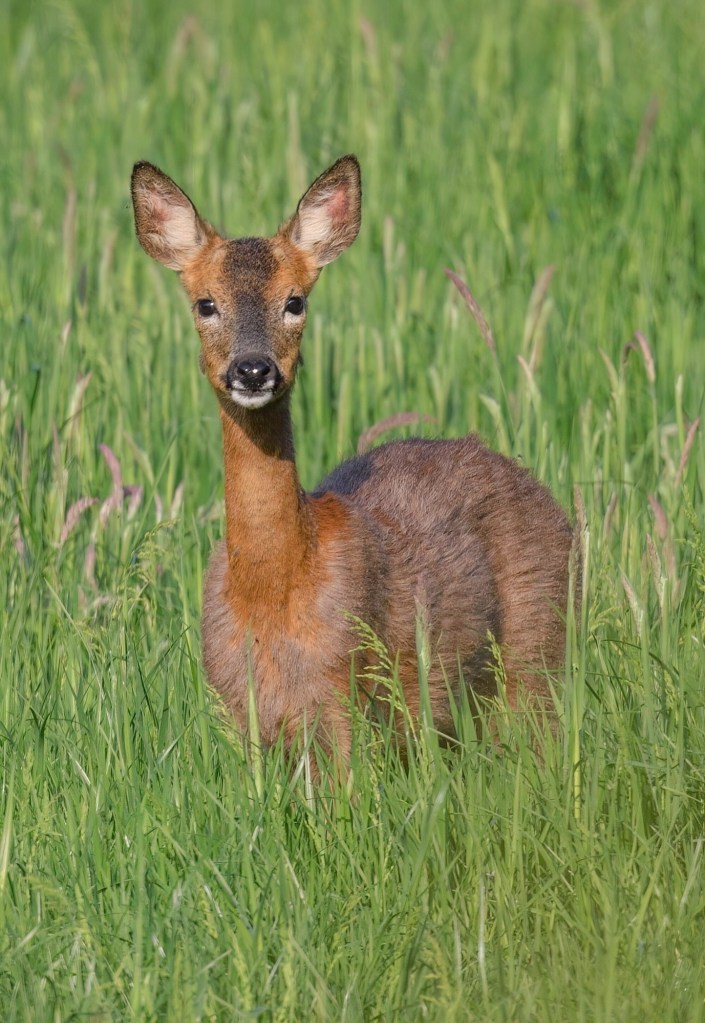
The Roe deer, Capreolus Capreolus, is one of two breeds of deer native to the British isles, they are a sleek, medium-sized animal with only a minuscule, rabbit-like scut for a tail and stand about 60 to 70cm tall and around 1 metre in length.
Found moving around the countryside in small family groups they are very common and their numbers are increasing, so much that they can now be seen in suburban gardens and parks as they have become so successful.
In appearance they are quite similar to Sika deer, a foreign invader to the British isles which I’ve written about previously.
(Caroline Legg)
In Autumn
At this time of year (October as of writing) the coat of the Roe will change colour, losing some of its russet tinge and becoming greyer to blend in with the winter woods, they are also seen abroad more often, as young Roe finish suckling and move out to set up their own territories. Males may have a false rut as well, a kind of a practice run and an attempt to establish a territory and they form ‘bachelor’ groups, sticking together over winter.
Roe will have to venture farther from home to forage as summer foliage dies back and leaves fall from the trees, their diet including any and all herbivorous plants they can reach with that long neck, sometimes even standing on their hind legs to get to those more inaccessible leaves, if hungry enough they will resort to grazing on twigs.
In the winter months when food is sparse they may even browse holly, and they have a particular penchant for roses. A young buck used to regularly visit our front garden when we rented the gatehouse at Browsholme and he would browse the flowers and leaves from the climbing rose on the front, completely oblivious to everyone peering out of the kitchen window at him!
Deer Management
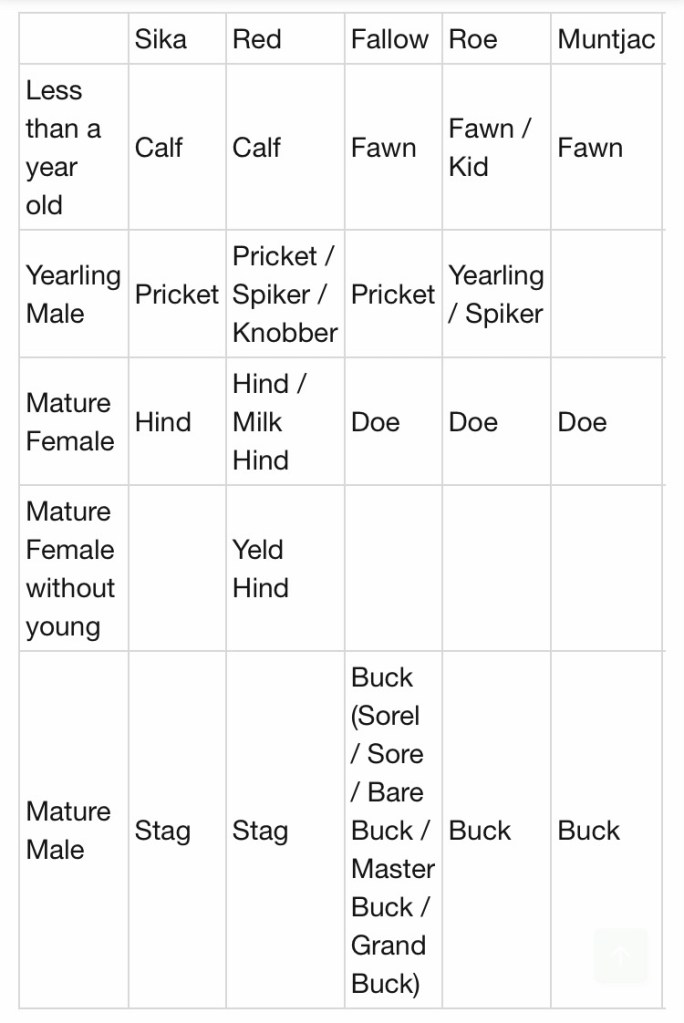
The shooting season in England for Roe lasts until the end of October and the management methods used by stalkers or hunters in the woodland that they frequent is usually to position a high seat , basically a chair on a ladder next to a tree, downwind of a glade, ride, or the edge of woods and wait for Roe either to cross on their way to feed or call them using special deer calls which mimic the barking sound of a buck.
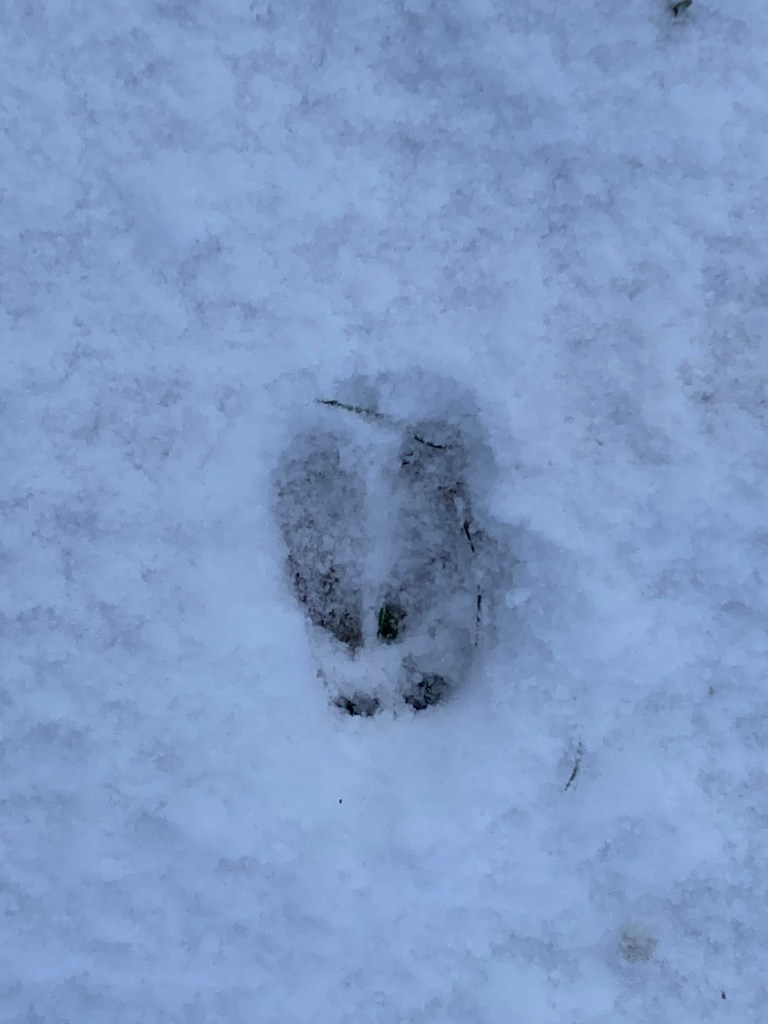
Experienced deer stalkers may try to track deer by staying downwind and following sign they leave behind such as nibbled vegetation, spoor and hoof-prints (called-slots).
It’s important to stay downwind as their senses of smell and hearing are acutely sharp but, like many prey animals, they are somewhat lacking in the sight department.

Deer Vision
Although deer are highly attuned to the slightest movement and possess a 310° field of vision (a human’s is 180°) they have poor color vision, limited to shades of blue and green, and poor depth perception as they have only a small number of cone cells in their retina.
On several occasions I have had Roe walk right past me within a distance of 10 feet as I had remained completely still and was stood downwind, on one occasion I tried to slowly raise my camera but even this slight movement was enough to spook a previously oblivious doe to my presence and send her crashing through the undergrowth!
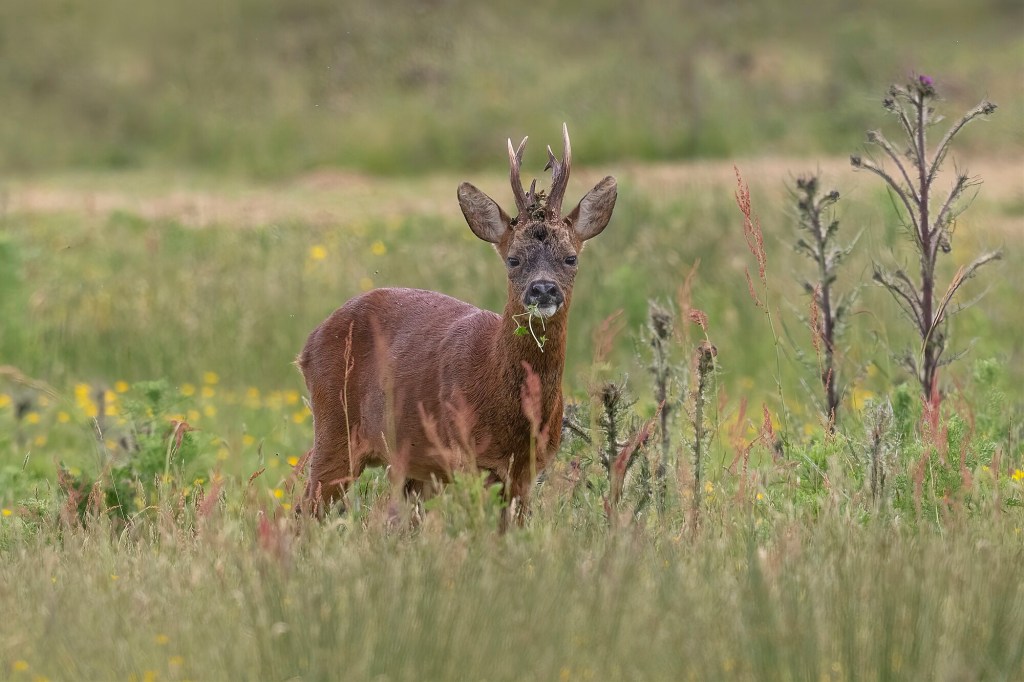
On another occasion during rutting season, when bucks become braver and more aggressive, an inquisitive male cautiously approached me to about 8 feet away, turning his head this way and that, before something alerted it to me and caused it run off helter-skelter through the Rhododendrons, barking as it went. I smoked at the time so it was probably this scent that scared it, (so for any prospective wildlife photographers reading this please take note and leave the rollies at home!)
(Caroline Legg)
Facts about Deer Vision:
- Deer have 20/60 vision, they can see an object 20ft away in daylight with the same clarity we can see it at 60ft.
- Deer have 20 times more rods then cones in their eyes which allows them to see in low-light conditions.
- Deer see blue wavelengths 20 times better than us but orange and red appear grey to them (it’s why American hunters wear orange ‘blaze’ to be visible to other hunters but not deer).
- Deer, like all ungulates, have a layer in their eyes called the Tapetum Lucidum which sits behind the retina, this layer acts like a mirror and is what we see reflecting back at us when we shine a light at them at night, it sits at the back of the eye so that any light that isn’t absorbed by the retina on the first pass gets a chance to be picked up on its way back out.
- Deer can process visual inputs 4 times faster than us.
- Deer can see 14 times better than us in twilight.
Dawn and dusk are the best times to find Roe as they emerge from cover on the outskirts of woodland, and being creatures of habit they can be seen in the same spots day-in day-out, sleeping during the middle of the night and day in quiet, sheltered, dry and secluded corners of the woods.
Here they make a rudimentary kind of bed for themselves by brushing aside leaf-litter to expose the earth beneath, they will also bed down in these areas during wet and windy weather, in particular when it’s windy as the movement of plants makes it difficult for them to detect predators.
Protecting Plantations
Roe are considered a pest in many situations due to their habit of grazing on crops, saplings and garden plants, in this part of the world arable land is quite rare but there is a big problem with Roe browsing in the extensive plantations of native trees that are currently being planted.
In many cases standard practice is to use deer-fencing and tree guards to protect plantations but some organisations, like the Ribble Rivers Trust, concerned about the use of plastic tree-guards, have taken a more holistic approach and simply plant saplings at a higher density to compensate for losses.

(Caroline Legg)
The issue of how to recreate the original landscape of the British isles, called ‘rewilding’, without having to control populations of herbivores such as the Roe is quite contentious, in other parts of the country, the Scottish Highlands for example, some kind of semblance of balance could be restored by reintroducing apex predators such as wolves, and this is being considered.
This would not be feasible in the densely populated northwest of England and would lead to conflict with the farming community, especially as much of the land here, over 55%, is farmed for livestock. So for now control of Roe through licensed shooting and deer-fencing is seen as the main way to prevent all of the hard work done planting trees from being undone.
Roe Deer, by Ted Hughes
In the dawn’s early light, in the biggest snow of the year, two blue-dark deer stood in the road, alerted
They had happened into my dimension, the moment I was arriving just there
They planted their 2 or 3 years of secret deerhood Clear on my snowscreen of the abnormal
And hesitated in the all-way disintegration and stared at me And so for some lasting seconds
I could think the deer were waiting for me To remember the password and sign
That the curtain had blown aside for a moment And there where the trees were no longer trees, nor the road a road
The deer had come for me
Then they ducked through the hedge, and upright they rode their legs away downhill over snow-lonely field
Towards tree-dark-finally, seeming to eddy and glide and fly away up
Into the boil of big flakes the snow took them and soon their nearby hoofprints as well.
Revising its dawn inspiration back to the ordinary
A B-H
(Oct 2024)
 Northwest Nature and History
I’m definitely seeing more of them when I’m out and about. Thanks for this fascinating insight.
LikeLiked by 1 person