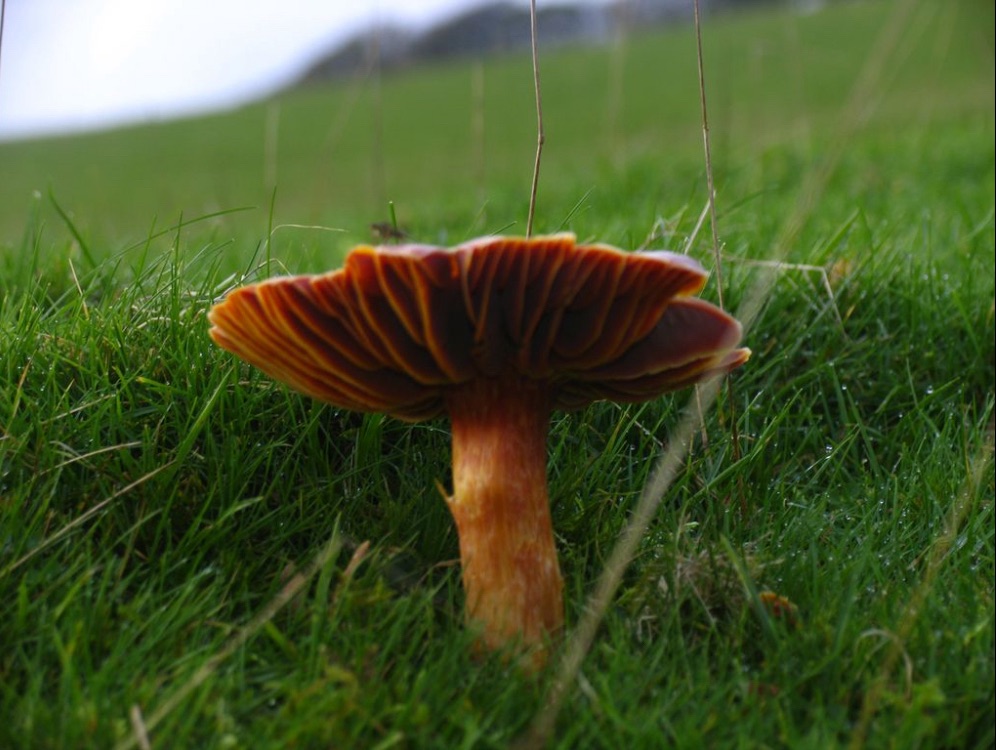
Waxcaps are attractive looking grassland fungi found at biodiverse sites, those that are rich in flora and fauna species. They earn their common name by way of their shiny, waxy-looking caps which, depending on the species, come in a wide variety of colours ranging from red, orange, yellow through to green, there is even one species known as the ‘parrot-cap’ due to its strikingly green hue.
They belong to the Hygrophoraceae family and the genus Hygrocybe, hygro coming from the Greek word hygrós, meaning ‘wet’, and cybe from another Greek word which means ‘head’ (cybe is used a lot in mycology, the study of fungi).

Butter Waxcap. Hygrocybe ceracea (Gail Hampshire)
Hygrocybes as Bio-indicators
Traditionally managed and unimproved grasslands, those which have been maintained through low-intensity grazing and mowing and haven’t been artificially fertilized, ploughed or reseeded, are now a rarity in the British isles. Therefore the evaluation of our remaining endangered grasslands to preserve species reliant upon them is essential.
Members of the Hygrocybe genus are considered to be good indicators of the conservation value of these nutrient-poor grasslands and are used as such by ecologists specialised in this field. However their importance is little understood outside of this esoteric sphere.
The system used to evaluate grasslands based on specimens of Waxcap and other bio-indicative species present is called the ‘CHEGD’ system and was first proposed in 1985 by a Danish ecologist named E. Rald, CHEGD standing for five groups of fungi that indicate a healthy, biodiverse grassland;
- C indicating Clavaroids, such as club, coral, and spindle fungi
- H for Hygrocybes
- E for Enteloma, also known as pinkgills
- G for Geoglossum, aka earthtongues (geo means ‘earth’ and glossum ‘tongue’)
- D for Dermoloma, aka crazed caps
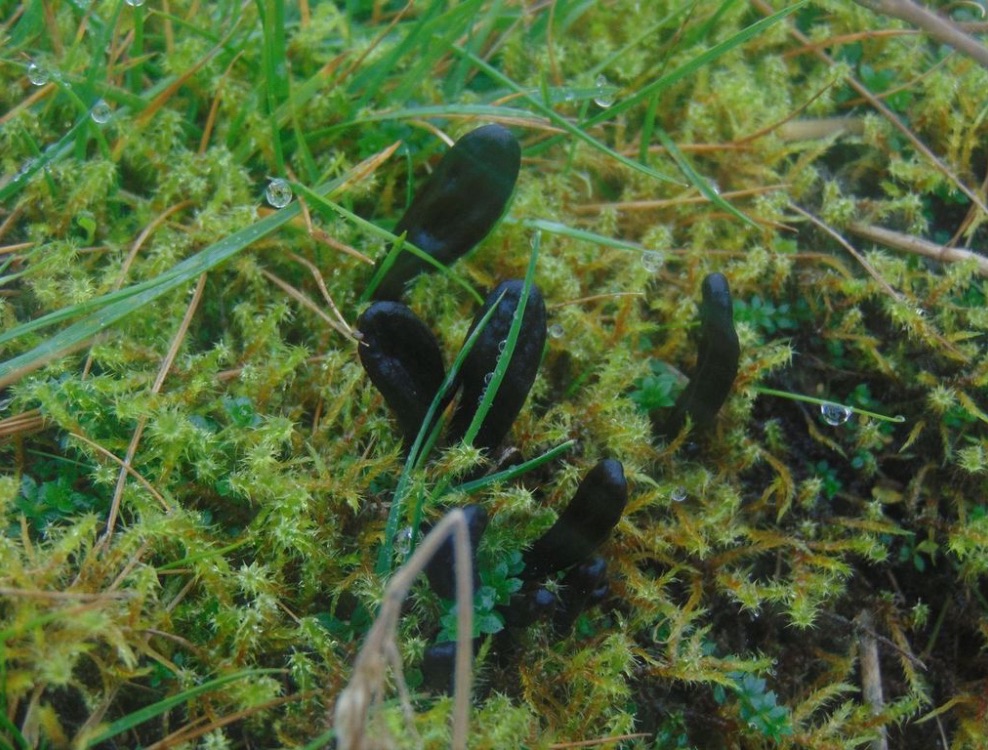
It’s a very simple and straightforward method involving a simple count of the waxcap fruiting bodies, what you might call ‘mushrooms’, present at a site. Rald originally suggested that the presence of 17 or more species means the site is of national importance, 9-16; regional importance, 4-8; local importance and 3 or fewer of no importance and, though the system has been modified since he first proposed it, the basic principle still stands.

(Sylvia Duckworth)
Hygrocybe Habitats
You can get a good idea of the kinds of habitats Hygrocybes like by looking at this interactive map of waxcap grasslands surveyed in Yorkshire by the North and East Yorkshire Ecological Data Centre and you may notice several similarities between the sites they were found at.
Personally I’ve found various species near the village of Austwick, in the Dunsop valley, and near Luddenden, Malham and Slaidburn, all on well-drained, calciferous ground with long-established pastures with a short sward grazed predominantly by sheep. These are exactly the kind of landscapes widely lambasted as “sheep-blasted deserts”, often, somewhat surprisingly and disappointingly, by commentators who you would presume to more ecologically literate.
I’ve also seen them growing in the slacks of the ancient dune-systems of Murlough in Co Down in Northern Ireland, in a corner of the reserve which has thought to have never been farmed and has only been grazed by rabbits and, more recently, a small herd of semi-wild Dexter cattle.
The similarities seem to indicate several requirements, the main ones being nutrient-poor soils, closely-grazed sward and, perhaps most importantly a complete absence of artificial fertilisers, which is a preference shared with many other species of flora and fauna found in herb-rich pasture-lands.
The Waxcap’s sensitivity to nitrogen, demonstrated by their refusal to produce fruiting bodies where it is present, is so particular that it has been used in the past to track illegal applications of fertiliser on protected sites.

Mysterious Mycelium
The lifecycles of fungi are always closely intertwined with those of the plants with which they share their homes, in most cases literally as their mycelia (the fungi equivalent of roots) grow within the root systems of the trees, shrubs, grasses etc above.
With many fungi this relationship is understood to a lesser or greater degree but with waxcaps it remains a mystery, their subterranean growth has proven impossible to isolate from the soil they grow within and their spores have so far stubbornly refused to germinate under laboratory conditions, let alone grow into the actual waxy looking caps.
These caps only emerge above the ground for a short period, lasting much less than the timespan of other fungi species, so the fungi exists for the majority of the year as a network of mycelia beneath the ground. They don’t appear each year either, avoiding those that are dryer or when grazing has been lighter, leading to a thicker and deeper growth of plants.
This means that ecologists seeking to assess the value of a site based on its Hygrocybes alone must repeat their visits over several years and at different times of the year in order to get any quantifiable results.
In recent years it has become possible to analyse the genes of mycelia in soil samples to assess the presence of Hygrocybes so that it’s no longer necessary to just wait for them to fruit, it may turn out that they have been present at sites all this time yet rarely, if ever, produced caps, only time and further research will tell.

Hues of Hygrocybes
At the start of this article i mentioned that waxcaps come in many different hues, with over 40 species found in the British isles, and as you will see most of them earn their common names from these colours. Some, like the Meadow Waxcap, are edible, but please be careful when picking any mushrooms as some are poisonous and they can be easily confused with others, even by expert mycologists.
Here are some of our most well-known species, though be warned that they tend to change colour as they age and usually several species occur together so identification can prove problematical, two commonalities they share are that their gills are usually thick and equally coloured and they don’t possess rings.
Parrot Waxcap, Gliophorus psittacinusthis, (Psitta is the scientific name for parrots) this is perhaps the most commonly found or easily identifiable waxcap and grows throughout the British Isles in summer and autumn, they tend to be very slimy and newly emerged caps can be very well camouflaged in the grass, although they become more obvious as they mature and turn yellow.

(Gail Hampshire)
Crimson Waxcap, Hygrocybe punicea, often found in large groups from September through to December, particularly in graveyards but otherwise rare, it is quite a large fungi, spreading up to 10cm wide, its gills are yellow when young but gradually turn red as it ages.

(Gail Hampshire)
Meadow Waxcap, Cuphophyllus pratensis, (pratensis is latin for ‘meadow’ and an epithet often used in biology), this is one of the largest waxcaps and its mushroom-coloured caps are commonly found on closely-cropped grassland and upland pastures. Appearing from late August til December they may form untethered ‘fairy rings’ (untethered means without a tree or remains of a tree in the centre of the ring). It is edible but rarely sought after by foragers of fungi.
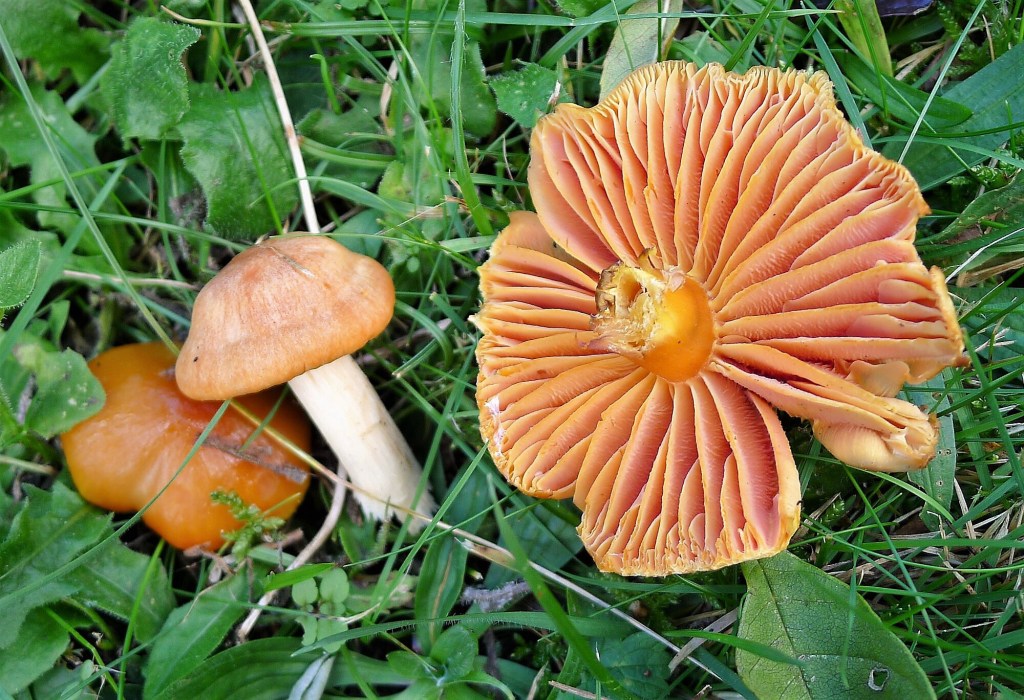
(Gail Hampshire)
Scarlet Waxcap, Hygrocybe coccinea, as its name implies it is a Scarlet red colour when young but this fades to an orange/yellow with age, coccinea comes from kokkinia, a greek word for red, and is an epithet very often used to describe red-coloured plants. It is found in fields, meadows, heaths, open woodland and on long-established lawns and, like the Meadow Waxcap, is also edible, in appearance it is similar to the Crimson Waxcap which is larger yet less common.
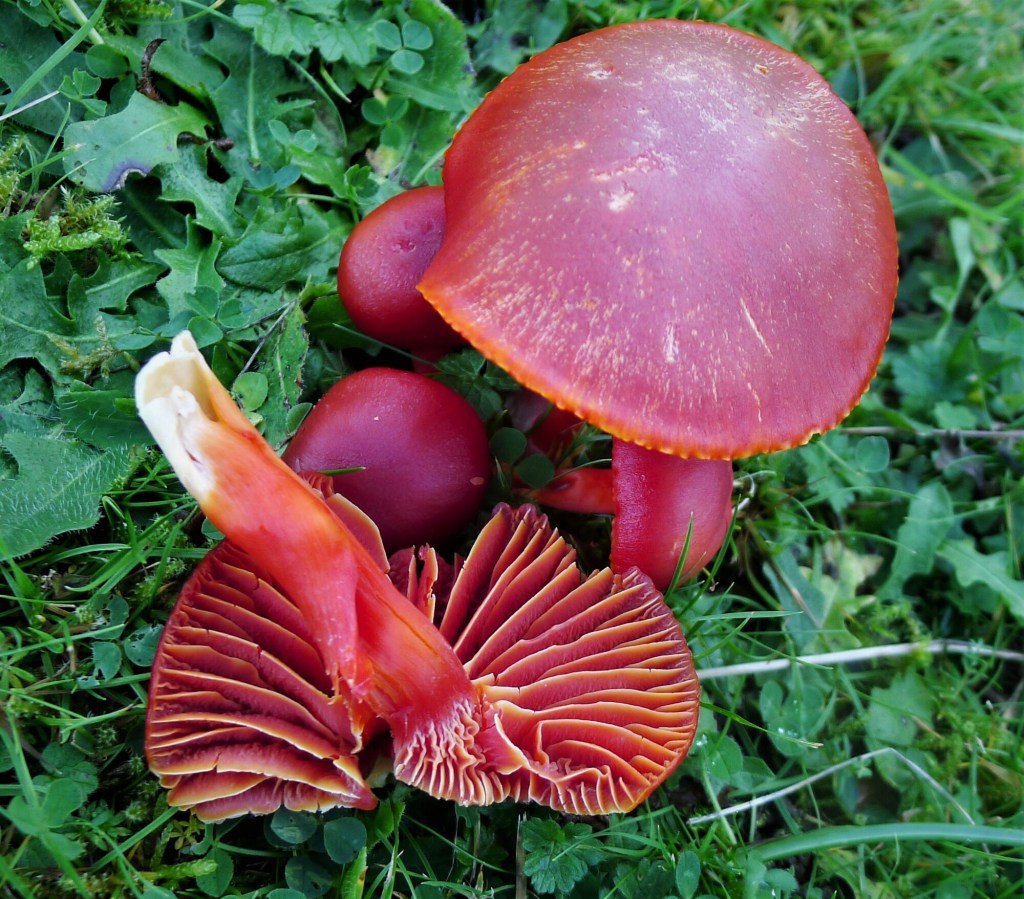
(Gail Hampshire)
Ballerina, or Pink Waxcap Porpolomopsis calyptriformis (until recently Hygrocybe calyptriformis) is a relatively rare waxcap emerging from September to November and found in western parts of the isles. It is a gracefully formed fungi with a white stem and conical pink cap which turns up at the edges as it ages, this cap is usually dry and silky unless it has just rained.
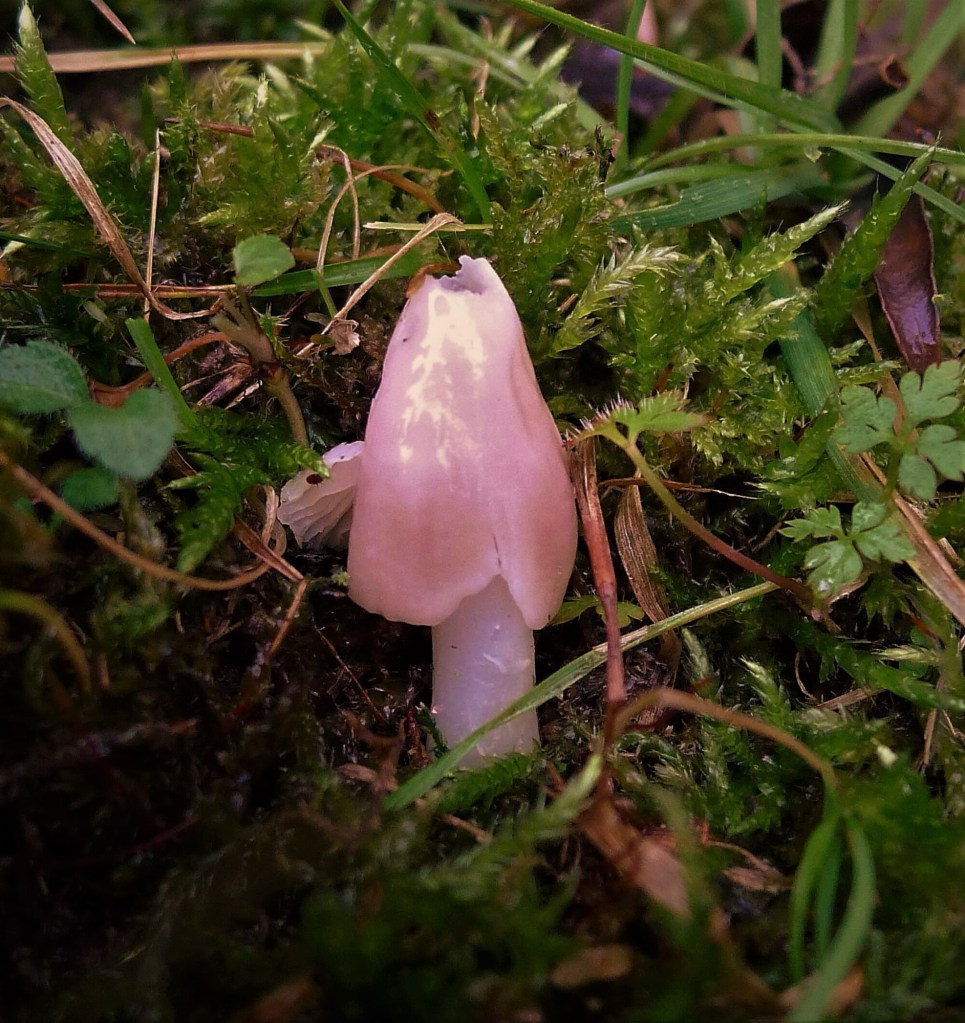
(Gail Hampshire)

(Gail Hampshire)
Threats
Our most biodiverse grasslands are those which been non-intensively managed for periods of over 20 years and very often for centuries and once damaged or disturbed they are effectively impossible to restore to their former condition.
Agricultural improvements such as ploughing, reseeding and fertilisation can be enough to destroy these fragile biomes and currently much of these grasslands are under threat of being buried forever beneath housing and other developments.
Species reliant upon them, like waxcaps, require short turf so will only thrive on grasslands that are regularly mown or grazed, a change in this grazing pressure, even slight, can be enough to upset the fine balance of species found growing upon them. In some cases well-intentioned ecologists have caused this upset themselves by favouring wildflower species in an attempt to create hay meadows upon formerly grazed pasture-land, some of which has been grazed for centuries by sheep.
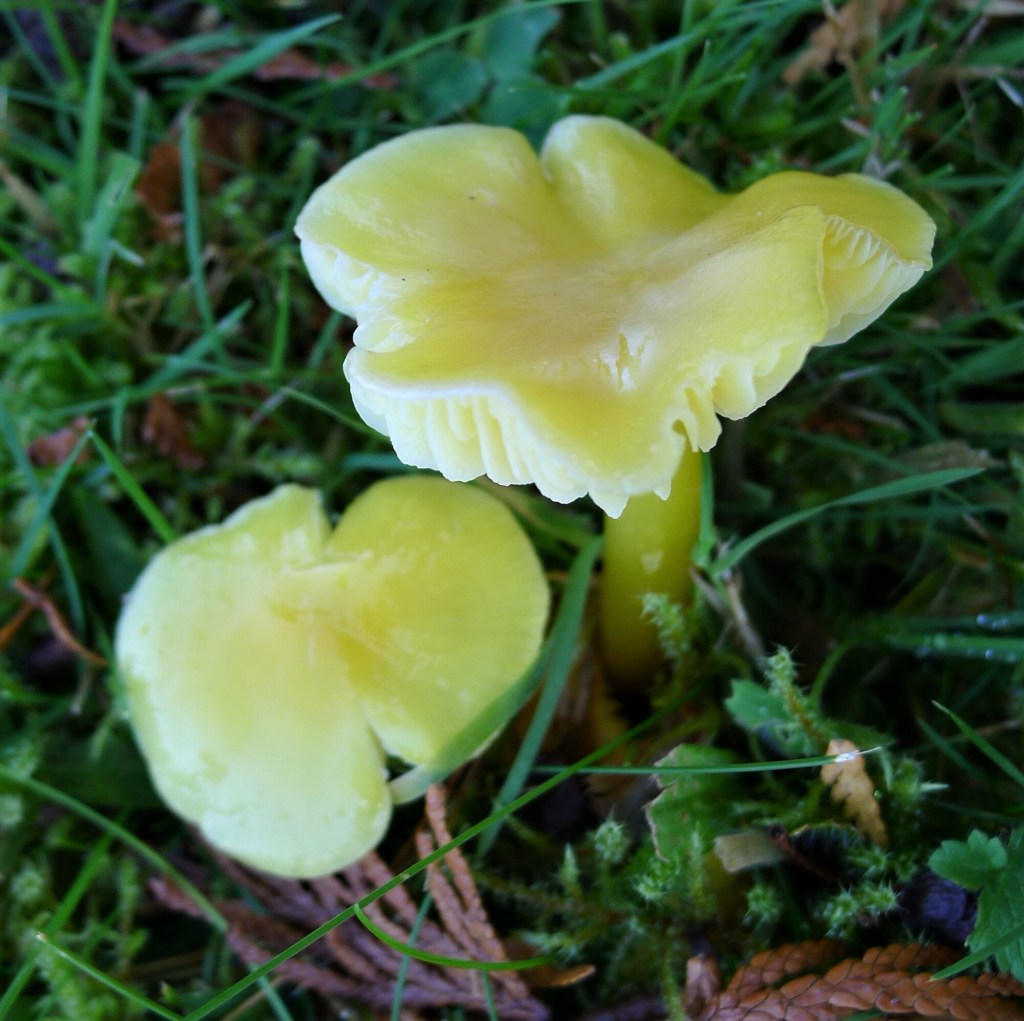
(Gail Hampshire)
On some landscapes grazing by Rabbits over decades or centuries has created the short sward preferred by species like the waxcap.
Indeed studies of Rabbit grazing on the sand dunes of Murlough, (the J A Whatmough named in that case study is my aunt who is largely responsible for my interest in natural history), one of the most diverse and natural dune systems in the British isles and classified as a SSSI (Site of Special Scientific Interest), has shown that even a slight reduction in grazing pressure due to increased predation or outbreak of diseases such as Myxomatosis can cause a decrease in biodiversity.
This is often overlooked as Rabbits themselves are not protected, rare or really of much interest to most ecologists, instead being regarded as non-native pests.
Hopefully future ecologists will be more aware of the importance of these ignored and even maligned ecosystems instead of discounting them as over-grazed or “sheep-blasted” and pay more attention to the fascinating jewels of nature that can be found growing within them.

A B-H
(Nov 2024)
 Northwest Nature and History
Nice post 🌺🌺
LikeLiked by 1 person