
The Northwest of England is home to some remarkably beautiful landscapes, shaped over millennia by traditional farming practices.
It is a part of the world famous for its ancient drystone walls and barns, built from the bones of the land and woven seamlessly into its very fabric in such a way that manmade and natural complement each other.
This has brought many visitors to the area over the years from all around the world and recently I have been asked which part of the northwest has the best barns and walls to look at.
This is an immensely difficult question to answer as they all have their unique charms and characters, so here are some of the best places to visit for admiring these venerable old structures and making up your own minds.

(Bill Harrison)
1. Yorkshire Dales National Park
The Yorkshire Dales are often the first place that pops into most people’s minds when they think of drystone walls and barns, and rightly so.
With over 8,000 kilometers of drystone walls and more than 6,000 field barns, this area is decorated with a patchwork of stone boundaries and scattered barns that define the “Dales” landscape. The walls, built from local limestone and gritstone, crisscross the rolling hills and valleys left behind by the glaciers of the last ice-age, while barns, often called laithes or cowhouses, dot the hay meadows.
- Top Spots:
- Swaledale: This dale is known for its high concentration of field barns (over 1,000) and well-preserved walls, especially in the Barns and Walls Conservation Areas. The village of Gunnerside offers stunning views of these features.
- Wensleydale: Famous for its scenic beauty, with walls and barns framing the countryside around Hawes and Aysgarth.
- Littondale: Another designated conservation area with quieter, less ‘touristy’ views of walls and barns.
- Highlights: Look for the “sheep-creeps” (small openings in walls for livestock) and the distinctive two-story barns used for cattle and hay storage.

(Dave Dunford)
How to get to the Dales
By Car;
Driving is the most flexible way to reach the Dales and they are accessible via several key roads:
- From the South; (Manchester/London) Take the A1(M) north, then exit at Junction 51 onto the A6055 towards Bedale. From there, follow the A684 west towards Leyburn, and then take the B6270 into Swaledale via Reeth. The drive from Manchester takes about 1.5 to 2 hours (roughly 70 miles), while from London it’s around 4.5 to 5 hours (250 miles).
- From the North (Newcastle/Edinburgh) Head south on the A1(M), exit at Scotch Corner, and take the A6108 towards Richmond. From Richmond, the B6270 leads directly into Swaledale. This is about 1.5 hours from Newcastle (80 miles).
- From York (For David and family!) Take the A59 west from York towards Harrogate. At Knaresborough, continue on the A59 until you hit the A1(M). Head north briefly, then exit at Junction 48 onto the A6055 towards Boroughbridge. From there, pick up the A6108 west towards Masham and Leyburn. At Leyburn, take the B6270 into Swaledale via Grinton and Reeth. For a slower, more picturesque drive, head northwest from York on the B1363 towards Helperby, then join the A684 at Bedale towards Leyburn. This adds about 15 minutes but avoids motorways.
- Scenic Route: If you’re near the Yorkshire Dales already, consider approaching via the B6160 from Kettlewell or the Aysgarth Falls area, the views are stunning but the roads are narrower so please take it slow.
Parking is available in villages like Reeth or Gunnerside, roads can be winding and narrow though so please be warned, and please don’t block farm gates!

By Public Transport
Public transport to the Dales is limited due to its rural location, but it’s possible with some planning:
- Train to Darlington: The nearest major rail hub is Darlington (on the East Coast Main Line), about 25 miles east. From London King’s Cross, it’s a 2.5-hour trip. From Darlington, you’ll need to continue by bus or taxi.
- Bus from Darlington or Richmond: The Arriva 79 bus runs from Darlington to Richmond (around 30 minutes). From Richmond, the Little White Bus (a local service) connects to Swaledale villages like Reeth or Keld. Check timetables at www.littlewhitebus.co.uk/as services are infrequent.
By Bicycle or foot
The Dales are on the Pennine Way and Coast to Coast walking routes. Cyclists can tackle the Yorkshire Dales Cycleway, which loops through Reeth. These options are best for those already in this part of the world.
Recommendations
- Best Overall: Driving gives you freedom to explore the more remote corners of the Dales.
- Most Eco-Friendly: Taking a train to Darlington then a bus to the Dales is your greenest option, though it will take up most of a day.

(John H Darch)
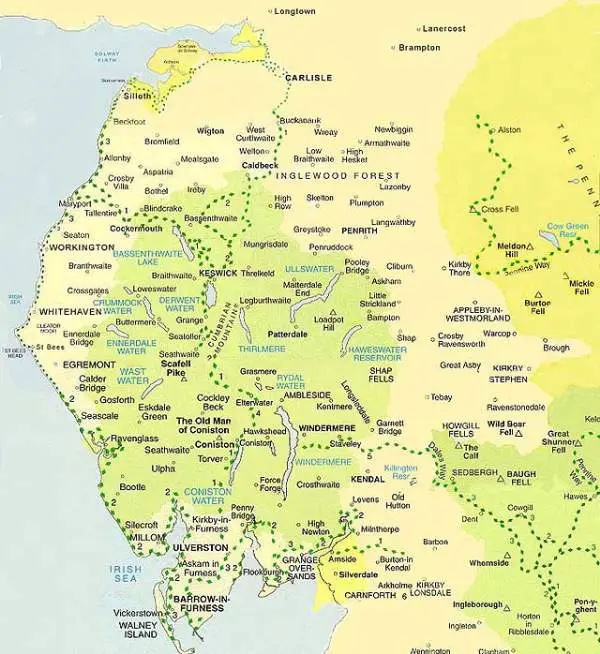
2. Lake District National Park (Cumbria)
Whilst better known for its lakes and mountains, the Lake District features extensive drystone walls that enclose the flatter fields of the valley bottoms and climb the steep fellsides. These walls, often made from slate or local stone, complement the area’s stone-built barns and farmsteads.
- Top Spots;
- Borrowdale; This valley’s walls and occasional barns contrast beautifully with the dramatic fells here.
- Langdale; Offers rugged scenery with walls snaking up hillsides, alongside traditional farm buildings.
- Kentmere; A quieter valley with well-maintained walls and barns amidst serene landscapes.
- Highlights; The walls here often follow ancient patterns, and some barns reflect the region’s pastoral history, particularly hefted sheep farming.

How to get to the Lakes
By Car;
- From London: Take the M6 north (via M1 or M40 to join it), exiting at Junction 36 for Kendal/Windermere (A591) or Junction 40 for Penrith/Keswick (A66). Time: 4.5 to 5.5 hours, depending on traffic (M6 can clog near Birmingham or Preston). Fuel stops are plentiful on the M6.
- From Manchester: M61 to M6 north, exit at Junction 36 for Windermere (A591) or Junction 40 for Keswick (A66). Time: 1.5 to 2 hours. Watch for rush-hour delays leaving Manchester.
- From York; Take the A59 west towards Harrogate, then join the A65 northwest via Skipton towards Kendal. At Kendal, you’re on the Lake District’s doorstep, so you can head west on the A591 to Windermere (southern Lakes) or north towards Keswick. Alternatively, take the A1(M) north to Junction 40 (Penrith), then the A66 west straight into the Lakes.
- From Newcastle; A69 west to M6 south, or A66 west from Scotch Corner (A1) straight to Keswick. Time: 1.5 to 2 hours. The A66 is scenic but single-lane in parts.
By Train;
- From Manchester; Manchester Piccadilly to Oxenholme (1 to 1.5 hours, TransPennine Express), then 20 minutes to Windermere. For Keswick, go via Penrith (1.5 hours total), then bus. Cost: £20 to 50 return. Time: 1.5 to 2.5 hours.
- From London; Direct from London Euston to Oxenholme (2.5 to 3 hours, Avanti West Coast), then a 20 minute Northern train to Windermere. For Keswick, go to Penrith (3 to 3.5 hours from Euston), then a 30-minute 508 bus. Total time: 3 to 4 hours. Cost: £50 to £150 return, cheaper with advance booking (nationalrail.co.uk).
- From York; Take the train from York to Lancaster (50 minutes, Transpennine Express), then switch to a Northern service to Windermere (1 hour 20 minutes total from Lancaster, via Oxenholme). Total time: about 2 to 2.5 hours. Trains run hourly; fares are £20 to 40 one way, cheaper if booked early.
- From Newcastle; Newcastle to Carlisle (40 to 50 minutes, Northern or TransPennine), then 554 bus to Keswick (1 hour) or train to Penrith (20 minutes) and bus. For Windermere, go via Oxenholme (2 to 2.5 hours total). Cost: £15 to 40 return.
- Onward Travel by bus; From Windermere station, Stagecoach buses (e.g., 555 or 599) connect to Ambleside, Keswick, or Grasmere (15 to 45 minutes). Keswick’s a 1 hour bus ride north.
- Recommendations;
- Short Trips (Manchester/Newcastle): Travel by car for speed and freedom.
- Long Trips (London): Travel by train for comfort and to avoid parking woes.
- Scenery: Driving via A roads like the A66 and A65 beats motorways for views.

(Dave Dunford)
3. Peak District National Park (Derbyshire/Cheshire/Staffordshire)
The Peak District’s western edges, overlapping with Northwest England, feature drystone walls made from gritty millstone and limestone. These walls usually divide the moorlands and fields, often accompanied by sturdier stone barns than those found elsewhere in the country.
- Top Spots:
- Edale: This is a good starting point for walks with the walls and barns set against the backdrop of Kinder Scout.
- Castleton: Surrounding fields showcase walls and occasional barns, with Peveril Castle adding historical context.
- Macclesfield Forest: On the Cheshire side, you’ll find walls and barns in a less crowded setting.
- Highlights: The walls here are often irregular, reflecting medieval and post-medieval enclosures, and the barns are more typically functional structures for livestock.

(Derek Harper)
How to get to the Peak District
By Car;
- From London; Take the M1 north (about 150 to 170 miles, depending on your destination in the Peak District, like Bakewell or Castleton). The drive takes roughly 2.5 to 3.5 hours, depending on traffic. Parking is available at popular spots like Mam Tor or Edale.
- From Manchester; Head southeast on the A6 or A623 (around 20 to 40 miles, 45 minutes to 1 hour). It’s a shorter trip, ideal for a day out.
- From York; From York it is roughly 50 to 60 miles, depending on your exact destination (e.g., Bakewell is about 55 miles).
One route is to take the A64 southwest from York towards Leeds, then merge onto the M1 southbound. Exit at Junction 29 (for Chesterfield) or Junction 28 (for Matlock), then follow signs via the A617 or A619 towards the Peak District. For Bakewell, the A619 via Chesterfield is straightforward.
This should take about 1 hour to 1 hour 15 minutes, traffic depending.

By train;
- From London; Take a train from London St Pancras to Sheffield (East Midlands Railway, about 2 to 2.5 hours, £30 to £80 one way depending on booking time).
- From Sheffield; connect to local trains to places like Edale or Hope (20 to 30 minutes).
- From Manchester; Trains from Manchester Piccadilly to Edale, Hope, or Buxton run regularly (30 to 50 minutes, £5 to £15 one way).
- From York;
Step 1: From York to Sheffield
Trains run frequently from York station to Sheffield (operated by Northern or Crosscountry). It’s about 25 to 45 minutes, depending on the service.
Cost: Around £10 to £20 one-way, cheaper if booked in advance.
Step 2: Sheffield to Peak District
From Sheffield, take a train to a Peak District gateway like Hope (for Castleton) or a bus to Bakewell. For Hope, the Sheffield-to-Manchester line takes about 30 minutes. For Bakewell, catch the 218 bus from Sheffield Interchange (roughly 1 hour).
Total Time: 1.5 to 2 hours, depending on connections.
By Bus;
- From London; National Express or FlixBus to Sheffield (4 to 5 hours, £15 to £30), then local buses (e.g., Stagecoach 271/272 to Castleton or Bakewell, about 1 hour).
- From Manchester; Stagecoach 199 runs from Manchester Airport to Buxton (1.5 hours), or TransPeak from Manchester to Bakewell (1 to 1.5 hours, £5 to £10).
- From York; There’s no direct bus from York to the Peak District. You’d need to go via Sheffield (e.g., FlixBus or National Express to Sheffield, then a local bus like the 218 or 257 to Bakewell or Castleton).
(Paul Harrop)
4. Forest of Bowland (Lancashire and North Yorkshire)
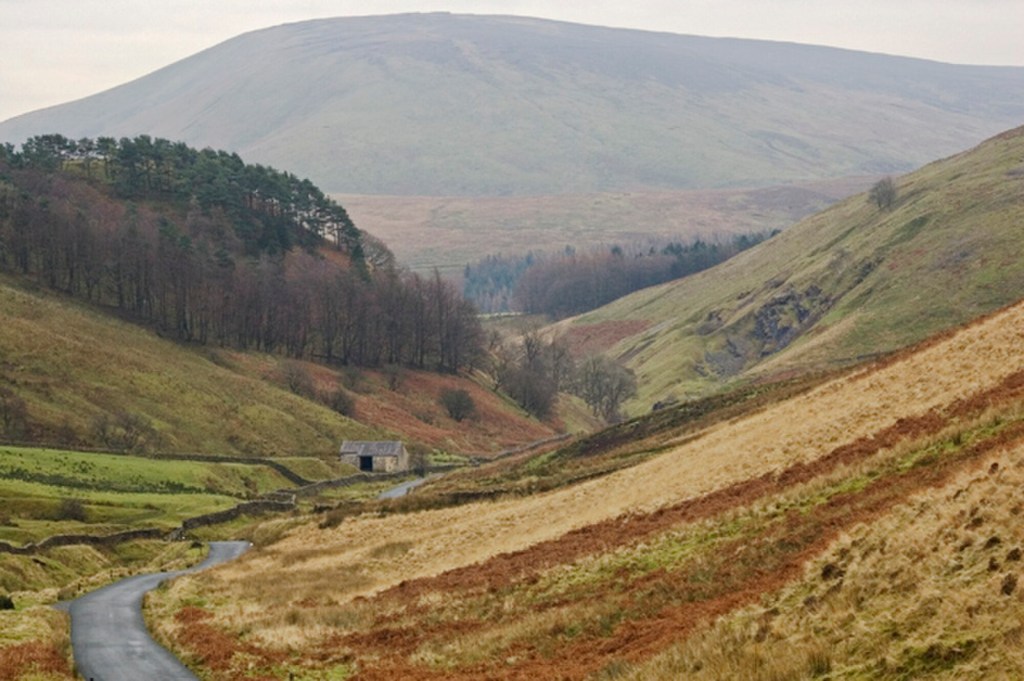
Classed as an Area of Outstanding Natural Beauty (AONB) the Forest of Bowland is an area I know very well, having grown-up and worked here. It is a hidden gem with vast moorlands and valleys crisscrossed by drystone walls. The walls are less dense than in the Dales but still striking, and barns are scattered throughout the landscape, often in remote locations.
- Top Spots;
- Dunsop Bridge; This is a very picturesque village, close to the heart of the United Kingdom and was a favourite place of Queen Elizabeth II. The nearby Trough of Bowland offers a chance to look closer at walls and barns from the roadside, with the occasional Limekiln thrown in for good measure.
- Slaidburn; At the other end of the Hodder valley this tiny and timeless village offers a mix of walls, barns, and stone cottages in a tranquil setting, indeed ‘Hodder’ translates as tranquil.
- Gisburn Forest; The forestry plantations around Stocks reservoir are scattered with abandoned barns and farmsteads, left after the construction of the reservoir, some have been restored, others lie forgotten in the depths of the pines, haunted only by owls and bats.
- Highlights; The isolation of the area gives the walls and barns a timeless, rugged charm, often covered in moss and lichens.

(Tom Howard)
How to get to the Forest of Bowland
From London
By Train;
- Route; Take a train from London Euston to Preston (operated by Avanti West Coast, ~2.5 hours), then switch to a Northern Rail train to Clitheroe (~30 minutes). Total travel time: around 3 to 3.5 hours. Cost: £50 to £150 one-way, depending on booking time and flexibility (cheaper with advance tickets).
By Car;
- Route: Drive via the M6 northbound (~4-4.5 hours, depending on traffic). Exit at Junction 31 or 32, then take the A59 or A671 toward Clitheroe.
By Bus;
- Route: National Express from London Victoria to Manchester (~4.5 hours), then a local bus (e.g., Stagecoach 280 or Preston Bus 11) to Clitheroe (~1.5 to 2 hours). Total time: ~7 to 8 hours.
From Manchester
By Car;
- Route: Take the M66 north, then A56 and A59 to Clitheroe (~1 to 1.5 hours). For Dunsop Bridge, continue via B6478 (~15 more minutes).
Train + Taxi
- Route: Train from Manchester Piccadilly or Victoria to Clitheroe (~1 to 1.5 hours via Blackburn or Bolton), then a taxi to deeper areas like Dunsop Bridge (~£20 to £30, 20 minutes). Total time: ~2 to 2.5 hours. Be warned: the train from Manchester to Clitheroe is often only 2 carriages so can be packed)
By Bus;
- Route: Stagecoach 280 from Manchester to Preston (~1.5 hours), then a local bus (e.g., Preston Bus 11) to Clitheroe (~1 hour). Total time: ~3 to 3.5 hours.

From York
By Car;
- Route: Take the A64 west to the A1(M), then M65 via Bradford, or the more scenic A59 through Skipton (~1.5 to 2 hours to Clitheroe.)
By Train;
- Route: Train from York to Blackburn (via Leeds, ~1.5 to 2 hours, operated by Northern Rail), then switch to Clitheroe (~20 minutes). Total time: ~2 to 2.5 hours. ( Please be warned, this train is often only 2 carriages and packed)
Bus + Train;
- Route: Bus from York to Leeds (e.g., Coastliner 840, ~1 hour), then train from Leeds to Clitheroe (~1.5 hours). Total time: ~3 to 3.5 hours.
Recommendations;
- Public Transport Limits: Buses within Bowland (e.g., Clitheroe to Dunsop Bridge) are sparse, so please check timetables via Lancashire County Council or Traveline.
- Timing: Avoid peak traffic hours (7 to 9 AM, 4 to 6 PM) if driving from Manchester or London.
- Pubs and Inns: These are far-and-few between, Newton-in-bowland has the Parker’s Arms which is very good but only sporadically open, the Hark to Bounty in Slaidburn is sadly closed, and the Inn at Whitewell is about the best Inn you will find anywhere in the British isles but has prices and crowds to match.

(author)
Tips for Visiting
- Walking: The best way to find and look closely at drystone walls and barns is on foot. Public footpaths and trails, like those in the Dales’ Three Peaks area or the Lake District’s fell walks, offer close-up views.
- Season: Spring and summer highlight the way drystone walls’ contrast with the green fields, while autumn and winter reveal their stark beauty against bare landscapes.
- Photography: Early morning or late afternoon light, the ‘Golden hours’, enhances the texture of the stonework.
- Local Insight: Look for signs of repair or unique features like ‘through stones’ (large stones spanning the wall’s width), ‘hogg holes’ (gaps for young sheep), stiles and gateposts. Also many barns have been converted into houses, why not try and peer into the past and see these structures as the utilitarian buildings they originally were.
To find out more about the drystone walls and barns of the Northwest of England here are some articles I’ve previously published;
- drystone walls
- Traditional field barns of the Northwest of England
- Drystone walling at Harwes farm
- Styles of stiles
If you enjoyed this article please consider showing your appreciation by buying me a coffee, every contribution will go towards researching and writing future articles,
Thank-you for visiting,
Alex Burton-Hargreaves
(March 2025)
 Northwest Nature and History
2 thoughts on “Admiring the Barns and Walls of Northwest England”