(all photos by author unless stated otherwise)
Comfrey, Symphytum officinale, also known as ‘knitbone’ is a hardy perennial herb, native to the British Isles and thriving in our temperate climate, especially in the damp, fertile soils often found along riverbanks, ditches, and meadows.
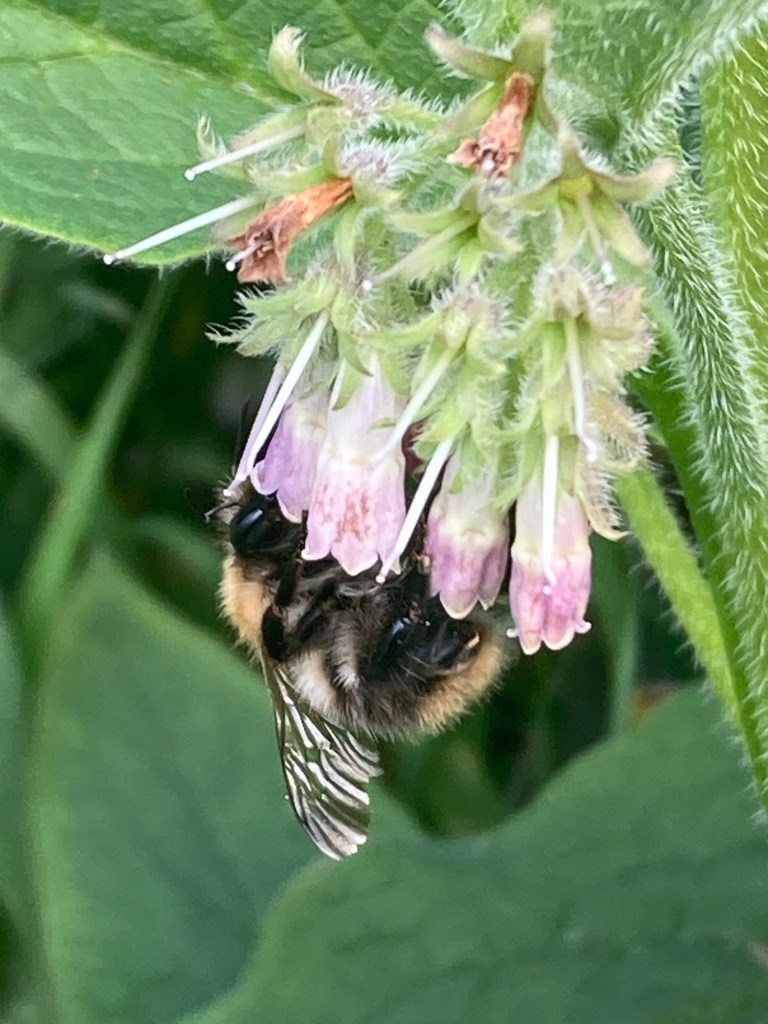
From late spring to early autumn this attractive-looking wildflower produces clusters of delicate tubular flowers, typically in shades of purple, pink, or creamy white. These attract pollinators like bees and hoverflies, particularly long-tongued species such as the garden bumblebee Bombus hortorum, from all over the vicinity.
Its deep, fleshy root system allows it to flourish in a variety of conditions, from shady woodlands to sunny field margins, making it a familiar sight in the broad spectrum of rural landscapes we have in this country, all the way up from the warm, maritime climate of Cornwall to the cool, damp mountain valleys of the Scottish Highlands.
Hirsute Herb
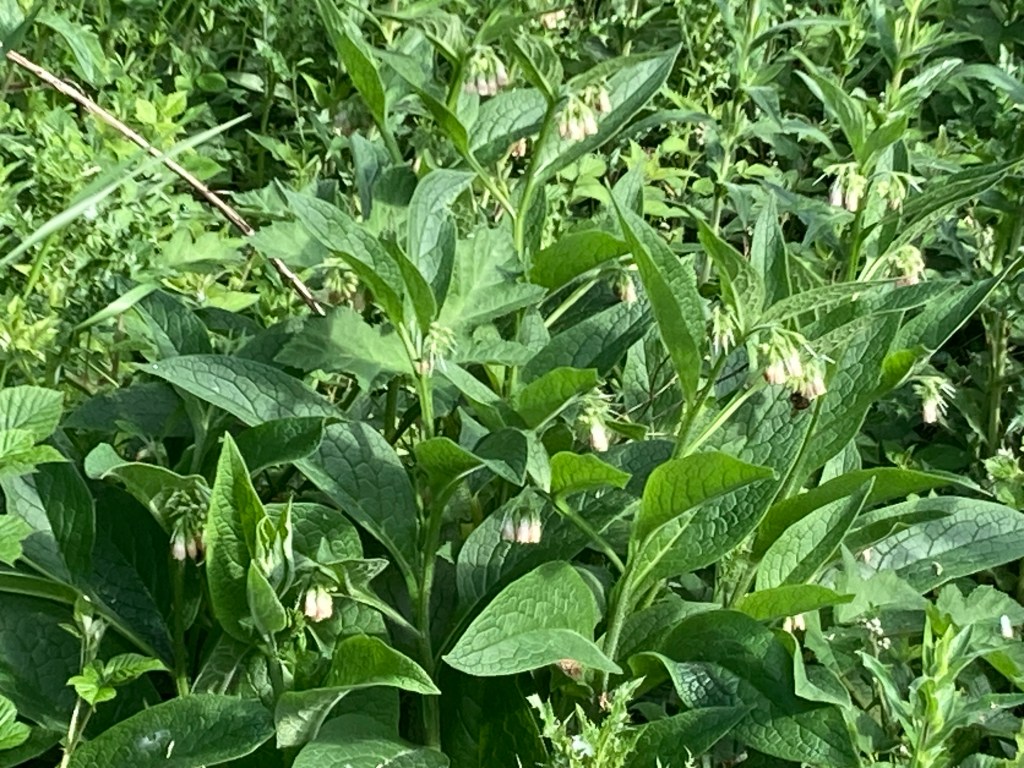
The ‘hairiness’ of its broad, lance-shaped leaves help it greatly too, the coarse hairs acting as a physical deterrent against herbivores, making the leaves less palatable for insects and grazing animals.
They help reduce water loss by creating a microclimate that traps moisture and reduces airflow over the leaf surface, aiding in drought resistance, and provide a modicum of shade, protecting the plant from intense sunlight. This has proved vital to the plant this summer (May 2025 as of writing) which has seen much of the country suffer drought conditions after months without rain.
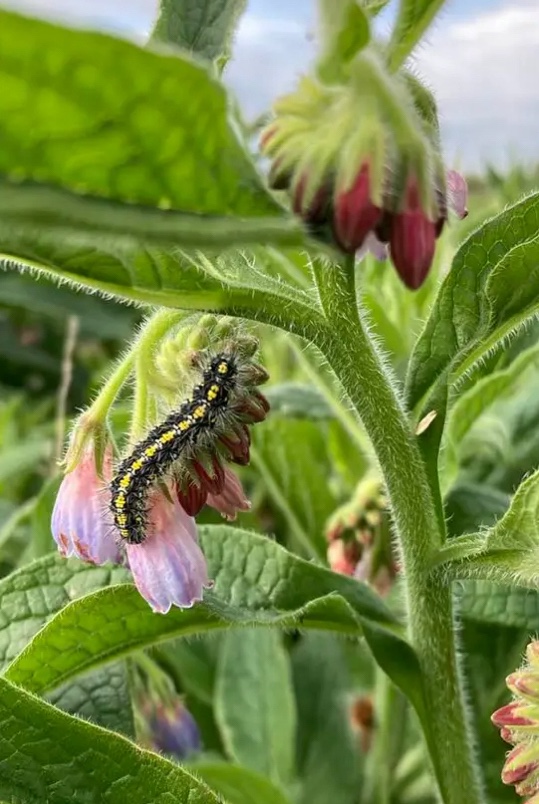
Acting rather like a spiky suit of armour the hairs can trap small insects or prevent larger ones from laying eggs on the leaves, although they are a larval food source for the Scarlet tiger moth, Callimorpha dominula, which specialises in eating the younger leaves, concentrating the plant’s alkaloids in its body to deter predators.
They may also reduce fungal or bacterial infections by limiting direct contact with the leaf surface.
(Cathy Smith)
Botanically, Comfrey belongs to the Boraginaceae family, which includes well-known plants like Borage, another hirsute herb popular with pollinators, Alkanet, and Forget-me-nots.
Although its ability to regenerate and spread has made it a resilient resident of the countryside this vigour can lead to it being considered invasive in managed gardens.
In the wild, however, Comfrey is regarded as a valuable part of the ecosystem, stabilising soil with its extensive roots and providing nectar for insects during its long flowering season.

Historical Healer
It is not only the conservationist who values Comfrey for it is highly regarded by herbalists too, having been prominent in British herbalism for centuries, earning it a revered place in the apothecary’s toolkit.
The common name, ‘knitbone’ reflects its historical use in treating fractures, sprains, and bruises, in fact ‘Symphytum’ originates from the Greek word ‘symphyo,’ which means “to unite” or “to bring together.”
The plant contains allantoin, a compound believed to promote cell regeneration and tissue repair, which made it a go-to remedy for wounds and musculoskeletal ailments in medieval and early modern Britain.
Village healers and wise women would prepare poultices from Comfrey leaves or roots, applying them to injuries to speed healing, indeed John Gerard, the 16th-century herbalist, praised Comfrey in his treatise herball, noting its efficacy in “knitting and comforting” broken bones.
Beyond its medicinal uses, Comfrey played a practical role in rural life. Farmers used its leaves as fodder for livestock, particularly pigs and poultry, due to its high protein and mineral content.
In some regions, Comfrey was brewed into a tea-like infusion, though this practice has waned due to concerns about the plant’s pyrrolizidine alkaloids, which can be toxic to the liver in large quantities if consumed internally.

Contemporary Comfrey
Today, Comfrey remains a beloved plant among gardeners, permaculturists, and herbalists.
Its most celebrated modern use is as a natural fertiliser, as its deep roots draw up nutrients like potassium, nitrogen, and phosphorus from the soil, concentrating them in its leaves, a process called ‘dynamic accumulation’.
When chopped and left to decompose, these leaves create a nutrient-rich mulch or liquid fertiliser, often called “comfrey tea,” which is prized for boosting the growth of vegetables and fruit crops.
This practice has become popular along with the growing interest in sustainable gardening and organic farming, making Comfrey a darling of eco-conscious rural communities.
In herbal medicine, Comfrey is still used externally in creams, salves, and ointments for minor skin irritations, bruises, and joint pain, however, due to the afore-mentioned safety concerns about internal consumption, its use is now more regulated, and herbalists advise caution.
Overall the plant’s dual nature; both healing and potentially harmful, underscores the need for respect and knowledge when working with wild herbs.
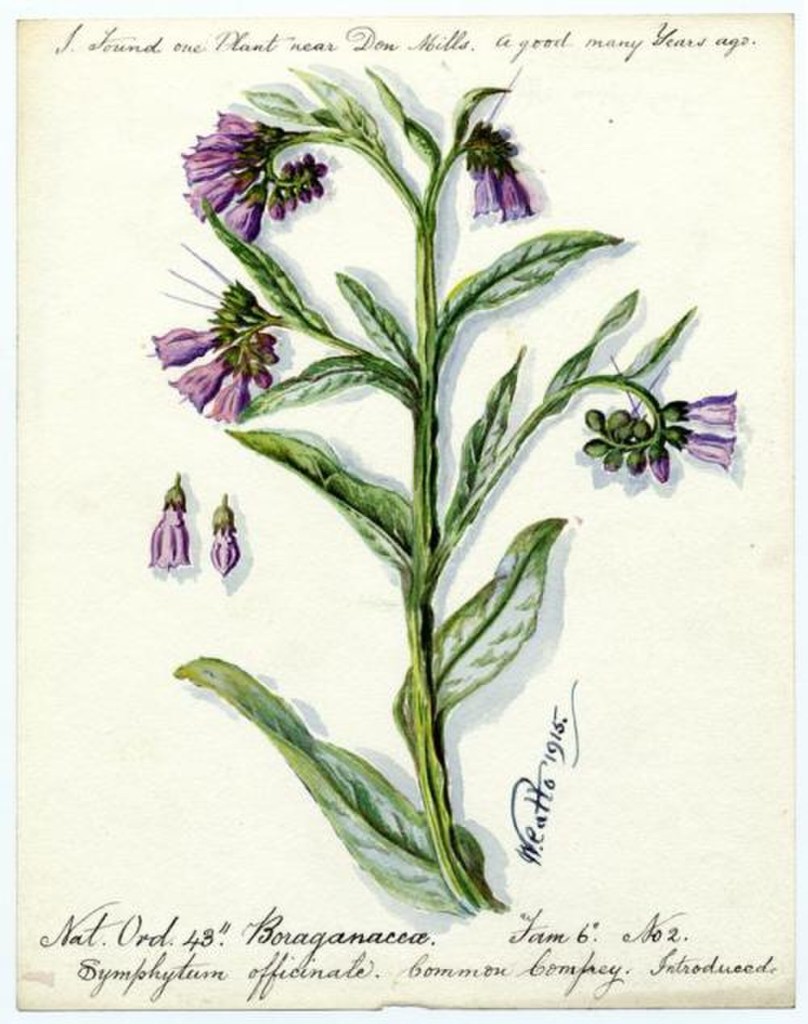
A Widow’s Weeds
A poor old Widow in her weeds
sowed her garden with wild-flower seeds;
Not too shallow, and not too deep,
and down came April – drip – drip – drip.
Up shone May, like gold, and soon
green as an arbour grew leafy June.
And now all summer she sits and sews
where willow herb, Comfrey, Bugloss blows,
Teasle and Pansy, Meadowsweet,
Campion, Toadflax, and rough Hawksbit;
Brown bee orchis, and Peals of Bells;
Clover, Burnet, and Thyme she smells;
Like Oberon’s meadows her garden is
drowsy from dawn to dusk with bees.
Weeps she never, but sometimes sighs,
and peeps at her garden with bright brown eyes;
And all she has is all she needs –
A poor Old Widow in her weeds.
Walter de la Mare (1873 – 1956)
If you enjoyed this article you can show your appreciation by buying me a coffee, every contribution will go towards researching and writing future articles,
Thank-you for visiting my site,
Alex Burton-Hargreaves
(May 2025)
 Northwest Nature and History
Excellent article thanks you, we get a LOT of Comfrey up round us
LikeLiked by 1 person
Thank you 🙂 I know of a few places round us and they always have lots of stuff buzzing around them
LikeLike