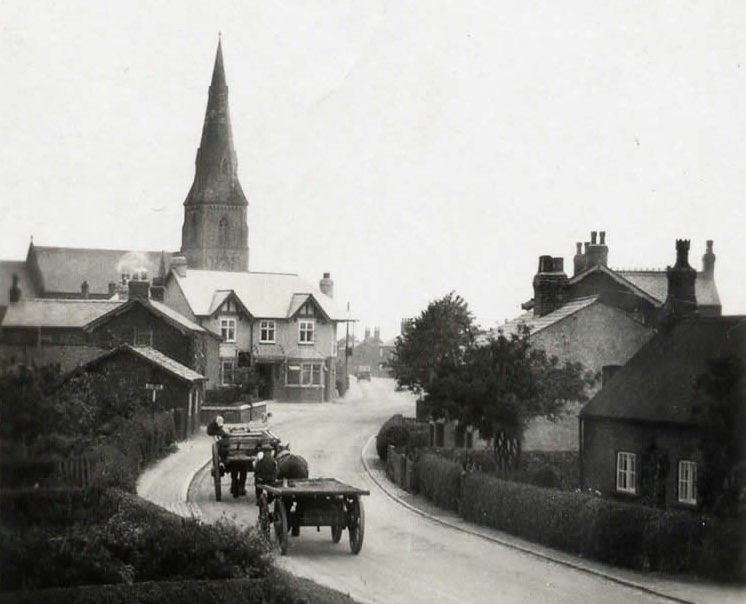
A Condensed History of the Lancashire Village of Tarleton, Spanning from its Viking Origins to the Modern Day
At the heart of West Lancashire’s fertile mosslands, roughly 19 miles northeast of Liverpool and 9 miles southwest of Preston, sits Tarleton, a quiet and pretty village that owes its existence to the fertility of the surrounding soils.
This landscape; flat, peaty and once treacherously boggy, has been transformed and improved over centuries into prime agricultural land, to make the village a hub of arable farming and market gardening.
Here we delve back through these centuries to Tarleton’s origins, spanning the time that has passed since its beginnings as a Viking settlement. up to the vibrant community we know now, a history perhaps as rich as the soil upon which it stands.

Tharaldr’s Town
The name Tarelton derives from the Old Norse Tharaldr, a personal name meaning ‘Thor’s ruler’, combined with the Old English tun, signifying a farmstead or enclosure and the origin of today’s word town.
Recorded as Tharilton in 1246 and mentioned in the Feet of Fines (medieval legal documents recording land transactions) in 1298, the village likely owes this name to an early family of settlers, indeed local lore suggests Vikings once camped along the banks of the River Douglas, which flows to the east.
Whether fact or fable, the river’s presence has shaped the village’s identity, its navigable waters, made accessible in 1727, connecting Tarleton to broader trade networks.
In medieval times, Tarleton was part of the Montbegon or Hornby fee, a feudal estate tied to the nearby village of Croston. By 1298, the manor was divided, with portions granted to John Malherbe and the Banastre family of Bretherton.
The Banastres held significant sway, their influence marked by contributions to subsidies in the 16th century and the hearth tax records of 1666, which noted 73 hearths in Tarleton, though most dwellings were modest.
The village’s early economy leaned on its loamy and mossy soils, ideal for crops like wheat and potatoes, with 3,209 acres of arable land recorded by the 19th century.

(Alexander P Kapp)
A Spiritual Span
Tarleton’s religious history spans centuries and is as layered as its peat-rich earth. An ancient chapel dedicated to St. Helen once stood in the township, home to a chantry founded around 1525 by priest George Dandy, and a hermitage occupied by Hugh Dobson, a hermit of the Order of St. Anthony, added to the chapel’s mystique around 1530.
However, Sir Thomas Hesketh’s later purchase and demolition of the chapel left Tarleton without a place of worship, a void felt deeply by the community. In 1650, to fill this void, the residents of Tarleton, Holmes, and Sollom built a Presbyterian church at Three Lanes End, but it had fallen into ruin by 1658.
The turning point came in 1719 when Henrietta Maria Legh of Bank Hall donated land for a new church near the River Douglas. St. Mary’s Church, a simple brick structure with a semi-octagonal apse, became the village’s spiritual heart. A stone belfry tower, added in 1824, and original fittings like box pews and a gallery staircase preserve its historical charm.
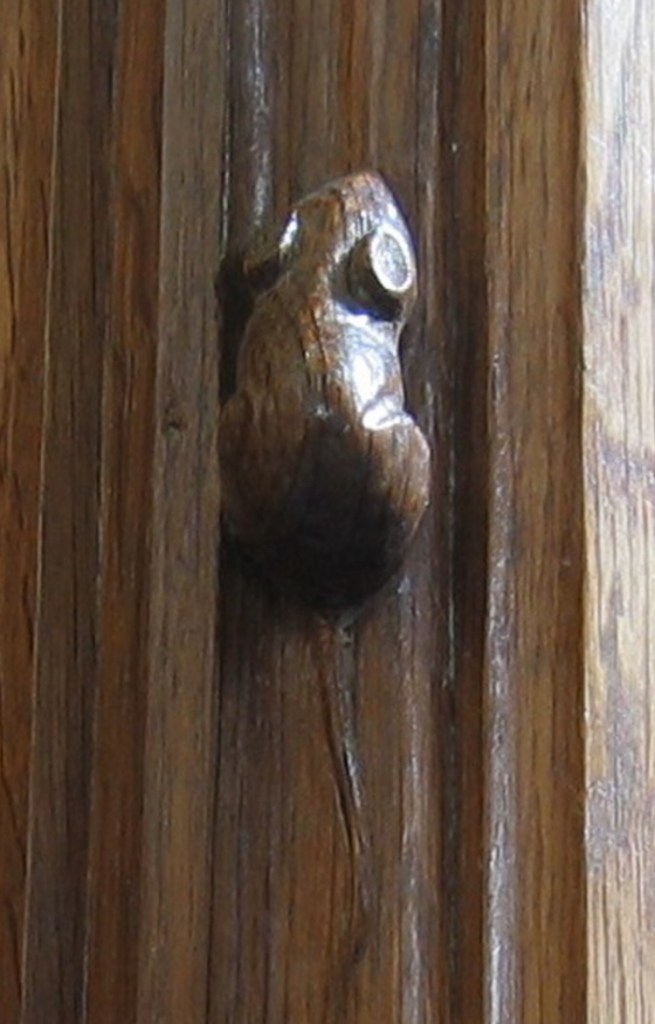
Today, St. Mary’s hosts services once a year on ‘Old Church Sunday,’ the last Sunday in August, a nod to this enduring legacy. By 1886, Holy Trinity Church, designed in neo-Gothic style by W. Basset-Smith, took over as the primary place of worship, its tall spire and Robert “Mouseman” Thompson furniture, adorned with his signature carved mice, adding a distinctive touch.
The village also embraces the diversity of faith with a Methodist chapel on Church Road and the Roman Catholic Our Lady Help of Christians on Hesketh Lane.
Agricultural Ancestry
Tarleton’s landscape, once dominated by the vast Martin Mere, now drained, has long been its lifeblood. The Tarleton Mosses, stretching from the Ribble Estuary to the A565, are testament to our ancestor’s ingenuity in reclaiming boggy land for agriculture.
The rich peat deposits have made the area a powerhouse for the market gardening industry, with glasshouses dotting the landscape, nursing salad crops and vegetables, many of which are packed at the village’s Huntapac warehouse before being shipped to grocers in nearby towns and beyond.
Beyond the smallholdings, arable fields stretch toward the horizon, all creating the farming landscape that defines Tarleton’s identity.

The soil, a mix of loam and moss over clay, has sustained generations, from medieval farmers to modern-day growers like the Bryan family, whose four-and-a-half-generation farming tradition underscores the village’s deep agricultural roots.
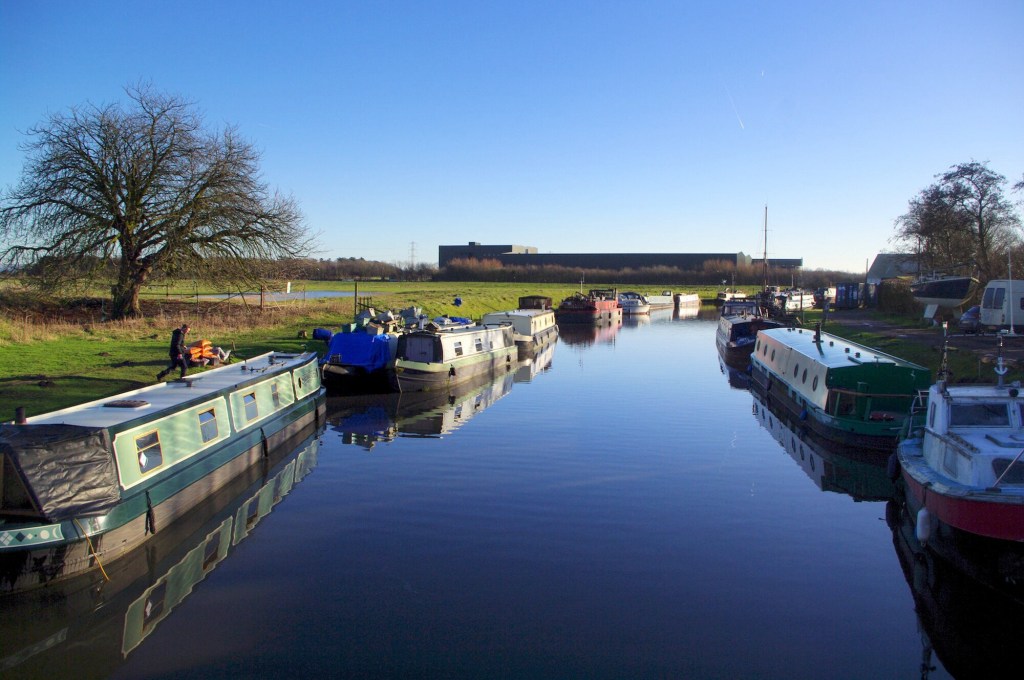
The River Douglas, flowing north to the Ribble, and the Leeds and Liverpool Canal, linked at Tarleton Lock, once formed vital arteries for trade and transport. The canal, serviced by a now-defunct railway branch, facilitated the movement of agricultural produce, while the A59 and A565 roads, intersecting at Tarleton’s crossroads, connect the village to Preston and Southports markets.
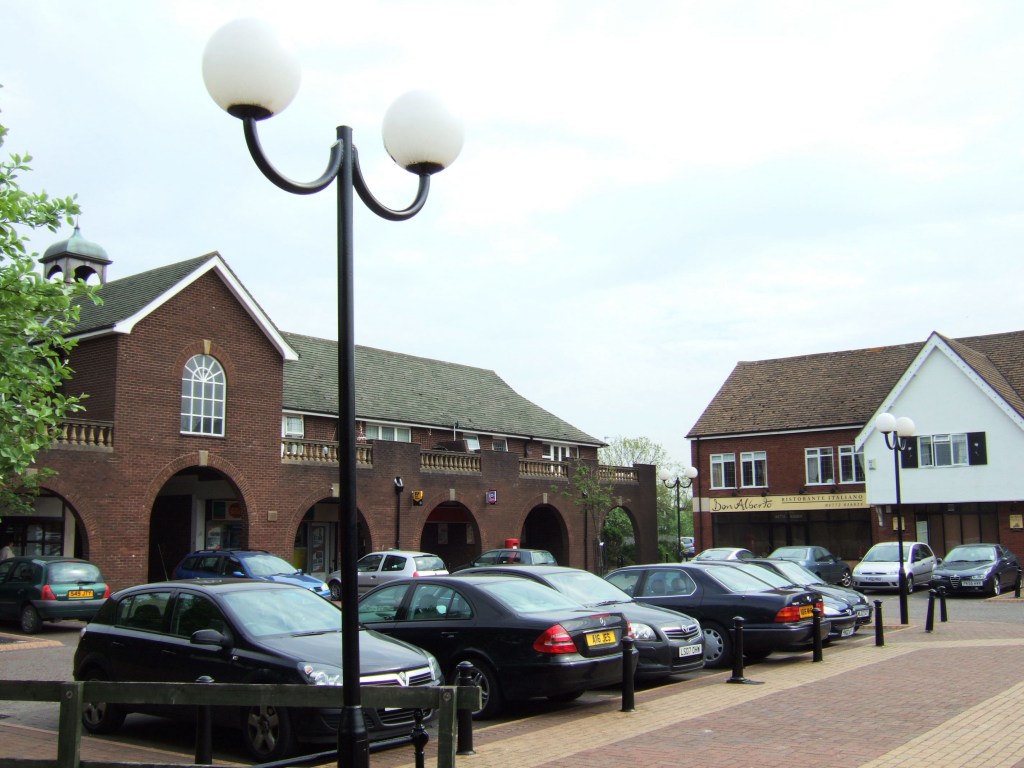
These links also mean that independent shops and businesses thrive in the village today, defying the pattern of decline high streets show elsewhere, most of these can be found on Church Road and Mark Square, making it well worthwhile visiting for its shopping alone.
(Small-town hero)
Historical and Social Fabric
Tarleton’s historical fabric is preserved in its 18 listed buildings, from the Grade II-listed Bank Bridge, carrying the A59 over the canal and river, to Holmeswood Hall, a 1568 hunting lodge built by the Heskeths of Rufford.
The Ram’s Head Inn, with its 1640 inscription, evokes the days of coaching, while a curate’s residence from 1726, built with Margaret Thompson’s legacy, stands as a testament to community benefaction.
A box of 17th-century silver coins, discovered in the 19th century, hints at further, as yet undiscovered, treasures buried in Tarleton’s past.
The village’s social fabric is reflected by its institutions. Tarleton Academy, a technology college with a swimming pool and sports grounds, serves as a hub for local youths, hosting the 471 (Hesketh Bank and Tarleton) Squadron of the Air Training Corps and sports clubs for cricket, football, rugby, and badminton.
Tarleton Community Primary School and Tarleton Holy Trinity Church of England Primary School nurture the next generation, while the library and bus services to Preston and Southport keep the village connected.
A Village in Transition
Although Tarleton seems to have preserved its unique character and charm, unlike many other communities around the country, it has not entirely escaped change, and this is mainly down to its rural allure.
Being as pretty and quiet as it is, with its proximity to Preston, Southport and other towns, it has become a highly sought-after destination for homeowners. Recent housing developments have sparked fierce debate, with some residents lamenting that it’s “not really a village anymore.” The 2021 Census recorded a population of 5,959, with Tarleton, Hesketh Bank, and Becconsall forming a built-up area of 8,755.
High house prices, averaging £269,000, reflect this demand, yet, the parish council, led by figures like Sam Bryan, strives to maintain Tarleton’s rural flavor, balancing this growth with its heritage.
Tarleton’s natural environment also draws visitors and prospective residents alike, the River Douglas and the canal offer scenic trails for walkers, and nearby, the West Lancashire Light Railway in Hesketh Bank provides a nostalgic glimpse into the area’s transport history.
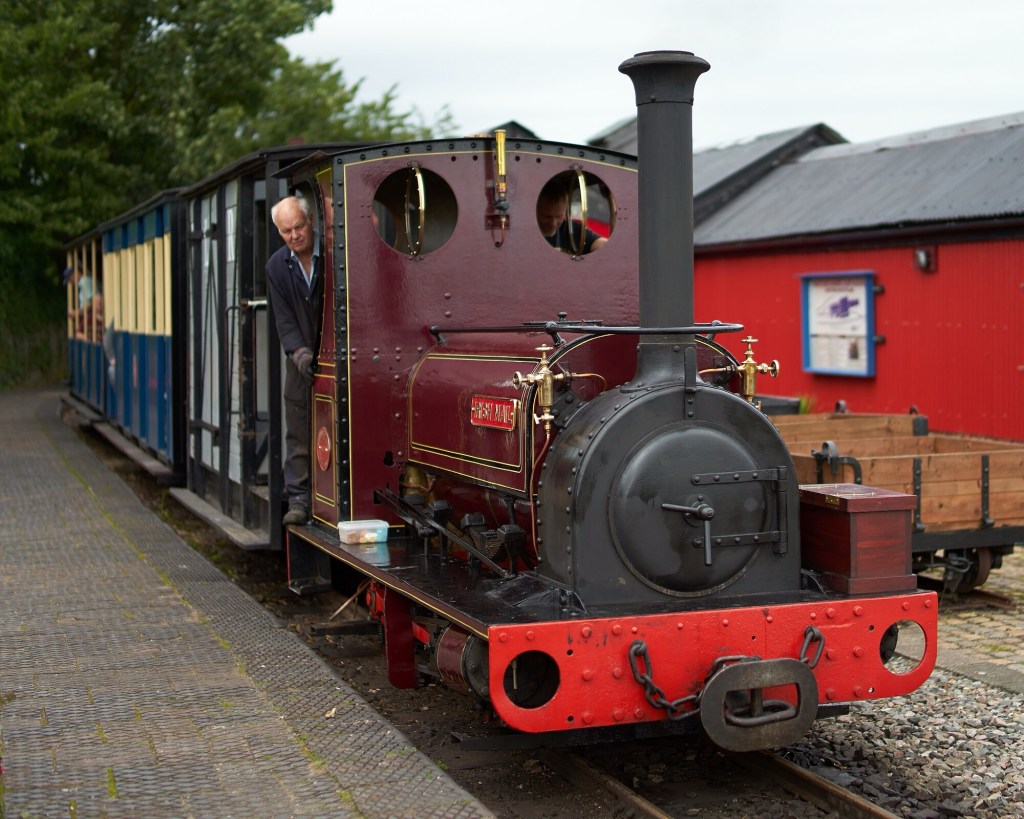
(Francis C Franklin)
Martin Mere is one of the biggest natural attractions in the area; a wetland nature reserve managed by the Wildfowl & Wetlands Trust (WWT), it’s a vital habitat for migratory birds, including thousands of wildfowl like Pink-footed geese and Whooper swans.
The site features lakes, marshes, and observation hides for birdwatching, plus conservation and educational programs. Historically, it was one of England’s largest natural lakes before drainage in the 17th century, if you look at Saxton’s map you can see just how large it used to be!
Back to Tarleton itself community efforts like resident Cheryl Courtney’s flower planting keep the village looking handsome and welcoming, a place where well-kept flower-beds, the pink blossoms of cherry trees and green open fields coexist with tidy shops, modern bungalows and semi-detached houses.
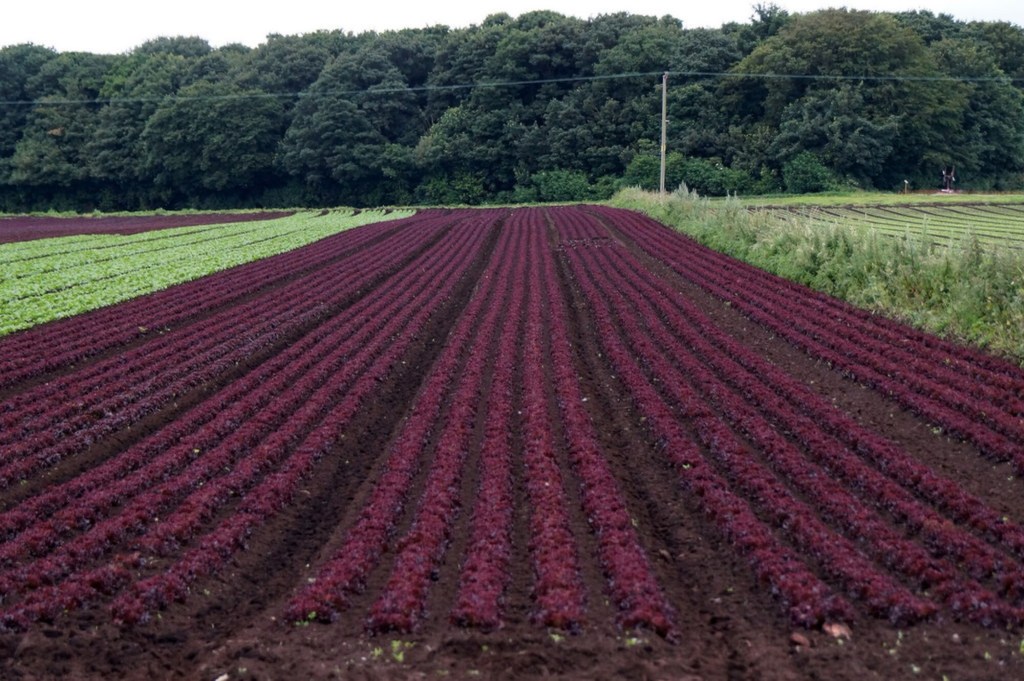
(Mike Pennington)
‘At Burscough, Lancashire’ a poem about Martin Mere by Liverpool poet Helen Tookey
Out on the ghost lake, what’s lost
is everywhere: murmuring in names
on the map, tasted in salt winds
that scour the topsoil, westerlies
that wrenched out oaks and pines, buried now
in choked black ranks, heads towards the east.
Cloudshadows ripple the grasses as the seines
rippled over the mere by night, fishervoices calling
across dark water. Underfoot, the flatlands’
black coffers lie rich with the drowned.
If you enjoyed this article please consider showing your appreciation by buying me a coffee, every contribution will go towards researching and writing future articles,
Thank-you for visiting my site,
Alex Burton-hargreaves
July 2025
 Northwest Nature and History