A Study of the Marine Wildflower and its Biology, using Occurrences on the Lancashire coast as an Example

Recently my wife and I re-visited a part of the Lancashire coast called Half Moon Bay, which lies between the pretty little village of Heysham and Heysham power station (not so little or pretty.) It’s a part of the country which is very dear to both of us, (in fact it’s where I proposed to my wife!)
One of the reasons we’re so fond of this pleasant stretch of shoreline is that, for its compact size, there is such a lot going on.
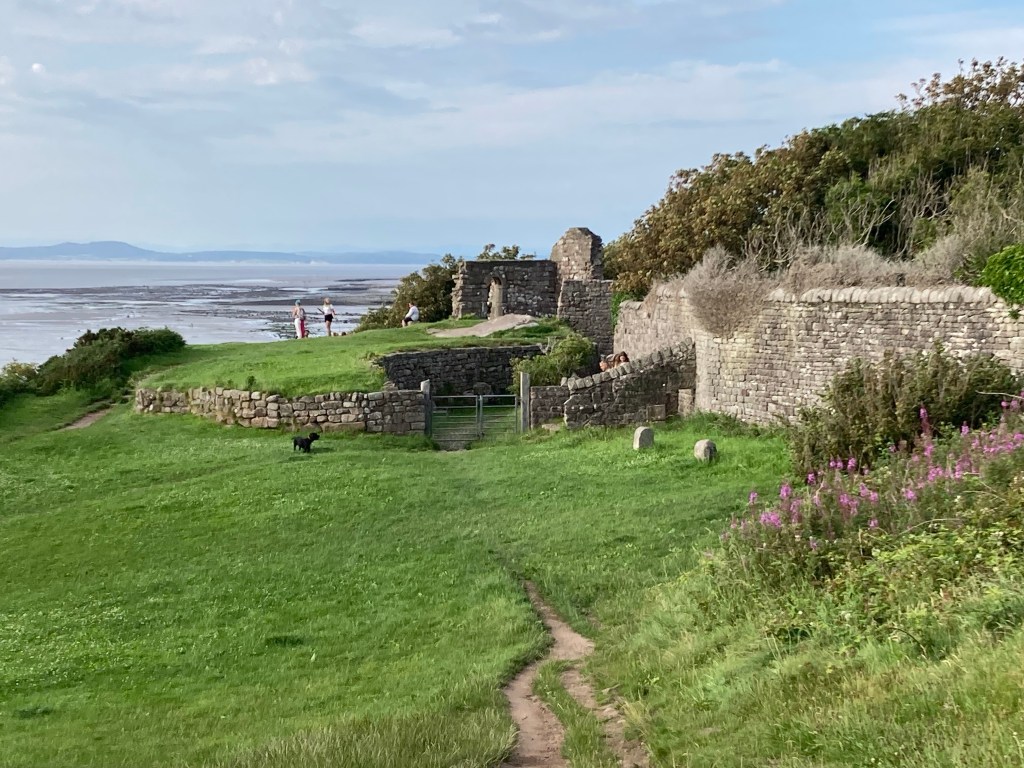
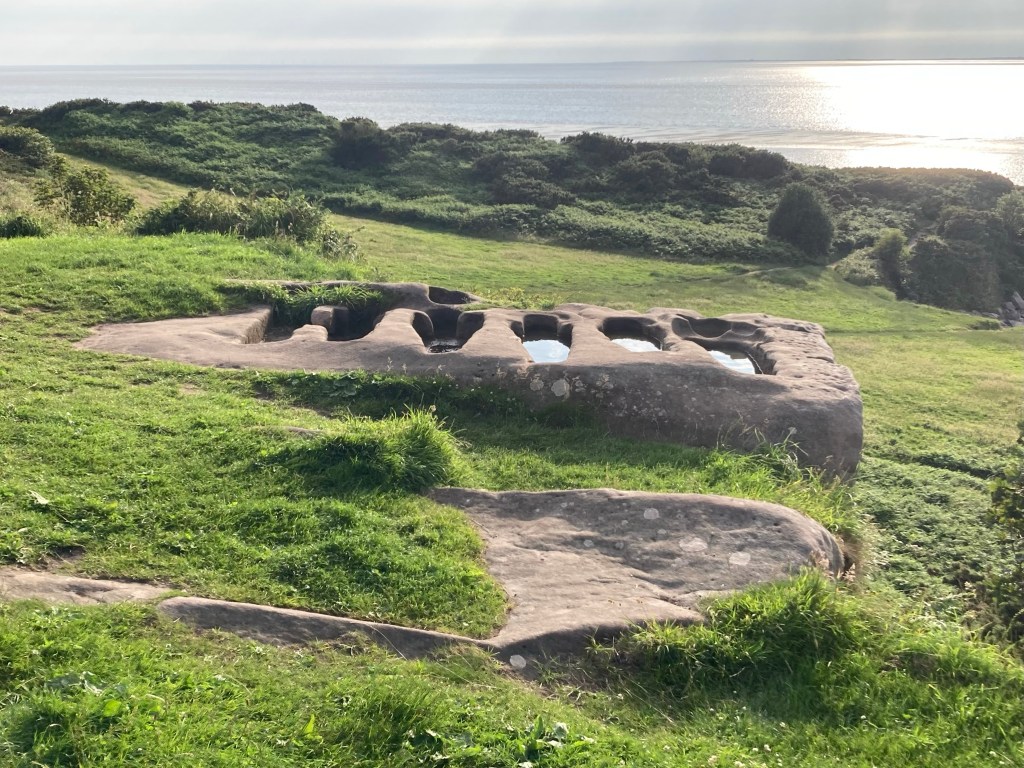
As well as a beautiful medieval church, mysterious stone graves and prehistoric rock carvings there is a rich mix of geology and habitat types to explore, with cliffs, rockpools, sand-dunes and a shingly strip of beach, all ideal for idly poking around on a sunny summer evening.
The last time we visited it was the end of June and we decided to have a closer look at some of the life in the rock-pools, as this spot is famed amongst ecologists for its maritime flora and fauna and there are some very interesting species to be found here.
Whilst clambering about on the rocks (please be very careful if you do this as they are very slippy) I spotted a little clump of white flowers at the top of one of the cliffs.
Upon clambering up there to see what they were I was rewarded with the discovery of a colony of Sea Campion, not a rare plant by any means, in fact it’s locally very common, but still fascinating and something we don’t get to see here inland at Padiham.
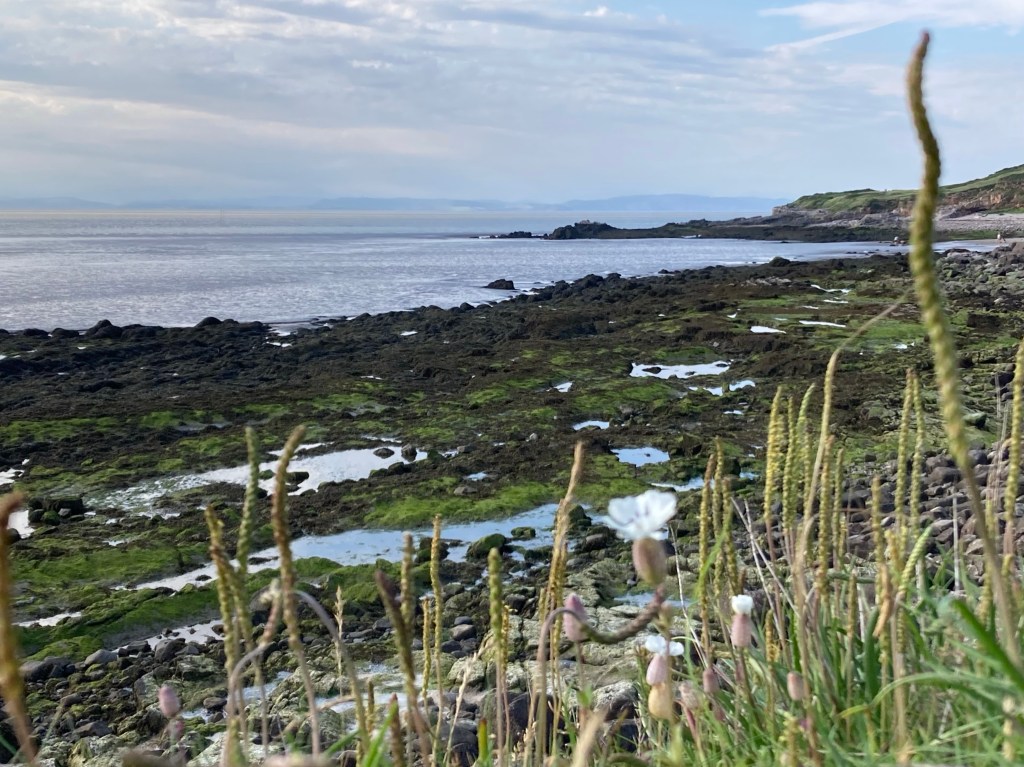
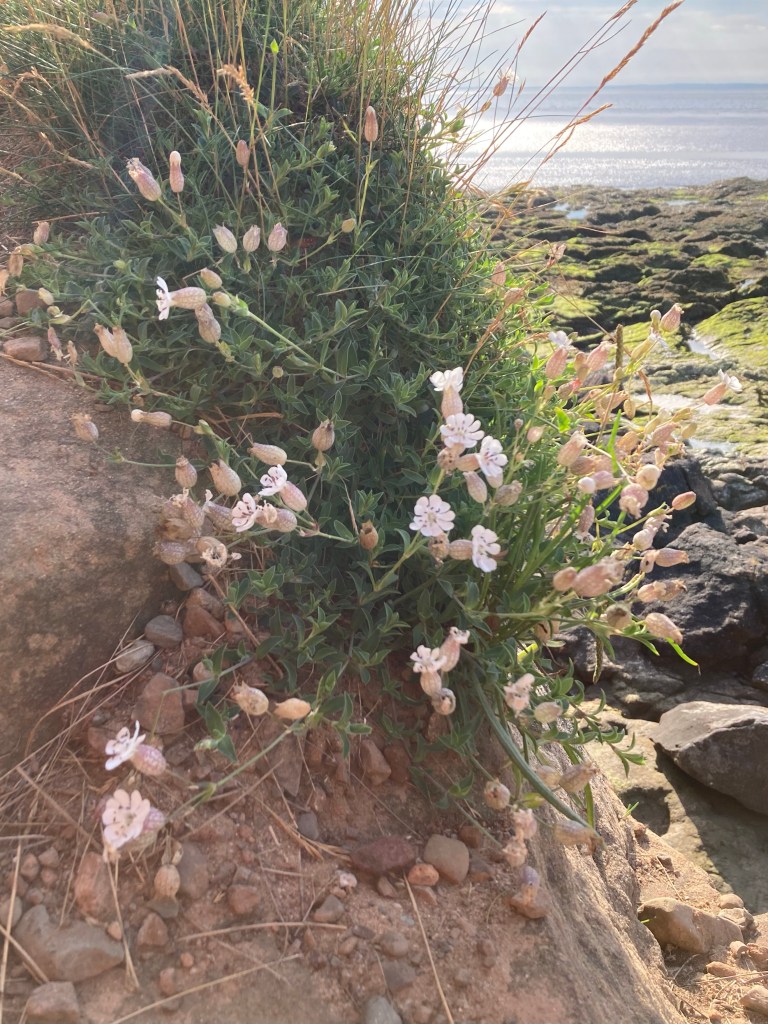
Sea Campion, Silene uniflora is instantly recognisable in coastal settings, forming dense, cushion-like mats that sprawl across cliff tops or peek through sandy shingle like patches of summer snow. Growing up to 30 cm tall, its lanceolate, stalkless leaves are arranged in opposite pairs along grey-green stems, giving the plant a compact, almost sculptural appearance.
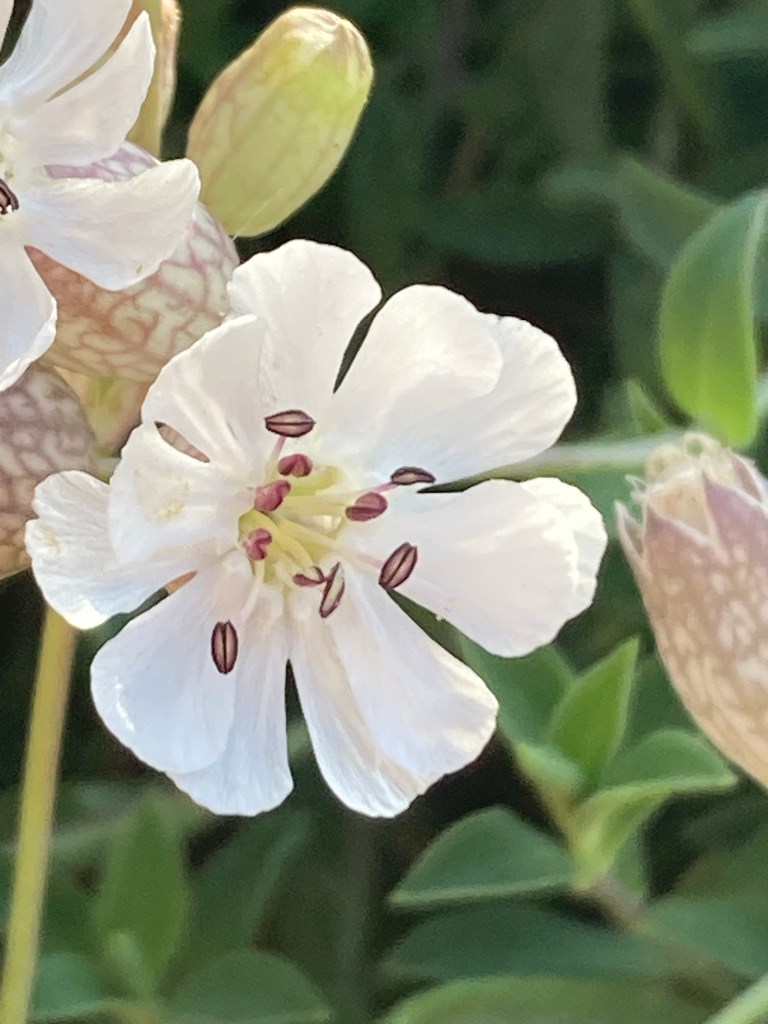
The flowers, typically 2 to 3 cm across, feature five bi-lobed petals that are usually pure white, though some carry a faint blush of pink or mauve. Unlike its cousins, such as Red Campion (Silene dioica) or White Campion (Silene latifolia), Sea Campion’s flowers are borne singly (hence the latin epithet uniflora) or in small clusters, each backed by an inflated, five-lobed calyx veined with reddish-purple hues.
These blooms, which lack a scent, are dioecious, meaning male and female flowers appear on separate plants, adding a layer of biological intrigue to their survival strategy.
In the northwest of England, Sea Campion is a familiar sight along the coasts of Lancashire, Cumbria and Merseyside, with notable populations gracing the lime-and-gritstone cliffs of Morecambe Bay and the shingle beaches of Walney Island. Its range extends beyond our shores, from Scandinavia to northwest Spain, and it has even found a foothold as an introduced species in places like Australia.
While primarily a coastal plant, Sea Campion occasionally ventures inland, colonising low-lying limestone habitats in northwest England and western Scotland where thin soils mimic the sparse conditions of its seaside home.

Evolution and Etymology
The ability of Sea Campion to thrive in such seemingly inhospitable places is down to some remarkable evolutionary adaptations.
Coastal cliffs and shingle beaches are harsh environments, with high winds, salt spray, and minimal soil or freshwater. Yet, Sea Campion has evolved to meet these challenges head-on. Its waxy leaves reduce water loss, while its low, mat-forming growth habit minimizes exposure to punishing coastal gales.
The plant’s deep root system, containing mildly toxic saponins, also anchor it firmly in loose substrates and may deter herbivores or competing plants.
These roots historically served practical purposes, with some campion species used as a soap substitute for washing clothes or hair, this possibly gave us the genus name Silene, which some sources say derives from the Greek word for saliva, referencing the frothy foam produced by related species like Red Campion.
However the direct etymology of Silene is debated, other sources connect it to the Greek words seio (shake, move to and fro) and lenos (wine), suggesting a connection to drunkenness and the god of wine, Bacchus.
Apparently this is because he was occasionally depicted as covered in foam, and because the flowers, on their tall, slender stems, tend to wave drunkenly in the slightest breeze, drawing attention to passing pollinators.
Phenotypic plasticity
Sea Campion’s ability to colonise new environments has drawn the attention of researchers studying rapid adaptation. A 2023 study by Bangor university explored how its phenotypic plasticity, a capacity to adjust its biology to new conditions, has enabled it to thrive in extreme settings, such as zinc-contaminated soils near old mining sites.
This plasticity allows the plant to alter gene expression in its roots, paving the way for genetic adaptations that enable populations to conquer challenging habitats. For example, Sea Campion growing near abandoned mines in Wales has evolved zinc tolerance, a trait that likely stems from the same resilience that allows it to endure the salty, nutrient-poor conditions of the Northwest’s coastlines.
Here Sea Campion plays a vital ecological role in stabilising shingle beaches and cliff edges, its roots binding loose substrates and preventing erosion, which seems to be a particular problem at Heysham. It also provides nectar for pollinators like bees and butterflies, though its dioecious nature requires cross-pollination between male and female plants, a process aided by the region’s coastal breezes.
From late March to October, with peak displays in May and June, Sea Campion’s flowers add splashes of white to the coastal palette, often intermingling with Bluebells or Red Campion for a striking visual contrast.
Future prospects
While Sea Campion is not currently endangered, its coastal habitats face threats from climate change and human activity. Coastal erosion, exacerbated by increasingly severe storms, could reduce the cliffs and shingle beaches where Sea Campion thrives.
Additionally, trampling by visitors to popular coastal sites like St Bees Head or Arnside Knott can disrupt its fragile root systems. Conservation efforts, such as those led by organisations like the Cumbria Wildlife Trust, aim to protect these habitats by managing foot traffic and promoting sustainable land use.
Sea Campion’s story also offers broader lessons for conservation, as its ability to adapt to extreme conditions, as seen in its colonisation of mine sites, suggests nature has a remarkable capacity to cope with environmental change.
Yet, as the Bangor University study highlights, such adaptations take time, and rapid climate shifts may outpace even this resilient plant’s ability to adjust. So protecting the Northwest’s coastal ecosystems, through measures like habitat restoration and pollution control, will be crucial to ensuring that Sea Campion continues to grace our shores for generations to come.
High Island
By Richard Murphy
A shoulder of rock
Sticks high up out of the sea,
A fisherman’s mark
For lobster and blue-shark.
Fissile and stark
The crust is flaking off,
Seal rock, gull rock,
Cove and cliff.
Dark mounds of mica schist,
A lake, mill, and chapel,
Roofless, one gable smashed,
Lie ringed with rubble.
An older calm,
The kiss of rock and grass,
Pink thrift and white sea-campion,
Flowers in the dead place.
Day keeps lit a flare
Round the north pole all night.
Like brushing long wavy hair
Petrels quiver in flight.
Quietly as the rustle
Of an arm entering a sleeve,
They slip down to nest
Under altar stone or grave.
Round the wrecked laura
Needles flicker
Tacking air, quicker and quicker
To rock, sea, and star.
Richard Murphy (1927-2018)
If you enjoyed this article please consider showing your appreciation by buying me a coffee, every contribution will go towards researching and writing future articles,
Thank-you for visiting my site,
Alex Burton-hargreaves
(July 2025)
 Northwest Nature and History
One thought on “Northern Shores: Sea Campion”