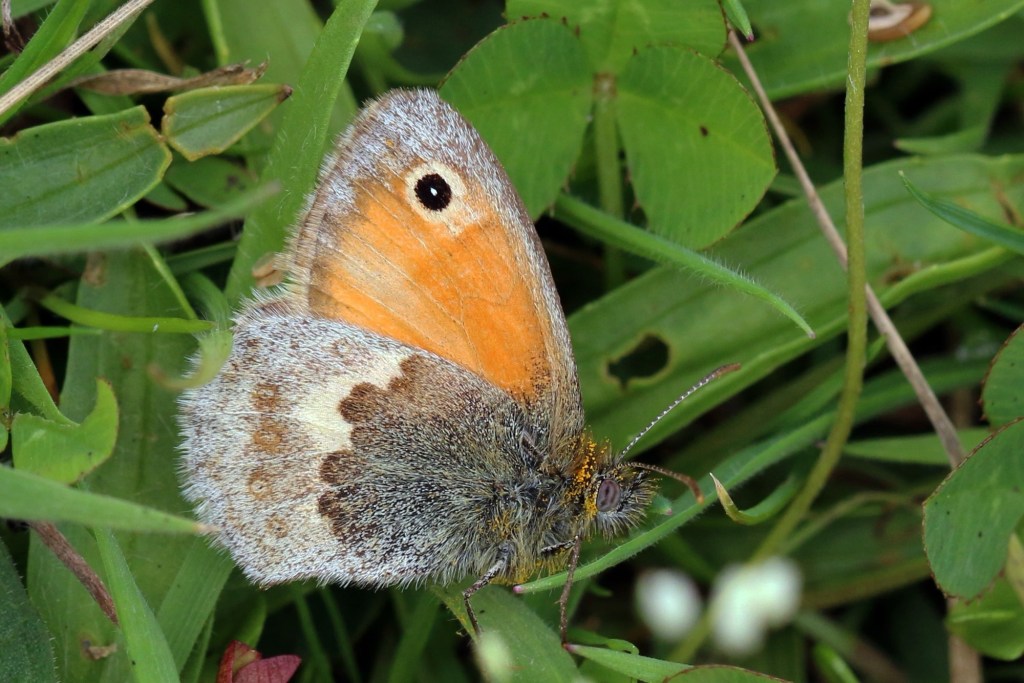
The Small Heath butterfly, Coenonympha pamphilus, a diminutive member of the Nymphalidae family, is a widespread yet increasingly vulnerable species across the British Isles.
In Northwest England, this unassuming butterfly thrives in a variety of open, grassy habitats, but its populations are closely tied to specific ecological conditions, particularly those shaped by traditional land management practices like grazing.
Here we look at the biology, distribution, and conservation status of the Small Heath, with a particular focus on its reliance on grazed pastures.
Biology and Identification
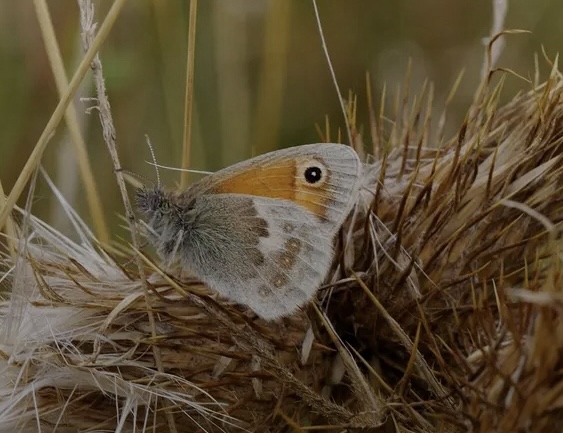
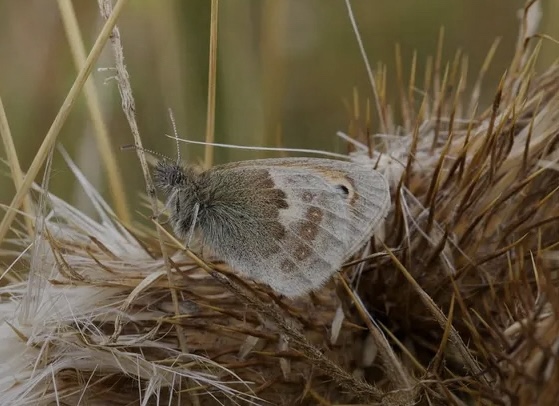
This species is the smallest of the “browns” in the Satyrinae subfamily, with a wingspan of 33 to 37 mm, its wings, when closed, reveal a characteristic eyespot on the underside of the forewing, set against a backdrop of orange-brown with grey and cream bands on the hindwing. Unlike most other butterflies, it always rests with its wings closed, tilting them to bask laterally in the sun, a behavior that aids thermoregulation.
A fluttering, low-flying butterfly it is active only in sunny conditions, rarely rising more than a meter above the ground. Its caterpillars feed on fine-leaved grasses such as fescues (Festuca spp.), meadow-grasses (Poa spp.), and bents (Agrostis spp.), which are critical to its lifecycle.
It typically produces one to two broods per year, with adults on the wing from May to September, and occasionally into October in favorable conditions.
Distribution
The Small Heath is widely distributed across the northwest, inhabiting habitats such as unimproved grasslands, moorlands, disused quarries, railway embankments, and coastal dunes. Notable sites include the peatland reserves of Winmarleigh Moss and Astley Moss, where it coexists with other species like the Large Heath, though the latter prefers wetter habitats.
It is particularly common in the Yorkshire Dales National Park, particularly on calcareous grasslands and acid moorlands with short grass swards. Despite its adaptability it has experienced significant declines in parts of the UK, including the Northwest, with a reported 62% drop in abundance from 1984 to 2003, earning it a place on the UK Biodiversity Action Plan as a priority species.
Its scientific name Coenonymphatells us that it was once much more common; Coeno coming from the Greek koinos, (κοινός), meaning ‘common’ or ‘shared’ and nympha from the Greek nymphē, (νύμφη): meaning ‘nymph,’ often used in entomology to refer to butterflies or their graceful, delicate nature.
The Greek epithet; pamphilus, means ‘loved by all,’ coming from the words pan (πᾶν) meaning ‘all’) and philos (φίλος), meaning ‘dear’, or ‘beloved’.

Reliance on Grazed Pastures
The fortunes of this species are tied to the grazed pastures it calls home, and there are several reasons for this, all primarily tied to its ecological requirements.
The butterfly’s larvae rely on fine grasses, with Sheep’s Fescue (Festuca ovina) being particularly favored. Adults nectar on low-growing flowers such as daisies, clover, and heather, avoiding taller plants like knapweeds or thistles. Males are moderately territorial, engaging in spiraling aerial displays to defend perches near vegetation, a behavior observed best in open landscapes.
Grazing maintains the open, low vegetation structure necessary for these grasses to remain accessible and dominant, preventing taller, competitive plants from overshadowing them.
They also prefer open, sunny habitats with short grass swards, as they fly close to the ground and require warm microclimates for basking and egg-laying. Grazed pastures provide this structure, preventing succession to scrub or woodland, which would make the habitat unsuitable for them, as they avoid shaded, dense vegetation.
Lightly grazed sites, such as heathlands, upland meadows, and coastal dunes, where the sward is sparse but not overgrazed, are ideal, as they ensure a balance of larval host plants and nectar sources.
Varied sward with bare ground, short turf, and tussocks will support the highest populations; bare ground supports basking, short turf hosts non-competitive grasses for caterpillars, and tussocks provide overwintering sites.
Studies suggest that conservation grazing (low stocking density, rotational grazing) results in lower butterfly diffusion rates, indicating higher habitat quality, as butterflies exhibit area-restricted behavior in these areas compared to heavily grazed or ungrazed sites.

Research by Swedish lepidopterists has shown that the males form ‘leks’ similar to those of Black Grouse. The males gather in sunny, sheltered areas, compete for the best spot and wait for the females to arrive. The unmated females will ignore any males they come across en-route to the lek site, but on arrival will immediately choose a mate. The word lek is Swedish and means “pleasurable games and activities”
(Photo by Gail Hampshire)
Habitat Management Practices
To support Small Heath populations, habitat management efforts focus on maintaining grazed pastures with a mosaic of vegetation structures while avoiding both overgrazing and undergrazing. Here are some evidence-based practices:
Implementation of light, rotational grazing
- Using low stocking densities (e.g; less then 1 cow/ha or 1 to 3 sheep/ha) creates a varied sward with patches of short grass, tussocks, and bare ground, this supports larval foodplants, nectar sources, and basking areas.
- Adopting rotational grazing with 7 to 10 days of grazing followed by 70 to 120 days of rest allows grass regrowth and prevents overgrazing. This mimics natural herbivore movement and maintains plant diversity.
- Avoiding continuous grazing prevents depletion of root reserves and increases the availability of fine grasses critical for Small Heath caterpillars.

Maintain a Mosaic of Vegetation
- Ensuring a mix of short turf (for host plants like fescues), tussocks (for overwintering caterpillars), and bare ground (for basking) creates the desired mixed sward. Some standing dead seed heads and plant litter should remain post-grazing to provide shelter.
- Retaining nearby scrub or hedges offers adult butterflies resting and nectaring sites, but it is essential to prevent scrub encroachment through selective clearing to maintain open grassland.
Choose Appropriate Grazers
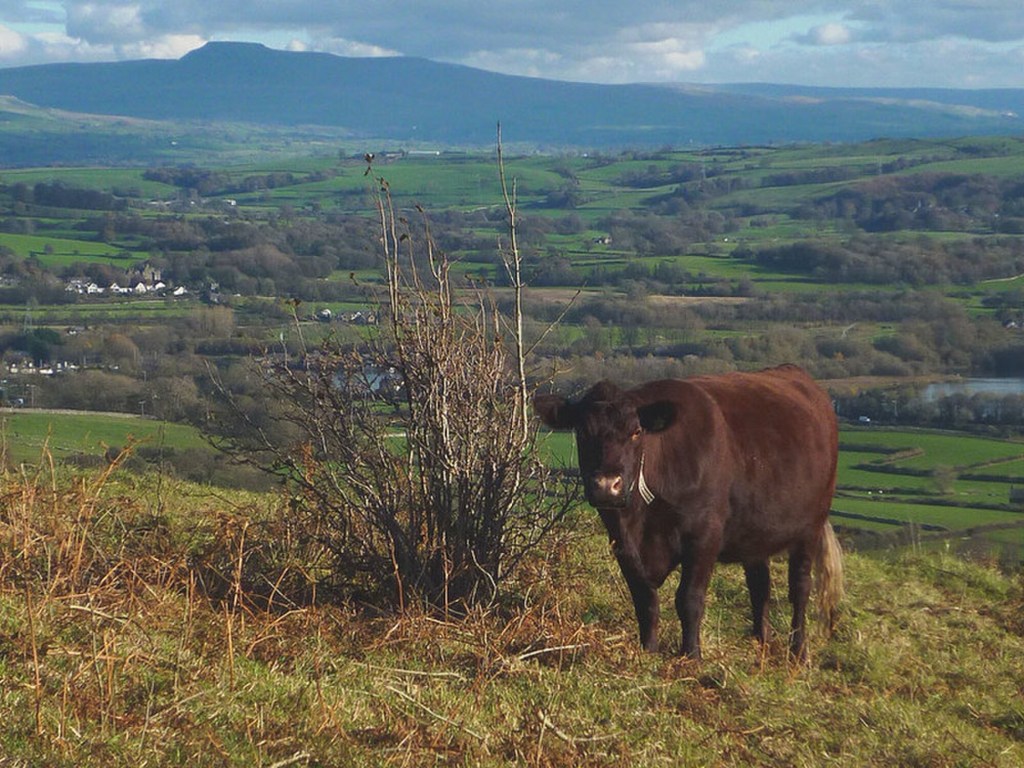
- Sheep or cattle are suitable for maintaining short swards, but cattle are often preferred for creating a varied sward due to their selective grazing habits. Horses may create uneven grazing patterns and are better for larger, complex sites.
- Ecologists will trial grazing on smaller areas initially to assess impacts and then adjust stocking rates to avoid local extinctions of butterfly populations.
Protect Nectar and Host Plant Resources
- The aim is to ensure a diversity of nectar-rich plants (e.g., clovers, vetches) and larval host grasses (Festuca, Poa, Agrostis), this is done by avoiding intensive mowing or fertilization, which reduces plant diversity.
- Grazing is timed to avoid disturbing egg-laying or larval development periods (April to September in the UK). Late summer or autumn grazing is often ideal to protect breeding cycles.
Monitoring and Adapting Management
- Sward height and plant diversity is regularly assessed to ensure grazing maintains a sparse, short sward without depleting key species. Ideally a “take half, leave half” approach should be taken, where animals graze no more than 50% of plant biomass.
- Using adaptive management strategies like Holistic Management or Adaptive Multi-Paddock Grazing balances ecological restoration with livestock needs, promoting biodiversity and soil health.
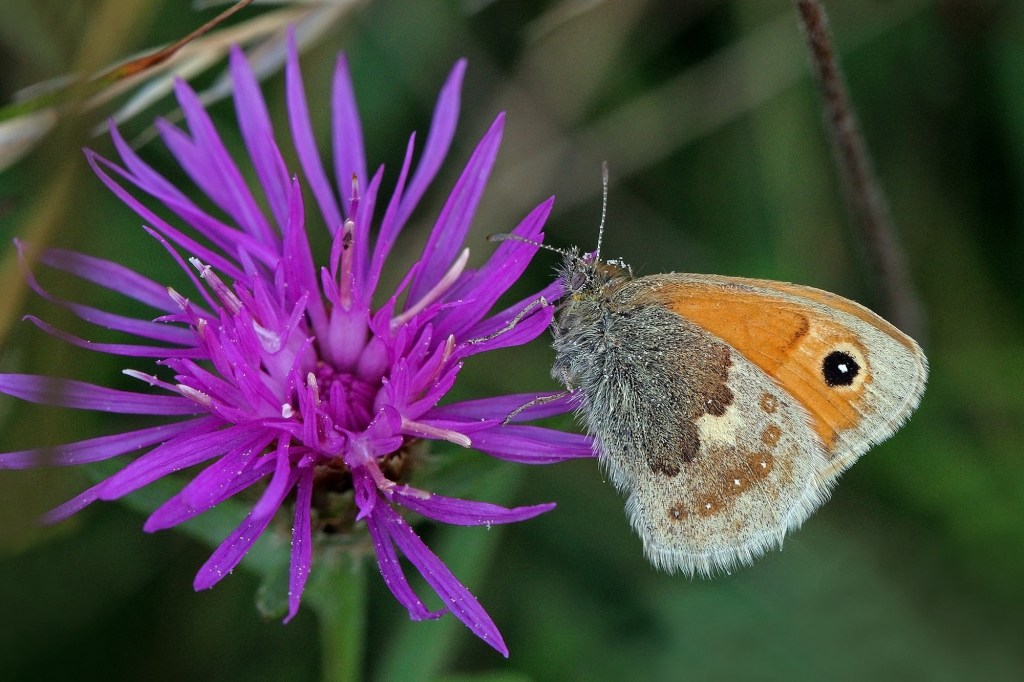
(Charles J Sharp)
Incorporate Additional Conservation Measures
- Preserving or restoring field margins, hedgerows, and verges near pastures creates corridors for butterfly dispersal, especially in arable landscapes.
- If possible use of pesticides near Small Heath habitats will be avoided, as they can harm butterflies and their food plants. If necessary, spot treatments for invasive weeds will be applied, (with prior approval).
- In urban or fragmented areas, greenways or biodiverse patches may be created and maintained to support dispersal and population connectivity of species like Small Heath.
Additional Considerations
- In northern regions (e.g., the far north of England and Scotland), Small Heaths typically have one brood per year, while southern populations may have two or three, so timing of grazing will attuned to local phenology.
- They fare better in warmer, drier conditions than shade-dwelling species, so south-facing slopes will be prioritised as will over-wetting pastures through drainage.
- The Small Heath is a UK Biodiversity Action Plan Priority Species and is listed as Vulnerable in the UK (on the 2022 Red List), so targeted management is critical to reverse long-term declines. By maintaining lightly grazed pastures with a diverse, short sward and protecting key foodplants and nectar sources, land managers can support thriving Small Heath populations. For further details, consult resources like Butterfly Conservation’s habitat management guides.

(Ron Shirt)
Small Heath
A sonnet by Johnathan Bradley
To be so plain is wonderful indeed; a special dullness makes this insect seem the flying cousin of a common weed – the kind that nature holds in low esteem.
So shy she hides her upper wings from view and keeps the lower face towards the sun, although the upper has a brighter hue, in almost wilful self-denial of fun.
Yet in the fields all kinds of colour abound inviting exhibition and display, with summer parties all around; but wayward Coenonympha stays away: she holds herself aslant, this coy Small Heath, concealing secret finery beneath.

(Eric Jones)
I learnt much of what I know about species like the Small Heath, and how to conserve them, while working on Murlough NNR in Co Down, Northern Ireland with my aunt, the highly respected conservationist Josephine Whatmough.
To her I am eternally grateful for instilling in me a life-long interest and love of the natural world, also for letting me run wild on her nature reserve as a child every endless summer holiday!
If you enjoyed this article please consider showing your appreciation by buying me a coffee, every contribution will go towards researching and writing future articles,
Thank-you for visiting my site,
Alex Burton-Hargreaves
(July 2025)
 Northwest Nature and History
Hello Alex, thankyou for your brilliant posts, discovered by chance on the off grid scotland site. I appreciated your article on FLY Camping. A result of our alienation from, yet vital need for Nature. Loved your articles on the Small Heath and Chitons.
Introduction. I have an RSPB , French equivalent LPO, and Mammals Refuge Garden in Burgundy. We had 32 species of butterfly a couple of years ago, Dormice and Bats. I am a keen naturalist. I was born on the Yorkshire Lancashire border and my grandparents lived in Fence, Carey Hargreaves and his wife Winnifred. My brother John Carey Hargreaves was a conservationist and photographer in Victoria, Australia…… so much in common.
The inevitable question…do you think we are related ?
Keep writing.
Best Wishes,
Julie Anne Hargreaves.
julieanne_hargreaves@hotmail.com
LikeLiked by 1 person
Hi Julie,
I’m really glad that you appreciate my posts, it’s always good to get some feedback like this, your quote about the fly camping piece is beautifully put, I will quote you if I may? That article was very well received, the Spectator have re-published it and I spoke to the new environmental editor of the Telegraph, Patrick Galbraith, about the subject today, so it seems to have struck a chord with some people!
Your refuge garden in Burgundy sounds fascinating, 32 species! that’s very impressive and you should be very proud of that, I would love to hear more about the garden and how it attracts so much life.
Vis-a-vis relatives; I’m currently learning more about my mother’s side of the family, they were Booths originally and came from Sparth house farm at Clayton-le-moors, I know very little about them but a distant relative found me via my articles so I’m learning a bit more through them. My father’s side of the family are Gorton Hargreaves and come from Poulton-le-Fylde, I can trace them back quite a few generations, it’s entirely possible that we are distantly related but there are a lot of Hargreaves!
It’s funny that you mentioned a connection with Australia, as my uncle Peter (from my dad’s side) lives over there, last time I heard that they were in Sydney, they are Duerdens though, he is retired but used to work as a diplomat for the Australian government and for the IAEA.
Maybe that’s all of some use, I can find out a bit more if you’d like?,
I hope to hear more about the garden in the future,
All the best,
Alex Burton-Hargreaves
LikeLike