
The heather beetle, Lochmaea suturalis, is a small, unassuming olive-brown leaf beetle measuring about 6mm, and it has long been a part of our moorland ecosystems.
While unremarkable in appearance, this native insect can wreak havoc when its populations surge, causing devastating outbreaks that threaten heather moorlands, their biodiversity, and the communities that depend on them.
As climate change and modern land management practices exacerbate these outbreaks, understanding the beetle’s impact and the cascading effects on ecology and local economies is critical.
Here I attempt to look into this issue and what might be done to address it.

The prefix Loch relates to the Greek word ‘lochme’ (λόχμη), meaning “thicket” or “bush,” alluding to the habitat or host plants (like heather, willow or hawthorns) where these leaf beetles are commonly found. The suffix aea is a standard Latinised ending used in zoological nomenclature to denote a genus.
Suturalis means “sutured”, referring to the dark sutural edges of the elytra (wing covers)
Inhabitants of the Heather
Heather beetles are natural inhabitants of heather-dominated landscapes, feeding primarily on the leaves of heather, Calluna vulgaris, a keystone species of our moorlands (read more about the 3 main species of heather here.)
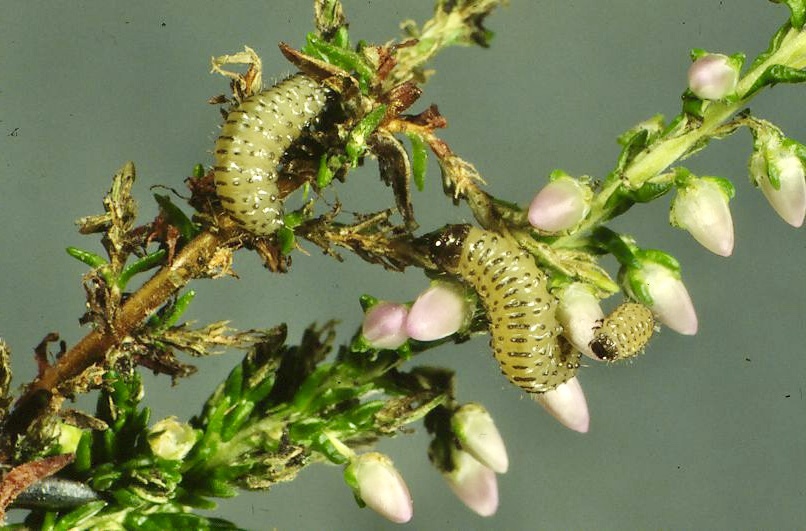
Under normal conditions, their feeding causes minor damage, occasionally contributing to vegetation diversity by creating patches of varied age structure. However, during outbreaks, beetle populations explode, with millions of larvae and adults stripping heather plants bare, leaving behind characteristic rust-red or grey “ghost heather” stalks.
These outbreaks can devastate thousands of hectares, transforming the vibrant purple moorlands into dull, lifeless expanses.
The reasons behind these population surges remain poorly understood, but several factors are implicated; warmer, damper springs and early summers create ideal conditions for egg-laying and larval survival, while milder winters allow more beetles to survive hibernation in moss, litter, or soil.
Climate change, with its hotter and drier summers, may amplify these conditions, increasing outbreak frequency and severity, additionally, large-scale, uniform heather monocultures, often a byproduct of the most intensively managed moors, are particularly vulnerable, as they provide an abundant food source with little ecological resistance.
Damage and Destruction
Beetle outbreaks cause significant damage to heather, which is the dominant plant species on most moorlands and a critical component of their ecological and economic value.
The larvae feed voraciously on its leaves, often killing plants outright or leaving them weakened and susceptible to further stress. In severe cases, entire moorland areas are denuded (called “beetled” by gamekeepers) with up to 90% of heather cover lost in some regions, as reported in parts of Wales recently.
This loss disrupts not merely the moorland’s aesthetic appeal but its ecological function too, replacing the heather with bare brown stalks or opportunistic species like grasses or bracken.
The ecological consequences are profound. Heather moorlands, which cover approximately 550,000 acres in England and Scotland, are globally rare habitats, supporting unique biodiversity, including species like the Mountain Hare, Bilberry Bumblebee, Meadow Pipit and predators such as the Merlin.
Heather loss alters vegetation composition, favoring faster-growing grasses that shift moorlands toward acid grassland assemblages. This change reduces habitat suitability for specialist species, disrupts food webs, and increases erosion and nutrient loading in peat soils, further degrading the ecosystem.
Additionally, damaged heather increases wildfire risk by creating dry, flammable patches, which can exacerbate habitat loss and release stored carbon from peat, contributing to climate change.
Impacts on Driven Grouse Shooting
Driven grouse shooting, a traditional practice in Britain, relies heavily on healthy heather moorlands to support Red Grouse, Lagopus lagopus scoticus, a species dependent on heather for food and cover. Heather beetle outbreaks directly threaten grouse populations by destroying their primary food source; juicy, green heather tips, which constitute about 80% of grouse chick diets.
Without adequate food, grouse face starvation, reduced breeding success, and increased vulnerability to predation when forced to move into open areas. Recent reports (August 2025 as of writing) indicate that beetle outbreaks may lead to canceled shooting days and reduced grouse numbers, with some moors losing viability for the forth-coming season.
The economic repercussions are significant for rural communities, grouse shooting supports jobs, tourism, and local businesses, particularly in marginal upland areas.
For example, estates in northern England and Scotland employ gamekeepers, beaters, and hospitality staff, while hotels and restaurants benefit enormously from shooting parties.
A single agency in northern England cancelled over 100 shooting days last year due to bad weather and beetle-related declines in grouse populations, illustrating the scale of economic disruption, and back in 2018 and 2019 the whole shooting calendar was cancelled in some areas.
For estates, the loss of heather can render moorlands unviable for shooting, threatening their financial sustainability.

Ecological and Social Effects
The ecological impacts of heather beetle outbreaks extend beyond grouse. Numbers of species like Curlew, Golden Plover and Lapwing, which thrive in managed heather moorlands, will decline as habitat quality deteriorates.
Conversely, generalist species like rosebay willowherb or bracken may colonise damaged areas, altering nutrient cycling and reducing biodiversity. The loss of heather also affects pollinators like bees, which rely on heather nectar, further disrupting moorland food webs, (and business for commercial honey producers)
Socially, the decline of grouse shooting due to beetle outbreaks fuels tensions between upland stakeholders, with proponents of grouse shooting arguing that it incentivises heather conservation, as moorland managers invest heavily in restoring damaged heather to maintain viable grouse populations.
Without this economic driver, there is less incentive for landowners, particularly those managing sheep farms, to restore heather, as grass-dominated landscapes are still suitable for grazing. This could lead to long-term habitat loss, as sheep farmers may not prioritise costly restoration efforts.
Critics of grouse shooting, including conservation groups, argue that intensive management practices, such as rotational burning, are responsible for creating heather monocultures that exacerbate the beetle outbreak problem.

(Mick Garratt)
Challenges and Solutions
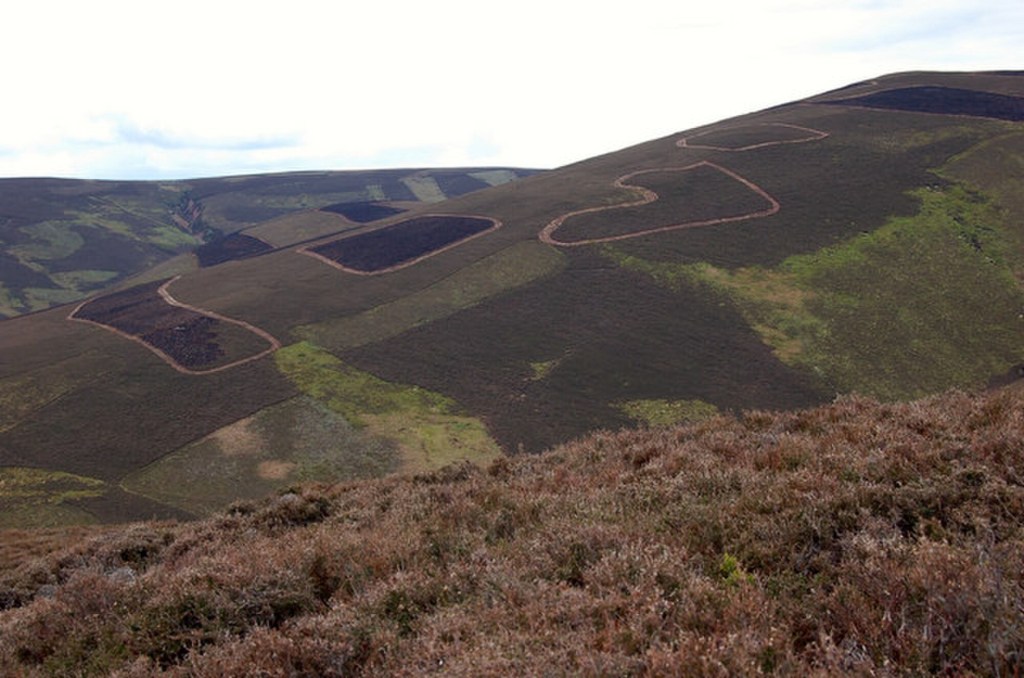
Managing heather beetle outbreaks is challenging due to limited control options and gaps in scientific understanding. Current strategies focus on manipulating moorland management practices, such as burning or mowing affected areas to remove damaged heather and promote regeneration. (To read more about controlled burning see here)
Summer burning, when larvae are exposed, or mowing to disrupt moist conditions favored by beetles, has shown promise, but these methods require further research to confirm their effectiveness, it can also harm populations of birds which may themselves predate on the beetle and its larvae. Grazing management, such as using sheep to create a more open heather structure, may also reduce beetle populations by limiting suitable habitat.
Natural predators, such as parasitic wasps, ladybirds, spiders, and ants, can help control beetle numbers, but their populations are variable and insufficient to prevent large outbreaks. Some suggest draining wetter moorland areas to reduce humidity, which aids egg hatching, but this risks causing environmental damage to peatlands.
Long-term solutions require integrating climate-resilient management practices, such as diversifying vegetation to reduce heather monocultures and enhancing monitoring systems to detect outbreaks early.

The life cycle of L. suturalis (From Rosenburgh & Marrs 2010)
The Way Forward
Outbreaks of L. suturalis pose a growing threat to the our iconic heather moorlands, with far-reaching consequences for ecology and rural communities.
If climate change intensifies, these outbreaks may become more frequent, challenging the delicate balance of moorland management. For communities reliant on driven grouse shooting, the economic fallout underscores the need for sustainable solutions that preserve both the ecological and cultural value of these landscapes.
Addressing this issue demands a collaborative approach, combining scientific research, evidence-based management, and stakeholder dialogue. By investing in resilient moorland ecosystems we can protect our moors and rural economies.
The heather beetle may be small, but its impact is huge, and highlights the fragility of these unique habitats and the urgent need to act before the our purple moors fade to grey.

“On the high moors, the heather glowed with a deep purple under the August sun, and I felt as if I could walk forever across that endless carpet.”
James Herriot- All Creatures Great and Small
Sources:
- Peak District National Park Climate Change Vulnerability Assessment
- Country Life, “The challenges facing grouse shooting”
- Shooting UK, “Grouse season 2025: A challenging year ahead”
- The Moorland Association, “The Heather Beetle Threat and How To Manage It”
- Natural England; A Desk Review of the Ecology of Heather Beetle
- Mountains and Moorlands, W.H Pearsall, (1989 edition)

If you enjoyed this article please consider showing your appreciation by buying me a coffee, every contribution will go towards researching and writing future articles,
Thank-you for visiting my site,
Alex Burton-Hargreaves
(Aug 2025)
 Northwest Nature and History