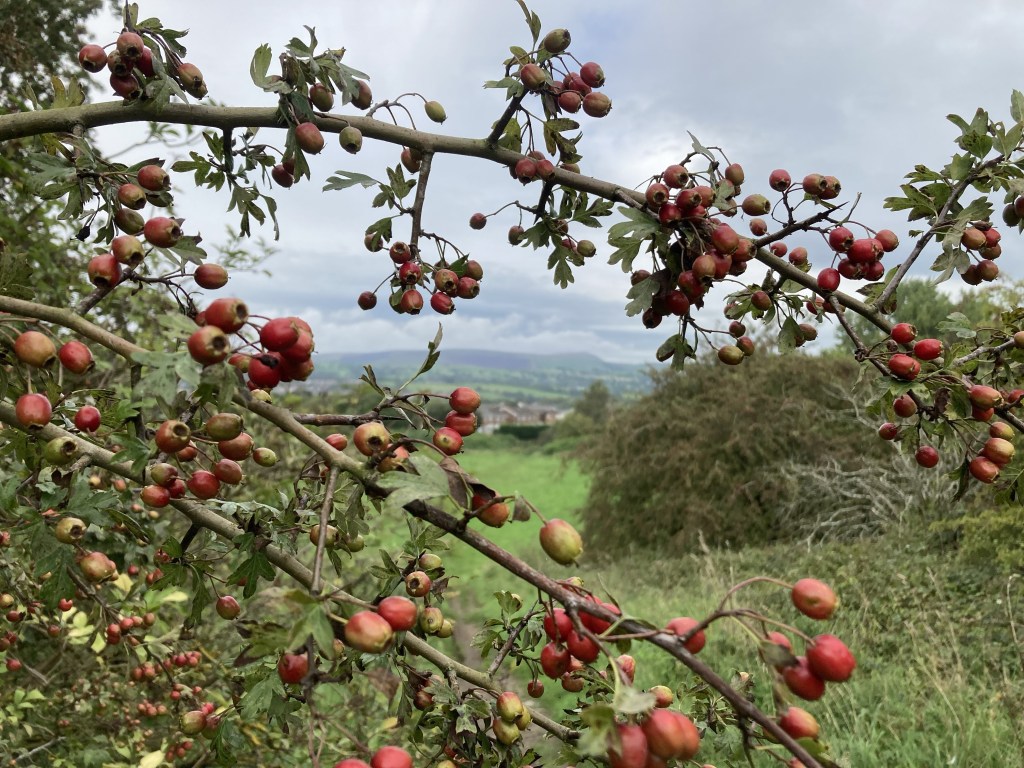
Autumn is traditionally the time of year we stock up for winter and, if you have the time and patience, it’s the season to forage for hedgerow berries to preserve in chutneys, jams and jellies. These make perfect Christmas gifts or you can keep them in the cupboard and bring them out to compete in next years village show!
In this recipe I’ll look at how to make Hawthorn jelly, which as well as being a bit more original than the usual jam recipes has lots of health benefits, it goes very well with seasonal game such as Grouse and Pheasant too.
Abundant and easy to pick
Hawthorn, quite handily, grows abundantly throughout the British isles and is very easy to pick the berries from, so is an ideal start for those who are new to foraging, there are a few basic tips for choosing the right berries though.
These are that the taste of the berries, also called ‘haws’ (hence the plant’s name) can vary a lot between plants, I’ve found that the younger trees have the fruitiest berries, and the oldest ones the bitterest, this would seem obvious and is a general rule of thumb for most things in life! but don’t be tempted to pick them too early, or green, as these will be bitter too, early to mid-October is the best time.
Hawthorn berries can be eaten raw, they have a sweet and sour taste which can be a bit too astringent for some, it’s best to squeeze out the seeds as, like the seeds of a lot of plants, they contain trace amounts of cyanide, though not enough to kill you as you’d have to eat an awful lot for that to happen!
To counter this acidic edge to them it’s best to prepare this jelly with about a third of something sweeter, in this case I used Golden Delicious apples, but other sweet varieties like Gala or Hudson’s Golden Gem can be used instead. Be careful not to use something which will override the delicate, almost wood-like taste of the berries as this is what makes it so individual and unique.

Ingredients
(Per jar, give or take a bit)
1kg Haws
500g Apples
1 Small piece of fresh ginger
Sugar
1 Lemon
Preparation
Make sure you’ve got your clean, sterilised jars and muslin ready to hand before starting.
Also why not put some tunes on whilst your at as you’ll be here a while, i’ve just re-discovered “she don’t use jelly” by the Flaming Lips which seems relevant, or maybe a bit of folk music?
Having first gathered as many berries as you can as you will have to throw some away, remove the stalks and wash them under cold water, then core and chop up the apples into 1 inch chunks and peel and grate the ginger.
Making the jelly
Place the berries, apples and ginger in a large pan of water and bring to the boil, simmer this for an hour and mash the berries every 15 mins or so, I used a potato masher for this, add more water if they start to dry as they will soak up quite a bit and make sure to stir them regularly so they don’t stick to the bottom and burn.
Leave the resulting mixture to strain overnight through the muslin, don’t be tempted to squeeze it through the muslin though as this will force larger particles through which will badly effect the end result. This will result in an attractive looking red or orange liquid but don’t attempt to taste it at this stage as it will be really horrible and bitter, it needs a bit more work yet to make it edible.

Setting the jelly
To make a fruit jelly like this set you ideally need a gelling agent, pectin is universally used for this purpose, being a sugar acid which is naturally present in the cell walls of some plants such as apples and citrus fruits, but absent or present in very small amounts in others, such as the haws we are using. This is why apples are perfect to use in this recipe and why a little squeeze of lemon juice is added, not too much as the more you use the more solid the jelly will end up being. A lot of sugar is needed, the ratio for Hawthorn jelly is as follows :
420g of sugar and the juice of 1 lemon per pint of liquid
Using a heavy saucepan boil the juice from the Haws, the sugar and the lemon juice, stirring continuously throughout, keep it on the boil for about 5 minutes or until it begins to set. You can find out if it’s setting quite easily by carefully taking a spoonful of the mixture and letting it cool on a plate, then poking it (not with your finger as it will be scalding hot!) to see if it’s still runny, in which case it needs a little bit longer, being careful not to overboil it.
For this last bit make sure to use pre-warmed jars to put the jelly in, fill them with hot water to warm them, otherwise the hot jelly may make them shatter
Finally skim off any foam or bits left on the top of the jelly and pour into the sterilised, pre-warmed jars, screw the lids shut and congratulations! You’ve made Hawthorn jelly!
A B-H
 Northwest Nature and History
One thought on “Northwest Recipes, Hawthorn jelly”