Why Choosing Local Independent Businesses Matters

On the high streets and markets of Britain’s towns and cities, a quiet revolution is taking place as, despite the convenience of sprawling supermarkets and seamless online deliveries, more consumers rediscover the value of local shops.
From the family-run bakery to the independent bookstore, butchers to beauticians, a perceptible change in shopping habits can be seen, and this is enormously important for our economy and society.
In 2024, the UK’s retail sector faced stark challenges, with nearly 13,500 stores closing, equivalent to 37 shops shuttering every day. Of these, independent retailers, often small businesses operating just one to five stores, accounted for a staggering 84.1% of closures.
This isn’t just a loss of bricks and mortar; it’s an erosion of economic vitality, community cohesion, and environmental sustainability.
However, things are looking up as more people realise that supporting local businesses, including traditional markets and farmers’ markets, isn’t merely nostalgic, but a strategic choice backed by compelling facts.

The Multiplier Effect
At the heart of the case for shopping locally lies the economic multiplier effect. When you spend £10 at a local independent retailer or market, approximately £5.20 of that recirculates within the local economy through wages, payments to suppliers, and reinvestments, compared to just £1.40 if the same amount is spent at a supermarket or national chain store.
This ‘local multiplier’ amplifies every pound spent, sparking a ripple of growth that national chains, with their centralised supply networks and headquarters, often situated far from the high street, simply can’t match.
Farmers’ markets and street markets exemplify this, generating up to three times more economic activity for the local area than supermarkets, as money spent there stays in the community through local wages and supply chains.
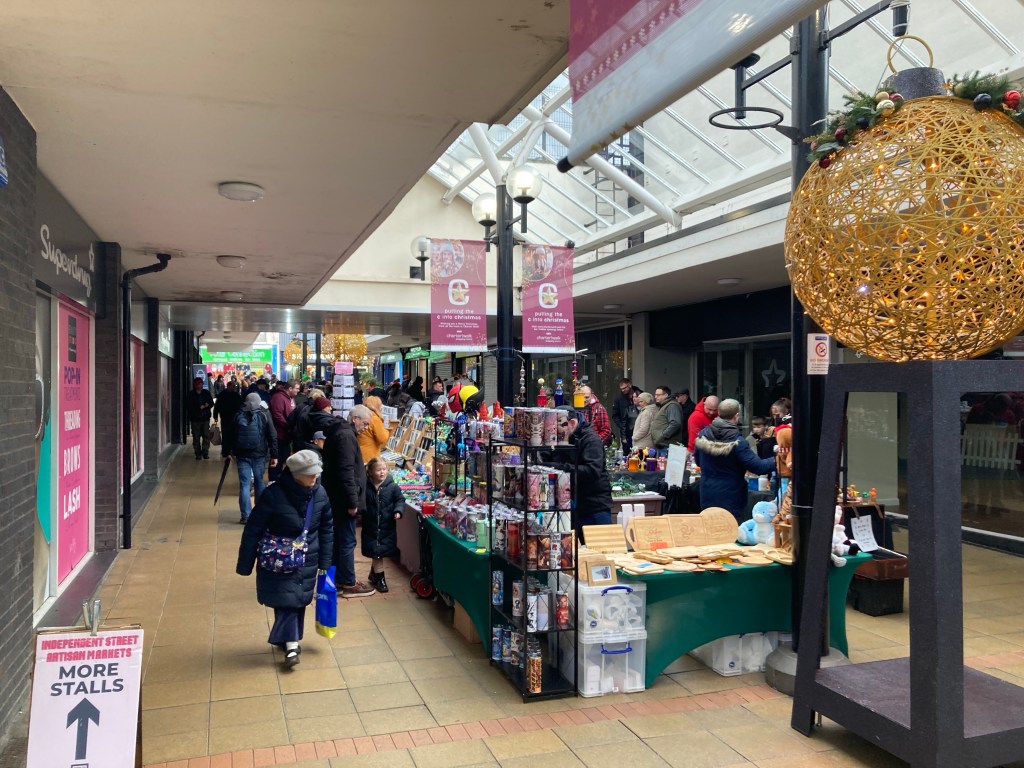
For instance, markets studied in London, like Ealing market, show annual turnovers ranging from £305,000 to £5 million, with additional customer spending at nearby retailers adding hundreds of thousands more to local economies.
Small and medium-sized enterprises (SMEs), the backbone of local retail, including market traders, dominate the UK’s business landscape. In 2024, there were 5.5 million SMEs, comprising over 99% of all businesses, employing 13 million people (47% of the workforce), and generating £1.8 trillion in turnover (36% of the total).
Within retail specifically, SMEs make up more than 99% of the 325,000 businesses in the sector, which collectively turned over £517 billion in 2024 and employed 2.7 million people, 8.3% of total UK employment.
Yet, while large chains capture nearly half of retail turnover, independents and markets drive localised prosperity: they hire locally, source from nearby suppliers, and contribute to a £2.8 trillion SME turnover that represents 52% of private sector revenue.
Case Study: Burnley
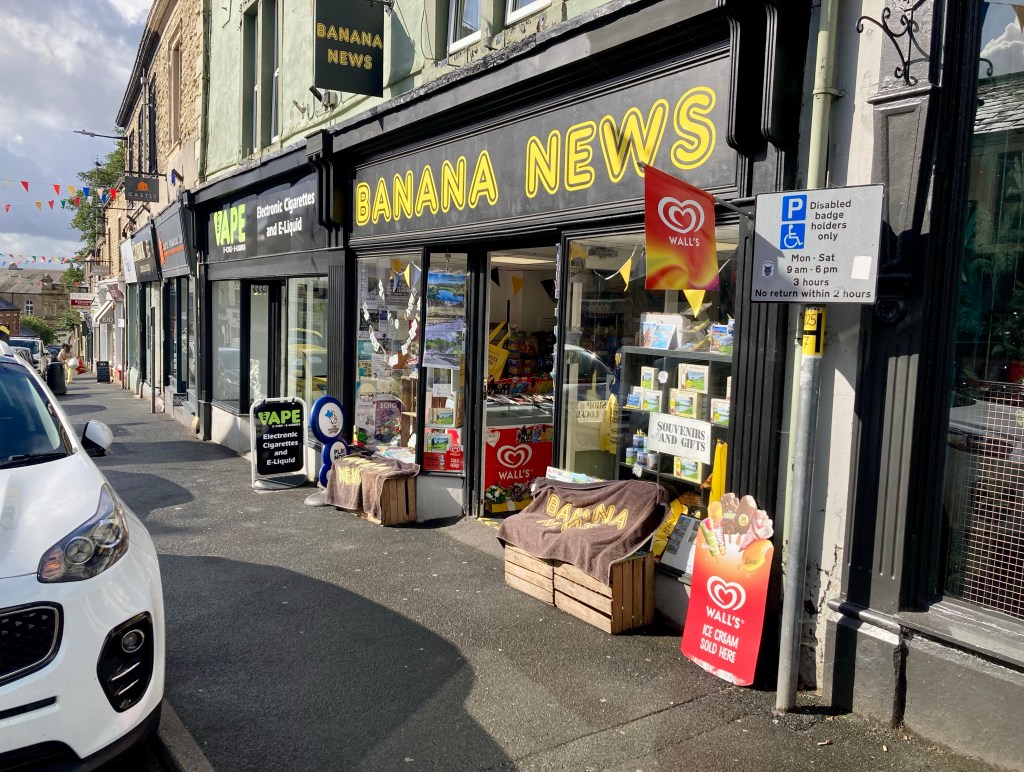
Take Burnley Market in Lancashire, with its 700-year history dating back to a charter in 1294; its modern Artisan Market alone boosts town centre footfall by an average of 3,000 extra visitors on event days, supporting over 60 independent businesses and drawing shoppers from across the region.
I work part-time in a long-established independently-owned cafe in the town centre and some of their highest takings since opening over 9 years ago have been recorded on these Saturdays, so I can vouch for this.
They are highlighted on the rota and the business is fully staffed on these days, so it’s abundantly clear that the benefits of the market to local businesses are not hyperbole!

The profits from such days circulate almost immediately within the local economy, instead of flowing to distant shareholders as they do with supermarkets and chains, but it’s not only about the money.
The atmosphere and reputation of the town benefit too; no-one wants to visit a quiet, boring town with no shops to browse, no cafes to sit in and nobody to natter to, they won’t return, and they will tell their friends.
Towns with quiet high streets die slow deaths.
This value is reflected in surveys, indeed a 2024 survey revealed that we are willing to pay up to 33% more for items from local shops than from large online retailers, a 14% rise from previous years.
Moreover, post-pandemic trends show that 32% of consumers shop more on local high streets than five years ago, with 28% even paying a premium on property values for proximity to vibrant independents and markets.
By choosing to shop locally you’re not just buying goods; you’re investing in the local community and ensuring that it can weather economic storms better than chain-dependent models.

Case Study: Clitheroe
Clitheroe Market has operated since the 12th century, with the first charter granted around 1147 under Henry de Lacy, establishing the town as a key trading hub in the area. By the 19th century, it included fixed fairs and recently £250,000 has been spent on upgrades, including better surfaces and lighting, with the aim of attracting more visitors.
It is open on Tuesdays, Thursdays, and Saturdays from 9am to 4pm and draws shoppers from a wide area, in fact we recently started doing our weekly shop there, with me and my wife taking turns to go on the bus each week.

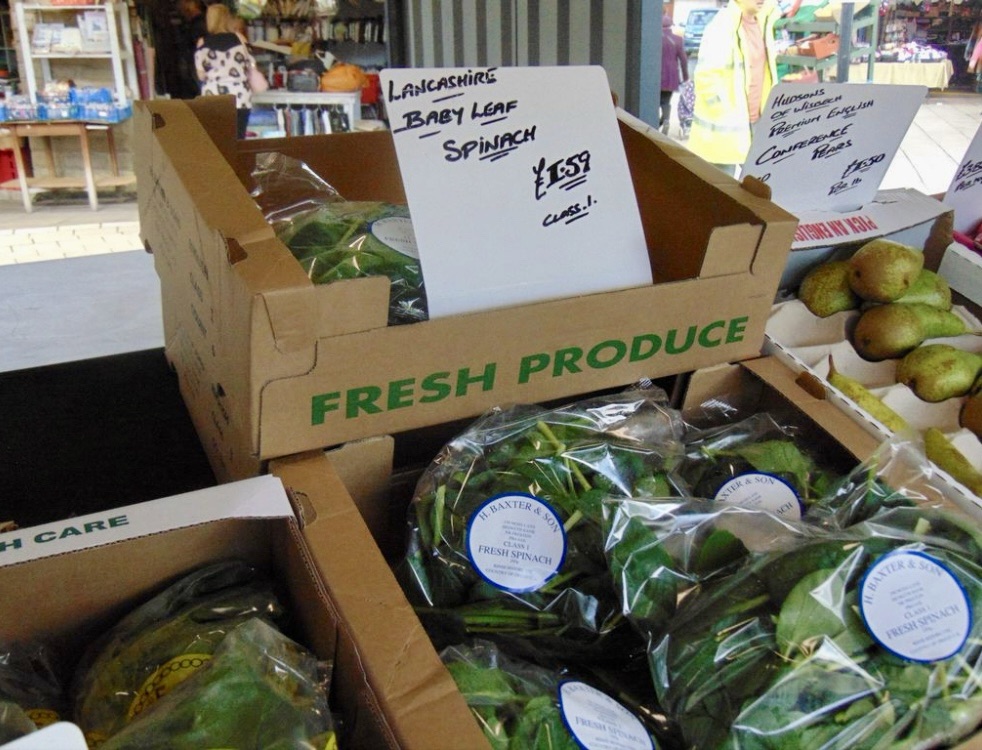


The reasons we choose to buy our groceries from there instead of a supermarket are simple; Quality, Value and Price.
At the moment it costs £3 to travel anywhere by bus, so even if you were to travel from as far away as Preston the cost is not prohibitive, if you were to drive the cost of parking alone would exceed this. At £6 a shopping trip this is better value than the £7 it costs to have a supermarket deliver to your house, plus you get an afternoon out!
We shop at some of the independent businesses here in Padiham, as we’re lucky enough to still have a few left, including 3 excellent family-owned butchers; Bobs, Conlans and Speaks, with the last being the oldest family-owned business in town, but Clitheroe offers a wider choice and has 2 markets, so it’s entirely possible to buy everything we need there.
Below are some price comparisons for groceries in our our last shop that I kept receipts for.
All prices in £/kg and compared to Tesco prices using the nearest equivalent product.
Market Price/ Tesco
Winter Squash. 1.97/ 1.00
Plums 4.30 /3.22
Iceberg Lettuce 0.99 /2.00
New Jerseys 2.64 /2.75
English Apples 2.67 /2.20
Swedes 1.10 /1.29
Parsnips 1.64 /1.40
Green Beans 3.00 /2.50
Broccoli 2.96 / 2.19
Courgette 2.97 / 2.20
Beef Tomatoes 3.30 / 3.00
Vine Tomatoes 2.97/ 2.38
Cherry Tomatoes on the Vine 6.95 / 6.60
Provenance;
Plums from the Ribble valley.
Apples were ‘Ripple’ variety and from Kent.
All tomatoes grown in Lancashire.
All other veg from Lancashire

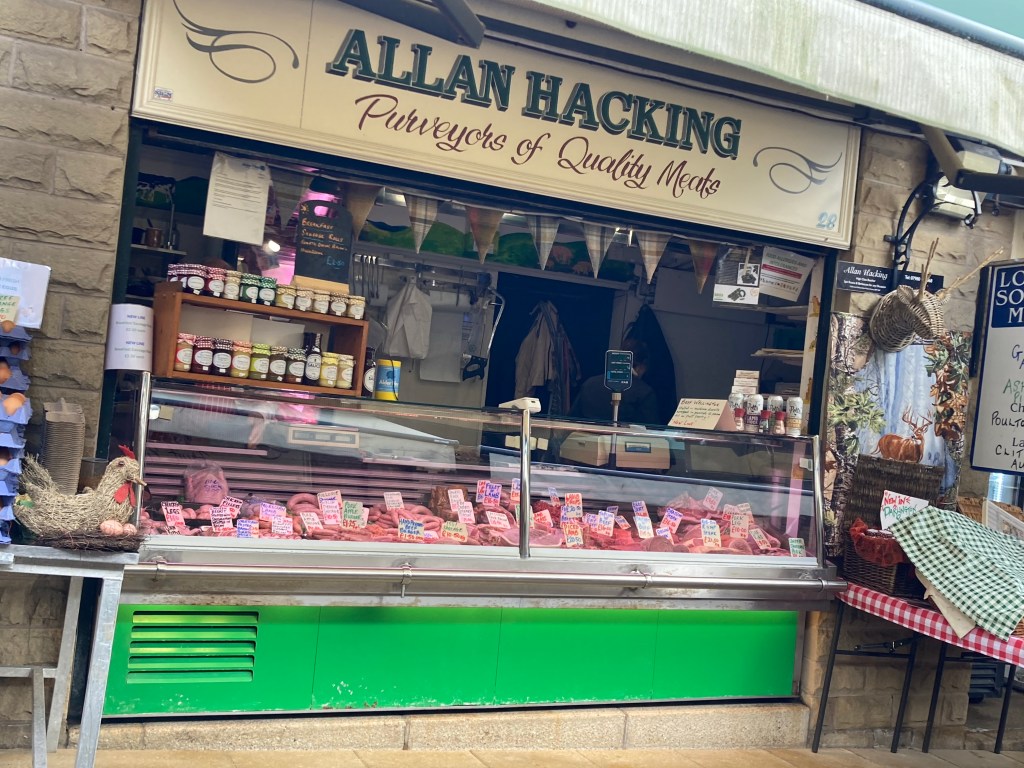


We find that the quality and shelf-life of everything we buy far exceeds that of supermarket products, therefore the lack of wastage makes up for any higher prices, and we also appreciate the lack of plastic packaging and other environmental benefits which I’ll cover later.
Of course not everyone has access to markets like Clitheroe’s or high streets with independent businesses, and as a country we really need to change that.


Clitheroe Country Market
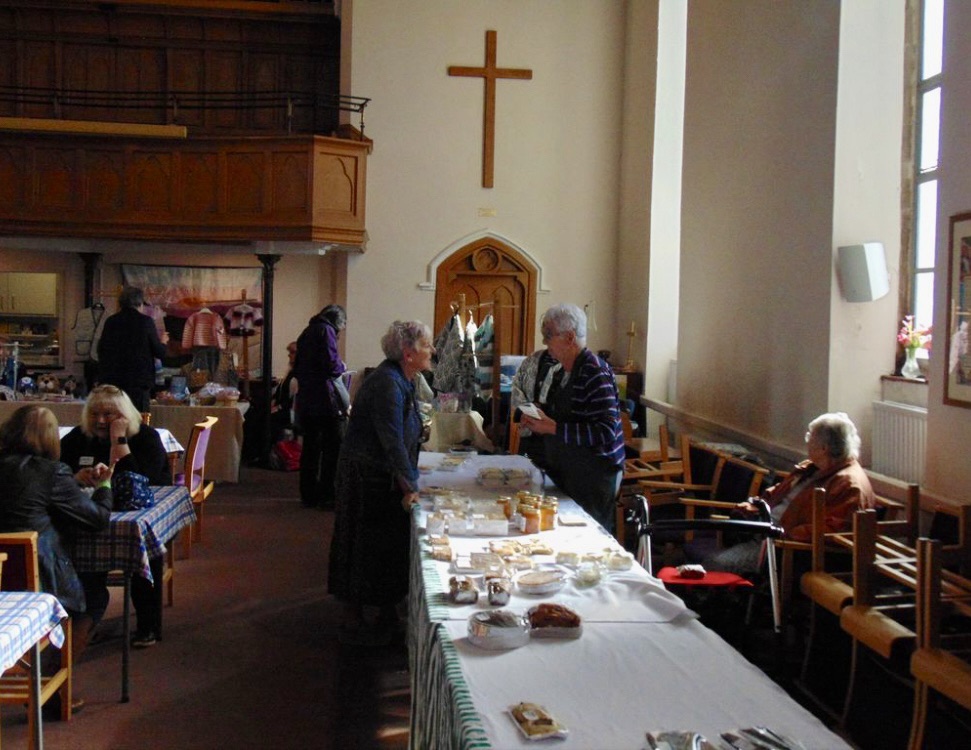
Earlier I mentioned that Clitheroe has two markets, the second one is called Clitheroe Country Market and is more of an artisanal/craft affair, yet still just as essential to the community.
Held weekly in the hall of the United Reformed Church every Tuesday from 9:30am to 12:00, it runs til December the 9th this year (2025) and is part of the broader Country Markets network, a cooperative of over 200 local markets across England and Wales that emphasise home-grown, home-made, and hand-crafted goods.
The market first opened in August 1969 as the W.I. Market (linked to the Women’s Institute) and has been a fixture in Clitheroe for over 50 years. It operates as more of a social enterprise than a profit-driven business, and is run by local volunteers, making for a friendly atmosphere with no obligation to buy.
The market is laid out around about a dozen tables where you can enjoy a cup of tea and a selection of cakes available from a counter at the back of the hall, you can also enjoy anything bought at the food stalls.
It makes for a very pleasant place to sit and relax or socialise, which is precisely the whole idea. Many communities now lack such spaces, especially those served solely by faceless supermarkets, and sadly many of the pubs and clubs which used to fill this role have now closed.

In clement weather a stall is placed outside, on the last day I visited it was selling preserves; including the rather nice Damson jam pictured above.
Inside the hall, which is wheel-chair accessible, are further stalls selling locally baked products including cakes, breads and pastries. Also on sale are high-quality hand-crafted products like woodwork, textiles, jewellery, photography, fine art, cards, and pottery, in fact I’m planning on buying one of the lovely hand-made dishes from the pottery stall for my wife as a Christmas present (please don’t tell her though!)


Environmental Benefits: Reducing our Footprints, One Purchase at a Time
Supermarkets might promise efficiency, but their global supply chains come at a steep environmental cost. Transporting goods across continents contributes significantly to our carbon emissions, with 19 million tonnes of CO2 annually from food imports alone. Local shopping, especially at farmers’ markets, turns this around as independent retailers and markets often source from UK producers, slashing food miles and associated emissions.
For instance, certified farmers’ markets usually require produce to be sourced within 30 to 50 miles (100 miles for London), compared to the average supermarket trolley’s 3,000 miles of travel, reducing emissions dramatically. Buying seasonal produce from a nearby farm shop or market can reduce the carbon footprint of your weekly shop by up to 40% compared to supermarket imports, particularly for high-emission items like out-of-season vegetables flown in from afar.
Beyond sourcing, the act of shopping locally encourages shorter trips, by foot, bike, or (as in our case) public transport, further cutting personal travel emissions, which account for the bulk of ’last-mile’ CO2 in retail.
Markets like Clitheroe’s are models of sustainability, offering locally sourced goods and following eco-friendly practices such as reduced packaging and community recycling schemes.
They are also incredibly valuable for our society.


Building Stronger Communities: The Social Fabric of Local Trade
The intangible benefits of local shopping are perhaps the most enduring. Independent businesses and markets keep the heart of high streets beating, and help fund essential services like libraries and parks through council revenue.
They offer unique products, artisan cheeses, bespoke clothing, or rare books, that chains can’t replicate, cultivating a sense of identity for neighbourhoods. Historic markets like Burnley’s and Clitheroe’s serve as community hubs, providing affordable fresh produce and supporting social interactions for a diverse array of groups, including low-income families, the elderly and ethnic minorities that may not be able to find what they need in profit-focused supermarkets.


This uniqueness builds community pride: shoppers feel connected, knowing their purchases support familiar faces and local stories.
Socially, local shops and market traders donate more to charities and events per sale than chains, which enhances civic life, and during the pandemic they proved to be resilient, with their safe, personalised service drawing people back, 32% more so than pre-2020.
There are benefits for young people and disadvantaged groups too, as these businesses create entry-level jobs and apprenticeships, bolstering social mobility in ways that supermarkets’ standardised models often overlook.
Farmers’ markets, in particular, act as low-barrier entry points for beginning farmers and provide personal interactions that build social capital.


Your Basket, Your Legacy
Every choice to bypass the supermarket trolley for a local till or market stall sustains jobs, shrinks carbon footprints, and knits communities tighter. With SMEs driving nearly half of employment and over a third of turnover, the stakes couldn’t be higher.
Start small, swap one weekly shop for a visit to your high street shops or a farmers’ market. Your wallet will spark a chain reaction of good, proving that local isn’t just better; it’s essential.

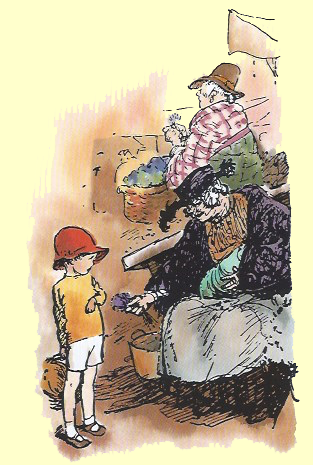
Markey Square, by A. A. Milne
I had a penny,
A bright new penny,
I took my penny
To the market square.
I wanted a rabbit,
A little brown rabbit,
And I looked for a rabbit
‘Most everywhere.
For I went to the stall where they sold sweet lavender
(“Only a penny for a bunch of lavender!”).
“Have you got a rabbit, ‘cos I don’t want lavender?”
But they hadn’t got a rabbit, not anywhere there.
I had a penny,
And I had another penny,
I took my pennies
To the market square.
I did want a rabbit,
A little baby rabbit,
And I looked for rabbits
‘Most everywhere.
And I went to the stall where they sold fresh mackerel
(“Now then! Tuppence for a fresh-caught mackerel!”).
“Have you got a rabbit, ‘cos I don’t like mackerel?”
But they hadn’t got a rabbit, not anywhere there.
I found a sixpence,
A little white sixpence.
I took it in my hand
To the market square.
I was buying my rabbit
I do like rabbits),
And I looked for my rabbit
‘Most everywhere.
So I went to the stall where they sold fine saucepans
(“Walk up, walk up, sixpence for a saucepan!”).
“Could I have a rabbit, ‘cos we’ve got two saucepans?”
But they hadn’t got a rabbit, not anywhere there.
I had nuffin’,
No, I hadn’t got nuffin’,
So I didn’t go down
To the market square;
But I walked on the common,
The old-gold common…
And I saw little rabbits
‘Most everywhere!
So I’m sorry for the people who sell fine saucepans,
I’m sorry for the people who sell fresh mackerel,
I’m sorry for the people who sell sweet lavender,
‘Cos they haven’t got a rabbit, not anywhere there!
A.A. Milne
Thank-you
Thank-you to all of the market traders that I spoke to, the staff at Cowman’s, David Brass at Banana News, Sue Marsden at Ribble Valley Cards and Ruth Postlethwaite who both told me all about the Country Market and gave me permission to take photographs.
If you enjoyed this article please consider showing your appreciation by buying me a coffee, every contribution will go towards researching and writing future articles,
Thank-you for visiting,
Alex Burton-Hargreaves
(Sep 2025)
 Northwest Nature and History