The Legend of the Crier of Claife is one of the Lake District’s most famous and has been retold many times over the centuries.
It begins in the medieval era with a monk from ancient Furness Abbey, a Cistercian monastery founded in 1123 on the Furness Peninsula. Tasked with redeeming the souls of wayward women, this unnamed monk fell deeply in love with one of his charges, a local lady whose rejection (or perhaps the impossibility of their union due to his vows) drove him to despair.
Overcome with grief, he fled to the remote Claife Heights on the western bank of Windermere, where he wailed in agony until his death.
But, as this version of the tale has it, death did not silence him; his restless spirit lingered, eternally calling out “Boat!” or “Ferry!” across the lake to summon passage from the eastern shore at Ferry Nab.
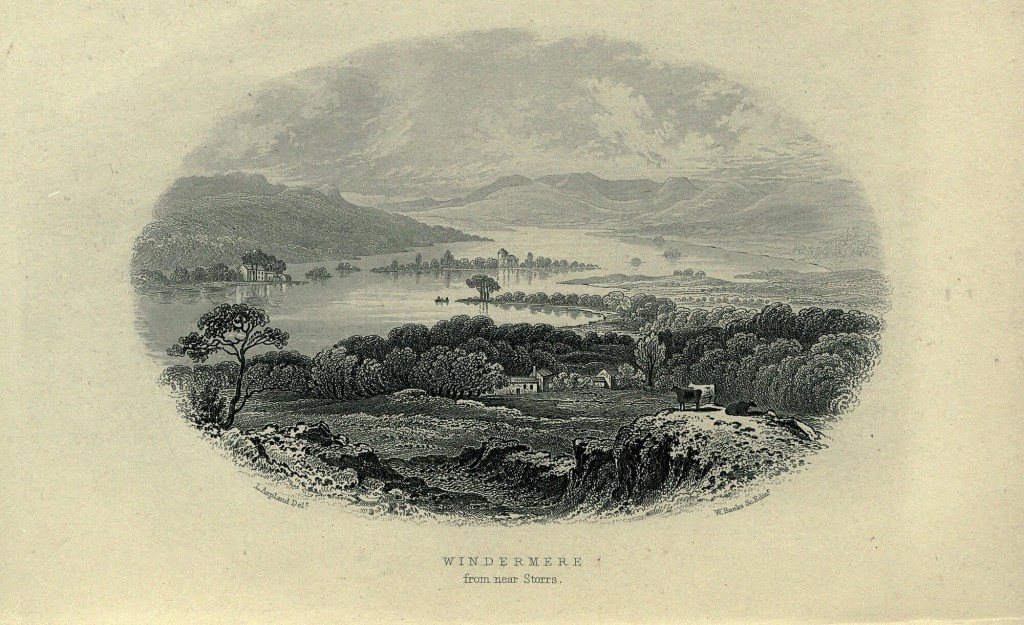
A Complete Guide to the English Lakes
‘Twixt Ferry Nab and Sawrey
For generations, ferrymen operating the historic crossing betwixt Ferry Nab and Sawrey knew better than to heed these unearthly cries after dark, for they knew that these were no ordinary pleas but rather the desperate howls of a damned soul.
One fateful stormy night a bold, or perhaps foolhardy, newcomer ignored the warnings of his peers and rowed into the gloom toward the voice. He returned alone, his face ashen with terror, his mind shattered.
Unable to speak of the horror he encountered, he succumbed to a fever and died days later.
From then on, the cries persisted, instilling fear in locals and travelers alike and, desperate for relief, the community summoned holy aid. In some versions, monks from Furness Abbey or an Augustinian from the chantry on Lady Holme island performed an exorcism.
Armed with the essential weapons of bell, book, and candle, the exorcist confronted the spirit on a stormy Christmas Day, binding it to an old slate quarry on Claife Heights. The ghost was confined there “until men should walk dryshod across the lake,” a poetic decree meaning forever, unless Windermere freezes over or dries up entirely.
Though bound, the Crier’s wails are still occasionally heard on windy nights, a reminder that some torments transcend the grave.
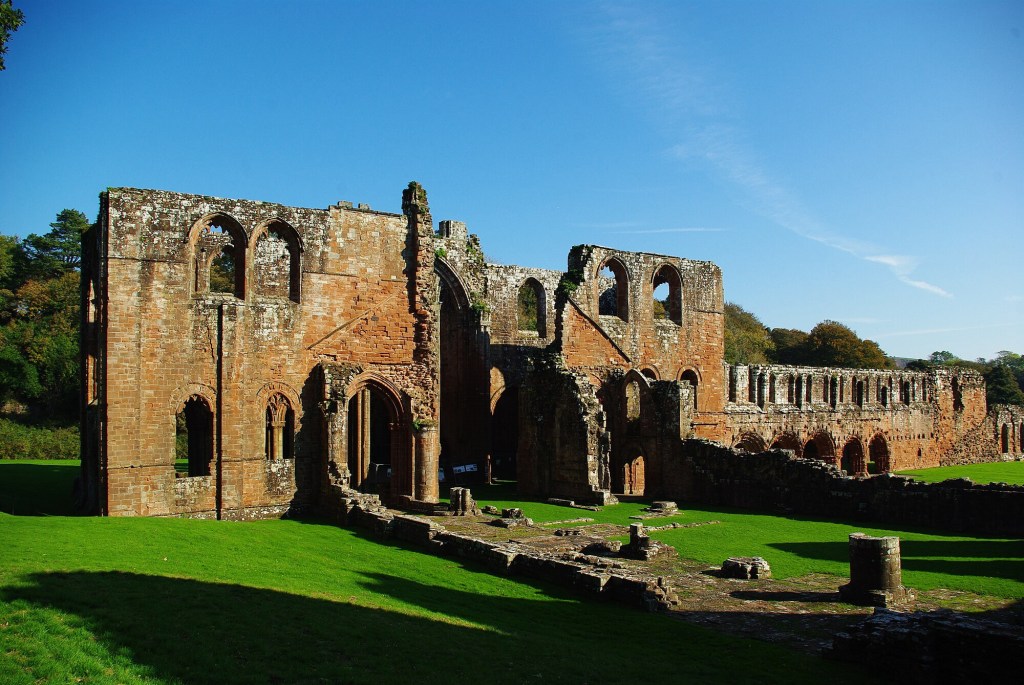
(Kevin Waterhouse)
The History of the Legend
The history of the Crier of Claife legend traces back to at least the early 19th century, with the earliest known written account appearing in a Christmas ghost story published in The Kendal Mercury on December 25, 1852, under the pseudonym ‘Snow Drop,’ setting the events around 1522.
This was followed by a detailed retelling in Harriet Martineau’s A Complete Guide to the English Lakes in 1855, which helped popularise the tale among Victorian tourists. Oral traditions of the story predate these, and were probably inspired by natural phenomena like the wind howling through the fells, or the cries of a Great Northern Diver, (a bird known as a Loon by Americans) which early inhabitants mistook for supernatural cries.
These motifs echo northern European folklore such as the Wild Hunt or Gabriel’s Hounds, once referenced by William Wordsworth in The Prelude.
The story’s medieval roots tie it to real historical sites; Furness Abbey (dissolved in 1537 during the Reformation) and the Windermere ferry, operational since the 14th century. By the 1850s, the name “Crier of Claife” appeared on Ordnance Survey maps, marking a disused quarry and making it the only ghost explicitly named on such charts, (a fact often cited in pub quizzes)
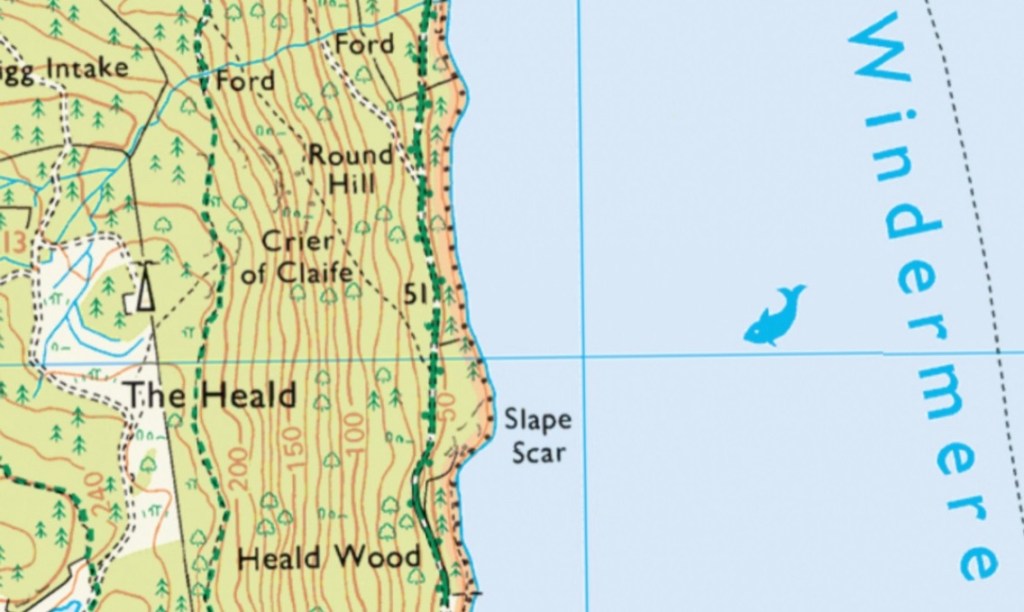
Over time, the legend evolved, incorporating various elements, with one version centred on a ferry disaster that occurred in 1635, when a vessel, known as the “Great Boat,” capsized and sank, killing 47 people, including a newly married couple.
In the Victorian era the story, like many others, was romanticised and Christianised reflecting the era’s fascination with gothic tales.
Today, it endures as Cumbria’s most famous spectral tale, and still influences local culture, until recently the Sawrey Hotel (now re-named the Cuckoo Brow Inn) even had a lovely little bar called the Claife Crier Bar.
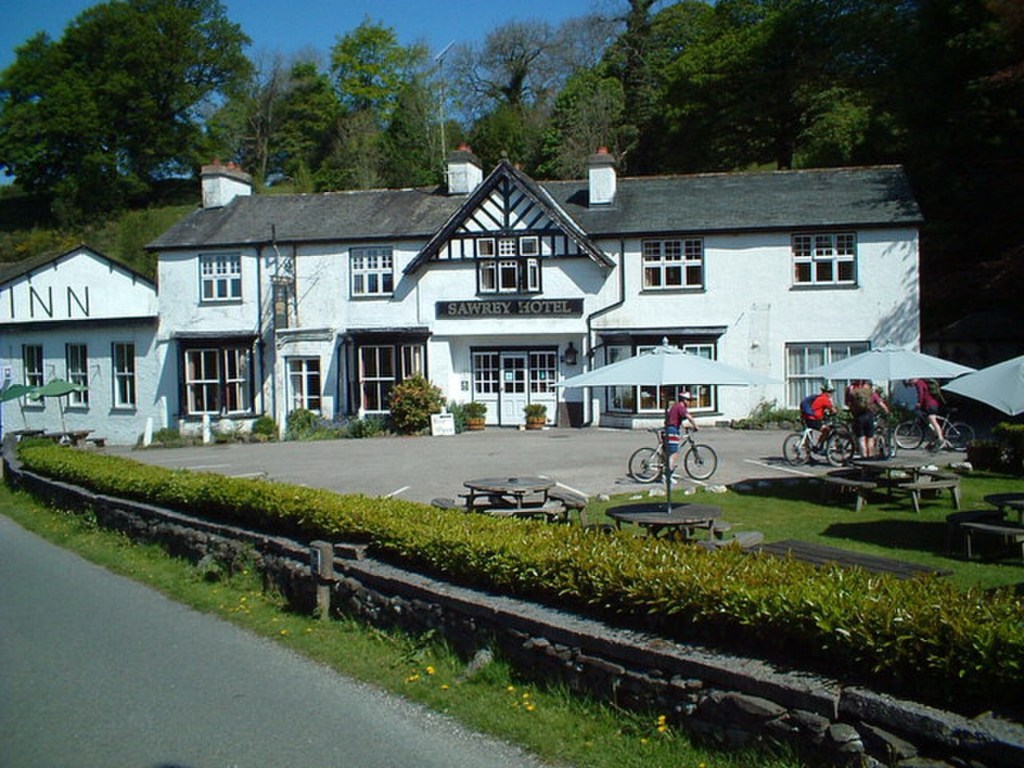
(Paul Rudge)
Sceptics, however, like antiquarian Alexander Craig Gibson, writing in The Lakeland of Lancashire No II. Hawkshead Parish, published in 1867, attribute the sounds to specific wind patterns from the nearby mountain of Gummers How;
“Still to the south rises the fine, bold, but not high hill called Latterbarrow, which there divides the vales of Esthwaite and Windermere.
On the wildest and most lonely part of this height, for it is scarcely a hill, there is an extensive slate or flag quarry, long disused and overgrown with wood, some of which is of considerable age.
This desolate spot bears the singular name, singular as applied to an extinct quarry, of The Crier of Claife, whereby hangs a legend, the leading particulars of which may be given here, as indicating the character of the current traditions of that locality.
“It is said that, more than three hundred years ago, “The Ferry” on Windermere was haunted by a troublesome night walker, crying in a manner that enforced attention, from the Westmoreland shore, for a boat; the most urgent and most awful appeals always coming on the most stormy nights.
One of the ferrymen who attended to this weirdly hail when first heard, and rowed across the lake against a fierce gale from the southeast, returned with an empty boat, horror-stricken and dumb, continuing speechless for some days and then dying.
Travellers began to avoid the ferry, for the crier continued to haunt the knab every stormy night; and “over all there hung a cloud of fear,” so that few cared to venture near it even by day, and to the well-accustomed hostelry might at length be applied the often-quoted words:”A merry place, ’twas said, in days of yore, But something ail’d it now – the place was cursed.”
It thus became desirable that something should be done to abate this fearful nuisance, and naturally the monks of Furness were appealed to for aid.
These holy men commissioned a brother of noted sanctity and skill to exorcise and lay the apparition, who had come to be known throughout the country by the title of “The Crier of Claife”.
He soon accomplished the object of his mission and succeeded in shutting up the crier in the desolate quarry, which has ever since borne the same name: a dreary spot, worthy of its story.
None of the country people will go near it after nightfall and few care to approach it even in daylight. Desperate men, driven from their homes by domestic discord, have been seen to be going in its direction and never known to return.
It is said that the crier is allowed to emerge occasionally from his lonely prison, and is still heard on very stormy nights sending his wild entreaty for a boat, howling across Windermere. I am qualified to speak to this, for I have heard him myself; or at least I have heard what I was solemnly assured by an old lady at Cunsey must have been the Crier of Claife.
Riding down the woods a little south of the Ferry, on a wild January evening, I was strongly impressed by a sound made by the wind as, after gathering behind the hill called Gummershow for short periods of comparative clam, it came rushing up and across the lake with a sound startlingly suggestive of the cry of a human being in extremity, wailing for succour.
This sound lasted till the squall it always preceded struck the western shore, when it was lost in the louder rush of the wind through the leafless woods.
I am induced to relate this by the belief I entertain that the phenomenon described thus briefly and imperfectly, may account for much of the legend, and that the origin of many similar traditional superstitions may be found in something equally simple.”
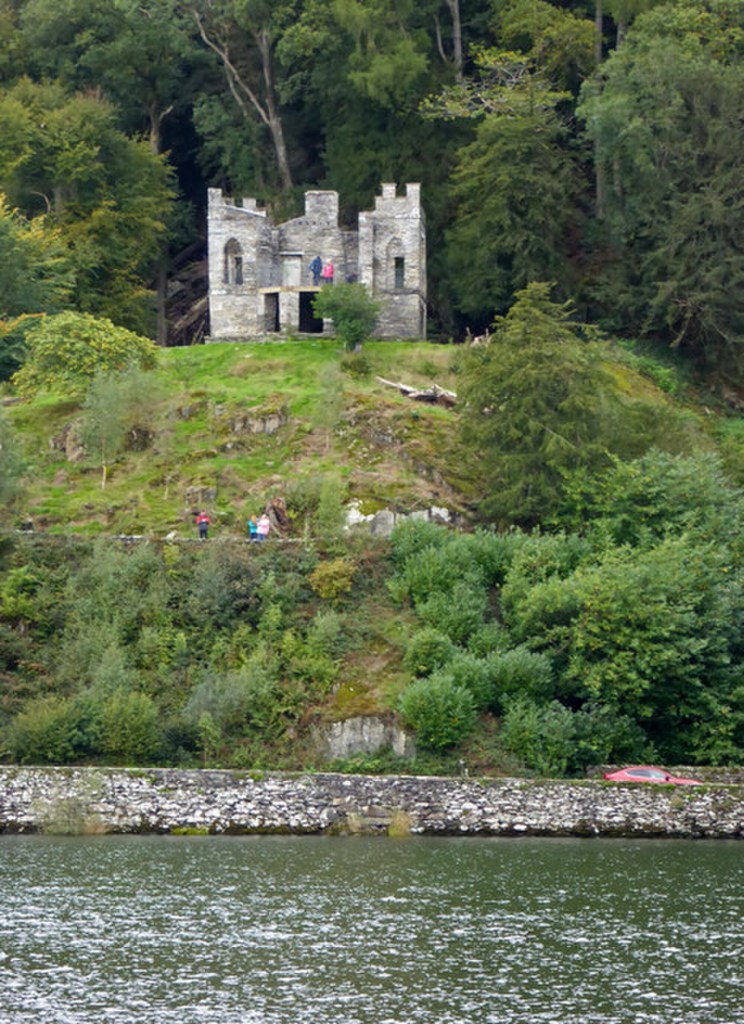
(Chris Allen)
Modern Echoes
The legend of the Crier of Claife is now firmly part of Lake District culture, inspiring poets like John Pagen White, who versified the tale in his 1873 collection Lays and Legends of the English Lake District and contemporary writers like P.J Scribbans, who based his debut novel on it; The Mereland Chronicles, published in October 2025.
It’s even become a staple of ghost tours and Halloween events, with the National Trust maintaining paths around Claife Viewing Station, a Georgian folly offering panoramic views of Windermere, ironically built for leisurely admiration rather than ghostly encounters. Modern reports from ramblers describe shadowy hooded figures stalking the woods or unexplained cries on foggy evenings, helping to keep the legend alive in an age of scepticism.
For those brave enough to visit, Claife Heights offers stunning hikes, but locals advise sticking to daylight hours.
Whether the Crier is a heartbroken monk, a trick of the wind, or something more sinister, it serves as a reminder of the thin veil between the living and the lost in this enchanting yet eerie corner of England.
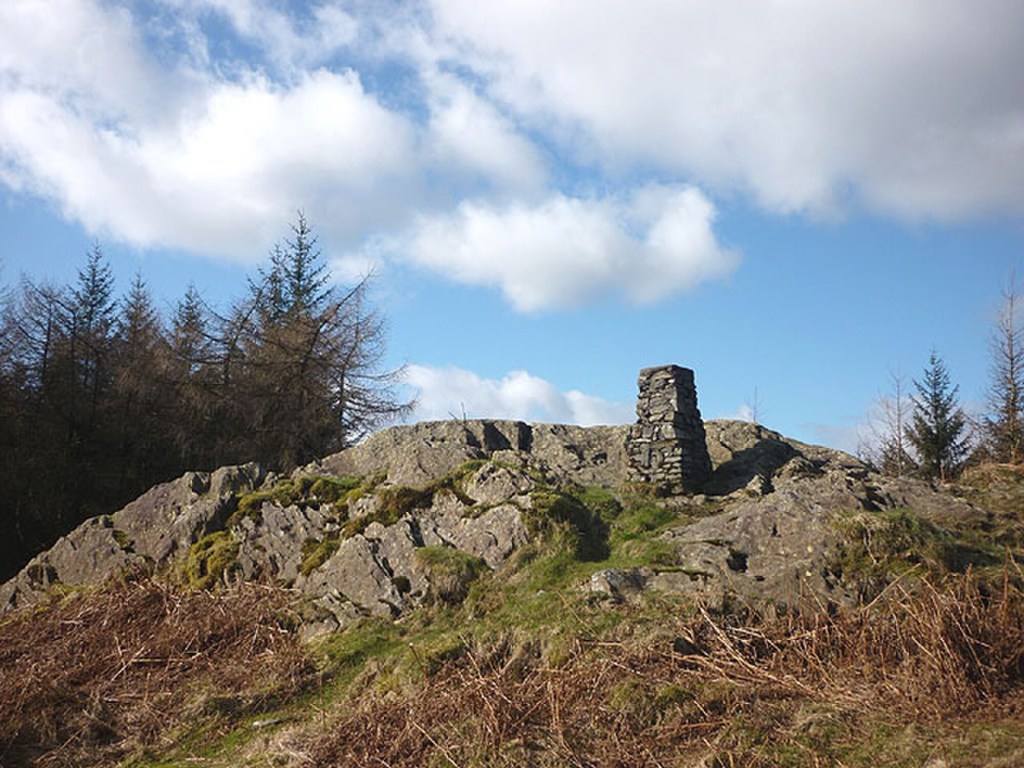
(karl and Ali)
If you enjoyed this article please consider showing your appreciation by buying me a coffee, every contribution will go towards researching and writing future articles,
Thank-you for visiting,
Alex Burton-Hargreaves
(Oct 2025)
 Northwest Nature and History
One thought on “Unnatural Histories; The Crier of Claife”