Version 2 of an article originally published in 2023, looking at the land management practice known as controlled burning, heather burning or muirburn, updated and amended with latest research, data, policy and regulations

Controlled burning, also known as prescribed burning, muirburn, or heather burning, is a long-established land management technique used primarily on the heather moorlands of the British Isles.
This practice involves deliberately setting small, managed fires to vegetation like heather to promote regeneration, maintain biodiversity, and reduce wildfire risks. However, it has become increasingly controversial due to environmental concerns, including contributions to climate change, soil erosion, and habitat disruption.
This updated version of an article I first published in 2023 explores the mechanics, benefits, drawbacks, and evolving regulations of controlled burning, incorporating recent developments as of November 2025.
(For Change Log please see below)

How Controlled Burning Works
Each year, during designated seasons; October the 1st to April the 15th in upland areas and November the 1st to March the 31st elsewhere, teams of gamekeepers, farmers, and local volunteers conduct burns when conditions are safe (dry weather with predictable winds). These periods avoid bird breeding seasons to minimise wildlife disturbance.
Teams use specialised equipment, such as paraffin torches for ignition, fogging units (resembling small fire engines) for extinguishing runaway fires, and vehicles for mowing boundaries around burn sites.
Strips of heather are pre-selected to create a mosaic habitat ideal for species like the Red grouse (Lagopus lagopus scoticus), providing young shoots for feeding chicks and dense cover for protection from avian predators like Peregrine falcons or Hen Harriers.

Environmental Impacts and Concerns
Proponents argue that controlled burning mimics natural processes, such as historical grazing by herbivores or lightning-sparked wildfires, which once shaped moorlands. In today’s fragmented landscapes, however, large herbivores are absent, and uncontrolled fires are suppressed to protect communities.
Critics highlight risks like soil erosion on fragile acidic uplands, leading to silt and peat runoff into waterways. Burning also releases CO2 and particulates, contributing to atmospheric pollution, though on a smaller scale than wildfires. A 2025 review by the Stockholm Environment Institute (1) examined 10 key claims about heather burning, concluding it can result in net carbon loss but varies by site conditions.
Recent studies, including one from Natural England in March 2025 (2), suggest burning may negatively affect upland peatland biodiversity, carbon storage, and water quality.
Conversely, a 2025 study on moorland management (3) compared burning to cutting methods, finding initial effects on vegetation similar but with varying impacts on early-season biodiversity.

Alternatives and Research
With growing scrutiny, alternatives like mowing, cutting, and grazing are being trialed. Institutions such as York University (4) and the Game and Wildlife Conservation Trust are researching these, concluding no single method fits all scenarios, different approaches suit varying moorland conditions. For instance, robotic and brush cutting show promise in reducing fire intensity while promoting regrowth.
The Heather and Grass Management Code 2025, published by Natural England, emphasises non-burning options like rewetting peatlands and increased grazing, stating that healthy peatlands do not require fire.
A Cambridge University paper notes that controlled burns could offset some carbon emissions through habitat restoration, but evidence remains mixed (5).

Legal Landscape
Natural England oversees licensing for burns, requiring permits for sensitive sites. The Heather and Grass etc. Burning (England) (Amendment) Regulations 2025, effective September the 30th, 2025 (6), lowered the peat depth threshold for licensing from 40cm to 30cm and expanded coverage to Less Favoured Areas, affecting over 676,000 hectares. This aims to protect peatlands, improve air quality, and reduce flood risks.
Environmental group Wild Justice has pushed for stricter rules through consultations and legal challenges (7), influencing the 2025 amendments but not achieving a full ban. Counter-arguments from the British Association for Shooting and Conservation (BASC) and Moorland Association (8) warn that restrictions could increase wildfire fuel loads.
The House of Lords debated these changes on October the 30th, 2025, expressing regrets over potential wildfire risks (9).

Global Context and Wildfires
In countries like the USA, Australia, and Southern Europe, prescribed burning is standard for wildfire prevention. The UK, facing a growing wildfire season due to climate change, saw record incidents in 2025 (10); over 996 responses by fire services, burning more than 47,879 hectares, surpassing previous records (11) (12). Notable events include a 500-hectare blaze on Dartmoor in May and a major fire on the North York Moors in September, fueled by overgrown vegetation.
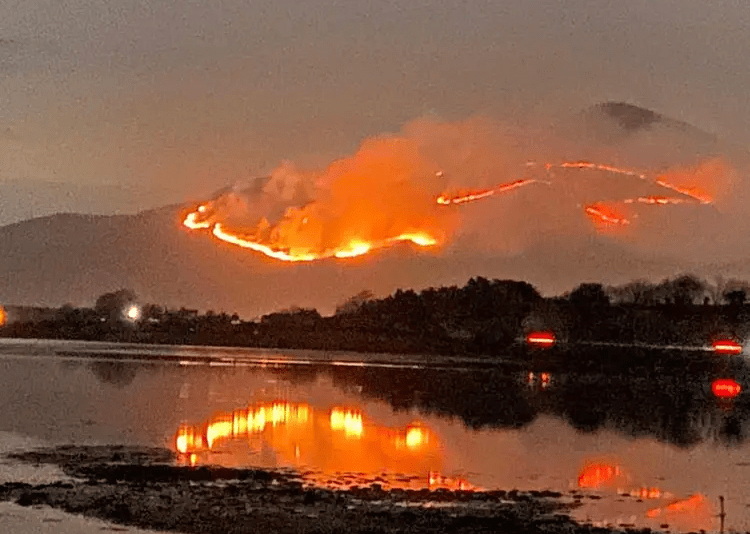
Past UK wildfires, like Saddleworth Moor (2019) and Mourne Mountains (2021, over 200 hectares), released far more emissions than controlled burns.
Public Perception
The sight of flames on moors can alarm urban populations, now over 84% of the UK, who are increasingly disconnected from rural cycles. Major landowners like the National Trust and RSPB, reliant on public donations, often favor non-burning methods for positive perception, even if less effective in some cases.
Conclusion
Controlled burning remains a tool for managing moorlands and supporting species (14) like the Emperor moth, Curlew and Golden Plover, but evolving evidence and policies push toward sustainable alternatives.
As climate change intensifies wildfire risks, balancing tradition, science, and public views will shape the future of UK uplands.
References
(1) Stockholm Environment Institute (SEI):“Prescribed heather burning on peatlands: a review of ten key claims” (2025)
(2) Defra press release: New proposals to ban heather burning on peatland to protect air, water and wildlife
(3) York University: Research on moorland management (2023, affirming varied methods)
(4) British Ecological Society: The impact of moorland cutting and prescribed burning on early changes in above-ground carbon stocks, plant litter decomposition and soil properties
(5) Cambridge University: “Controlled burning of natural environments could help offset our carbon emissions” (peer-reviewed).
(6) Natural England: Wildfire Evidence Review (2020, updated insights in 2025 Code)
(7) Wild Justice Burning Bogs
(8) BASC Defra burning ban will add fuel to wildfires
(9) Hansard: Heather and Grass etc. Burning (England) (Amendment) Regulations 2025 Volume 849: debated on Thursday 30 October 2025
(10) International Fire & Safety Journal (IF&SJ): What is a wildfire and why the UK wildfires 2025 matter more than ever
(11) National Fire Chief’s Council (NFCC): New wildfire record sparks urgent call for fire service investment
(12) National Preparedness Commision: The scope and scale of UK Wildfire in 2025
(13) Moorland Trust: Fuel Load and Flame Length on Heather Moorland: What the Science Tells Us
(14) German Study: Fire enhances heathland bird densities on military areas.
For the latest regulations, visit GOV.UK.

Author’s Notes and Change Log
Although I intended my original article to be accessible and unbiased I was never entirely satisfied that it was, and felt that it read rather clumsily.
With this updated version I’ve attempted to address this, here is a log of the changes I’ve made since publishing the original.
Change Log
• Added new summary section on practice, pros, cons, and controversy.
• Reorganised structure with subsections/headings; shortened paragraphs for better flow.
• Clarified phrasing, using ‘active voice’ with no run-ons; added simplified definitions; improved neutrality with counter-evidence.
• Added 2025 updates to research and data (e.g; SEI review, Heather Code, wildfire stats; 996+ incidents, 47,879+ hectares etc)
• Updated with 2025 regulations and policy (30cm peat threshold, expanded licensing); included debates and Wild Justice role.
If you enjoyed this article please consider showing your appreciation by buying me a coffee, every contribution will go towards researching and writing future articles,
Thank-you for visiting,
Alex Burton-Hargreaves
(Nov 2025)
 Northwest Nature and History
2 thoughts on “The Controversial Practice of Controlled Burning (v2)”