A Lancashire Dialect Weaving Poem by An Operative, part of my Cotton Chronicles Series

Hum, whirl, click, click, clatter,
Rolling, rambling, moving matter:
Whizzing, hissing, hitting, missing,
Pushing, pulling, turning, twisting.
Buzz, bang, going, coming,
Standing, creeping, walking, running,
Piecing, breaking, starting, stopping,
Picking, mixing, fixing, copping.
Push, rush, cleaning, oiling,
Slipping, sweating, screaming, toiling:
Fetching, taking, spoiling, making,
Saucing, swearing, bagging, bating.
Here, there, this way, that way,
Bad-end, nar-here, fur-on, up-there;
Break-it-out, wind-it-off, hurry piece-up,
Get-em-up, quick, or a’st ha’ to stop.
Steam, dust, flyings choking,
Stripping, grinding, brushing, jolting;
Full time, short time, no time – so that
Enough’s in a mill without Surat!
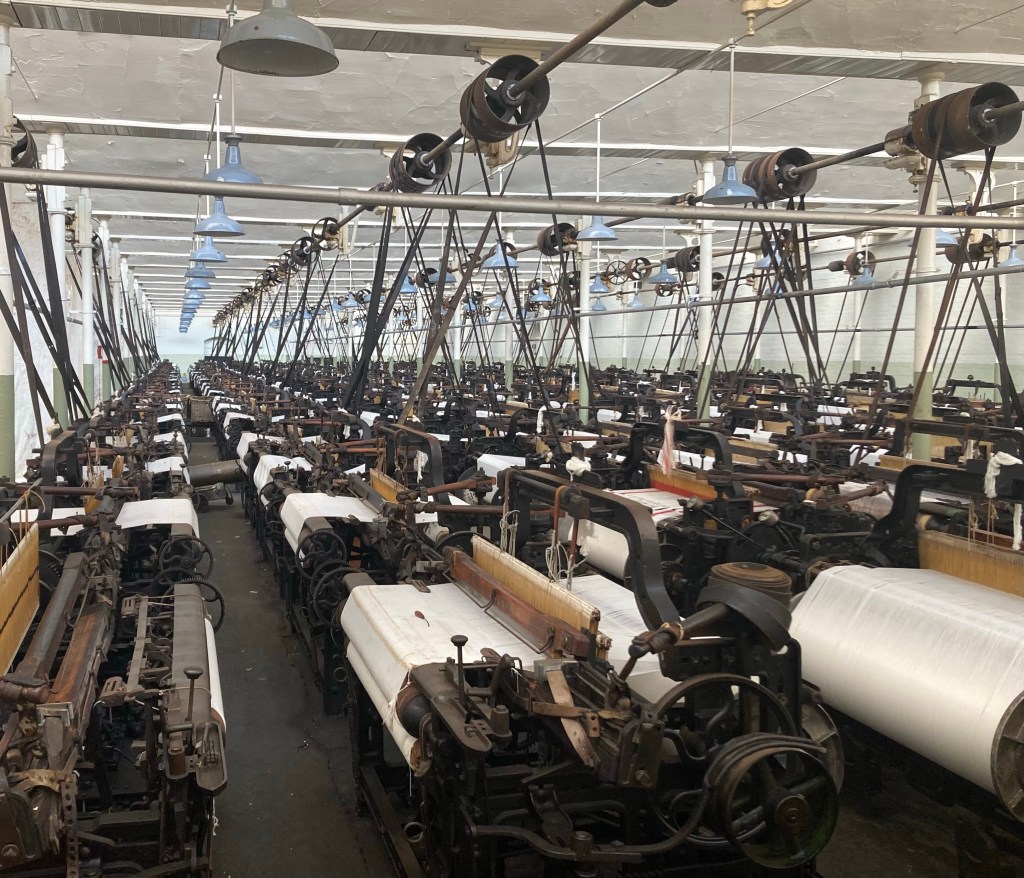
‘The Cotton Mill’ poem, signed anonymously by “An Operative” from Bolton, was published in the Bolton Chronicle on September the 24th, 1864.
Written at the height of the Lancashire Cotton Famine (1861 to 1865), caused by the American Civil War’s disruption of cotton supplies to Britain, it vividly and effectively depicts the gruelling, relentless realities of mill work.
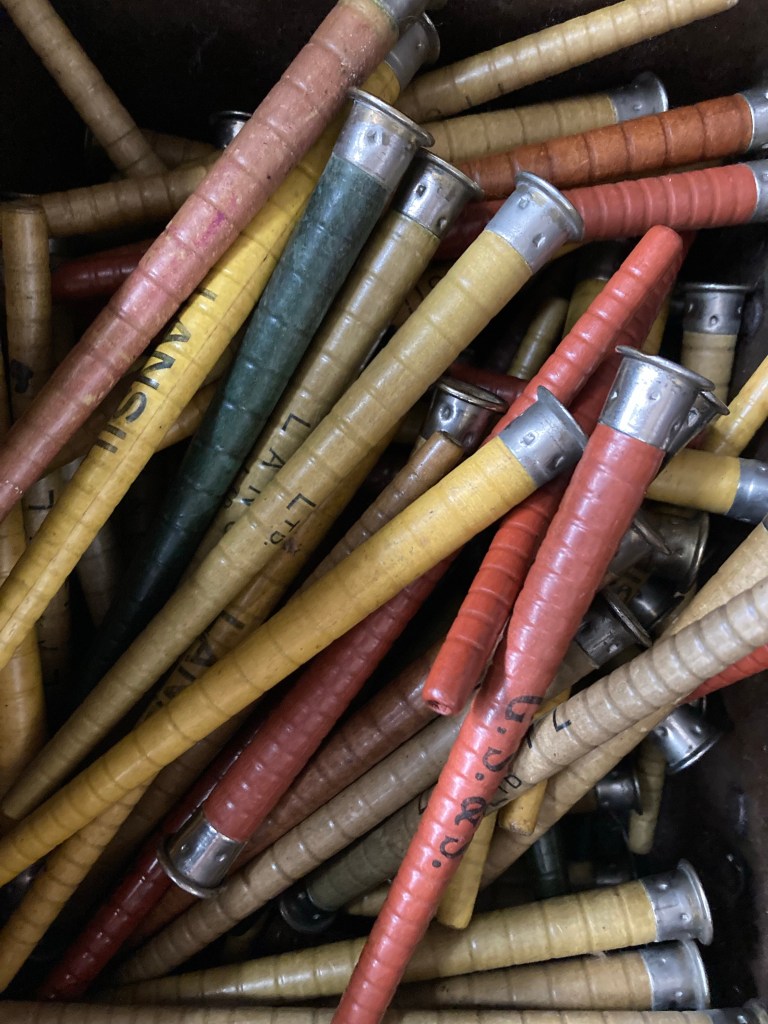
The mill jargon would have been understood by the majority of the population at the time, “piecing” referring to the process of joining broken threads to keep the weaving going without a break (weavers worked “piecemeal” so if work stopped so too did their pay) and “copping” being the winding of spun yarn onto a cop, which is a cylinder of yarn wound on a spindle or bobbin to be ready for weaving.
The dialect phrase “a’st ha’ to stop” translates as “all will have to stop,” because if a snapped yarn wasn’t pieced together quickly the loom would indeed have to be stopped.
The last stanza repeats “time” thrice; “Full time, short time, no time,” a powerful device to grab the reader and shake him into the understanding that life in the cotton mills was about time above everything else.
Finally the culminating exclamation; “Enough’s in a mill without Surat!” is a dig at the inferior cotton imported from India as a substitute for American supplies during the famine. Weavers despised Surat utterly because it was short-stapled so difficult to process, leading to lower productivity and reduced wages.
For many of them the day a mill started using Surat could be the straw that broke the camels back, things were bad enough already as the famine brought destitution and hardship to over 400,000 in Lancashire alone.

If you enjoyed this article please consider showing your appreciation by buying me a coffee, every contribution will go towards researching and writing future articles,
Thank-you for visiting,
Alex Burton-Hargreaves
 Northwest Nature and History