Let him that is no coward nor no flatterer,
But dare maintain the party of the truth,
Pluck a red rose from off this thorn with me.
Act 2, Scene 4 from William Shakespeare’s Henry VI, Part 1
The story of the Red Rose of Lancashire begins in the 14th century with the royal House of Lancaster when this noble family, descended from John of Gaunt, Duke of Lancaster, adopted the red rose as a heraldic badge, a simple yet striking emblem used to identify supporters in an era of shifting alliances and feudal loyalties.
The badge, blazoned as ‘a rose gules’ (a red rose), was not originally tied to the county of Lancashire itself but to the ducal house that held vast lands here, including the Duchy of Lancaster.
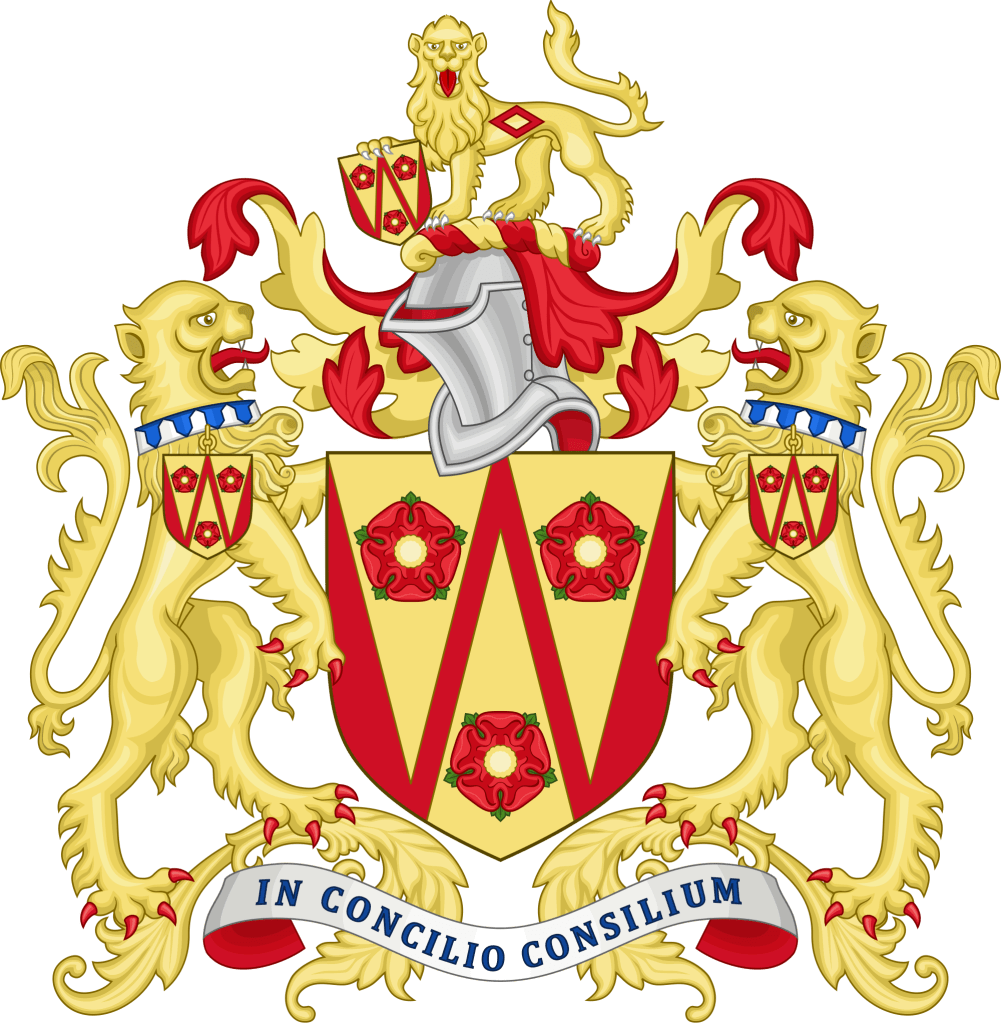
The motto: ‘IN CONCILIO CONSILIUM’ translates as ‘In council is wisdom’
The Wars of the Roses
The rose’s prominence came during the Wars of the Roses (1455 to 1487), a series of civil wars pitting the House of Lancaster against the House of York. The conflict, romanticised in later literature by writers like Shakespeare, saw Lancastrians rally under the red rose, while Yorkists bore the white rose.
Though the rose symbols were not as rigidly defined during the wars as popular myth suggests, historians noting that the “Wars of the Roses” name was coined by 19th-century writer Sir Walter Scott, the red rose became indelibly linked to Lancaster’s cause.
The wars ended with the victory of Henry Tudor (Henry VII) at the Battle of Bosworth in 1485, a Lancastrian descendant who cleverly united the symbols by marrying Elizabeth of York, creating the Tudor rose: a red rose overlaid with a white one.
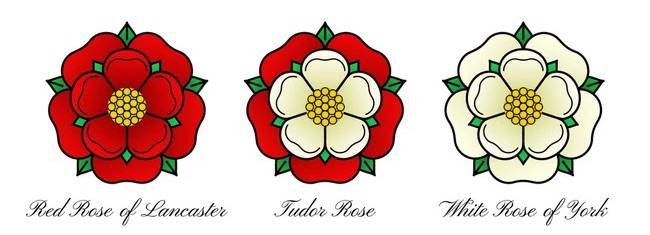
Symbol of Lancashire
It was in the centuries following the Tudor victory that the red rose transitioned from a royal emblem to a symbol of Lancashire as a whole.
The association likely developed retrospectively, as the House of Lancaster’s legacy grew entwined with the county’s identity much like a briar-rose tangles within its hedge. By the 19th century, the red rose started appearing in local heraldry, including the arms of Lancashire County Council, which features three red roses on a silver field.
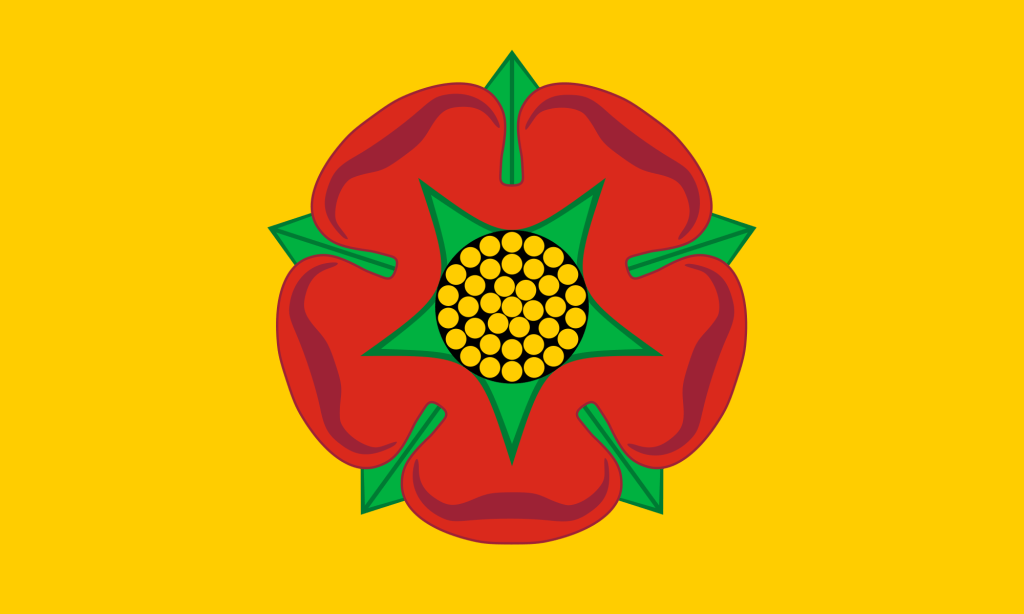
In 2008, the official flag of Lancashire was registered, displaying a single red rose on a gold background, a design chosen to avoid clashing with other emblems and to honor the historic symbol.
Today, the red rose adorns everything from sports kits, like those won by Lancashire in the Roses cricket match against Yorkshire, to boxes of tea, and is as widely recognised as the running fox of Leicestershire or the 3 seaxes of Essex, if not more so.

Lancashire, Real Lancashire
by Betty Lightfoot
Lancashire, real Lancashire is a county with soul,
Woven in cotton, our native pride flows
from Pendle Hill country with its bastions once bold,
down river valleys, up steep cobbled roads,
to Old Trafford’s ground and the Veladrome’s bowl,
pride in our past has been nurtured, and grows
to blossom and bloom alongside our rose,
King Cotton’s shuttle still binds young and old.
Tended with love by a gardener who knows
our county’s symbol has served many roles.
Admired by our Duke – or so I’ve been told
the Red Rose of Lancashire is a sight to behold.
A sign saying ‘welcome’ proud natives know
Lancashire, real Lancashire, is a county with soul
If you enjoyed this you can show your appreciation by buying me a coffee, every contribution will go towards researching and writing future articles,
Thank-you for visiting,
Alex Burton-Hargreaves
(Feb 2026)
 Northwest Nature and History