A Little Guide to Spotting Butterflies and Moths on the Dunes of the Fylde Coast
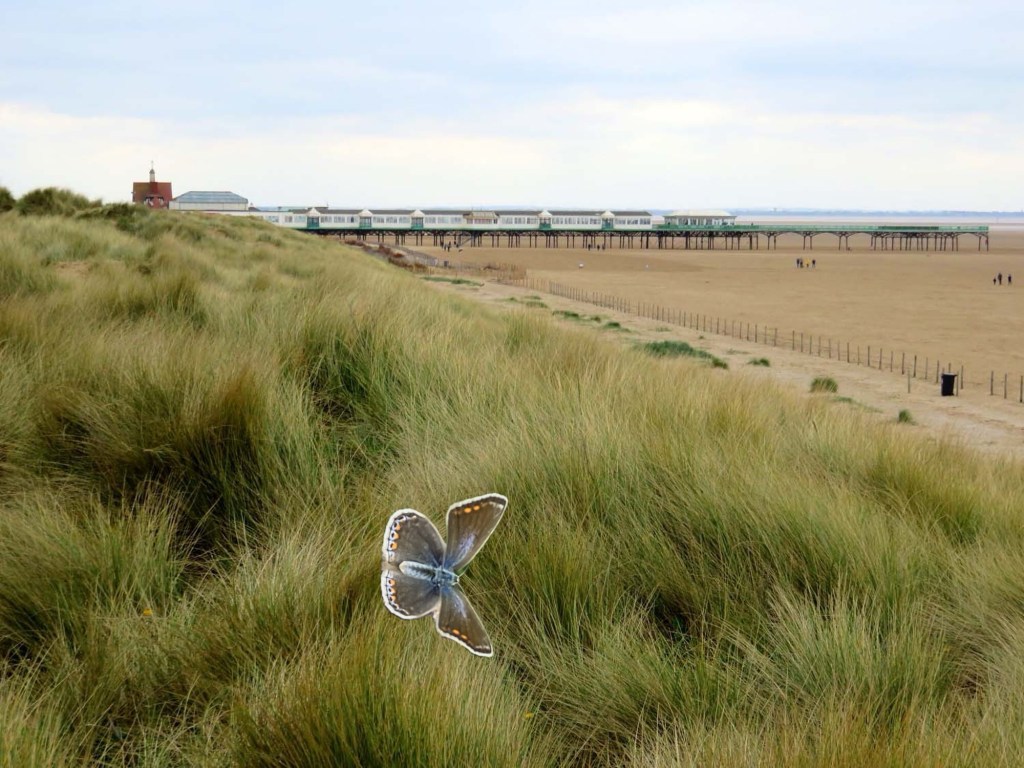
Lancashire’s Fylde Coast features one of the finest stretches of sand dunes anywhere in England. From St Annes to Starr Gate these dynamic dune-systems, remnants of a once vast realm of sandy hills which stretched along this entire coast, are home to a myriad of flora and fauna, many of which have nowhere else to live.
In the dune-slacks you may find Helleborine or Sea Holly, a recently re-introduced Sand Lizard may be spotted scurrying away into the Marram Grass, and far overhead a Skylark may soar, its song heard but its form unseen in the sunlit heights.
This habitat supports a remarkable diversity of life, you may walk here every day of the year and not see a fraction of the natural sights they have to offer, and one of the most bounteous families of fauna found is that of the Lepidoptera; butterflies and moths, of which over 150 species have been recorded overall.
(author)
A Springtime Saunter in the Sand-dunes
In spring, as overwintering adults emerge and early generations take flight, a walk through the Fylde’s dunes offers excellent chances to spot moths or butterflies basking on warm sand or feeding on nectar. Early spring is the time for our hardy over- winterers, but by May, dune specialists appear. Here are the most likely encounters:
Early Spring (March to April)
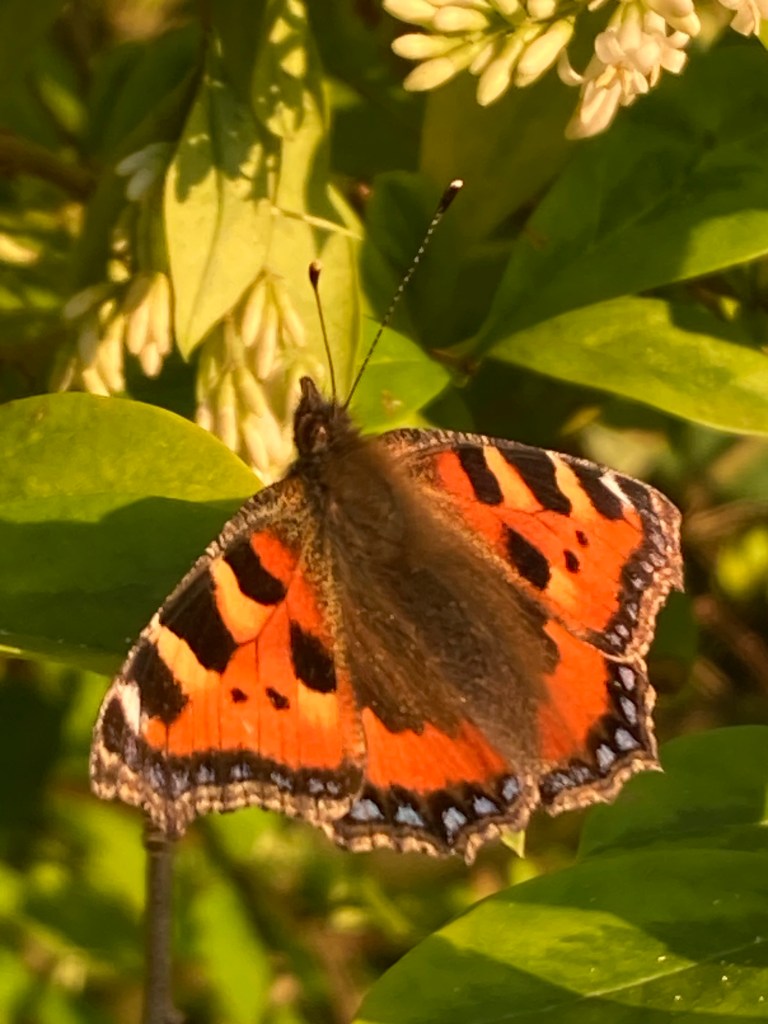
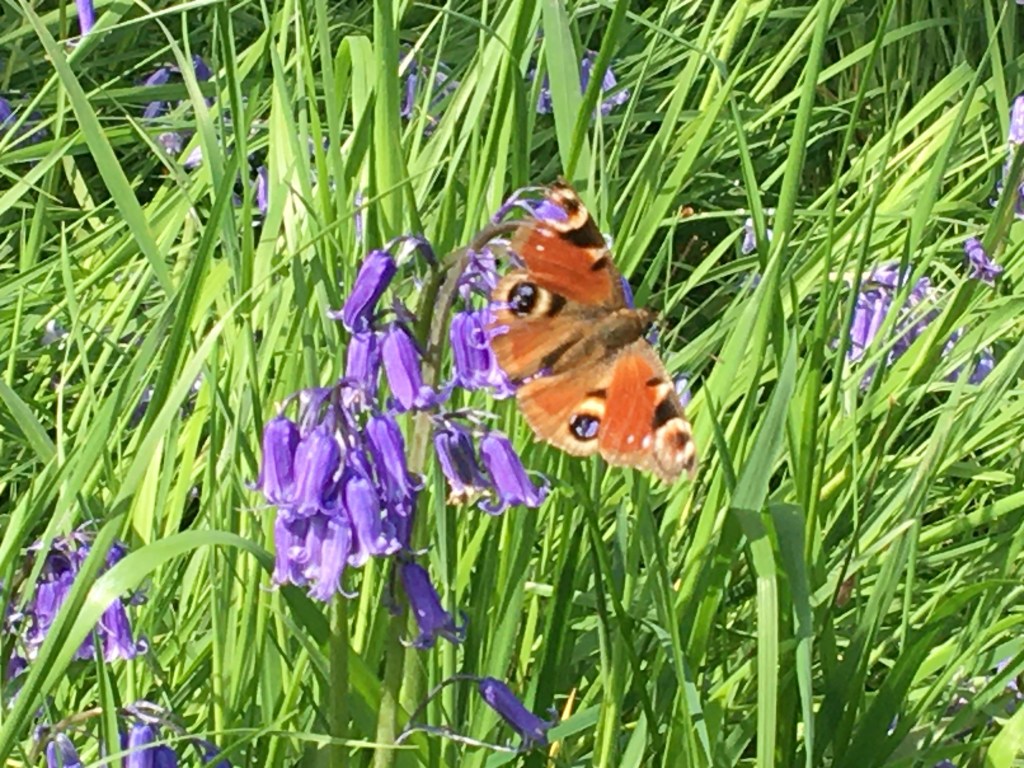
Small Tortoiseshell (Aglais urticae) and Peacock (Aglais io) are the stars. These colourful over-winterers hibernate in crevices or vegetation and emerge on sunny days to bask on bare sand or dune ridges. The bright orange, blue-spotted wings of the Tortoiseshell are unmistakable, as are the staring, unblinking eyes of the Peacock, long regarded as a symbol of renewal and awakening.
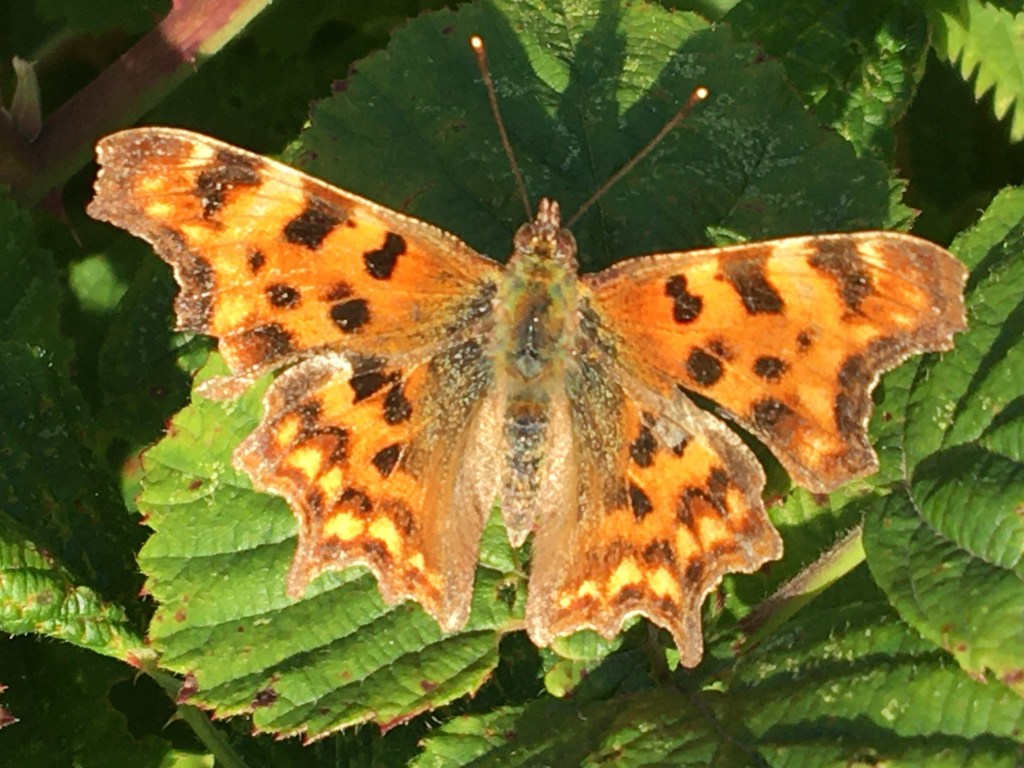
The Comma (Polygonia c-album) may also appear, along with Holly Blue (Celastrina argiolus) in its spring brood.
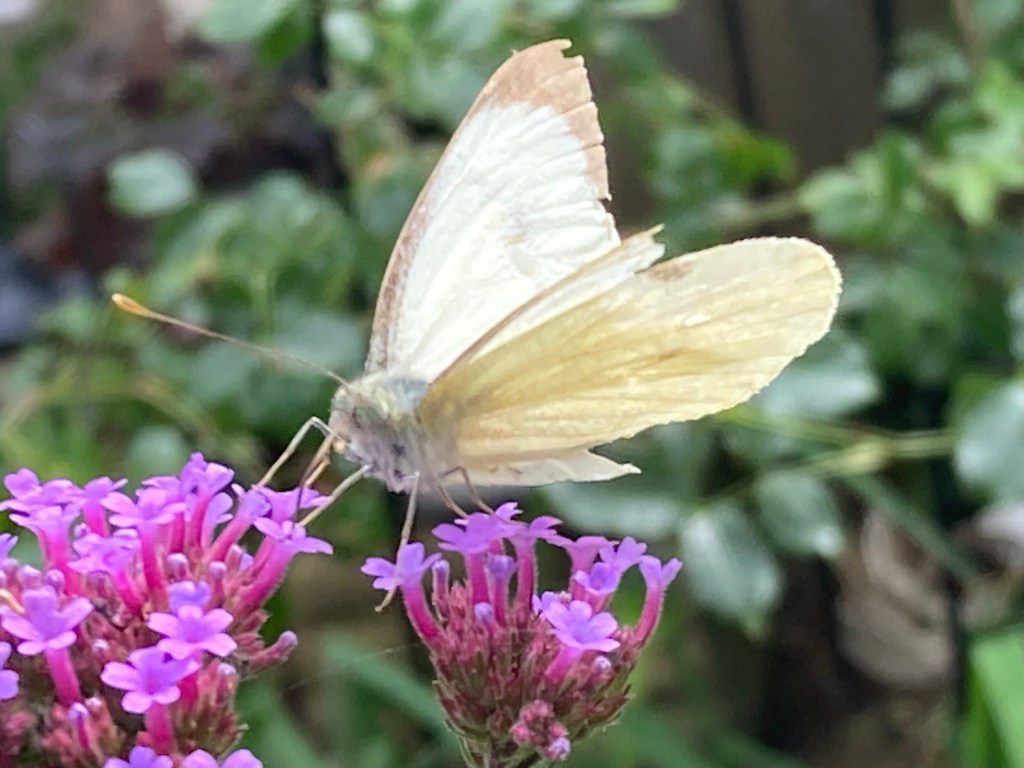
Whites are common too: Small White, Large White, and Green-veined White (Pieris napi) flutter over the rolling sands from April onwards.
(Charles J Sharp)
(Author)
(Author)
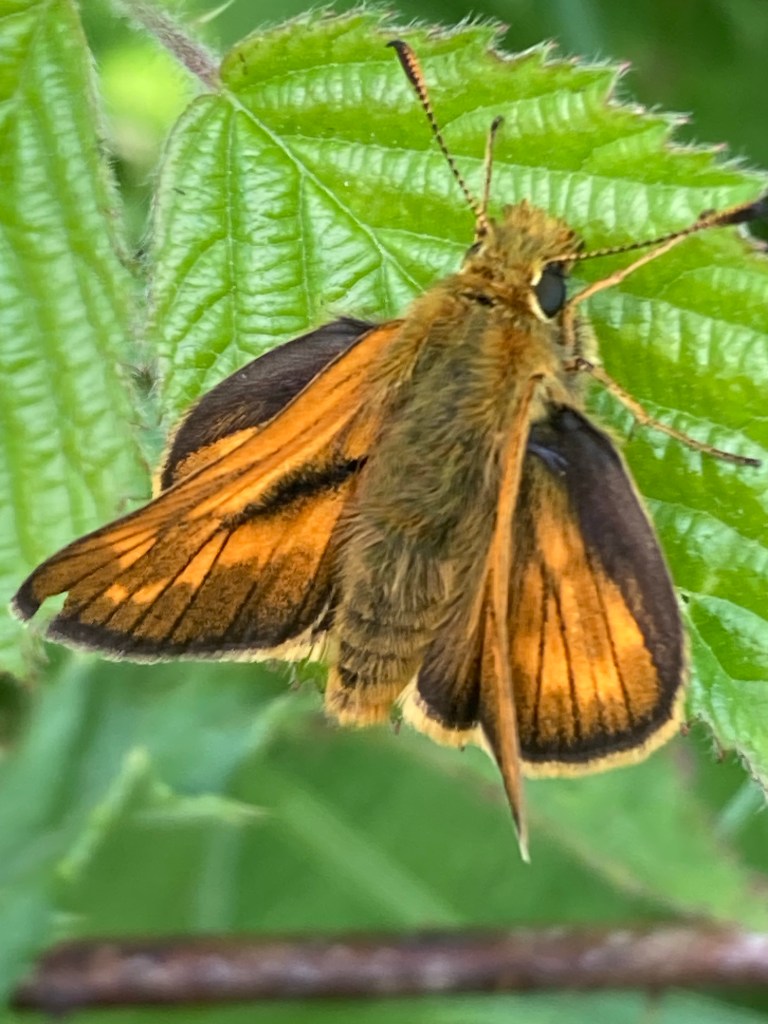
O. sylvanus (author)
Mid to Late Spring (May to June)
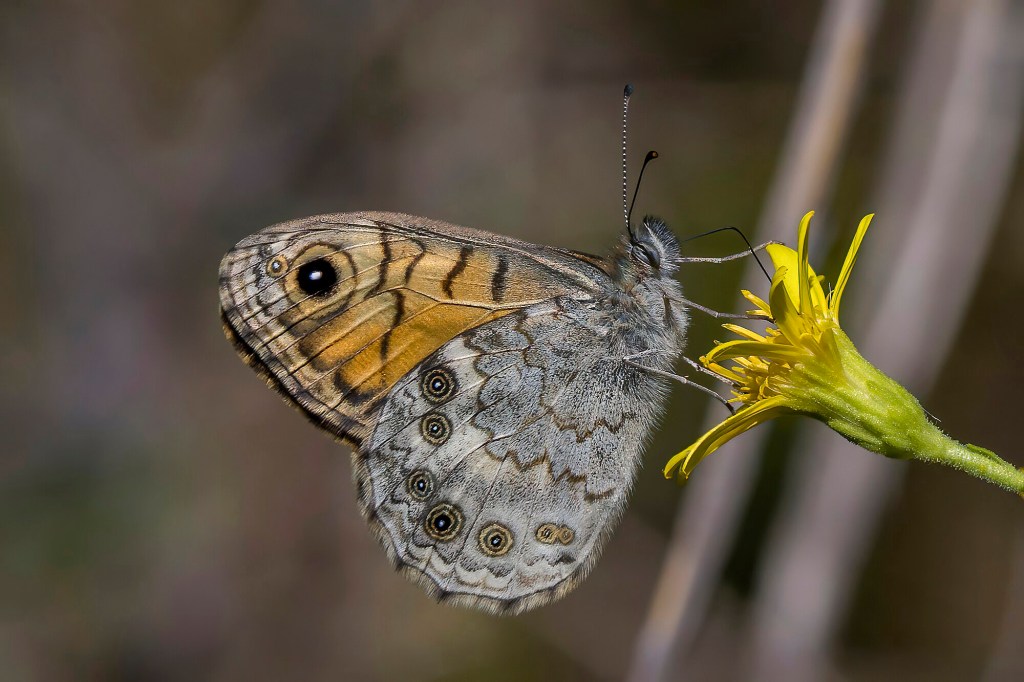
The Wall Brown (Lasiommata megera), classified as a priority species under the UK Biodiversity Action Plan (BAP,) and seen as a classic butterfly species of the dunes, brightens up the Fylde coast from early May onwards. Its orange-and-brown patterned wings with eye-spots make it easy to spot as it patrols sandy paths or bare ground. Populations here are notable, though it is declining regionally.
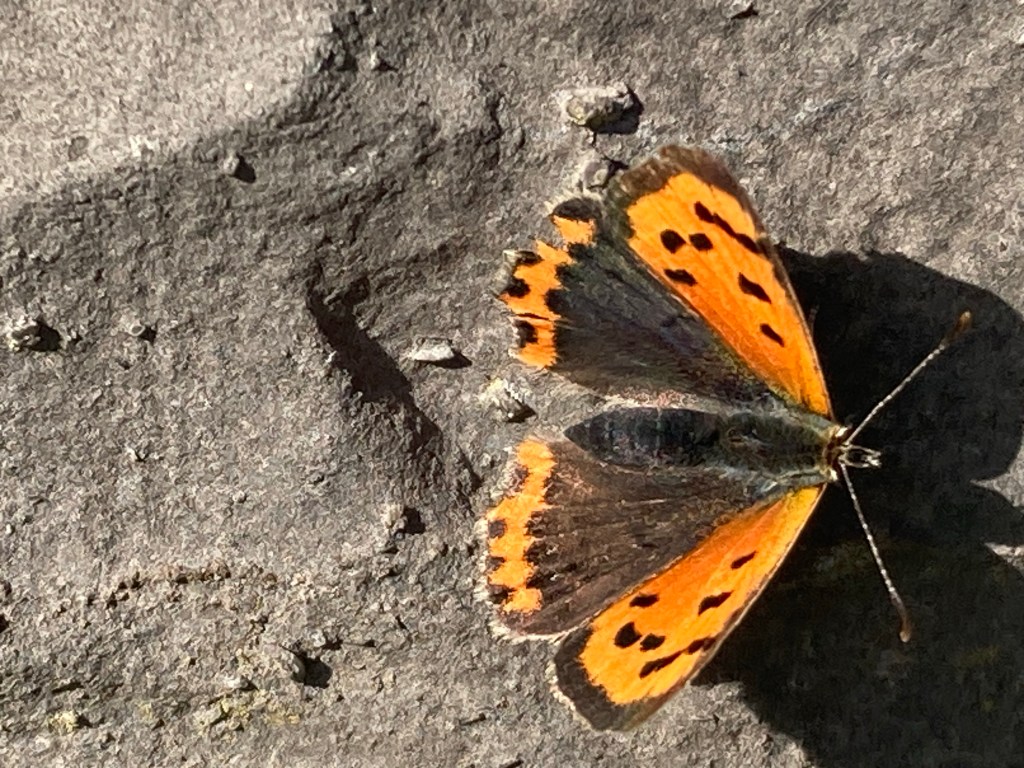
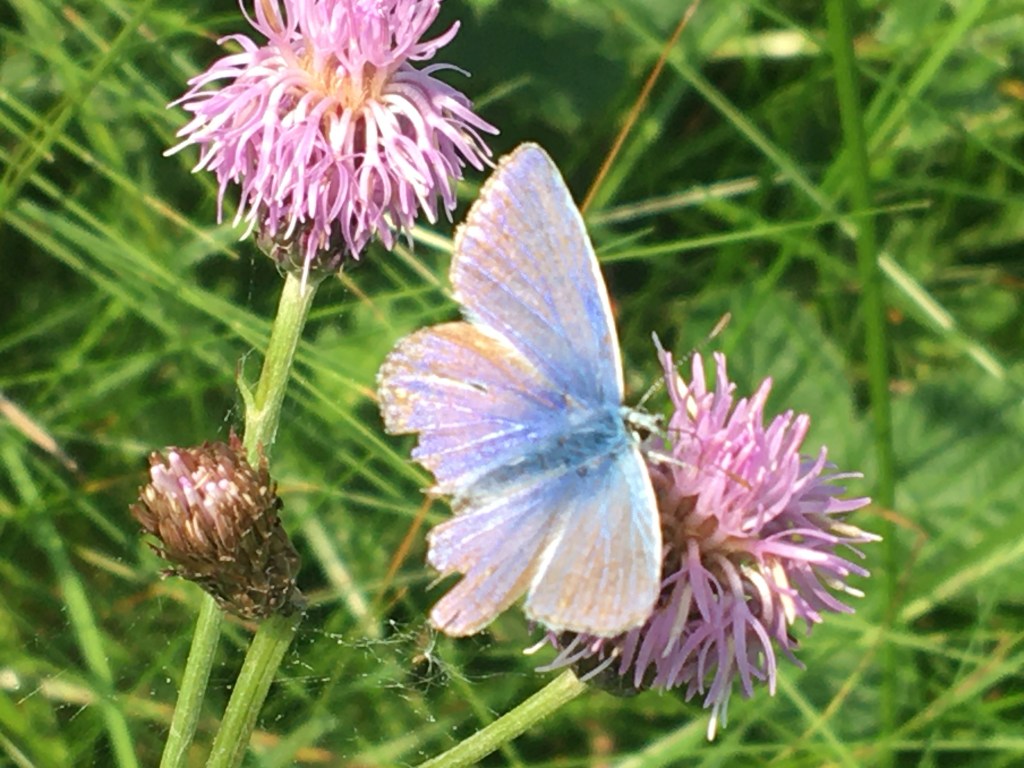
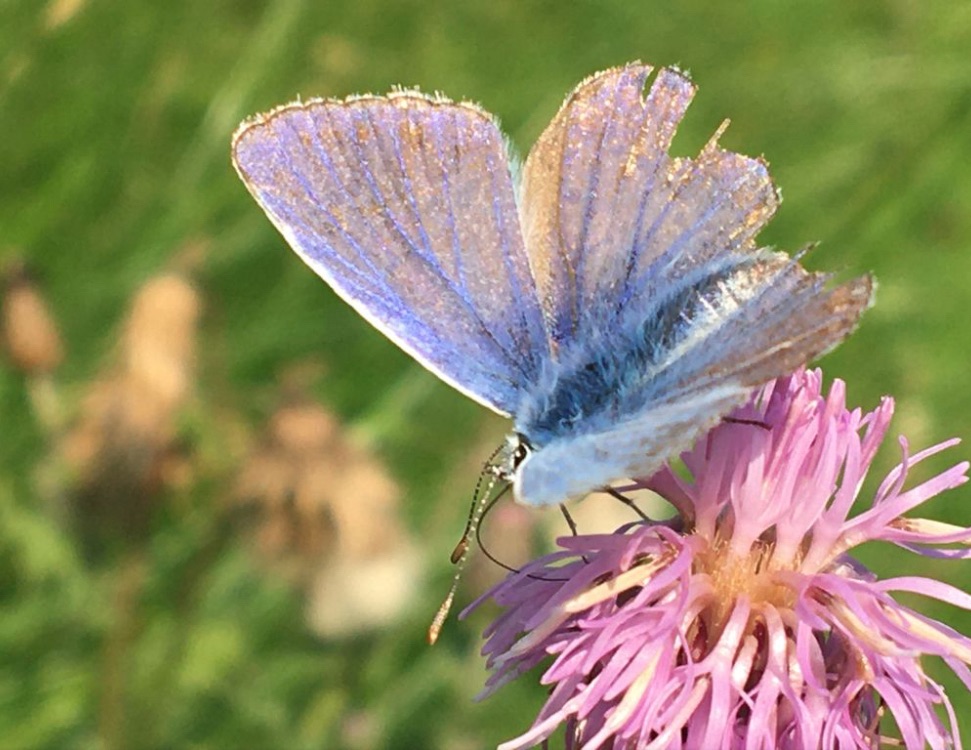
Small Copper (Lycaena phlaeas) emerges from late April, its fiery orange wings flashing on sorrel or low vegetation, often with multiple broods in good years. By late May, the Common Blue Butterfly (Polyommatus icarus) appears low over Birds-foot trefoil, with the males a vivid blue. Skippers (Small and Large) and Meadow Brown start in June.
Moths of the Dunes
Moths add extra spectacle for both the serious and lay-Lepidopterist, although they usually appear later in the year. Day-flying species visible in spring include the Emperor Moth (Saturnia pavonia) a large and very distinctive moth with prominent eye-spots on grey-brown wings, males fly by day in sunny weather seeking females, with the flight period typically late March through April to May.
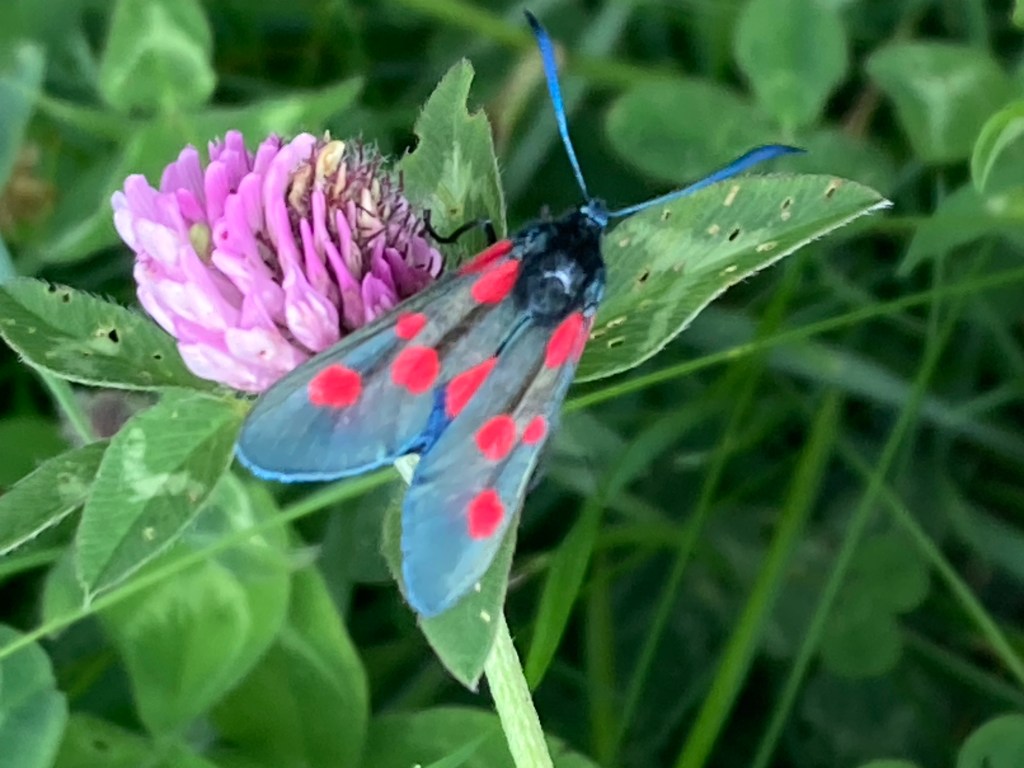
The Six-spot Burnet (Zygaena filipendulae, from June onward) with its striking red-and-black wings, and Latticed Heath are other species that may be seen in daytime during late spring.
Naturally most moth species are nocturnal, so are rarely seen by visitors, but they still add to the diversity of the dunes, here are some that may be found on the Fylde:
Sand Dart (Agrotis ripae) A dune specialist and priority species, with larvae feeding on roots of dune grasses and plants. Flies mainly in summer.
Shore Wainscot (Mythimna litoralis) A coastal noctuid moth tied to marram grass dunes; larvae feed on the grass roots. It’s a key indicator of good dune quality.
Sandhill Rustic (Luperina nickerlii) A priority species confined to the sand dunes of northwest England and North Wales. Adults emerge in late summer/autumn, hiding in dunes by day. This is one of the rarest dune moths in the region.
Ear Moth (Amphipoea oculea) Recorded as a priority species here, associated with damp dune slacks.
Mouse Moth (Amphipyra tragopoginis) Another priority moth noted on the Fylde dunes.
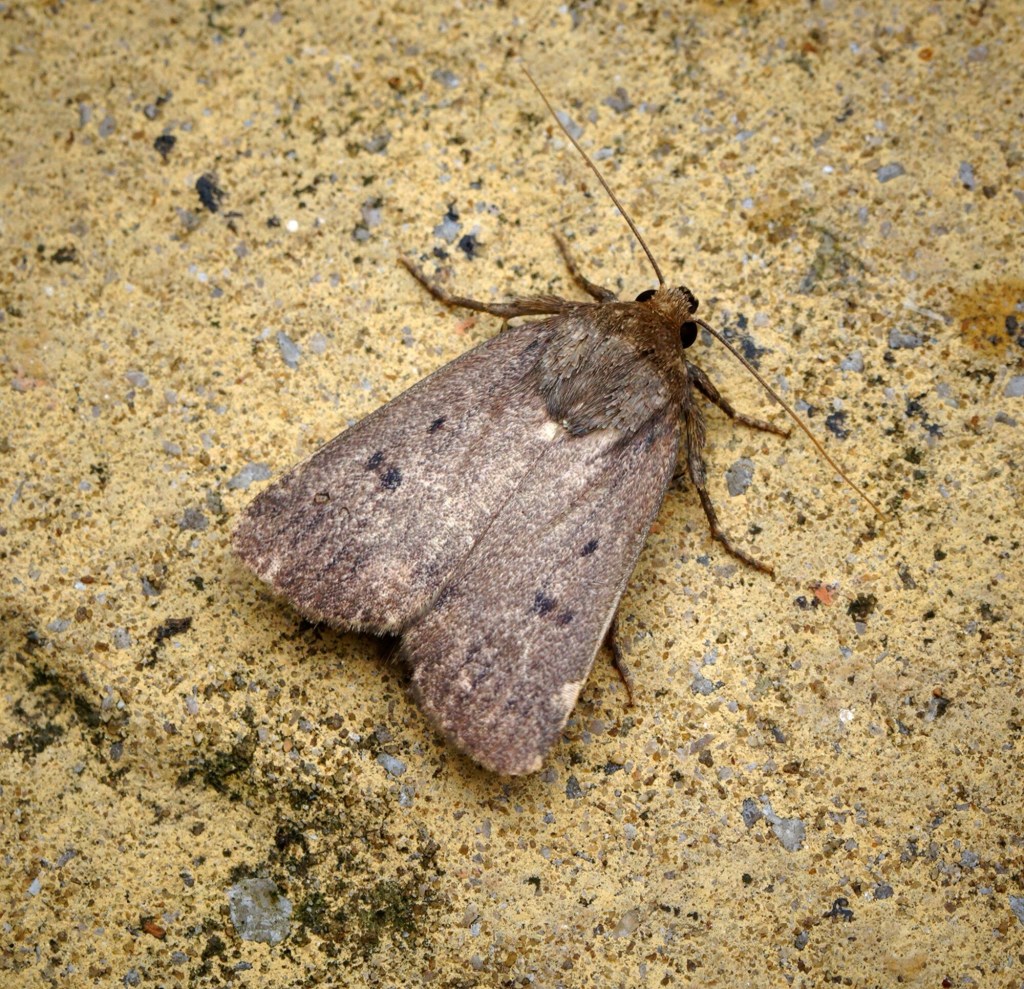
(Ben Sales)
Protecting the Dunes in Spring, Following the Countryside Code
Springtime on the dunes can be magical, the air is fresh off the sea and the first signs of life are starting to appear, making it a very special place to visit at this time of year.
Yet it is a highly critical season for the wildlife that lives there, with ground-nesting birds, such as Skylarks and Stonechats breeding, and fragile young plants supporting caterpillar food sources. So, with this in mind, please follow the Countryside Code when you visit and be mindful of the creatures who share this world with you.
Care for nature, Please do not cause damage or disturbance
Stick closely to marked paths. Dune vegetation is easily damaged by trampling, and many plants (e.g; those hosting Small Copper or Common Blue caterpillars) are vulnerable. Avoid picking flowers or disturbing rocks and logs where insects shelter.
Always keep dogs under control and in sight
From the 1st of March to 31st of July, keep dogs on a short lead (under 6ft) on open access land, including dunes. This protects ground-nesting birds like skylarks, which breed in the Fylde dunes and are easily disturbed, dogs off-lead can cause abandonment of nests.
Dog poo
Bag it and Bin it (or take it home): Even in wild places, waste harms plants and insects and poses health risks to other visitors.
Respect everyone
Be considerate to other visitors, local residents, and those managing the land (e.g; rangers) Leave gates as found and follow signs, many dune areas have seasonal restrictions or paths to safeguard wildlife.
Enjoy the outdoors
Plan ahead, check the weather and tide, and wear suitable footwear for sandy and muddy paths. Take only photos and memories.
By following the Code, you ensure the dunes remain a safe haven for Lepidoptera and other wildlife. A springtime walk in the dunes is a delight, where else might you encounter such colourful butterflies against golden sand and sea views?, so please go responsibly, enjoy the spectacle, and help preserve this special corner of our coast for future generations.
To report your sightings, see what others have spotted, or for guided walks, check out Butterfly Conservation Lancashire or the Lancashire Wildlife Trust, please report your sightings too as it really helps researchers build up a better picture of what is about so they know which species to help.
Fragile Wings on Fragile Sands
On quiet crests of sand and salt,
where marram whispers to the wind,
Graylings drift like loose sea-foam,
their speckled wings the colour of dry grass.
Common blues alight on ragwort gold,
Small coppers flash like sparks against the sky,
in slacks where orchids hide and lizards bask,
they flutter, fragile, free, yet tethered here.
The Irish Sea may breathe at their feet,
its tides carving the fragile sand,
but their dunes hold fast,
moving in time yet still keeping their place,
dancing where the land meets the waves,
in a rhythm that we cannot see
If you enjoyed this you can show your appreciation by buying me a coffee, every contribution will go towards researching and writing future articles,
Thank-you for visiting,
Alex Burton-Hargreaves
(March 2026)
 Northwest Nature and History