Remembering the Hapton Valley Colliery Disaster
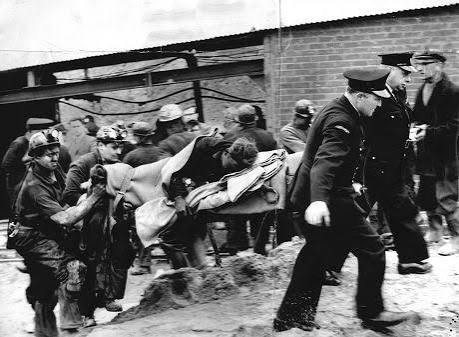
On the 22nd of March, 1962, the tight-knit mining community of Hapton in Lancashire was shaken by catastrophe when an underground explosion ripped through Hapton Valley Colliery, the town’s main employer, claiming the lives of 19 men and injuring many others.
This disaster, one of the last major mining tragedies to occur in Great Britain before the industry’s decline, brought into the stark light of day the many risks inherent to coal extraction, particularly in the gassy seams of northern England which were infamously prone to firedamp accumulation.
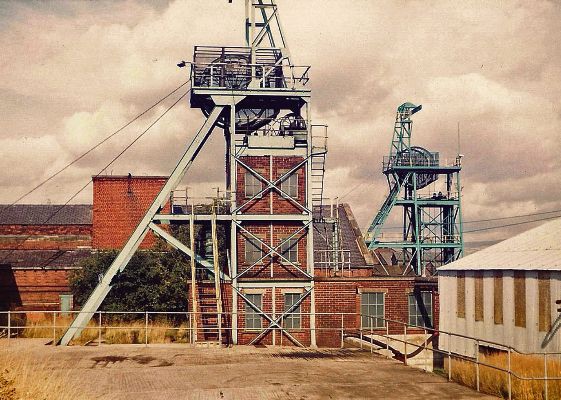
(B3tarev3)
A Brief History of Hapton Valley Colliery
Hapton Valley Colliery can trace its origins back to the early 1850s, when its first shafts were sunk at Spa Wood to a depth of approximately 420 feet.
The mine targeted the Upper Mountain and Lower Mountain/Union seams (significant coal seams within the Lower Coal Measures of the Burnley Coalfield) within a syncline structure (please see glossary below for explanation of terms used) complicated by many faults, including the notorious Deerplay Fault with its displacement of up to 330 feet. These seams produced high-quality coal ideal for metallurgical coke, feeding the voracious appetite of the industrial revolution.
Early operations faced significant hurdles, including faulting and water ingress, which temporarily halted production. In the 1880s widening of shafts and installation of advanced pumping systems allowed the mine to expand and operations resumed by 1890. New shafts (Numbers 3 and 4) were added by 1910, reaching depths of 515 feet while the original Spa Pit closed in 1935. A surface drift was introduced in the 1940s for better access.
Following nationalisation in 1947 under the National Coal Board (NCB), the colliery modernised further, and in the 1950s, new drifts extended eastward, tub capacities increased, and winding equipment was electrified. By 1958, coal transport shifted to conveyor systems, and mechanisation peaked in 1961 with another surface drift. At the time of the disaster, the mine employed 386 underground workers and 67 surface staff, yielding about 700 tons of saleable coal daily from two faces in the Union Seam using longwall methods, including coal ploughs and Anderton Shearer Loaders.
The seams were notoriously gassy, with high levels of firedamp (methane) recorded. Prior incidents included two ignitions on No. 1 face in the summer of 1960, leading to its abandonment, and another on No. 2 face’s return gate stable on April the 4th, 1961, attributed to frictional sparking.
Ventilation relied on shafts, fans, and a 3,780-feet surface drift, but these measures proved insufficient on that fateful day.
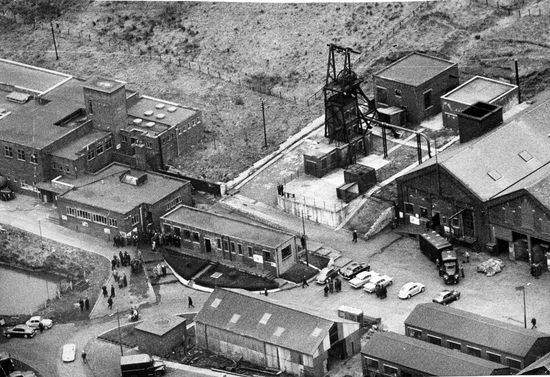
(David Thorpe)
The Disaster Unfolds
On the morning of March the 22nd, 1962, the day shift commenced at 8am in No. 2 District, where the Union Seam lay about 513 feet deep. The 465-feet-long face advanced southward at a 1 in 6.25 gradient, with coal extracted using electrically driven machines, explosives, and compressed air picks. Ventilation flowed at around 20,000 cubic feet per minute, with firedamp levels typically between 0.4% and 0.7%. Firedamp was drained through 120-foot boreholes spaced 105 feet apart, capturing about 55% of the gas produced at the face.
The previous shifts had advanced the face, drawn waste, and ripped gates without incident. However, just after 9:40am a catastrophic explosion erupted, described by survivors as a thud or loud shot, followed by air reversal and thick dust. The blast originated in the return gate, likely from the stable or a point 540 to 840 feet outbye from the face ripping. Flame propagated down the face for about 90 feet from the intake stable, with charring on props indicating the direction from the return side. The explosion affected nearly 3000 feet of roadways and face, with violence suggesting an 8% firedamp/air mixture.
Investigations by H.M. Inspector of Mines and the Safety in Mines Research Establishment (S.M.R.E.) ruled out obvious causes like electrical faults or smoking. The official report concluded the ignition was likely from firedamp, possibly mixed with coal dust, sparked by either shotfiring in the return gate stable or a thermite reaction involving aluminum foil wrappers (from food or cigarettes) contacting rusty iron supports.
High firedamp spots in the stable, due to inadequate ventilation without a brattice sheet, contributed, though the exact gas source, perhaps from broken coal, waste, or unsealed boreholes, remained uncertain. Post-explosion air measurements showed reduced flow and elevated firedamp, but no secondary blasts occurred.
The scene at the pithead was chaotic, with crowds gathering as news spread.
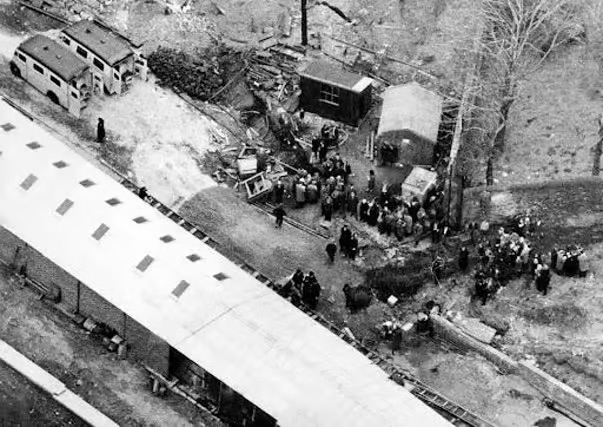
The Victims and Immediate Aftermath
Rescue teams worked tirelessly, but the toll was heavy: 16 men died instantly from blast injuries or asphyxiation, and three more succumbed in hospital.
The deceased included:
Christopher William Brown, 55, driller
Sampson Henry Bulle, 44, deputy
James Cumming. 19, supply man
Robert Dunston, 26, ripper
Stanley Faulkes, 41, filler
John William Halstead, 53, deputy and shotfirer
George Hartley, 32, mechanic
Raymond Earnest Howarth, 20, electrician
Tom Isherwood, 49, face supervisor
Donald Stewart McGoogan, 28, mechanic
Garry Pickle, 22, electrician
John Robinson, 24, filler
Donald Rushton, 33, ripper
Robert Shuttleworth, 33, filler
Ronnie Anthony Taylor, 16, supply man
Benjamin Walsh, 25, filler
John Grieg Barritt, 23, electrician
Joseph Forrest, 17, supplies man
Peter Tinsley, 16, apprentice electrician
Additionally, 21 men were injured, some seriously.
In the immediate aftermath, parliamentary discussions highlighted the tragedy, with condolences extended and calls for thorough inquiries.
The NCB and authorities conducted a two-month investigation, leading to recommendations such as improved firedamp drainage from boreholes, ensured stable ventilation, revised shotfiring practices, development of automatic firedamp detectors, restrictions on aluminum alloys underground, and bans on aluminum foil wrappers in gassy mines.
These measures aimed to prevent similar incidents, though the colliery continued operations until 1982, when it closed due to flooding risks from adjacent workings. The shafts were capped, and structures demolished by 1983.
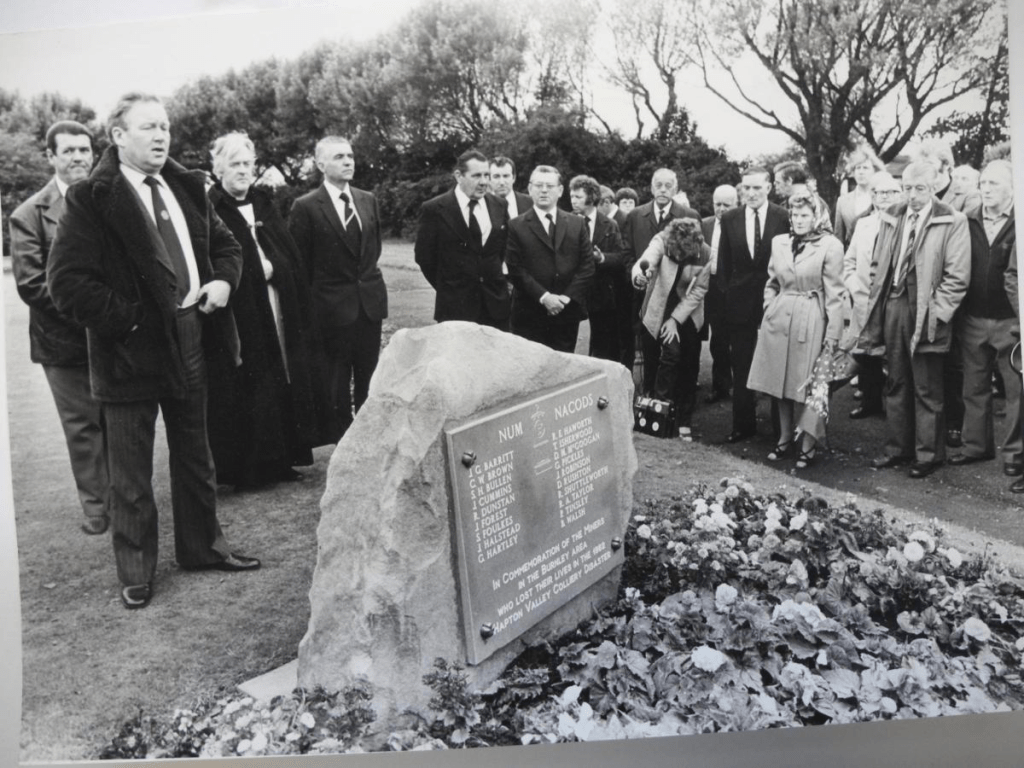
Legacy and Commemoration
The Hapton Valley disaster left an indelible mark on Hapton and the broader mining community, and is a poignant reminder of the dangers of an industry that once employed thousands in Lancashire. Annual reunions at Burnley Miners Club and exhibitions, such as one held by the BBC in 2012 marking the 50th anniversary, keep the memory alive.
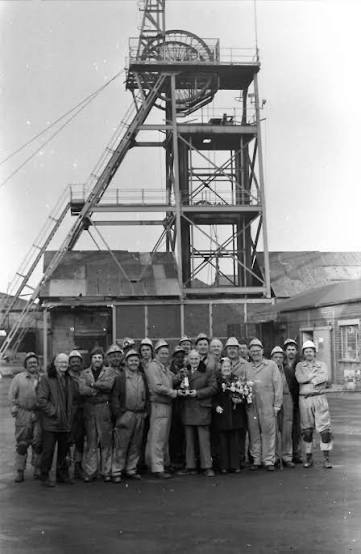
(This and other images from Burnley Civic Trust Heritage Image Collection)
Glossary of terms used
- Brattice (or brattice sheet): A temporary partition, usually made of strong canvas (often tarred for air-tightness), used to direct or control ventilation airflow in underground roadways or workings, such as directing fresh air to a specific area like a stable.
- Colliery: A coal mine, including its surface buildings, plant, shafts, and underground workings.
- Deputy: An underground supervisory official (also called a fireman in some regions) responsible for safety inspections, checking for gas, ensuring proper ventilation, and overseeing workers in a district or section of the mine.
- Drift: An inclined or horizontal underground roadway driven from the surface or between seams to provide access, ventilation, transport, or drainage (distinct from a vertical shaft).
- Anderton Shearer Loader: A floor-mounted coal-cutting machine with rotating drums that shears coal from the face while loading it onto a conveyor; a key mechanised tool in 1950s–1960s longwall mining.
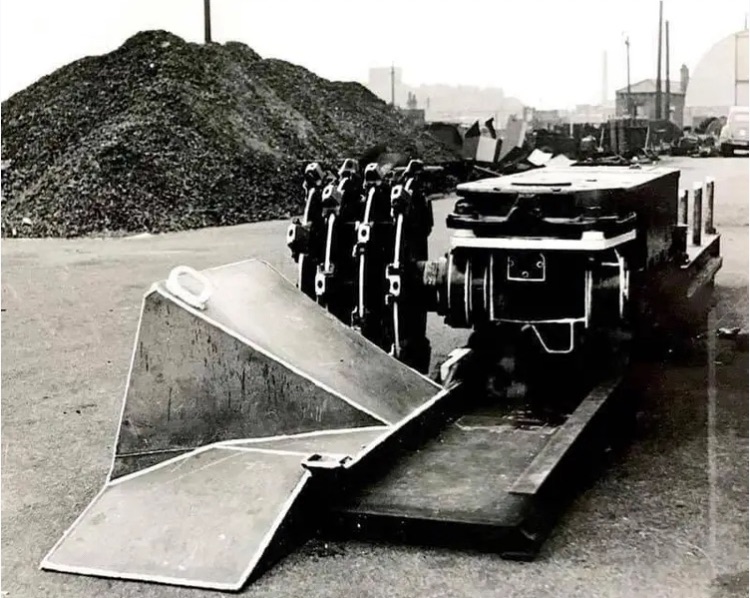
(the picks have been removed in this image by Gaz Beattie)
- Face (or coal face / longwall face): The working area where coal is actively extracted from the seam, typically a long straight exposure in longwall mining.
- Firedamp: Methane gas (CH₄), a naturally occurring flammable and explosive gas released from coal seams; its accumulation poses a major hazard in gassy mines.
- Filler: A miner who loads (fills) cut or broken coal into tubs, conveyors, or other transport systems on the coal face.
- Gate (or gate road): A roadway or tunnel providing access to the coal face; intake gates supply fresh air, while return gates carry used air and gases away.
- Longwall: A method of coal mining where a long continuous face (often 300–900 feet) is worked in a single slice, with the roof allowed to collapse behind as the face advances; common in mechanised UK mines.
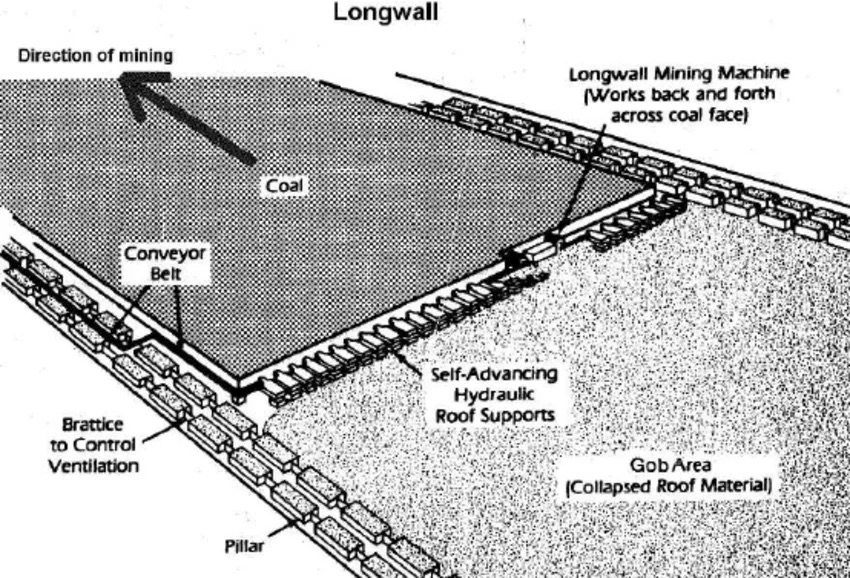
(Gerhard Weiss)
- Ripper: A miner specialised in ripping (enlarging or advancing) roadways or gates, including removing roof or floor material, setting supports, and building packs.
- Seam: A layer or bed of coal within the rock strata, often named (e.g; Union Seam, Lower Mountain Seam).
- Shotfirer: A qualified miner authorised to charge, stem, and fire explosives in boreholes to break coal or rock; requires strict safety protocols in gassy conditions.
- Shotfiring: The process of using explosives to break down coal or rock in the mine.
- Stable: A short widened section at the end of a coal face (intake stable or return stable) where machinery turns or where ripping/maintenance occurs; often prone to gas accumulation due to lower airflow.
- Syncline: A downward fold in rock strata forming a trough-like structure; coal seams in synclinal areas can be confined and structurally complex.
- Coal plough (or coal plow): A mechanised device that ploughs along the coal face to undercut and break coal, often used in thinner seams as an alternative to shearers.
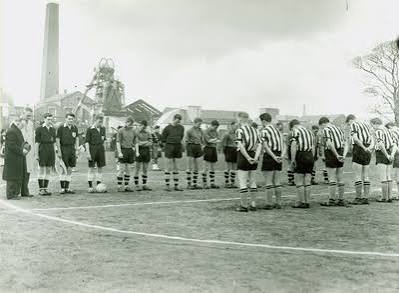
(Red Rose Collections)
In health and strength they left their homes,
not thinking death so near,
It pleased the Lord to bid them come,
and in his sight appear
Alex Burton-Hargreaves
(March 2026)
 Northwest Nature and History
I was only thinking about this recently. My father was a deputy in the mines at the time, and I remember him having a copy of the enquiry report into the Hapton Valley explosion. I can still picture the detailed maps of the underground. Such a dangerous industry.
LikeLiked by 1 person
I’ve found the technical side of mining fascinating, and I’m frankly in awe of the men that worked down them, we have no idea of the sheer graft and risk they faced every day just to earn a living. I’m lucky enough to have known a gentleman called Bobby Clark, who was a survivor of this disaster, he used to drink in the bar I ran, when they say “he was a larger than life character” he was the kind of man that saying was invented for, and if you go for a night out down the “the miners” you find that they’re all like that!
LikeLiked by 1 person