The European Stonechat, Saxicola rubicola, Ecology, Biology and Other Notes
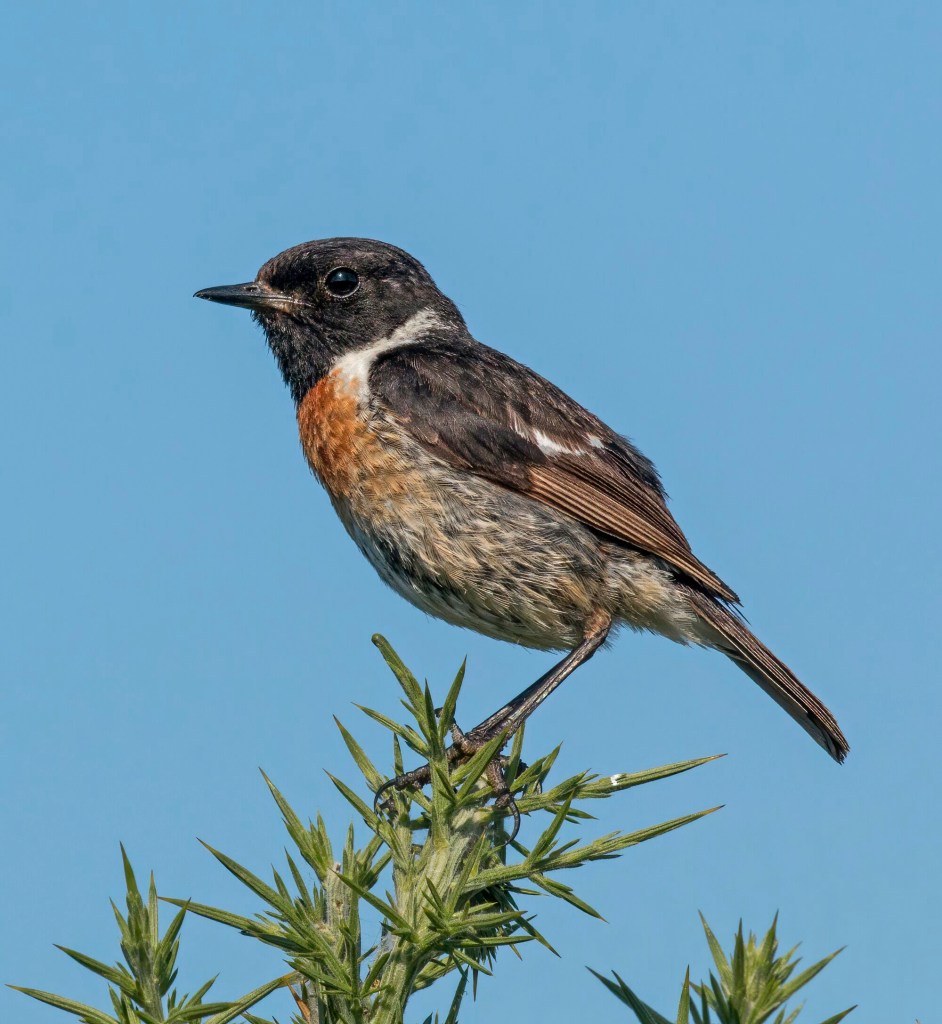
(Charles J Sharp)
Rising dramatically from Lancashire’s landscape, Pendle Hill is best known for its brooding presence, sweeping views, and the infamous 17th-century witch trials. Yet for naturalists this 1827-foot high gritstone massif is prominent for other reasons, mainly for the upland bird species which either reside upon or use the hill as a staging post.
Here Raven are often seen circling overhead on thermals, Curlew, which regard Pendle’s sheep pastures as perfect for breeding, and migratory birds like Golden Plover, Dotterel and Snow Bunting use the open summit as a resting spot on their long and arduous travails.
In spring the hill becomes alive with birdsong as smaller birds come into their own, high above, unseen in Pendle’s famous mists, Skylark and Meadow Pipit trill, from a lone Rowan an Ouzel whistles and from the Gorse you may hear the unusual yet unmistakeable call of the Stonechat.
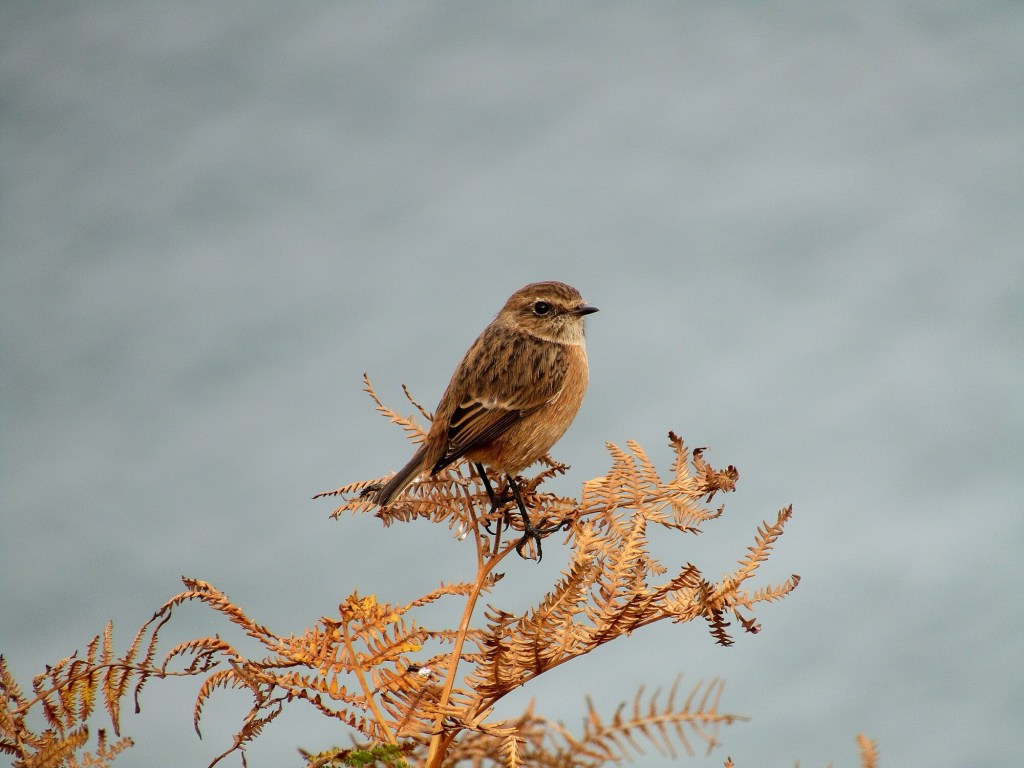
Saxicola translates as ‘rock dweller’ and is derived from the Latin saxum ‘rock’ and cola ‘dweller’, rubicola comes from the Latin rubus, meaning ‘bramble’ or ‘blackberry’
(Image by Partonez)
Meet the Stonechat
Stonechats (Saxicola rubicola), are robin-sized members of the chat family (Muscicapidae), roughly 12cm in length yet, much like the robin, possessing a larger-than-life character that belies their small stature.
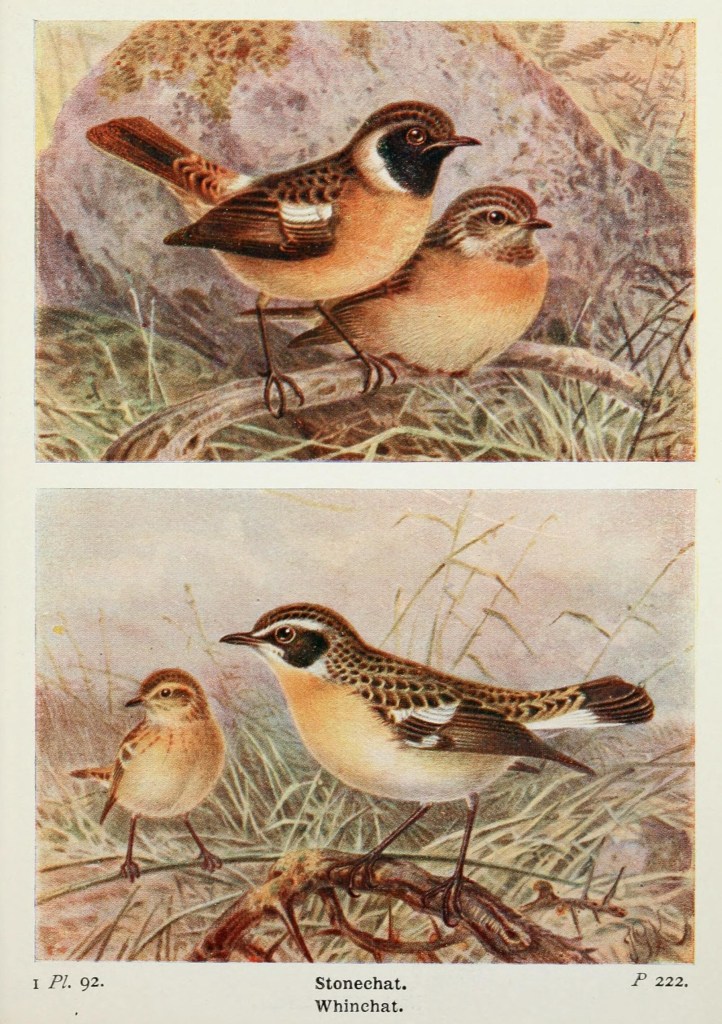
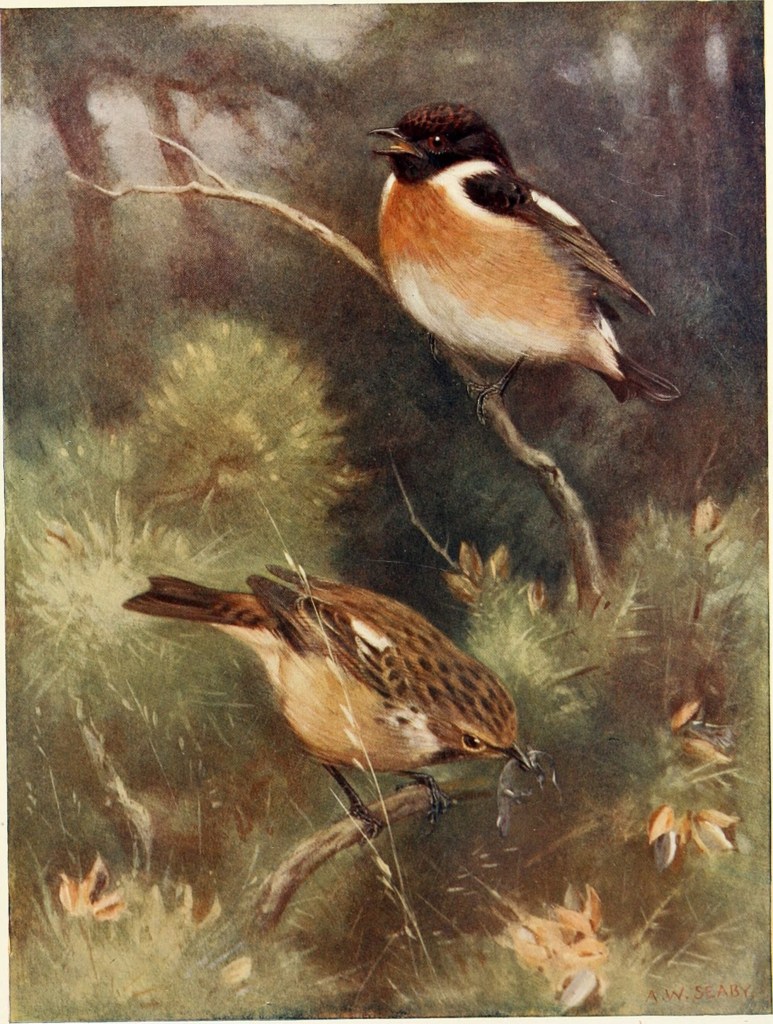
The Male in his breeding plumage is a strikingly handsome fellow, sporting a glossy black head and throat, a bold white half-collar on the side of his neck, a rich orange-red breast, and a mottled brown back with white wing patches that flash during flight. Females and juveniles are subtler, yet still attractive-looking, with brown heads, paler orange-buff underparts, and less contrast overall, helping them blend into the vegetation while nesting.
One of the easiest ways to identify a Stonechat is its behaviour and call, they frequently perch upright on prominent vantage points, such as the tops of Gorse bushes, fence posts, heather stems, or bracken, flicking their wings and tail in a restless, jerky manner.
Their alarm call is a sharp, dry “tack-tack”which gives the bird its name, as it sounds exactly like two small stones being knocked together. This vocal habit makes them surprisingly easy to locate even when they’re not singing their short, scratchy warble.
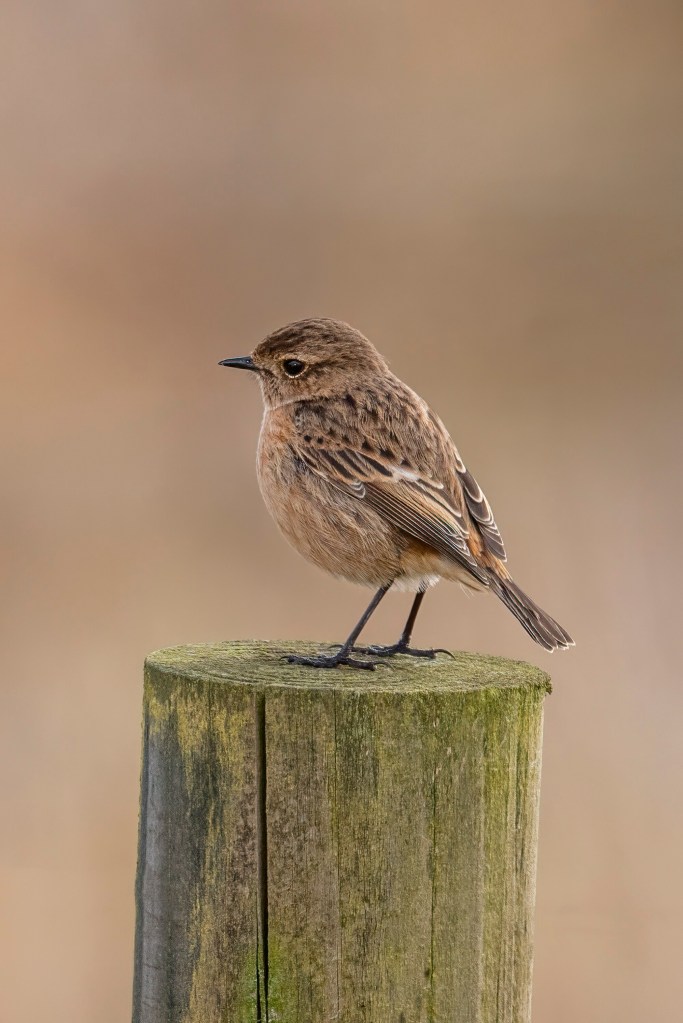
In folklore, because of their unusual chattering call, Stonechat were thought to be in constant conversation with the devil, they were even thought to carry a drop of the devil’s blood and that he would break the back of anyone who harmed their eggs.
(Image by Caroline Legg)
Hilly Habitat
Pendle’s mosaic of heather moorland, rough grassland, scattered gorse, and boggy patches provides ideal terrain for Stonechats. They favour ‘rough’ open country with low, dense scrub for nesting and elevated perches for hunting and territory defence, they are often found on the lower and mid-slopes where gorse and bracken offer cover, though they can range higher during good years.
Like much of upland Lancashire and the nearby Forest of Bowland, Pendle supports a mix of resident and breeding birds. Stonechats here are largely summer visitors or partial migrants although they do breed in the area in some years, numbers fluctuating with weather and habitat conditions. Whinchats (a close relative) also pass through as migrants, sometimes breeding nearby, but Stonechats tend to favour slightly denser, taller vegetation than can be found on these windswept slopes.
Their diet consists mainly of insects and other invertebrates, which they catch by dropping from a perch or making short fly-catching sallies. In autumn and winter they supplement this with seeds and berries, such as Bilberry and Blackberry.
Harsh winters can affect survival rates, pushing some birds to milder coastal or lowland sites where they may forage on agricultural land.
Breeding Behaviour
Stonechats nest low down in thick tussocks, gorse, or bramble, where the female builds a neat cup of grass and moss lined with finer materials and hair, in this nest they typically raise one or two broods per season, with clutches of 4 to 6 eggs. Both parents feed the young, and the male remains highly territorial, singing and displaying from prominent perches to ward off rivals.
This habit of perching conspicuously gives the passer-by a good opportunity to admire his plumage, and if you are too close to his nest he will accompany you up the path, “tack-tacking” at you until satisfied that you pose no further threat, on a calm spring or early summer morning, you might hear these sharp “tack” calls carrying across the slopes long before you spot the bird itself.
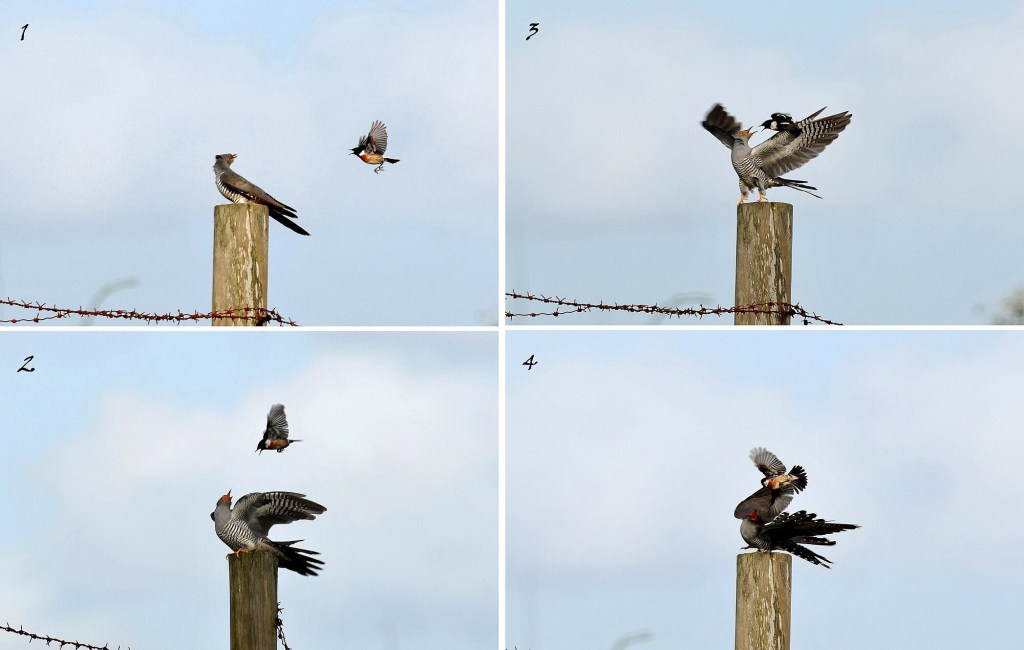
(Olivença)
Stonechat Conservation
The European Stonechat is currently listed as Green (least concern) on the UK’s Birds of Conservation Concern list, though local populations can be vulnerable to habitat loss, overgrazing, or severe winter weather. Maintaining a varied mosaic of heather, gorse, and rough grassland is key to their continued presence on hills like Pendle.
Conservation efforts by landowners, the Lancashire Wildlife Trust, and upland managers help by balancing grazing levels and controlling bracken where it becomes too dominant. Walkers can support these birds simply by sticking to paths and keeping dogs under tight control during the nesting season (March to August) to avoid disturbing ground-nesting species.
But ever that man goes
through place-keepers, through forest trees,
a stranger to strangers over undried sea,
houses for fishes, suffocating water,
or lonely on fell as chat,
by pot-holed becks
a bird stone-haunting, an unquiet bird.
(Excerpt from The Wanderer by W. H. Auden)
If you enjoyed this you can show your appreciation by buying me a coffee, every contribution will go towards researching and writing future articles,
Thank-you for visiting,
Alex Burton-Hargreaves
(April 2026)
 Northwest Nature and History