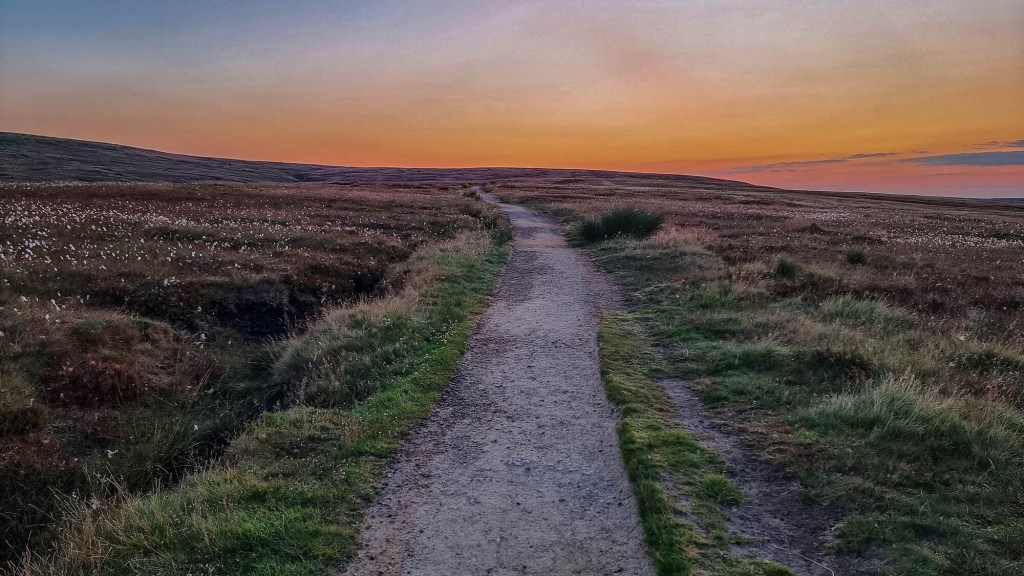
The Moorland Breeze
By Edwin Waugh
OF all the blithesome melody
that wakes the warm heart’s thrill,
give me the wind that whistles free
across the moorland hill;
When every blade upon the lea
is dancing with delight,
and every bush and flower and tree
is singing in its flight.
When summer comes I’ll wear a plume,
with flowers of shining gold;
and it shall be the bonny broom,
that loves the moorland wold;
And it shall wave its petals bright
above my cap so free,
and kiss the wild wind in its flight
across the lonely lea.
Blithe harper of the moorland hills,
the desert sings to thee;
The lonely heath with music thrills
beneath thy touch so free:
With trembling glee its wilding strings
melodious revels keep,
as o’er the waste on viewless wings,
thy fairy fingers sweep.
In yonder valley, richly green,
I see bright rivers run;
They wind in beauty through the scene
and shimmer in the sun;
And they may sing and they may shine
down to the heaving sea;
The bonny moorland hills are mine,
where the wild breeze whistles free!
Oh lay me down in moorland ground,
and make it my last bed,
With the heathery wilderness around,
and the bonny lark o’erhead:
Let fern and ling around me cling,
and green moss o’er me creep;
and the sweet wild mountain breezes
sing
Above my slumbers deep.
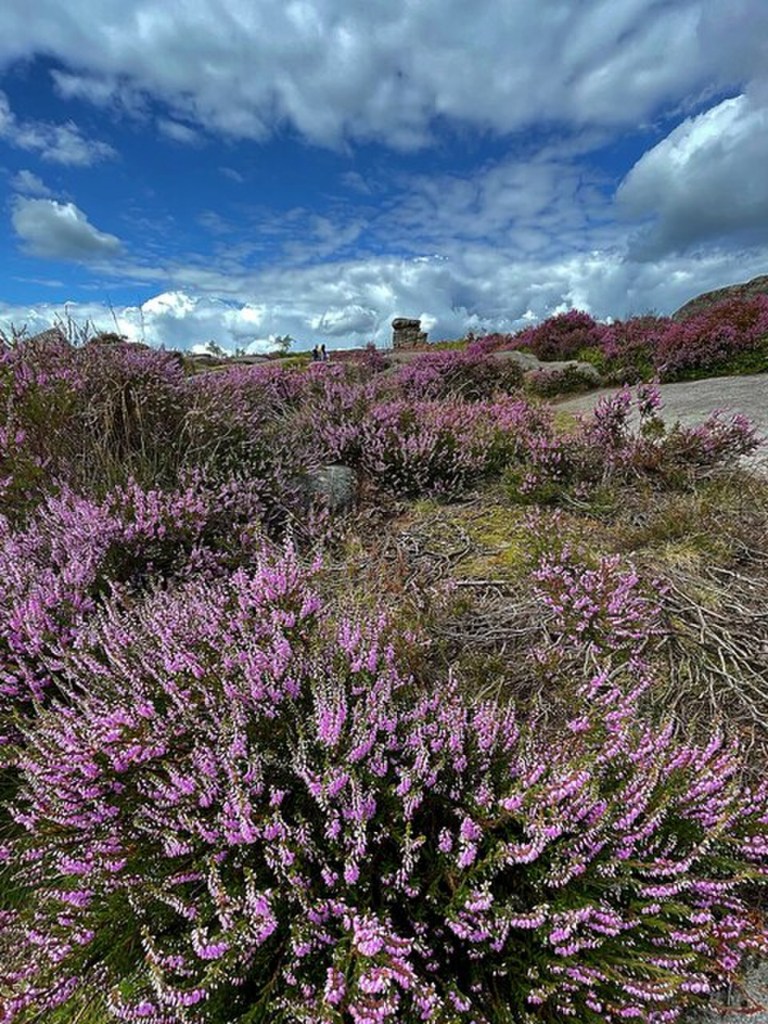
Lancashire’s Burns
The Victorian Poet Edwin Waugh, known as “Lancashire’s Burns,” was born 1817 in Rochdale, Lancashire, to a shoemaker’s family.
After his father’s death at the age of nine, Waugh faced poverty but was taught to read by his devout Methodist mother. Apprenticed to a printer when twelve, he developed a love for literature, particularly Lancashire’s history and poetry, influenced by Robert Burns and John Collier.
Waugh gained fame for his Lancashire dialect poems, notably “Come Whoam to Thi Childer an’ Me” (1856), and prose works like Sketches of Lancashire Life (1855). By 1860 he had become a full-time writer, known for vivid depictions of working-class life. Despite personal struggles, including a turbulent marriage, Waugh was celebrated for his humor, pathos, and dialect recitations.
He died in New Brighton, Cheshire, in 1890 and is commemorated with Waugh’s Well on Scout Moor above his hometown of Rochdale.

(Michael Ely)
Thank-you for reading. If you enjoyed this piece and would like to support further articles on the wildlife and history of the Northwest, you can buy me a coffee here.
Alex Burton-Hargreaves
(April 2026)
 Northwest Nature and History