A Guide to Spotting the Common Darter Dragonfly
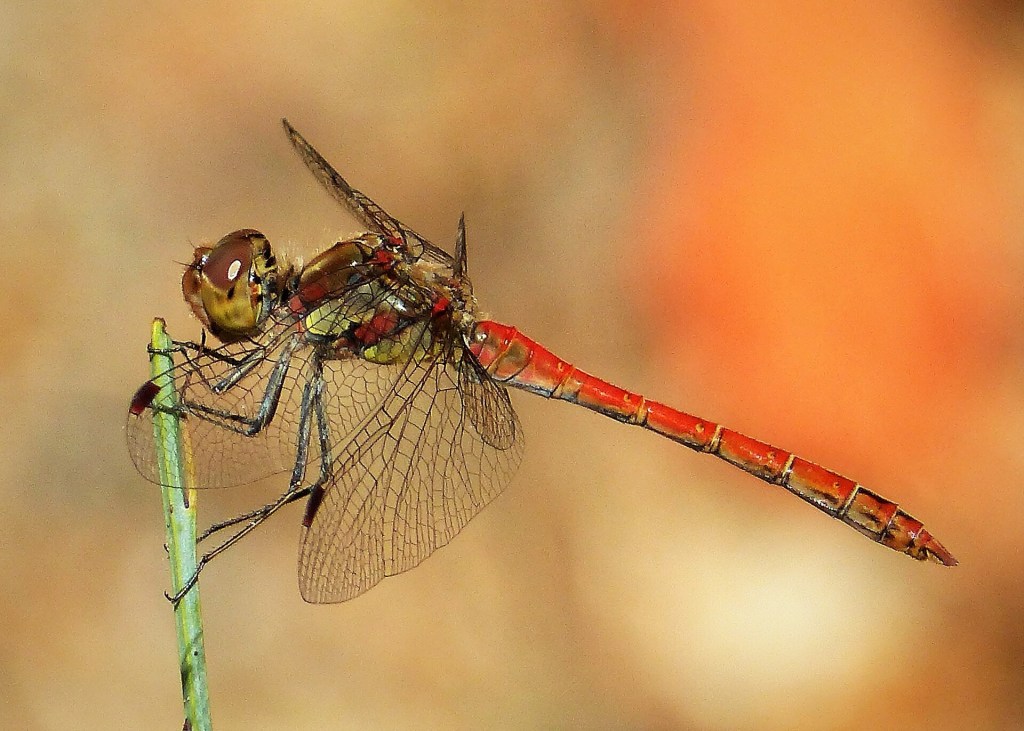
In the serotinal days of late summer, when the countryside’s tones shift from emerald to gold, our insect life slowly fades from the scene and the buzz and hum of bees and flies dials back to the silence of winter.
Yet life still lingers, and some flying insects remain to stir the cooling autumnal air, including the striking and swift-flying Sympetrum striolatum, the Common Darter dragonfly.
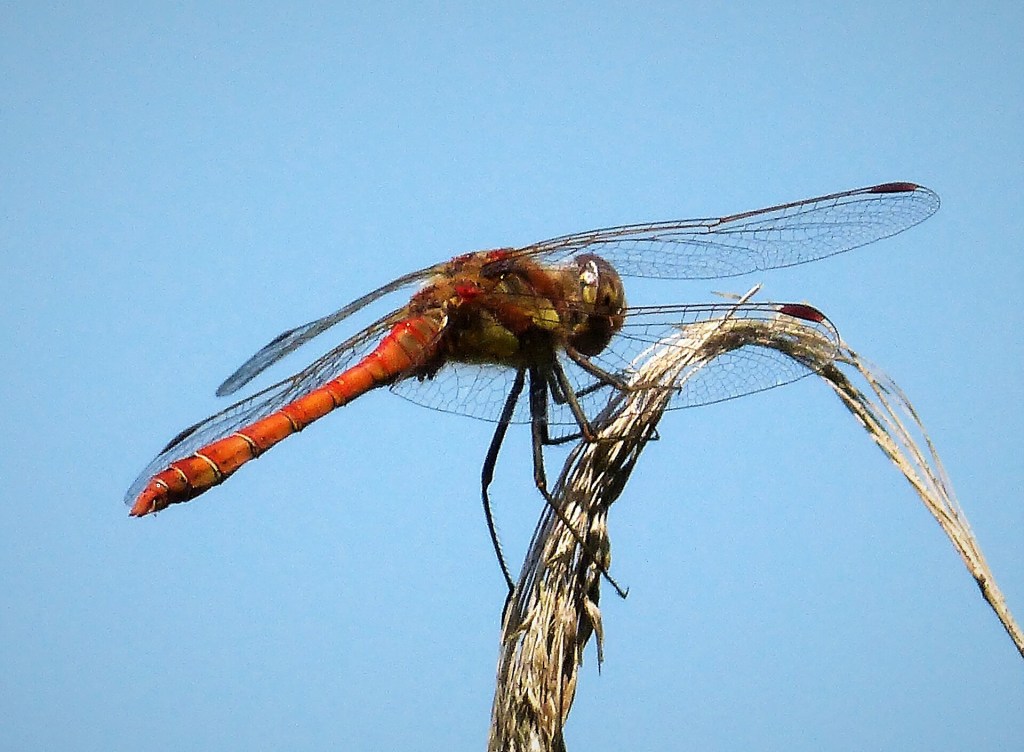
The first half of its scientific name comes from Sympiknos (σύμπυκνος), meaning ‘compressed’ and êtron (ἦτρον), meaning ‘abdomen’.
This literally translates to ‘having a laterally compressed abdomen’
(Charles J Sharp)
Perfect Predator
One of our most successful predatory flying insects the Common Darter is a relatively small, narrow-bodied dragonfly, measuring just under 4.5cm in length.
If you are out walking and happen to spot one they are highly rewarding to identify because the sexes look completely different:
- Males: Mature males exhibit a striking, fiery red abdomen with yellow panels decorating the sides of their bodies.
- Females & Immature Adults: These individuals sport a subtler, golden-brown or ochre colouration, which camouflages them perfectly against dry grass.
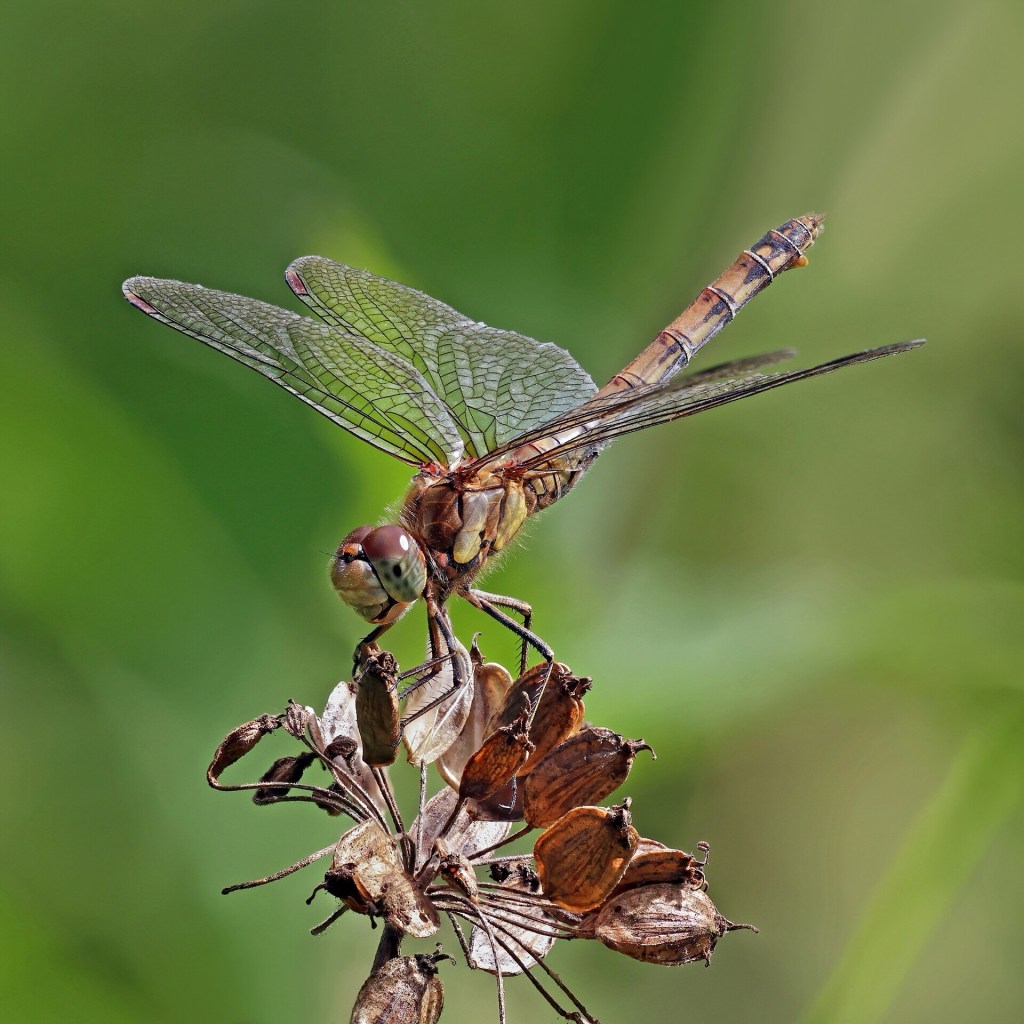
(Charles J Sharp)
Distinctive Darting
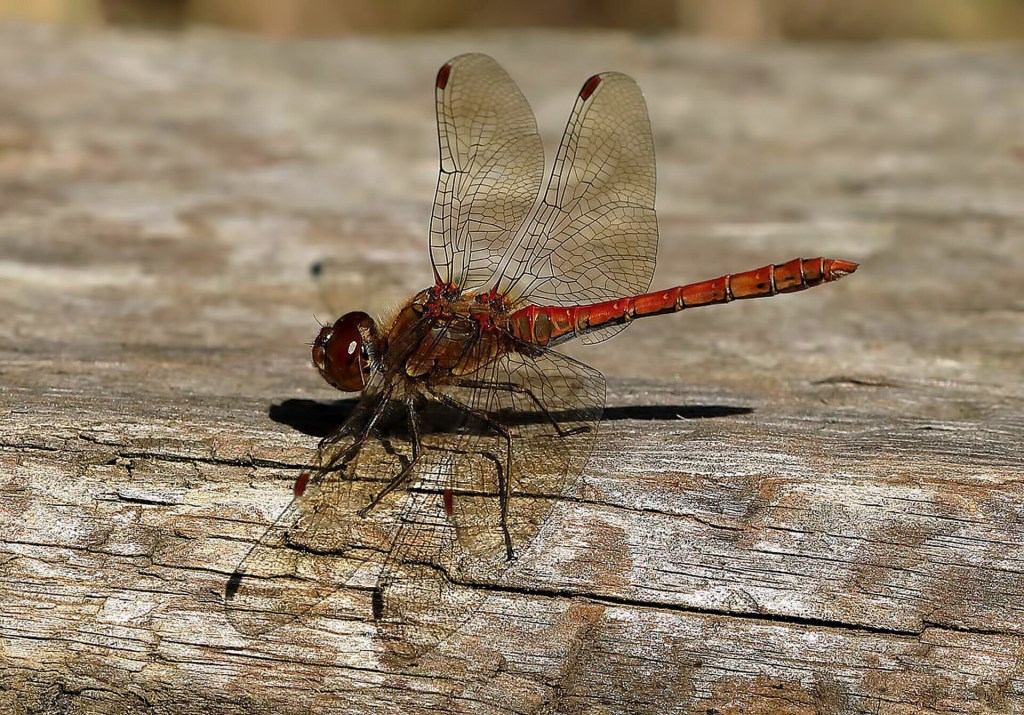
True to their name, these dragonflies deploy a distinctive “darting” flight mechanism. Instead of patrolling the skies non-stop like larger Brown Hawker dragonflies, Common Darters are patient, they spend long periods resting on favoured, sun-warmed perches, such as wooden garden fences, low stone walls, or reed-stems.
When a tasty fly or midge ventures too close, they explode into the air, snatch their prey mid-flight, and promptly return to the exact same spot to eat it at their leisure.
Their incredible wings, which enable them to dart out like this and swoop, dive, hover or even reverse at the speed of thought, also serve another purpose. As well as giving them the edge over their prey in terms of speed and manoeuvrability they lend this dragonfly an advantage in time too.
Ace up the Sleeve
As September turns to October, and the air temperature drops, the Common Darter holds an ace up its odonatan sleeve, one which when played allows them to hunt for longer in the day and later in the year. This trick is the ability to angle their wings toward the sun like tiny solar panels, thus absorbing enough heat to keep their muscles active long after other dragonfly species have died out for the winter.
This means that is not rare for entomologists to record sightings well into November or even early December.
Adaptable Anisoptera
While they can be scarcer in the highest, windswept upland zones of the Pennines, Common Darters are incredibly abundant in lower-lying habitats.
They are remarkably unfussy breeders and will gladly move into:
- Large nature reserve lakes (like Middleton Nature Reserve at Morecambe or Brockholes near Preston)
- Slow-flowing rivers, drainage ditches, and canals
- Small, shallow garden ponds right in the middle of suburban estates
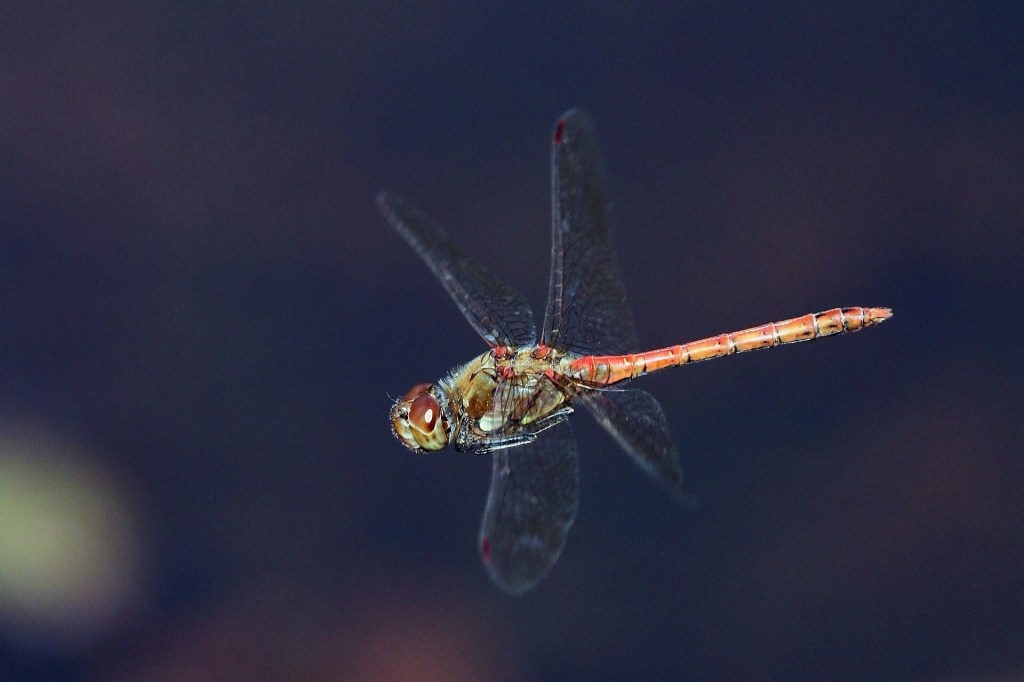
Striolatus comes from striola, latin for a fine line or streak, which is the diminutive form of stria, a furrow, groove, or channel, thus describing this species’ striped markings (Charles J Sharp)
Fast Living
The life of an adult Common Darter is brief, lasting only a few weeks, but their overall life-cycle spans about a year. Mating pairs fly in tandem over the water, with the female dipping her abdomen beneath the surface to deposit her eggs onto submerged weeds. The aquatic larvae hatch and spend roughly a year hidden in the mud, acting as voracious underwater predators before climbing up a reed to emerge as adults the following summer.
Because they are so adaptable, the Common Darter is the perfect target species if you want to invite more wildlife into your garden. By digging a simple garden pond and planting some native reeds, you can create a vital sanctuary for them.
The next time you are out on an autumn walk keep your eyes on the fence posts and foliage as you pass and you might just catch a glimpse of this fiery little sentinel keeping watch over the changing seasons.
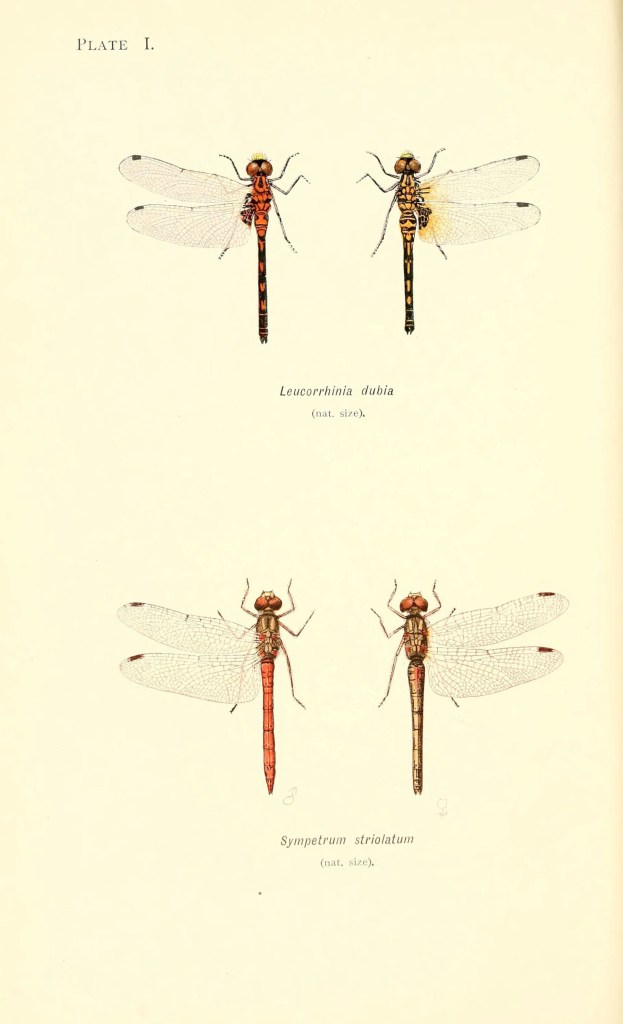
William John Lucas, 1900
The Dragonfly
Alfred, Lord Tennyson (adapted)
Today I saw the dragonfly
come from the wells where he did lie.
An inner impulse rent the veil
of his old husk: from head to tail
came out clear plates of scarlet mail.
He dried his wings: like gauze they grew;
Thro’ crofts and pastures wet with dew
a living flash of light he flew.
(In his original work ‘scarlet’ was instead ‘sapphire’)
Thank-you for reading. If you enjoyed this piece and would like to support further articles on the wildlife and history of the Northwest, you can buy me a coffee here.
Alex Burton-Hargreaves
(September 2026)

