
Controlled burning, also known as Prescribed burning, Muirburn or Heather burning, has long been used as a method of managing the heather moorlands of the British Isles.
Every year, from the 1st of October to the 15th of April in upland areas and from the 1st of November to the 31st of March in other areas, outside of the breeding seasons of bird species and when the weather is suitable; (dry with a predictable wind direction), teams of gamekeepers, farmers and whoever can be recruited from the local community head up to the grouse moors.
The teams will be kitted out with equipment to ignite, control and put out the fires, including paraffin torches for igniting the fires, specialist fogging units, which are like small fire engines, to extinguish them if they get out of control, and a small vehicle equipped to mow around the area intended for burning.
A strip of heather to be burnt will have been selected long ago with the aim of maintaining a habitat fit for breeding pairs of Red Grouse, Lagopus lagopus scoticus.
Accessible young heather shoots for the chicks to reach and dense old plants for the brood to reach quickly for safety when a marauding Peregrine, Hen Harrier or other bird of prey patrols overhead being the two most important criteria.

Is burning a thing of the past?
Recently there have been some concerns amongst keepers, conservationists and landowners that burning can expose our fragile acid uplands to erosion from rainfall, with a resulting influx of silt and peat into streams and watercourses.
Heather burning is also seen by some as a contributor to atmospheric CO2 levels at a time when this is something of a worry, (although this isn’t necessarily always the case as recent research, cited below, has found).
Keeping public perception in mind alternatives to burning such as mowing, cutting and grazing are being considered and trialed, York university is one academic body which is looking into this and there are other bodies carrying out research into viable alternatives too.
Naturally our moors would be grazed by herds of herbivores such as deer and occasionally lightning would spark wildfires which would burn, uncontrolled, across the hills, with regeneration taking several years.
But in our small and heavily populated isles uncontrollable wildfires are something to be feared and quenched immediately, and on our remaining, compartmentalised pockets of moor, which are often farmed and managed for many different purposes, the herds of grazing animals which used to exist before Neolithic times simply cannot now.

Licensing and the legal battle
Currently Natural England, the government body in charge of matters such as this, have a licensing system for controlled burning and this is has been legally challenged by Wild justice, an environmental pressure group, with the British Association for Shooting and Conservation and several other shooting and conservation groups issuing counter-challenges.
In many parts of the world, such as the USA, Australia, and Southern Europe, controlled, or prescribed burning is considered one of the best methods of practice for preventing wildfires, and some spectators are noting that the UK effectively has a wildfire season itself now due to climate change.
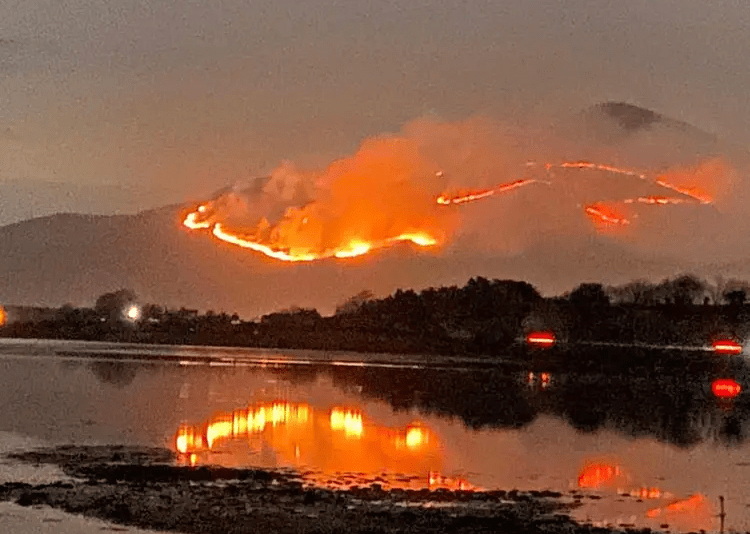
Controlled burning does lead to CO2 and particulates being released into the atmosphere, but on an much smaller scale than that which is released by uncontrolled wildfires, such as that which took place on Saddleworth Moor above the City of Manchester in 2019, and in Northern Ireland, where the Mourne mountains were swept by a huge wildfire in April 2021, which burnt over 200 Hectares (1 Hectare is equal to a square with sides of 100 metres, so 10,000 m2).
There local firefighters and other community groups have formed a team to practice controlled burning and prevent future wildfires and other areas are looking to replicate this model too.
Disconnection with nature
Of course the sight and spectacle of heather burning is simply too unpalatable for many now, especially in a time when what used to be the familiar event of stubble burning isn’t carried out on a wide scale anymore, but wildfires around the world are familiar on our tv news programmes.
This is increasingly the case in our cities and countryside where people are becoming more and more disconnected with the nature of the British countryside and its cycles.
With some of our biggest landowners now being charities such as the National Trust and the RSPB, who make most of their income from the public, over 84% of which live in urban areas, there is a huge amount of money invested in how their land management methods are perceived by the public, other landowners are following suit.
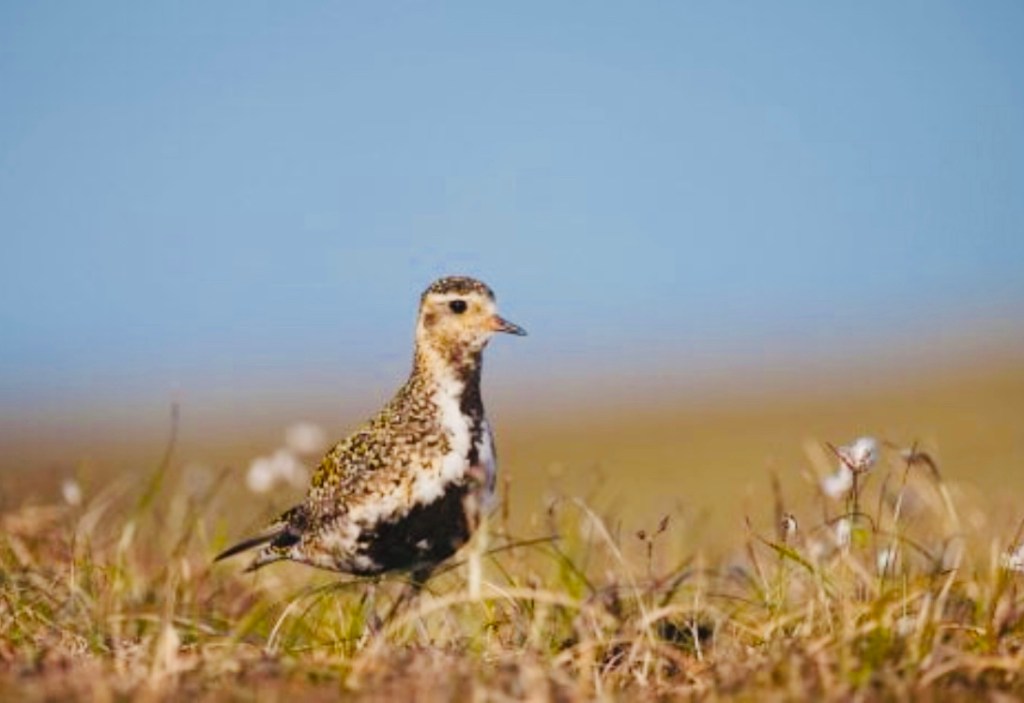
This means that burning as a method of land management may be resigned to the past in favour of management methods such as mowing and grazing, even if these are not necessarily the most practical and effective methods, in order to preserve our precious moorlands and peat bogs for threatened species such as the Emperor Moth, Curlew, Golden Plover and many others which rely upon it.
Further reading
For further reading into the subject here’s some peer-reviewed research done by Cambridge Uni entitled ‘Controlled burning of natural environments could help offset our carbon emissions’, Natural England’s Wildfire Evidence Review from 2020 and York University have carried out research into the best methods of managing moorland habitats, with their latest publication on the practice (2023) concluding that there is no single best practice of heather management and that different methods suit different circumstances.
A recent paper reports how research in Germany has found that territory densities of heathland breeding birds are enhanced by fire on military training areas.
A B-H
 Northwest Nature and History
Another good read, a point of interest. Dartmoor – controlled moorland fires are called “Swaling” which is permitted, and early in the year before nesting birds. The burn is intended to encourage new vegetation growth. Whereas “wild fires” tend to be deliberate arson and summertime.
LikeLiked by 1 person