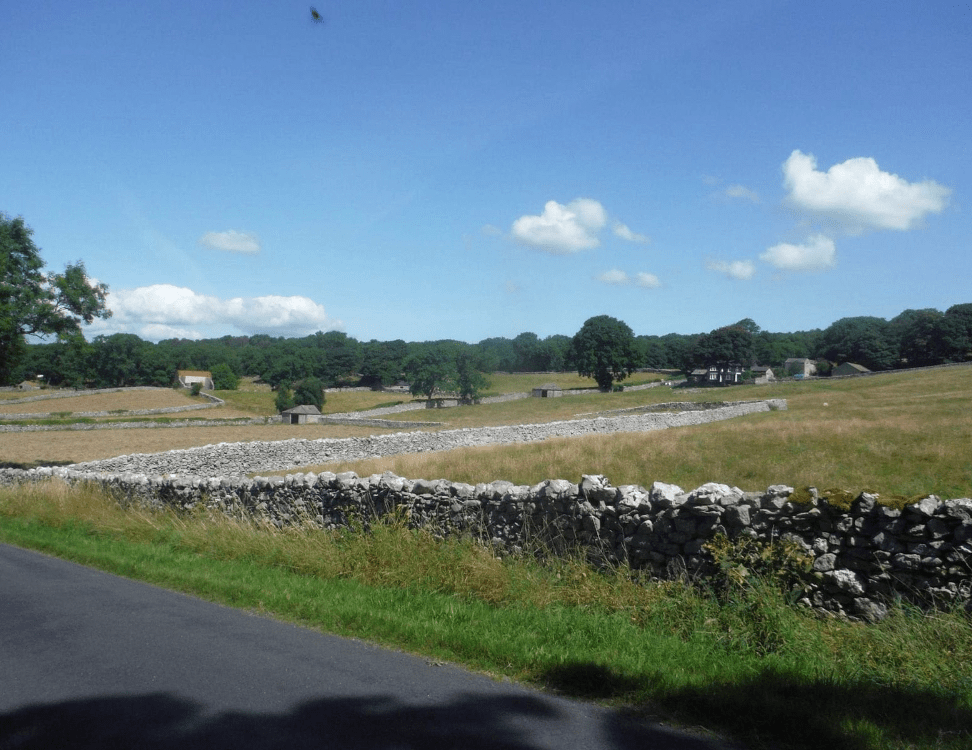
Visitors to the North of England often comment on the multitude of stone walls winding their way across the landscape, these are part of the character of the region which brings those visitors here in the first place.
On a cloudy day, their grey and green stones seem to fade into the hills and the skies above as the endless lines of walls march off into the distance, resting beneath row after row of softly folded clouds. And then one day the sun will inevitably come out and it’s like you’ve been teleported to an entirely different country, as the stone walls take on an entirely new look altogether in the sunlight beneath the vibrant blue skies.
You might suddenly notice that these seemingly jumbled grey stones aren’t merely grey and grey alone, but are covered in beautiful blotches of white lichen (usually Parmelia saxilitis, which I’ll write about in a future article) that glint in the sunshine. If you look closer you’ll see splashes of orange and yellow lichen as well, which sometimes creates an effect reminiscent of military camouflage patterns along the stones.
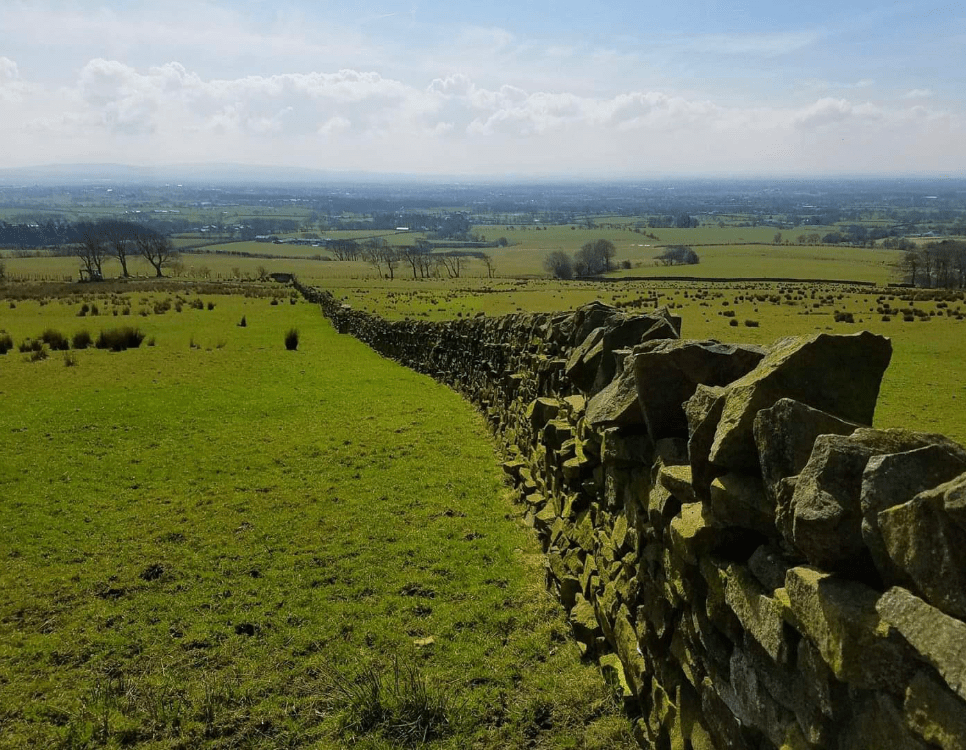
Why are there gaps in drystone walls?
Drystone walls are called this as they are made entirely without any mortar or other materials to help stick them together, therefore ‘dry’, however this leaves gaps between the stones, something which tourists often notice as they drive past and can actually see the sky straight through them.
This is because many of the walls here are quite ancient, and as such were made before the advent of mortar and other cement-like materials to build them up, and because it would simply cost too much to cement all those miles of stones together, so they have been built that way ever since.

How do they stand up then?
While I’m not an expert drystone wall builder or stone mason myself, I have built a few small sections of stone wall here in the traditional style, helped local farmers fix theirs on innumerable occasions, and received an NVQ in Drystone walling at college,so I can discuss the basics of this practice, I’ve even helped build Bee Boles (which I’ll also write about, see image below).
Most drystone walls are made by carefully selecting the correct stones bit by bit as the waller progresses onwards and upwards. He must ensure that each stone will properly rest within the wall, sitting still and balancing atop the last layer of stones, and he must do this with the minimum of picking and choosing, or shaping with a hammer or chisel, as this will simply take too long.
An experienced or professional drystone waller will have to quickly achieve ‘the knack’ of being able to pick the right stone for the job straight away without any faffing about!

There are many tricks and methods and one I learned the hard way is a common technique which is to actually place the smallest stones along the bottom and then finish or ‘cap’ them with your larger and heavier rocks.
Although this is seemingly counterintuitive at first, you find that the weight of these larger rocks can help hold down the layers beneath, compressing them together and preventing them from moving or spilling out of the wall, there is an awful lot of trial and error as you go, especially when it’s your first time learning how to build a dry stone wall.
Why are there stone walls everywhere in the North of England?
The land up here, especially in Bowland, Cumbria and the Pennines, is exceptionally rocky, and as such it has always been a practical solution for farmers to achieve two important tasks at once, to kill two birds with one stone as it were. One is to clear the land of excess stones so that more grass could grow and the other is to simultaneously create separate, stockproofed, fields.
Given that there are so many rocks lying around all over the place, this free material may as well be picked up and put to use, and farmers, like any other businessmen, very much like the idea of ‘free’!

I’ll write about some of the techniques and terms used in drystone walling, such as ‘through-stones’, ‘coping stones’ and ‘cripple holes’ in future articles, but for now, if you want to learn the art, for it is an art form in the purest sense, of drystone walling yourself the Dry Stone Walling Association offer courses and qualifications and it is well worth learning as popularity in this ancient craft is booming at the moment!
A B-H


Interesting read, I was looking at some lovely dry stone walls the other day in Hartsop and there were a couple of guys repairing one
LikeLiked by 1 person
Thankyou, glad you liked it, 🙂 I thought that I couldn’t write about the northwest of England without including drystone walls, I couldn’t do it as a job though, I just don’t have the infinite patience you’d need!
LikeLiked by 1 person
I don’t think my back would like it much!
LikeLiked by 1 person