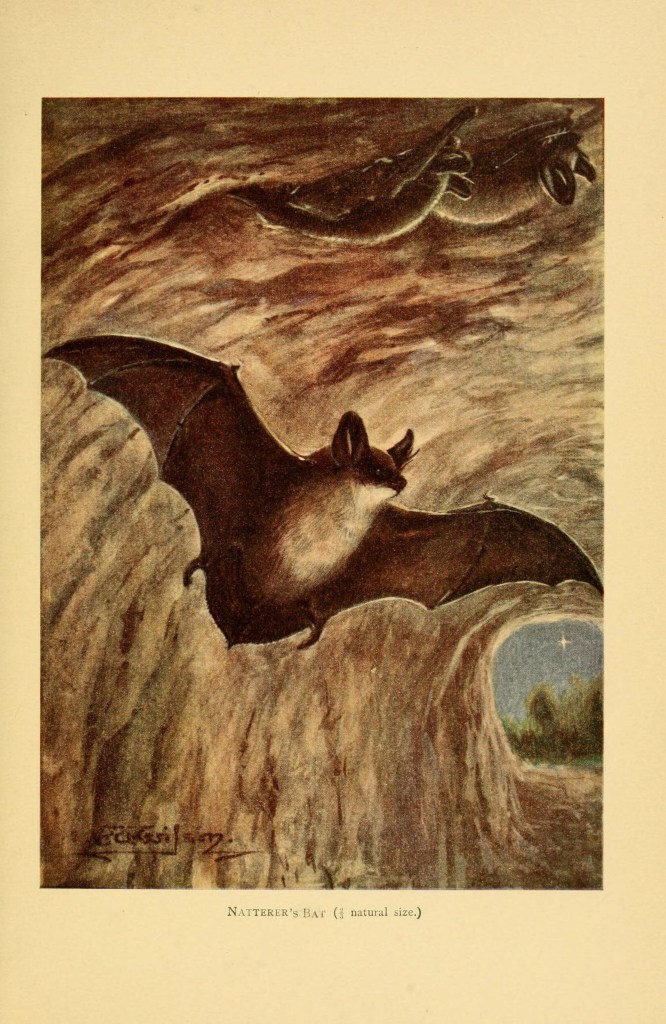
The Natterer’s Bat, Myotis nattereri, named after the Austrian naturalist Johann Natterer is a medium sized species found throughout the British isles.
Appearance, flight and echolocation
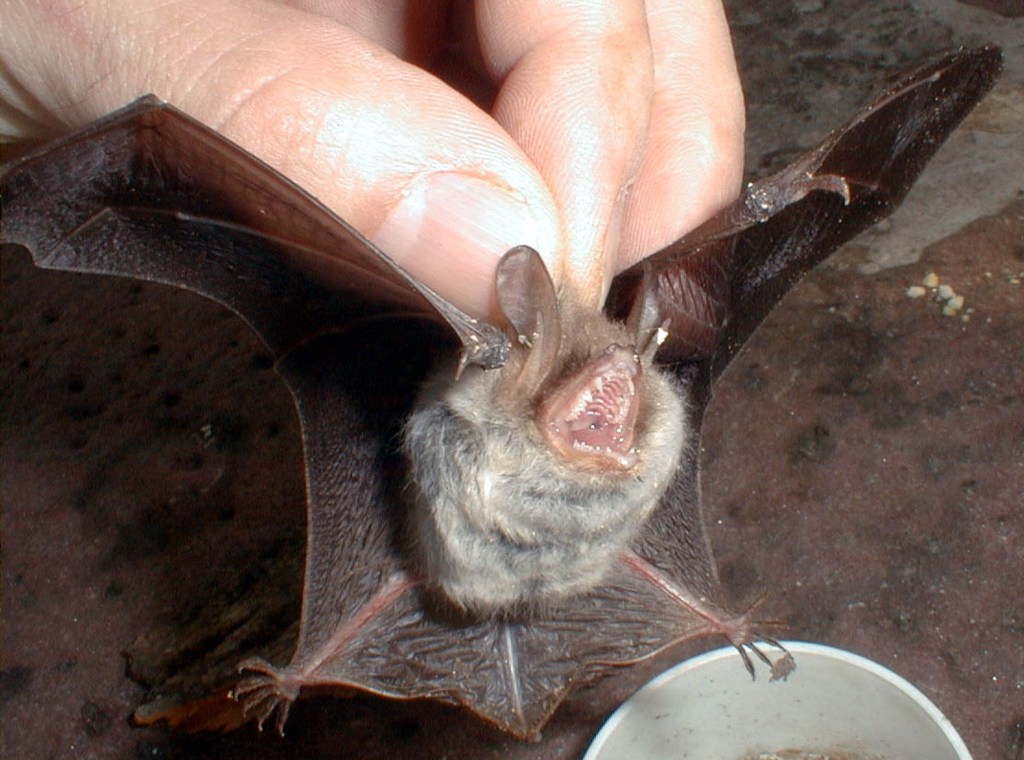
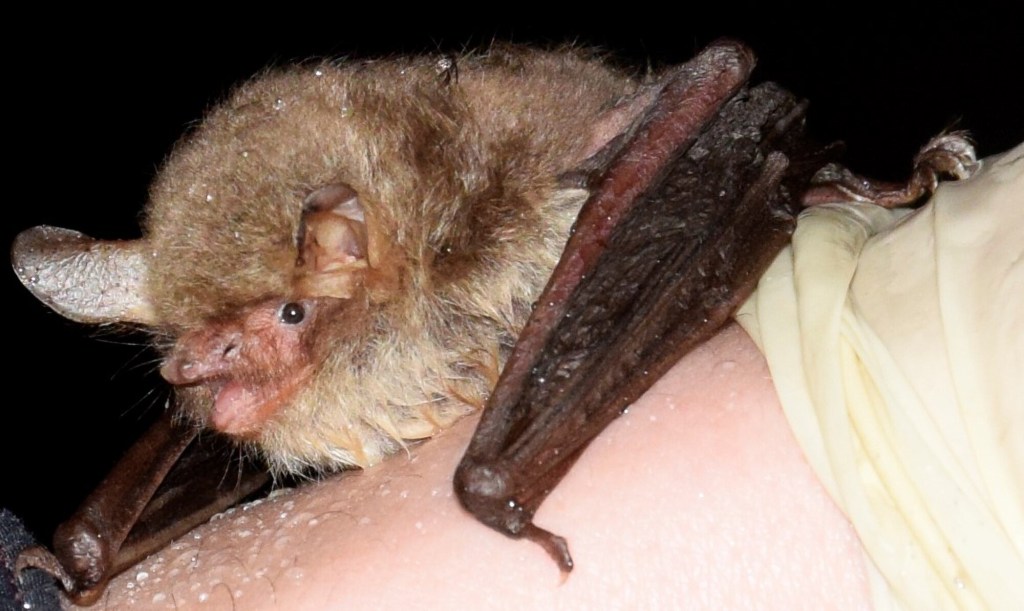
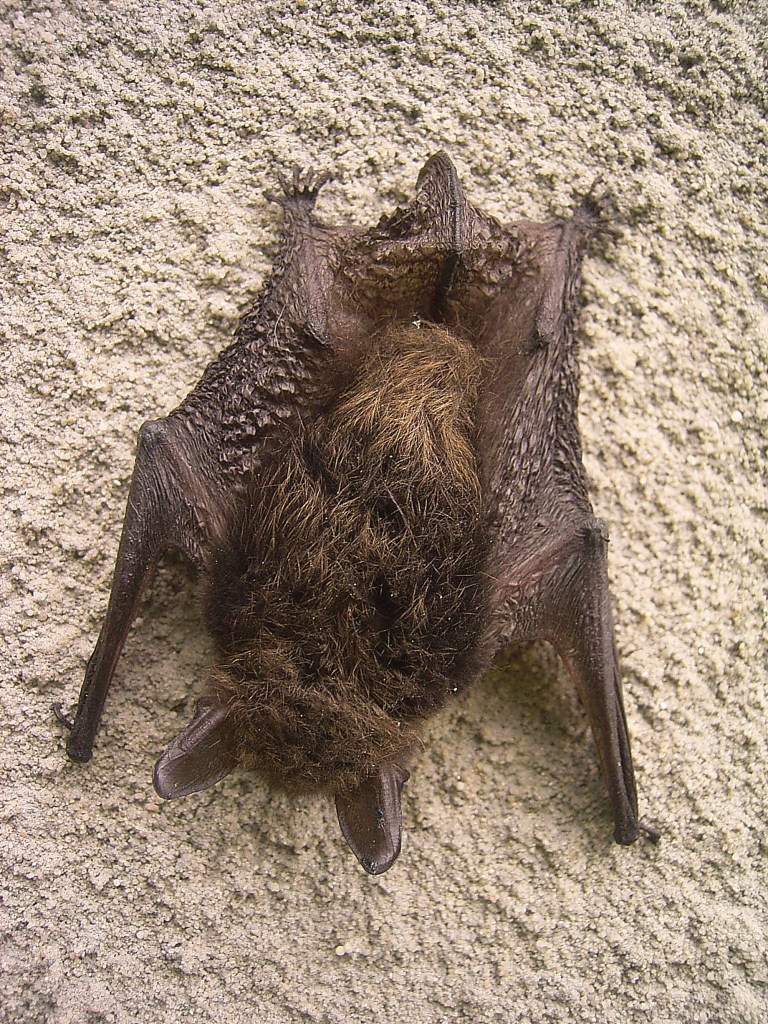
They have light brown fur on their upperbody and pale white fur underneath and their face, which is long and pink, has little fur covering. Their ears are long and narrow and they will fold them forward over their nose when sleeping and hibernating.
Altogether, although being classed as a ‘medium sized’ bat, they are still remarkably small creatures, a fully grown adult is only 5cm from nose to tail and when they are at their heaviest, in autumn when they have fattened up for hibernation, they only weigh 12 grams, and this will have halved by the time they wake up in spring!
Their wings are light brown and make the Natterer appear a lot larger than it is, they are broad and taper to a point at the tips and span about 30cm. This multi-role shape enables them to fly fast, yet maneuver at low speeds when they are close to ground level, it also gives them the ability to hover for short periods.
When in very slow flight their long tail, which can be up to 5cm in length, will be held straight down and will be used to snatch prey, such as spiders, from surfaces.
Natterer’s bats are quite a vocal species, and communicate in the frequency band of 40 to 60 kilohertz, using a series of clicks and chirps which they change to high pitched squeals when in flight, and if they are alarmed they emit a deep humming sound.
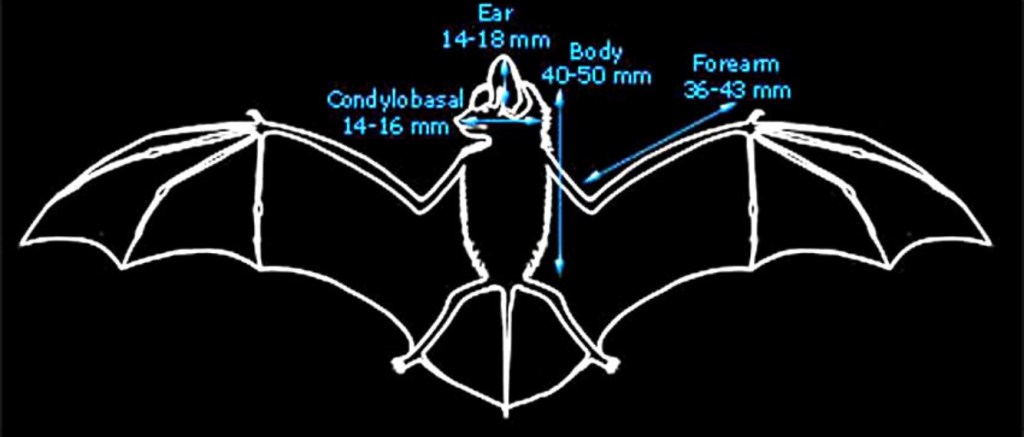
(image by bio-bris.ac.uk)
Habitat and hunting grounds
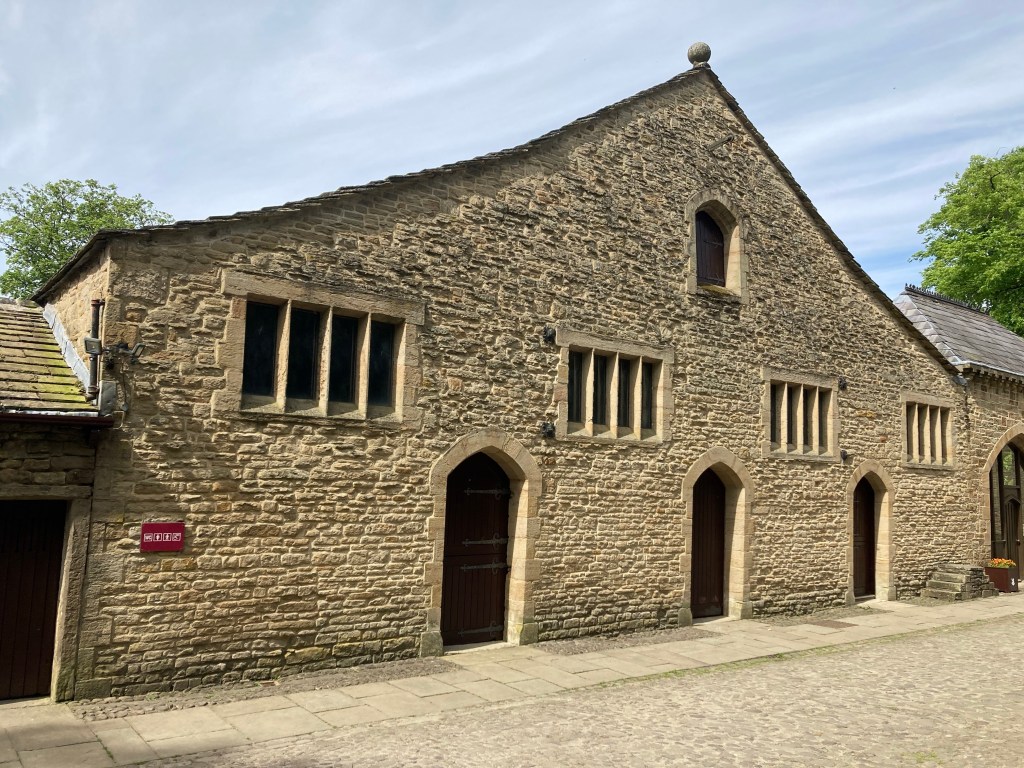
Natterers prefer woodland habitats which are close to their favourite hunting grounds over bodies of water and can often be found in the same areas as Daubenton’s bats, they will also use the same roosting sites, such as under bridges and in old barns and hollow trees.
In the summer these colonies will be made up of breeding females and their offspring, with the males remaining separate and alone in their own spots, in winter, however, Natterers need a location with high humidity and a constant temperature, so will search out places like damp caves, old mines and cellars.
A perfect habitat will have both summer and winter roosts but such places are hard to find, especially as many old barns are now converted into houses, so this restricts their range a great deal.
Predators and prey
This is a very late bat, only emerging in the evening, usually about 1 hour after sunset, they have traditional hunting sites and regular flight paths, which they head straight for.
They have 2 different hunting strategies for catching prey; when hunting over water they will catch their prey, such as moths, Caddis flys, Stoneflys and midges. When hunting in vegetation and woods they will snatch prey such as spiders, beetles, woodlice, and other small arthropods, straight from tree trunks, leaves, branches or the ground.
One of the reasons Natterers can emerge so late, and so avoid predation themselves by Owls and other birds of prey, is that these methods of hunting are very efficient, and when they catch larger prey items they will take them back home to the roost to eat later at their pleasure.
Courting behaviour and rearing young
Breeding season for Natterer’s bats starts in autumn, at this time of year roosts will contain both males and females. The male, hitherto unwelcome in the female-only roost, will be allowed in at this time of year, and will find a spot in the roost to perch himself and attract females by singing.
Once they have mated the female has the ability, like many small mammals have, to delay the fertilisation of her eggs until spring, when they will gather together in maternity roosts to collectively raise their young, which they will give birth to around June.
A female only gives birth to 1 baby in a season and the young bat will be doted over by the mother until fully weaned after 6 weeks, they are fast to develop, turning from a silvery grey to the adult colouration of light brown within 9 weeks old, by which time they are able to hunt for themselves.
Population and prospects
The life cycle of the Natterer’s bat, and their specific requirements for roosting and hibernating sites, makes them vulnerable to man-made changes.
As with a lot of our native species loss of habitat is their main threat, particularly loss of nature woodland and the hollow trees in which they like to live, chemical treatment of attic timbers has also been shown to have harmed some populations and the increased use of pesticides has reduced the abundance of the insects upon which they are totally reliant.
As Natterer’s bats only produce one offspring each year this also makes any population losses hard for them to recover from, although they do live for 7 years on average, and can live up to 20 years at the most, so local populations can recover if given a chance.
The overall British population was estimated at 100,000 in 1995 and recent tree planting schemes across the country, on local and national scales, should mean there will be plenty of mature native broadleaved woodland for these bats to live and hunt on in the future.
Recent research has also found that Natterer’s bats have ancestral swarming sites, which are being identified and protected, these are locations where many bats will gather, from as far away as 25km from their roosts, and swarm, leading to what is called ‘outbreeding’ from different colonies.
The protection of these should prevent interbreeding due to isolation of colonies, which is always a worry for biologists studying vulnerable species such as the Natterer’s bat, and goes to show how research and understanding of a species behaviour can help secure its future.
Twinkle, twinkle, little bat!
How I wonder what you’re at!
Up above the world you fly,
Like a teatray in the sky.
(Lewis Carroll)
A B-H


4 thoughts on “Natterer’s Bat”