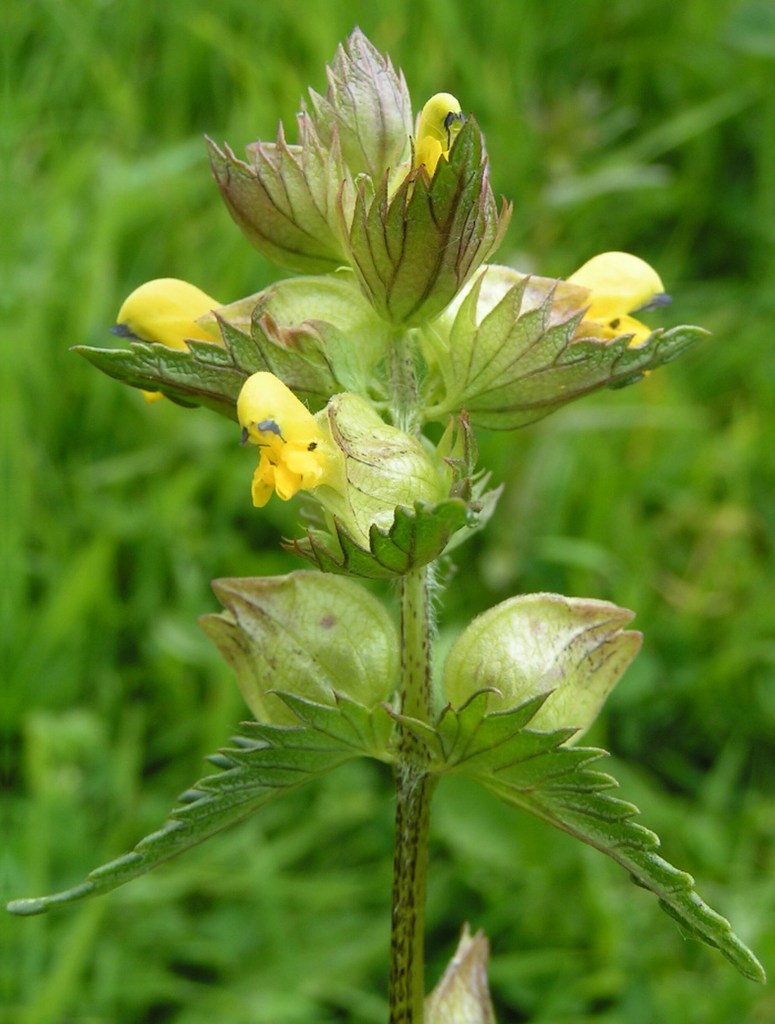
The Forest of Bowland has several SSSI’s or Sites of Special Scientific Interest within its bounds and most of these are of interest to botanists for the rare native plants they harbour.
One of these is the Hay Rattle, Rhinanthus minor, also know as the yellow rattle or cockscomb. The plant gets its name from the rattling sound its dry seed pods make and as its natural habitat is in hay meadows. The first part of its scientific name; ‘Rhinanthus’ refers to the supposedly nose-like shape of it’s flower.
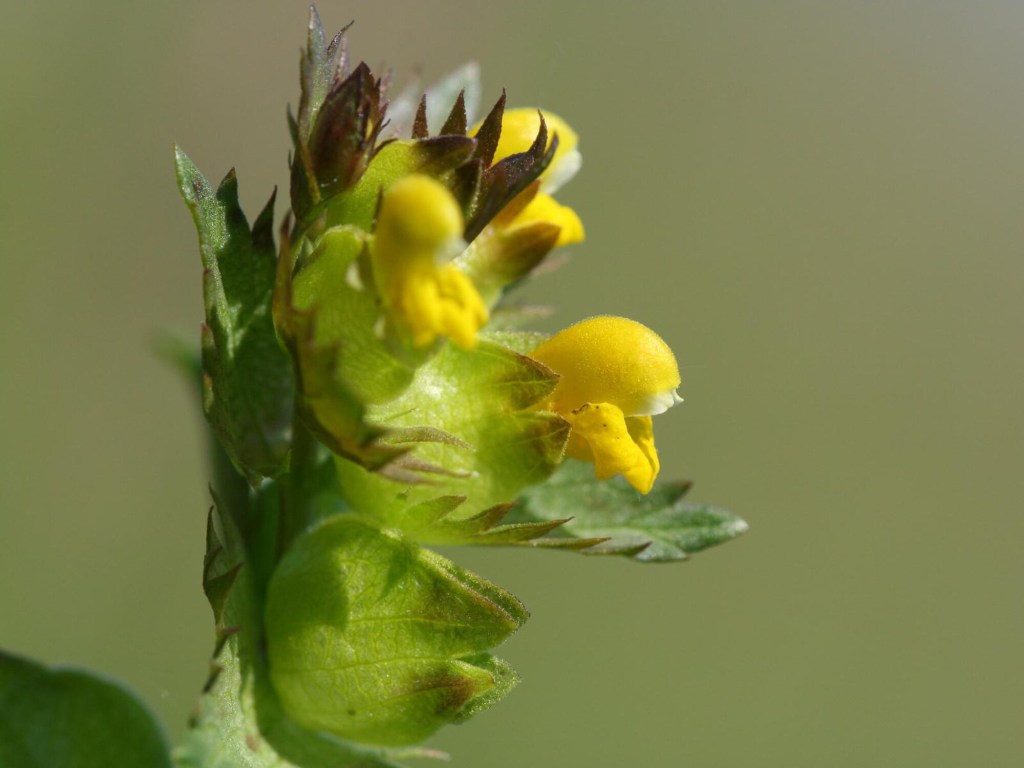
Attractive flowers
It flowers from June to September with clusters of yellow flowers blooming on the top of a stem about 18 to 24 inches high. The flowers attract larger pollinating insects such as bees and bumblebees to pollinate them and the seeds form in rounded brown cases, these are spread through the movement of animals and people knocking them from their cases. They grow best in lightly disturbed, dry soil, this limited dispersal method means the plant doesn’t spread very far very fast, which limits it to a small area.
Semi-parasitic
It is a semi-parasitic plant, getting some of its water from the roots of other plants, mainly grasses, if you look closely at where a hay rattle is growing you might notice that any grasses around it will be shorter and thinner, this makes it quite useful in a wildflower meadow for stopping grasses becoming too dominant and rank, so giving other plants a chance to establish.

Scything
Traditionally the rattle of the seeds told the farmer it was time to cut the meadows and the hay rattle was spread very well through scything, the sweep of the scythe’s blade carrying the seeds from the plant and broadcasting them across the meadow, with the movement of hay bales containing the seeds helping the plant to spread further afield.
Once very common and well known it is now quite rare in the British isles, over-fertilisation of fields and mechanical grass cutting methods are thought to have killed it off in meadows where it used to be common, also grazing from sheep and cattle and the over-fertilisation from their manure has further discouraged it.

Where to see
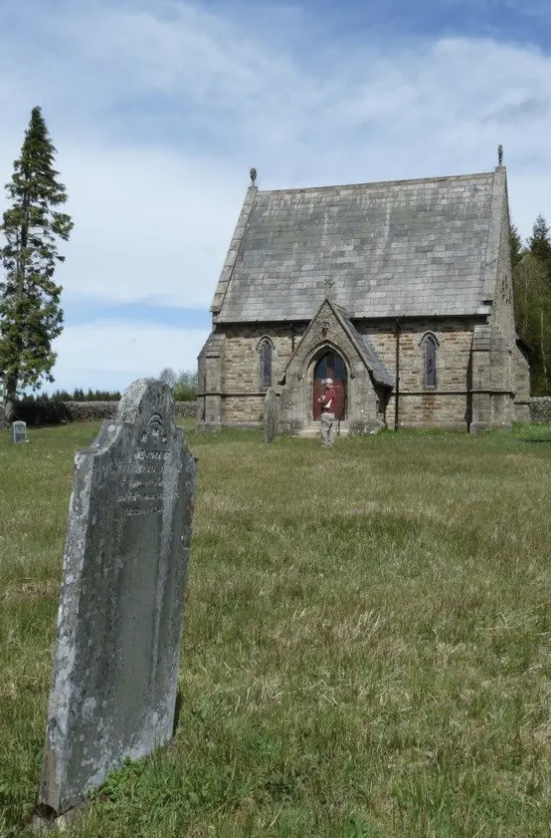
In Bowland there are several places it grows, two places you can easily find it which are accessible to the public are the graveyard at Dalehead chapel in Gisburn forest and at Bell Sykes meadow SSSI near Slaidburn.
The graveyard at Dalehead chapel was historically never ‘improved’, meaning fertilised or ploughed to encourage grass, always remaining a corner of set-a-side land, so it is now home to over 130 species of wildflowers, herbs and rare grasses. It’s a beautiful place to visit at any time of year but at the height of summer when the flowers are all blooming and swarming with bees it is absolutely stunning.
Bell Sykes or Coronation meadows are situated east of the ancient village of Slaidburn and have been kept as traditional meadows for long enough to allow many species of wildflowers including the hay rattle to establish themselves here, the meadows are farmed by the Cowking family and guided walks are regularly held here by local ecologists several times a year that are well-worth booking tickets for.
Growing it yourself
If you fancy growing yellow rattle in your own wildflower meadow, seeds can be bought online and from garden centres, you have to prepare the ground properly though. First cut the grass really short, remove any clippings, moss or dead grass, (moss means it’s too damp for it anyway) ‘scarify’, or scratch and expose the bare soil with a rake and scatter the seeds on the bare, loose soil. The seeds must be spread before winter as they need a few months of cold weather to encourage them to germinate in spring. Maintain the meadow by mowing really short once or twice in the summer, obviously avoiding the hay rattle, and remove the clippings. It’s quite hard to grow in a garden though as it needs the right habitat and infertile soil to begin with.
Please remember that rare plants like the hay rattle, orchids and other species you might find are likely to be protected species or in a protected area so it may be illegal to pick them or gather the seeds without permission. Picking of any plant or part of a plant in an SSSI is illegal.
So leave them for the bees and other people to enjoy! just take some memories and photos home and why not try to find out how a plant got its name too, some of the names aren’t as straightforward as the hay rattle though!
A B-H
 Northwest Nature and History
There are fields above Grindleton full of it. But thanks for the information on Dale Head Chapel, I’ve picnicked in the grounds but never seen inside it.
I’ve just uploaded some pictures of Bird’s Foot Trefoil and Mouse-ear Hawkweed – beautifully named.
LikeLiked by 1 person