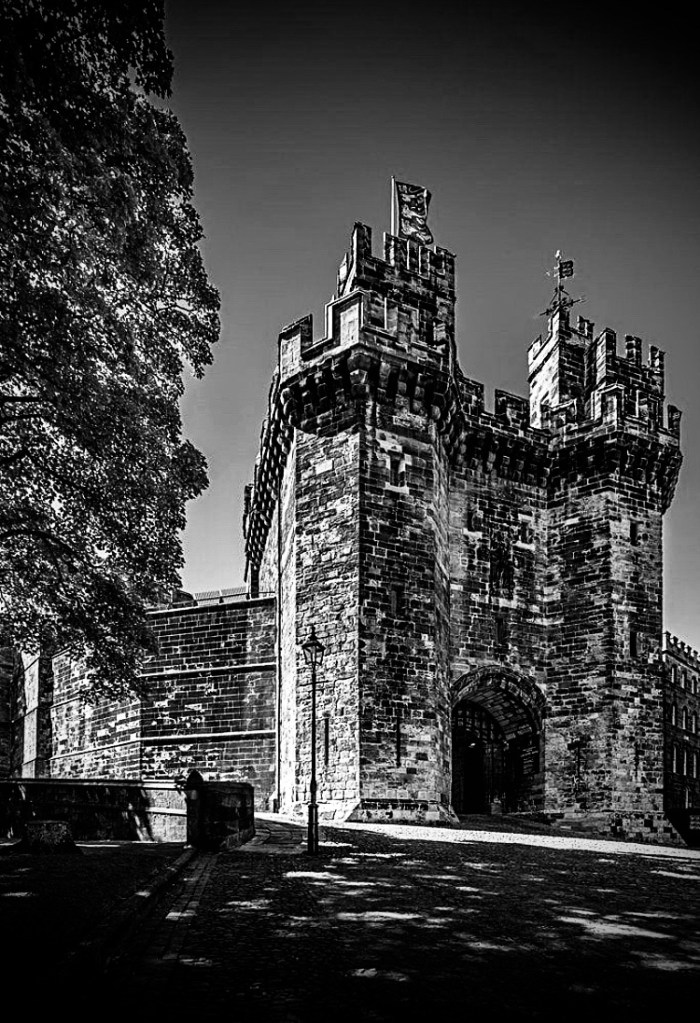
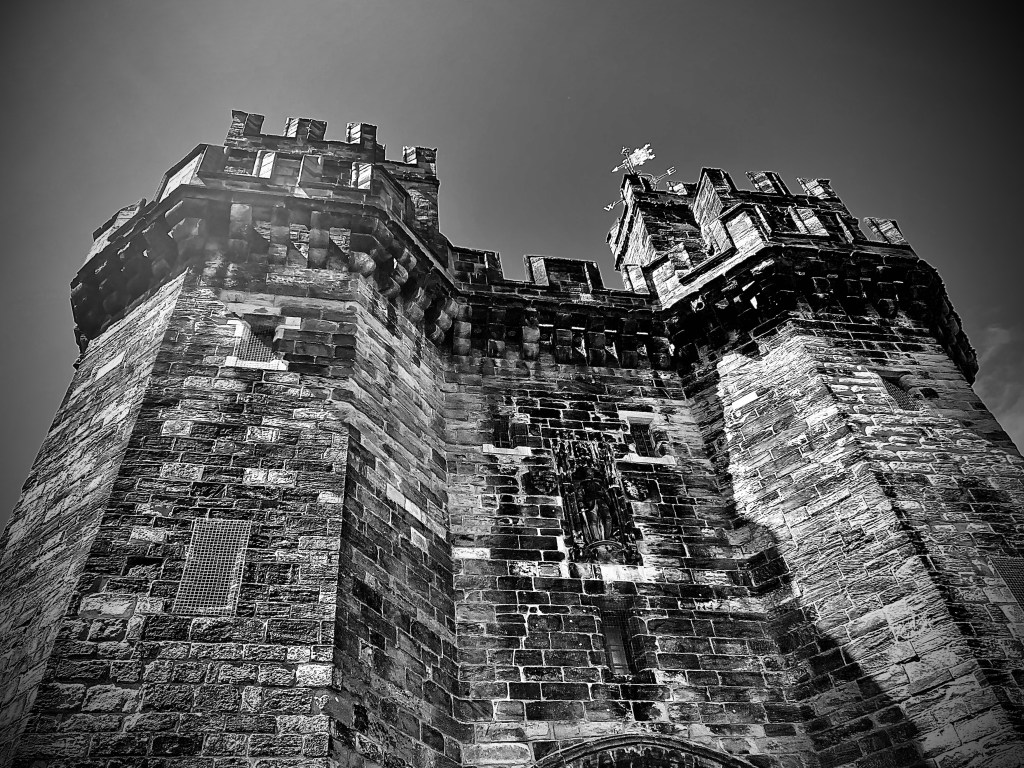
It is over Four Hundred years since the infamous Pendle Witch Trials at Lancaster where the accused twelve were taken to be sentenced and hanged in 1612.
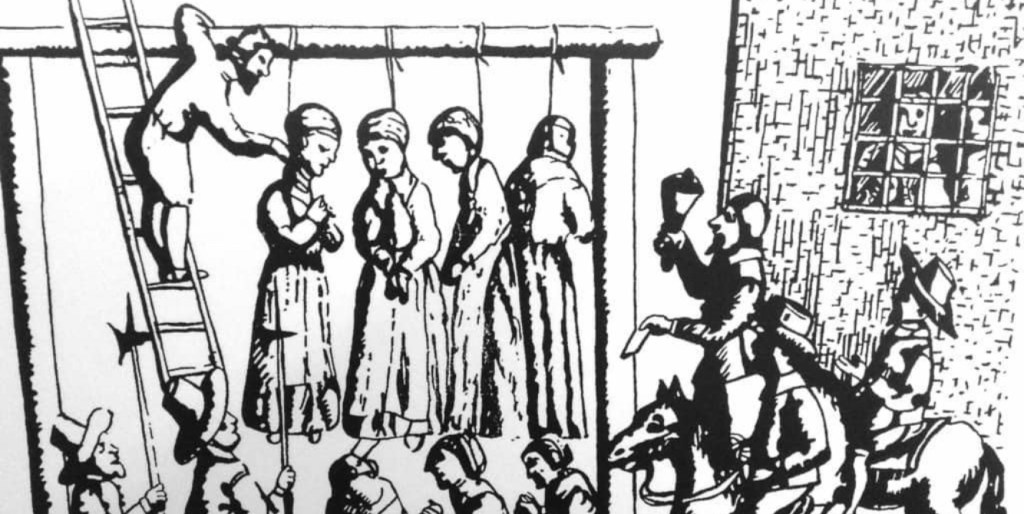
In that fateful year, between the 17th and 19th of August, Eleven people went to trial on suspicion of practising witchcraft, it should have been Twelve but the grim conditions of the Castle’s Dungeon claimed the life of elderly Elizabeth Southerns, known as ‘Old Demdike’, who had practiced witchcraft for over Fifty years. Of the remaining Eleven Ten were tried at Lancaster Castle and One was taken to York, Jennet Preston, who was tried there because she originated from Gisburn in Yorkshire.
Six of these poor souls came from two Lancashire families, the Demdikes and the Chattox, who were bitter rivals, for a long while they had both been headed by old, yet strong-willed widows; Elizabeth Southerns (Old Demdike), and Anne Whittle, who was known as ‘Mother Chattox’.
Feared or Respected?
Of course knowledge has always equalled power and in poor farming communities such as those the ‘witches’ came from these skills made them very powerful indeed, however, to the outside world the control and sway they had over others made them sources of suspicion and threat.
Both women were reputedly feared in their local communities, although respected might be a better term as at that time ‘witchcraft’ referred to the ancient crafts of herbology and zootherapy (medical use of of animals and their products) and their uses for healing man and beast, which were hugely useful and valuable skills in farming communities like Pendle, especially when it came to healing livestock.
James the First
The King of England at the time of the trials was James the First, he was of the Protestant faith yet there was no Protestant doctrine of witchcraft. On the other hand James’ mother, Mary Queen of Scots was Catholic, and the Catholics held a very dim view of witchcraft, deeming that practitioners had made a pact with the devil and were incapable of redemption, so worthy of persecution.
In his reign James attempted to bring forth peace between Protestants and Catholics and the pursuit of Witches was one the assertions he promised in order to bring this about, he also genuinely feared that a Coven of Witches had made several attempts on his life.
James already had a morbid fear of violent death and was famous for adopting topical issues of the time and developing ‘expert knowledge’ of them, so he became obsessed with witchcraft, drafting a law in 1562, The Witchcraft Act, “An Act against Conjuration, Witchcraft and Dealing with Evil and Wicked Spirits”, which was punishable by death.
His obsession became so great he published a book on the subject in 1597; Daemonologie, In Forme of a Dialogue, Divided into three Books: By the High and Mighty Prince, James &c.
To the Assizes
It was under this Act that the Twelve were arrested, Eleven prosecuted, and Ten hanged at Lancaster, but for a long while there has been uncertainty amongst historians about the exact route that they were taken, a discussion which will probably never be settled as there are several paths that could have been used by the assizes.
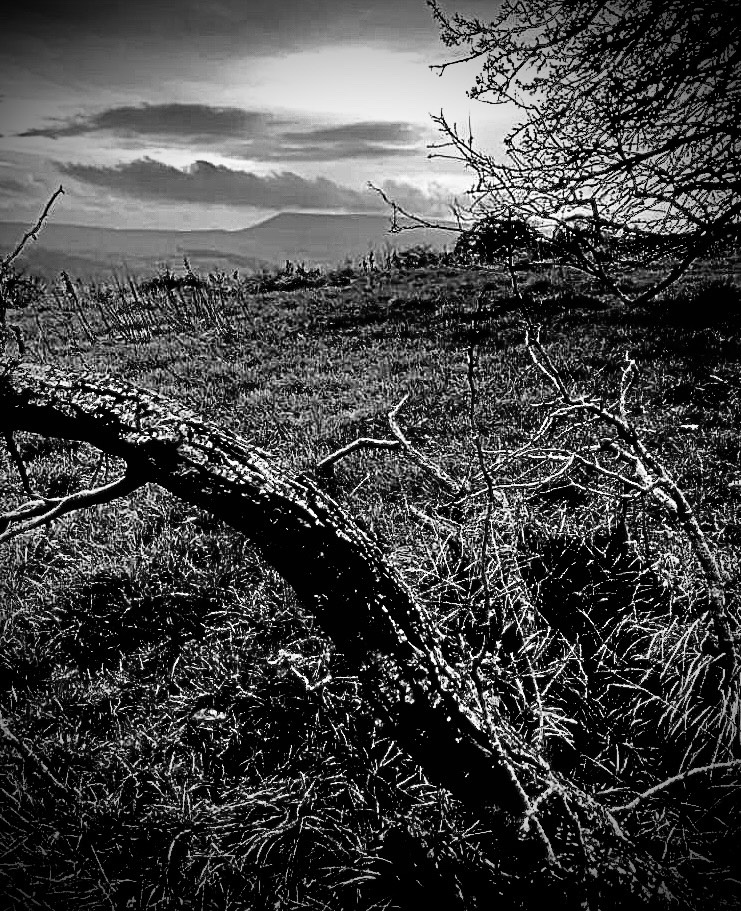
One route which along which they could have been taken might have been the Salter Way, an ancient Roman Road in use at the time. This track, long yet surprisingly traversable like most Roman roads, with a commanding and easily defensible aspect over the landscape, crosses over the fells from Slaidburn to High Bentham.

Some historians believe this way would have been unlikely as it would have required an extra days travelling due to its length, which would have made it necessary to stop at an Inn or other hostelry before-hand.
This would obviously have been undesirable bearing in mind the nature of the accused which were being conveyed to Lancaster and the only suitable place on this route would have been what is now known as the Hark to Bounty in Slaidburn. This would have been a Forest Court at the time rather then the public hostelry it is now and there is little or no mention of the Inn in the various accounts of the trial, although it was often frequented by justices travelling between the two Great Northern Assize Courts of York and Lancaster.
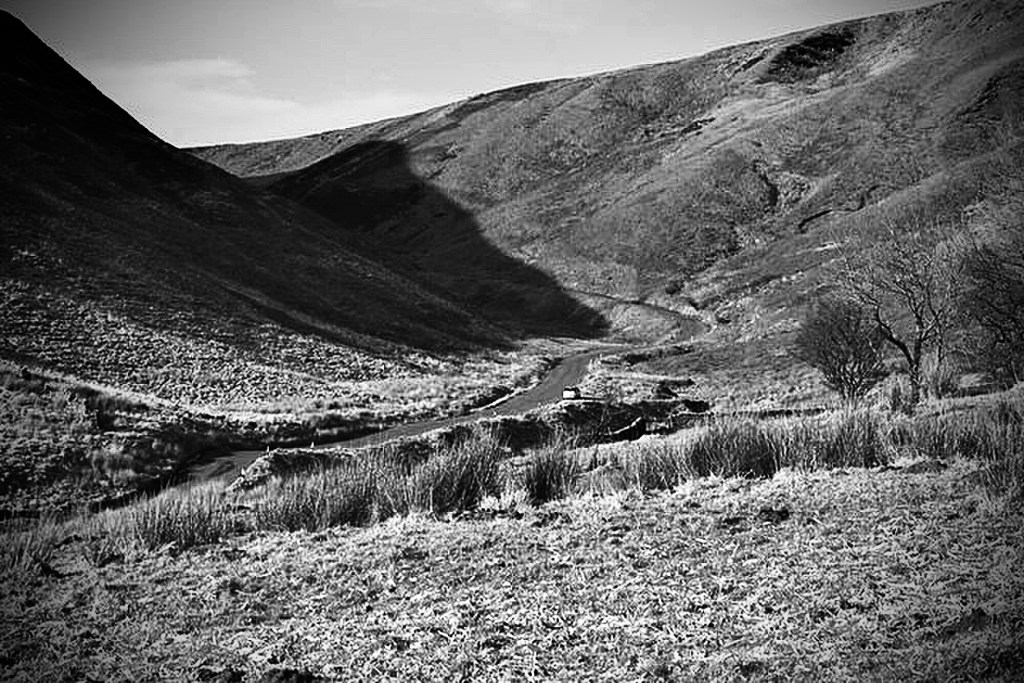
Another would have been through the Trough of Bowland as this pass through the hills has been used for centuries, although it was infamous at the time for being very treacherous and poorly-maintained, which does throw a small degree of doubt on this theory. However this would have been a more direct route which passed through the now mostly disappeared village of Beatrix, which was one of the biggest villages in the area at the time (see the accompanying article for more about the history of Beatrix)
The Lancashire Witches Walk
A very popular long distance walk, the Lancashire witches walk follows one path they were thought to take. It winds 51 miles from the Pendle heritage centre in Barrowford, through the Ribble Valley and the Forest of Bowland and finishes at Lancaster Castle, where they were tried and hung.
The halfway point of the route is Slaidburn , where the Court for the Forest can still be visited by arrangement upstairs in the Hark to bounty inn.
The Tercet Markers
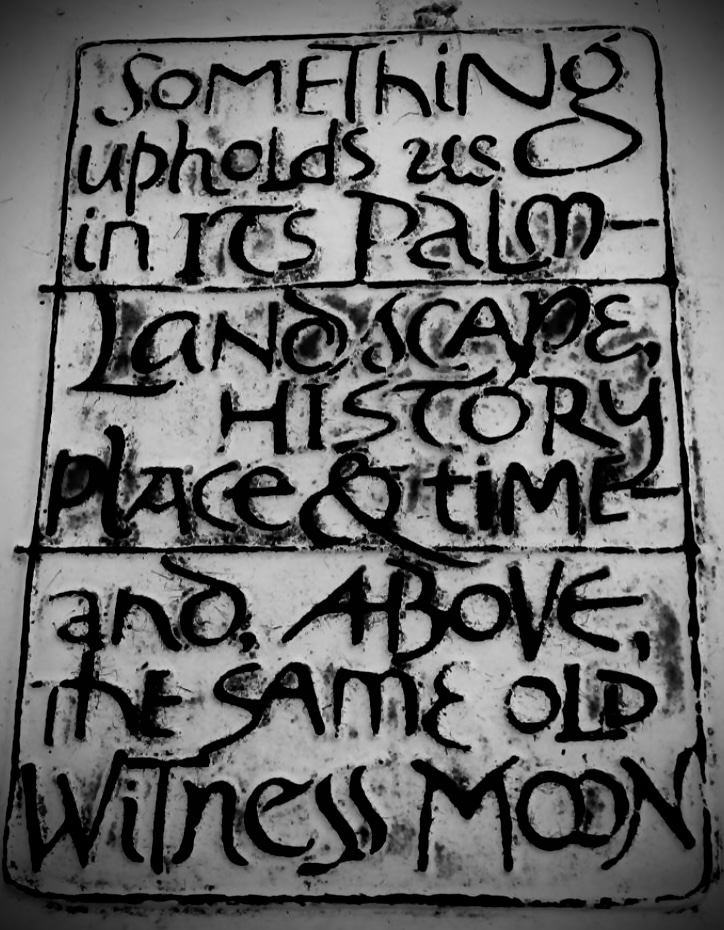
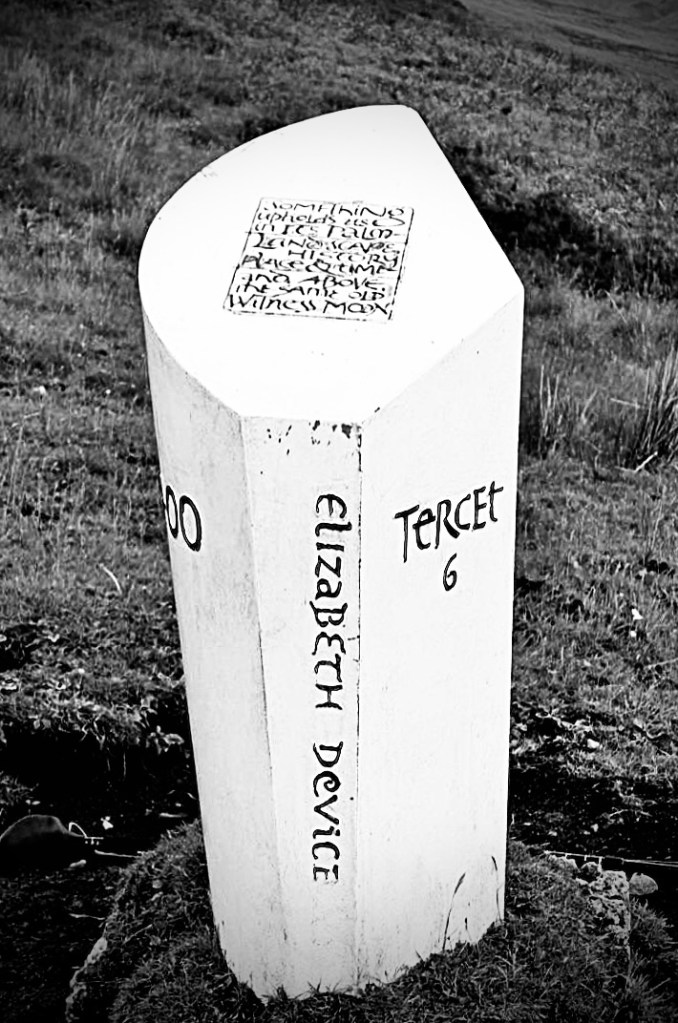
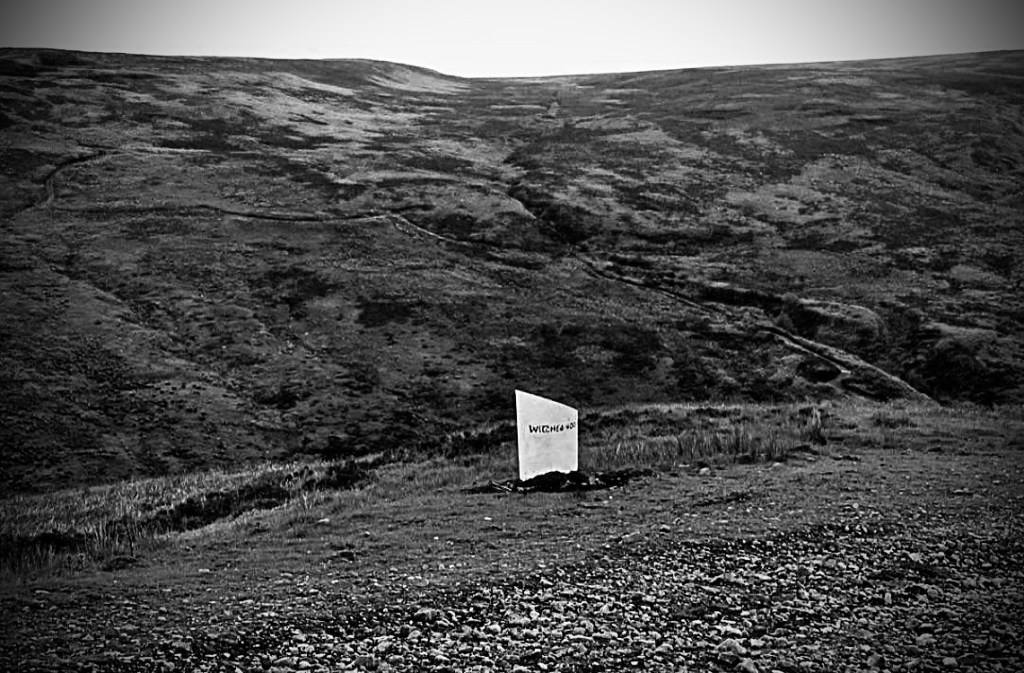
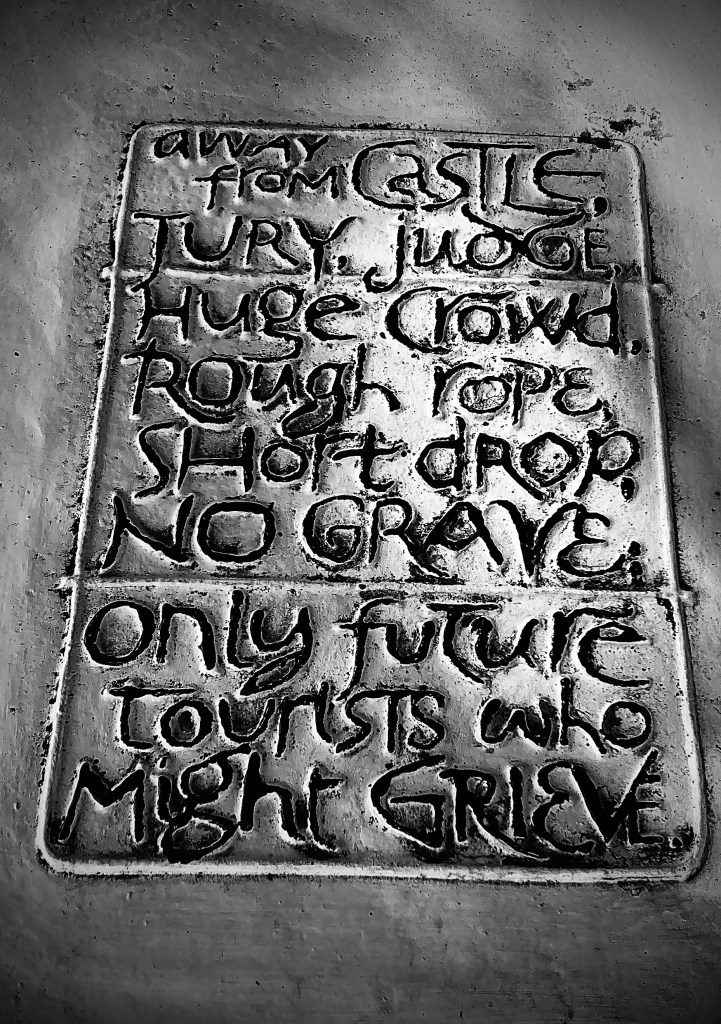
Ten white, cast iron monoliths known as the ‘tercet’ waymarkers (Tercet meaning three lines of verse) designed by Stephen raw, formerly of the Royal Mint Design Advisory Committee and inscribed with poems by Poet Laureate Carol Anne Duffy were placed along the Witches Walk, here are some examples of the verses upon them:
One voice for ten dragged this way once
by superstition, ignorance.
Thou shalt not suffer a witch to live.
Witch: female, cunning, manless, old,
daughter of such, of evil faith;
in the murk of Pendle Hill, a crone.
Heavy storm-clouds here, ill-will brewed,
over fields, fells, farms, blighted woods.
On the wind’s breath, curse of crow and rook.
A B-H
 Northwest Nature and History
Don’t go anywhere near Pendle today!
LikeLiked by 2 people
Are the police blocking it off tonight?
LikeLiked by 1 person
Probably a one way system on the surrounding roads.
LikeLiked by 1 person