The History of Burnley’s Queen Street Mill, the last Functioning Steam-Powered Cotton-Weaving Mill in the World
Queen Street Mill can be found down the end of a quiet cul-de-sac in the Lancashire village of Harle Syke on the outskirts of Burnley and is the world’s last surviving operational 19th century steam-powered weaving mill.
Set up as a worker’s cooperative in 1894 the mill operated for decades after its contemporaries had ceased running, finally closing as a business concern in 1982. It re-opened in 1986 after Burnley Council stepped in to run it as a museum and was taken over by Lancashire Museums in the 90s.

The mill’s weaving shed was used in BBC’s 2019 production of A Christmas Carol and the 2011 film The King’s Speech, it is open to the public from March to November, (please visit the council’s website for more information about opening times)
In this series of article’s i’ll use Queen Street Mill pars pro toto to look at the history of Lancashire’s Cotton industry, beginning with the mill’s power plant.
Lancashire Boilers
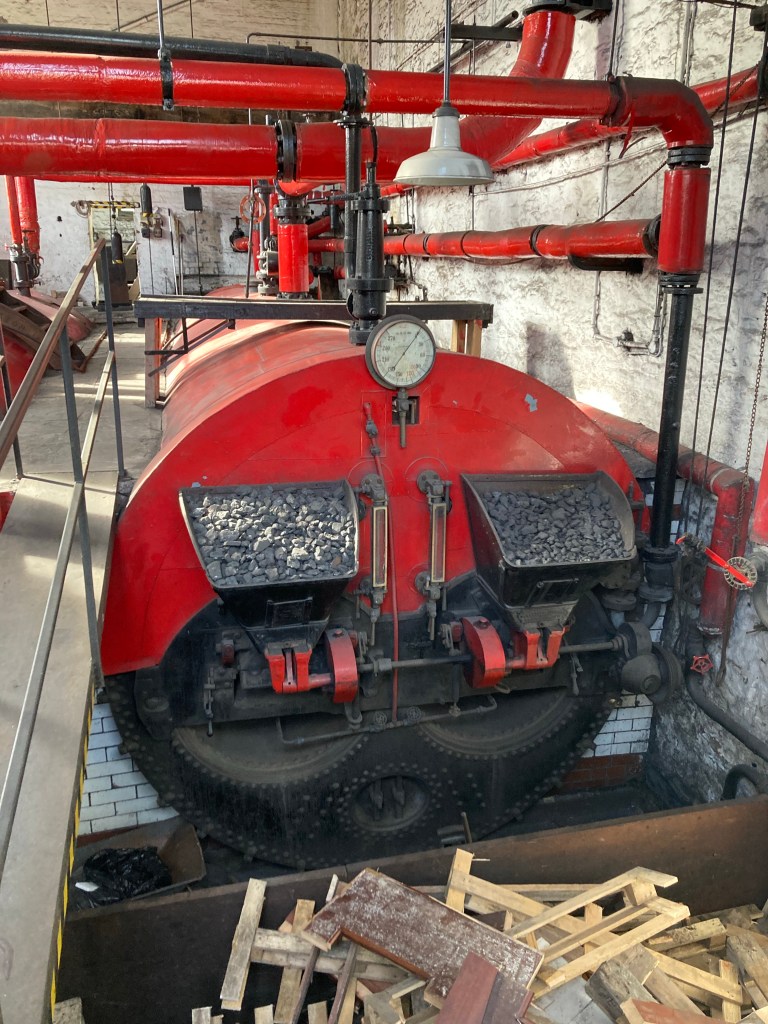
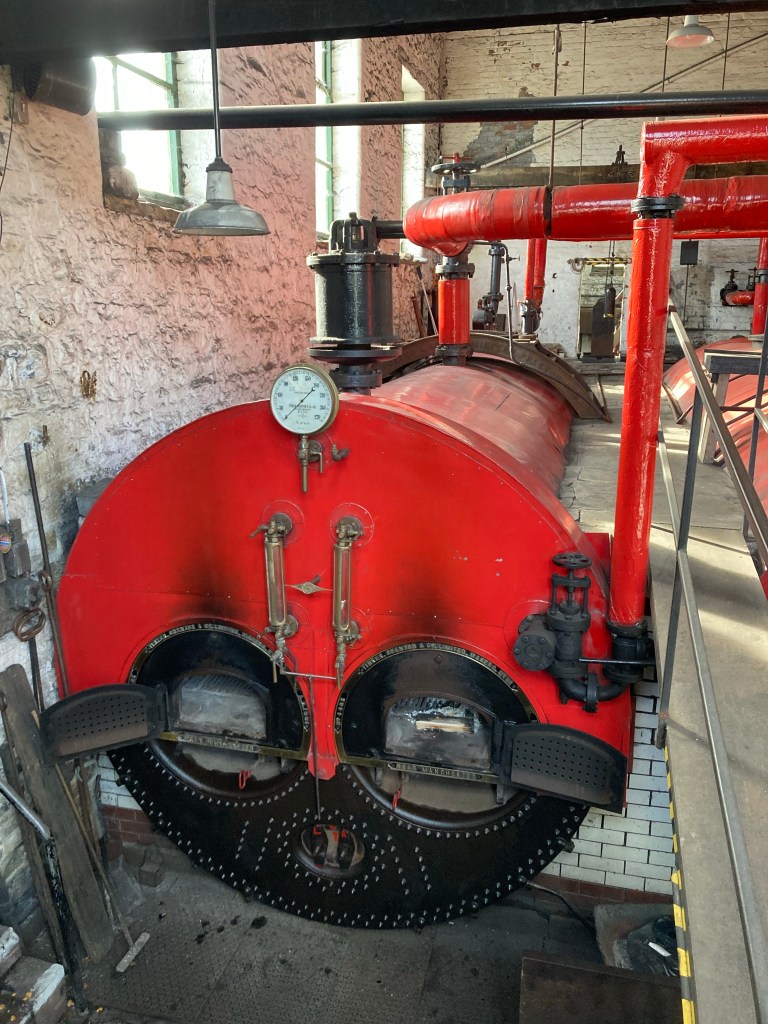
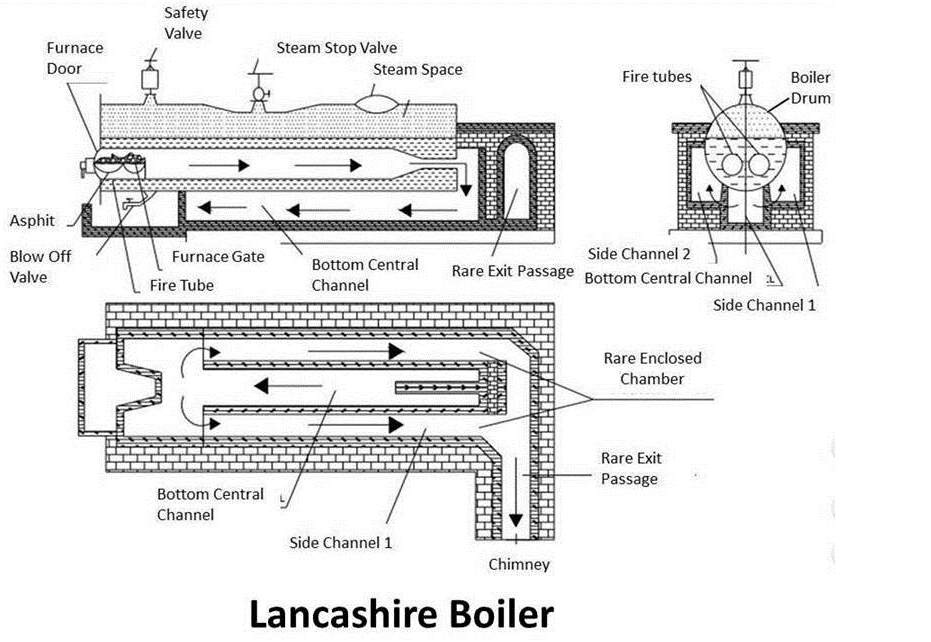
Queen Street Mill was (and occasionally still is) powered by steam, this is raised in two Lancashire Boilers manufactured of high-quality steel by Tinker Shenton of Hyde, near Manchester. Only the left-hand boiler is used now, it was installed in 1901, the right-hand boiler was installed when the mill was built in 1895. Lancashire Boilers hold a huge amount of water, up-to 5,000 gallons, this was pulled from a lodge (see image below) that is fed by a spring and an ingenious water-catchment system that collects all the rain and dew from the roof.
As Lancashire boilers were built of such high-quality steel to withstand the high temperatures and pressures generated within many were re-purposed when the mills closed, one such use was as oil-tanks, they were simply welded shut and stood on end!

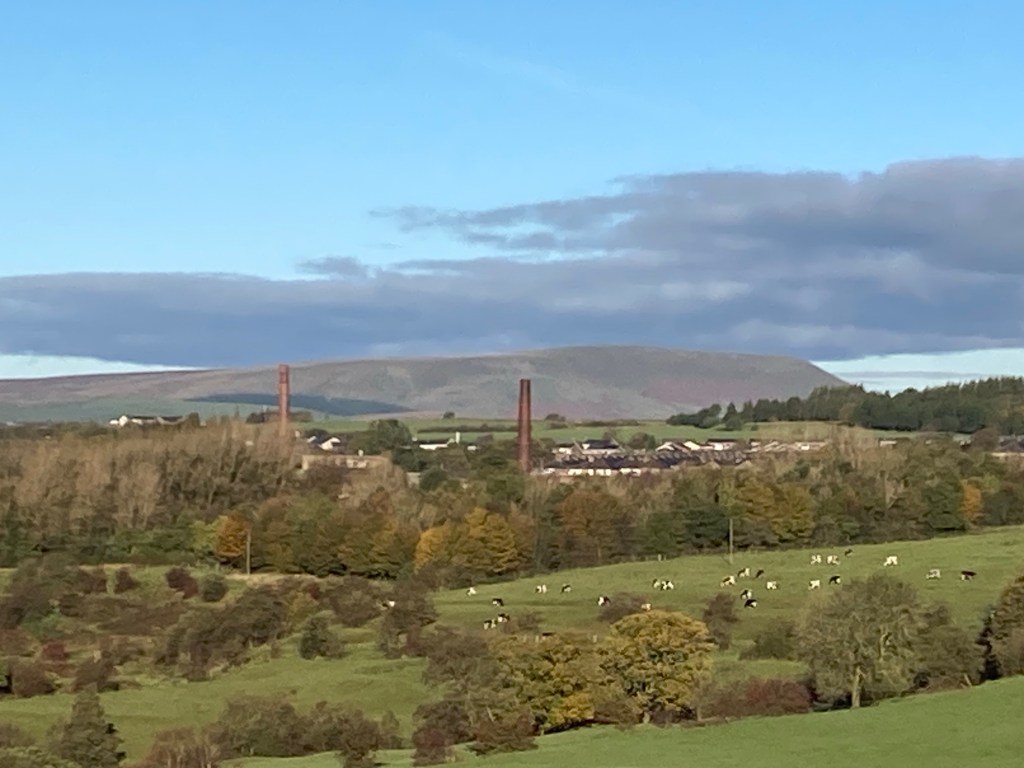
As well as being very thirsty Lancashire Boilers are hungry beasts, they consume a huge amount of coal, the space in front of these boilers can hold 12 tons of coal and this would have been topped up regularly. As with all living creatures they need to breathe, tall chimneys created a powerful draw and vented all the hot steam, gases and smoke, Queen Street’s chimney is made of Accrington brick and stands 115ft proud.

Peace, the Tandem Engine


Peace, the engine which turns the looms, was built by Roberts of Nelson and was originally called ‘Prudence’ after the first Chief Engineer’s wife!, she was re-named after the First World War (the engine that is).
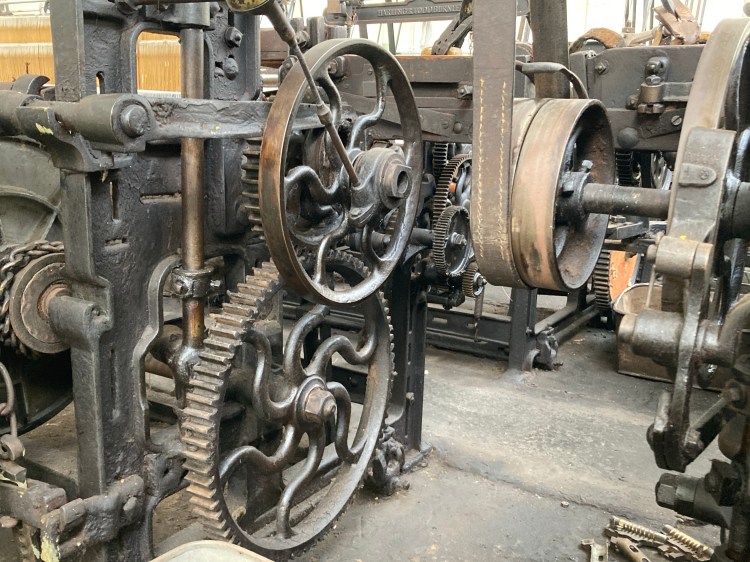
She is called a ‘Tandem Engine’, as she operates by expanding the steam generated by the boilers twice, first in a small cylinder, then in a larger one closer to the flywheel, (the big wheel in the image) at her peak she generated over 600hp in order to drive the 2250ft of shafts that the mill originally held, which in turn powered the mills 1040 looms.
Part Two will look at the Mill’s Looms and how they operated
To read more about the history of Cotton Weaving please see this article or any of the others in my Cotton Chronicles Series; https://northwestnatureandhistory.wordpress.com/2023/10/15/kissing-shuttles/
A B-H


Hi Alexander,
you have created a wonderful archive. I see you have looked in depth at Queen Street Mill so I am assuming you are also aware of Bancroft Mill Engine Museum in Barnoldswick bancroftmill.org.uk
but I’ve not (yet) seen reference to us on your site.
We have one more Steaming Day this year – Sunday 24th November. We also have a Roberts Compound engine but it’s a cross-compound rather than a Tandem.
We have working looms as well – weaving our souvenir tea-towels.
We also have a tandem engine – made by Smith Brothers and Eastwood – and came from a Mill in Bradley near Skipton and it also runs on a steaming day.
Keep up the good work – feel free to call in on a Saturday also when we usually maintaining the engines and the buildings.
Graham
LikeLiked by 1 person
Hi Graham,
I’m glad you you like the articles I’ve published already, I’ve been meaning to finish the second part of my cotton chronicles series about looms and a visit to Bancroft mill would really help.
I haven’t visited the mill yet but it’s high up on my list of places that I’ve really got to see so I’ll try to get over later this month, it would be fascinating to see the engine in operation too.
All the best,
Alex
LikeLike