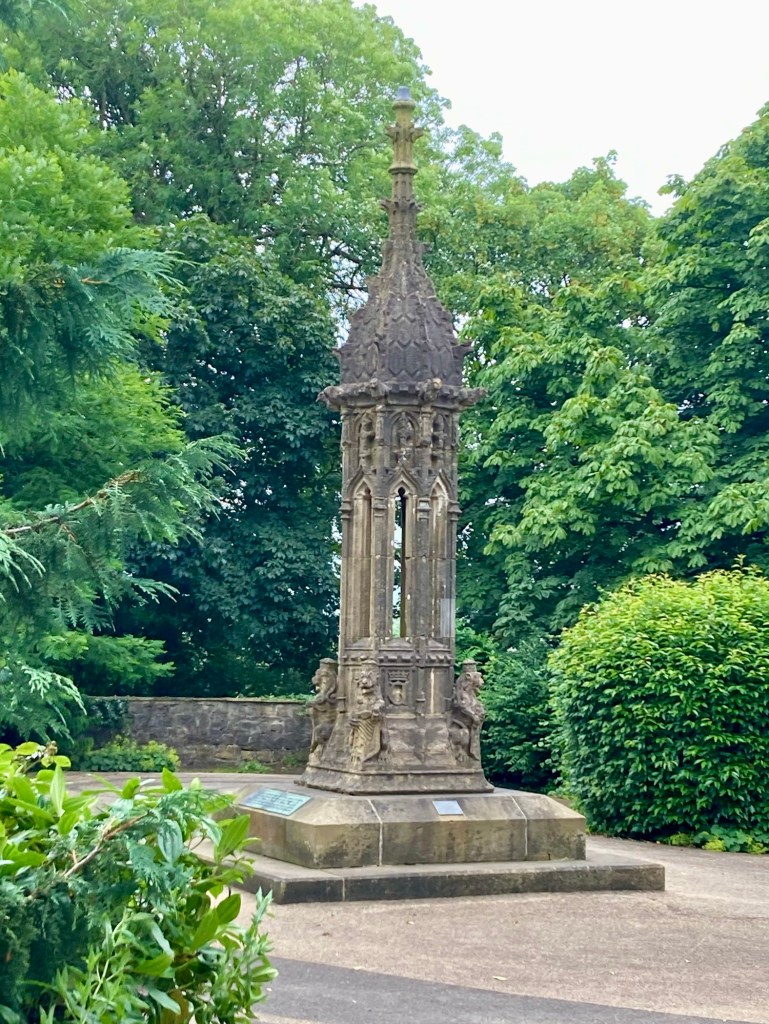
Clitheroe is a small market town situated in the Ribble valley in Lancashire, famous for its small Norman castle which stands upon a prominent Limestone outcrop in the centre of the town, part of the Tournaisian Clitheroe Limestone Formation which protrudes through the landscape at a few locations in this part of the country.
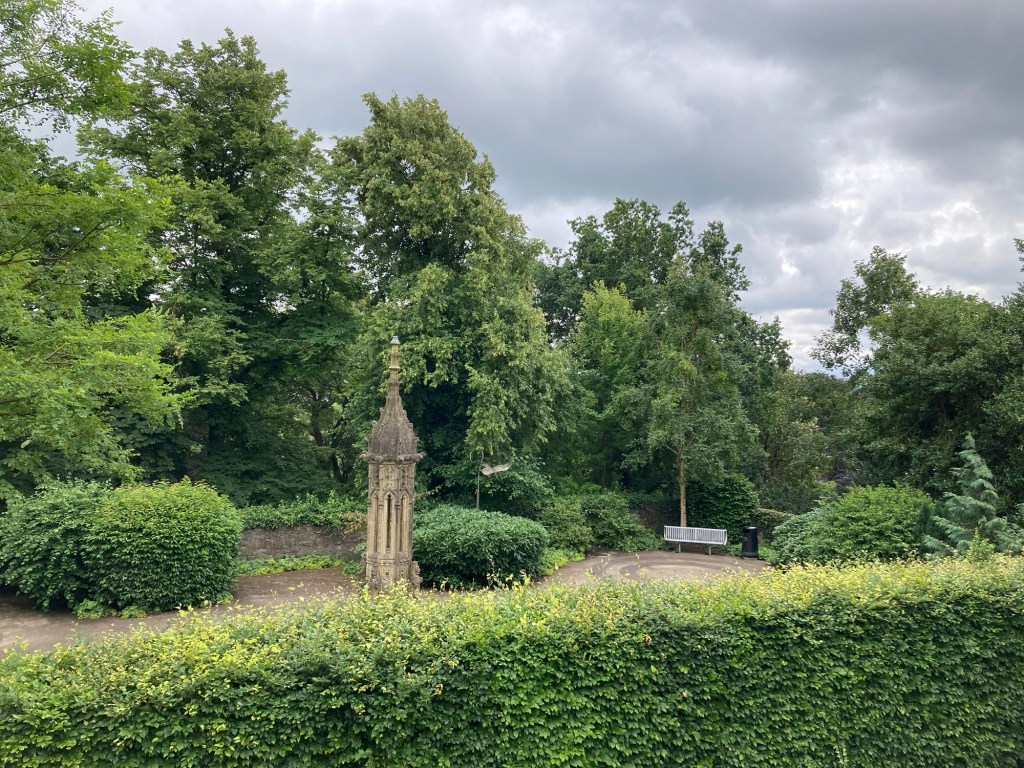
Under the shadow of this tiny, yet still imposing castle, in the well-kept grounds, stands a slightly incongruous-looking gothic artefact.
The story of how it came to be here is quite fascinating.
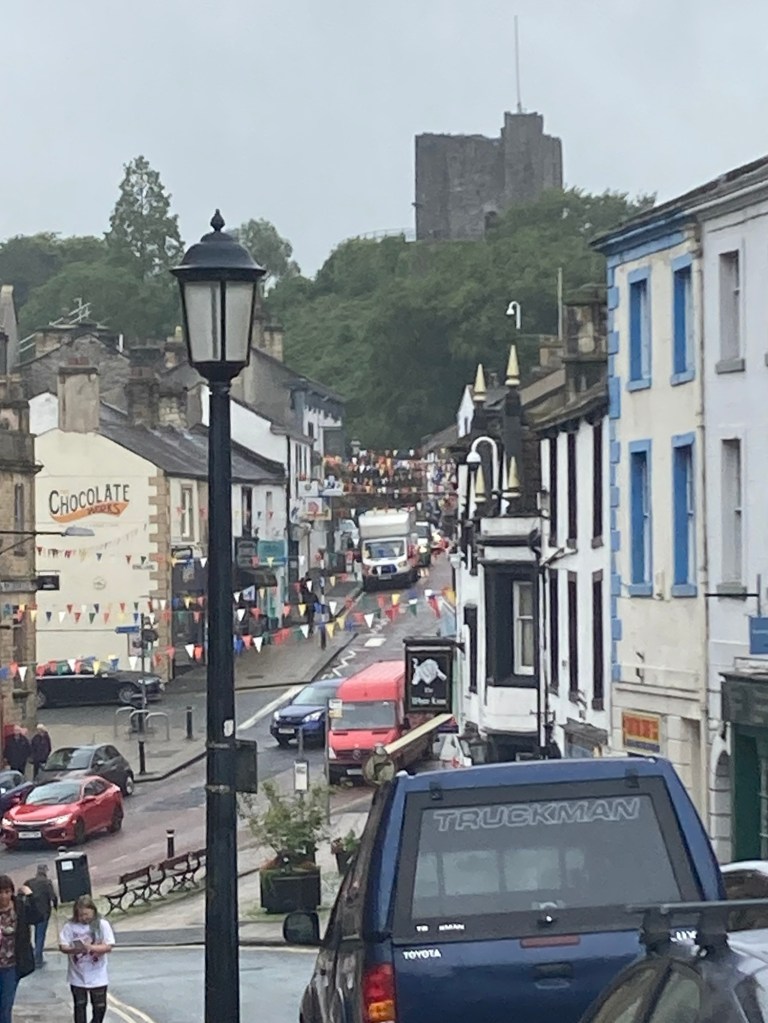
Clitheroe’s Connection
The town, seen here in this video by Jonti, has always had a close relationship with parliament, for various reasons of which I’ll write about in the future, and in 1937, to mark the coronation of George VI, it was decided that this connection should be marked somehow.
Clitheroe’s MP at the time was Sir William Brass, whose descendants still live in Clitheroe (David Brass, who runs the newsagents Banana News stood for Clitheroe MP himself as an independent in 2015), and he had recently been presented with a slightly peculiar, and rather cumbersome, gift to thank him for his services during World War One in the Air Corps, which he decided would need a suitable home.
This gift was an enormously heavy ornate gothic Limestone spire taken from the roofs of the houses of parliament.
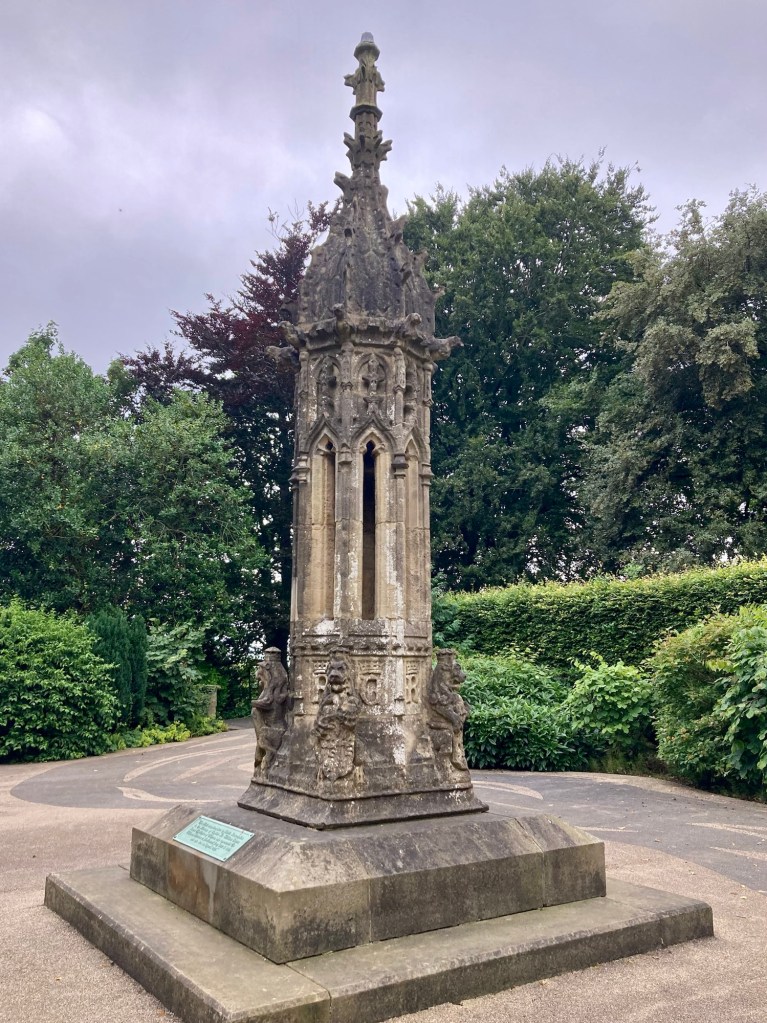
Crumbling Spires
In 1834 most of the old Houses of Parliament were destroyed by the ‘Great Fire’, leaving only Westminster Hall intact. A competition was held to find a design for the replacement and this was won by the very well-known and prolific architect Sir Charles Barry, who later went on to re-design Gawthorpe Hall and its grounds in the 1850’s.
Sir Charles enlisted the help of fellow architect AWN Pugin, who also helped with Gawthorpe Hall in the neighbouring town of Padiham and designed St Hubert’s chapel at Dunsop Bridge and the reconstruction of the Houses of Parliament was completed in the 1860’s.
Careful consideration was put into sourcing the stone for the re-building and the committee charged with this eventually settled on Magnesian Limestone from a small quarry at Anston in South Yorkshire, this stone has also been used to construct York Minster and the Manchester Athenaeum.
The stone itself has mostly proven to be very workable and durable for large-scale masonry work but there was a snag with sourcing it, this was that the new Houses of Parliament were at the time the largest masonry building project in the world and as such there was no single quarry large enough to produce this quantity of stone.
A consequence of this was that some of the stone extracted in the rush to satisfy the contract turned out to be of sub-standard quality, and in 1904 a series of major repair programmes were started to rectify this, including removal of eight of the building’s crumbling spires.
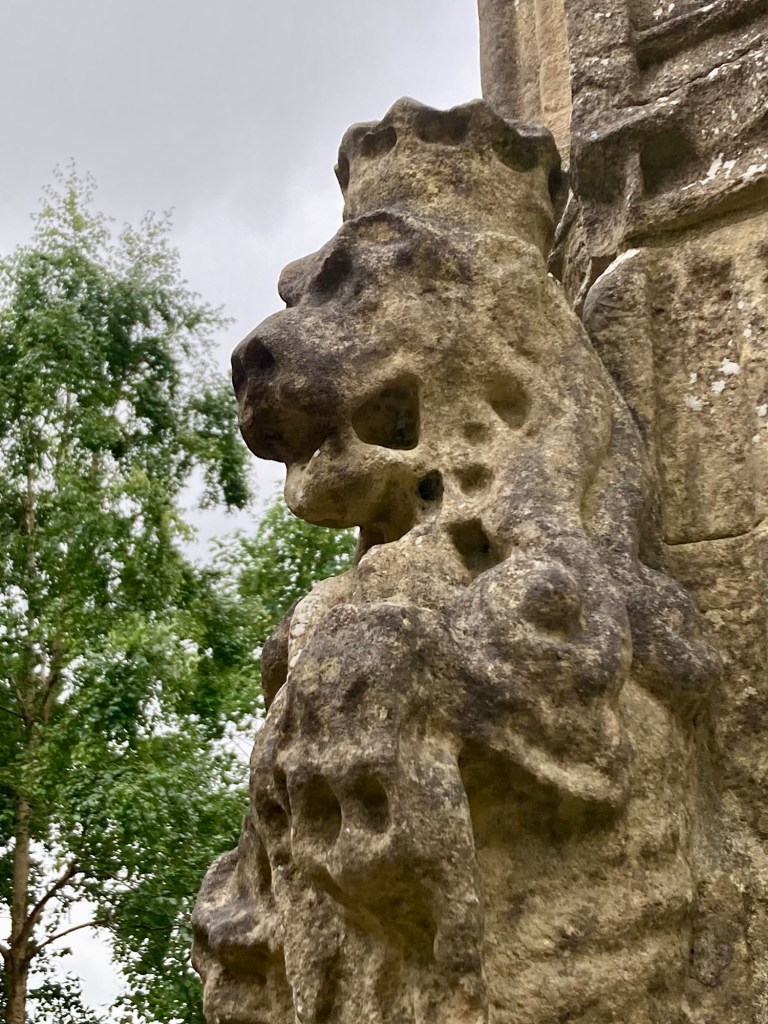
affronté–sejantat at each corner of the pinnacle
The Lost Spires
The eight spires, constructed of the poorer-quality stone and eroded by London’s atrociously polluted air, were removed and given to eight benefactees to thank for various services to the empire.
It seems that five of these have long been lost, not only to London’s smog but also the fogs of time, but the locations of three are known, obviously including the one relocated to the comparatively clean air of Clitheroe.
Lord Boyd of Merton was given one of the pinnacles and installed it his gardens at Wiveliscombe Hall in Somerset, and another resides at Hamsterley Hall near Consett in County Durham, presented to John Standish Surtees Prendergast Vereker, 6th Viscount Gort, for, as with Sir William, his services during World War One.
Those two are on private land but the one presented to Clitheroe is available for all to see as it always has been per Sir William’s intention.
To be continued in Part Two
In Part Two I’ll write about the presentation of the pinnacle to the people of Clitheroe and its legacy, including a chapter on the extensive renovation work carried out the structure in 2015.
A B-H
(Aug 2024)
 Northwest Nature and History
Nicely done. I only vaguely knew about tgis, having visited Clitheroe and seen it, but didn’t really take it in. Your account is a lot more interesting than I realised!
LikeLiked by 1 person
Thanks, i like to write about the more obscure corners rather than the obvious things which everyone else writes about, there are people who’ve lived in clitheroe for decades who didn’t know that was there, personally i think it deserves a better garden more like the original but maybe that’s just me!
LikeLike
Nice site you have
LikeLiked by 1 person
Thanks 🙂
LikeLike
Hello I like your site
LikeLiked by 1 person
Thanks, glad you like it 🙂
LikeLike
Hello I like your website please check out mine
Thanks
Tim
Turbo jet marketing
LikeLiked by 1 person