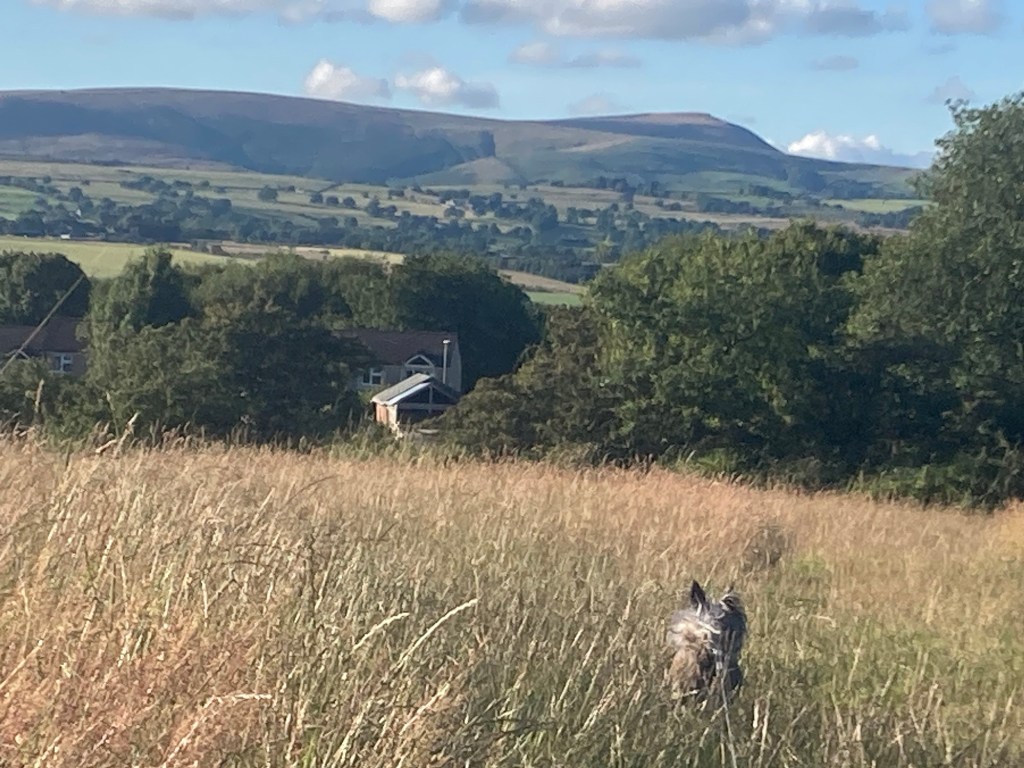
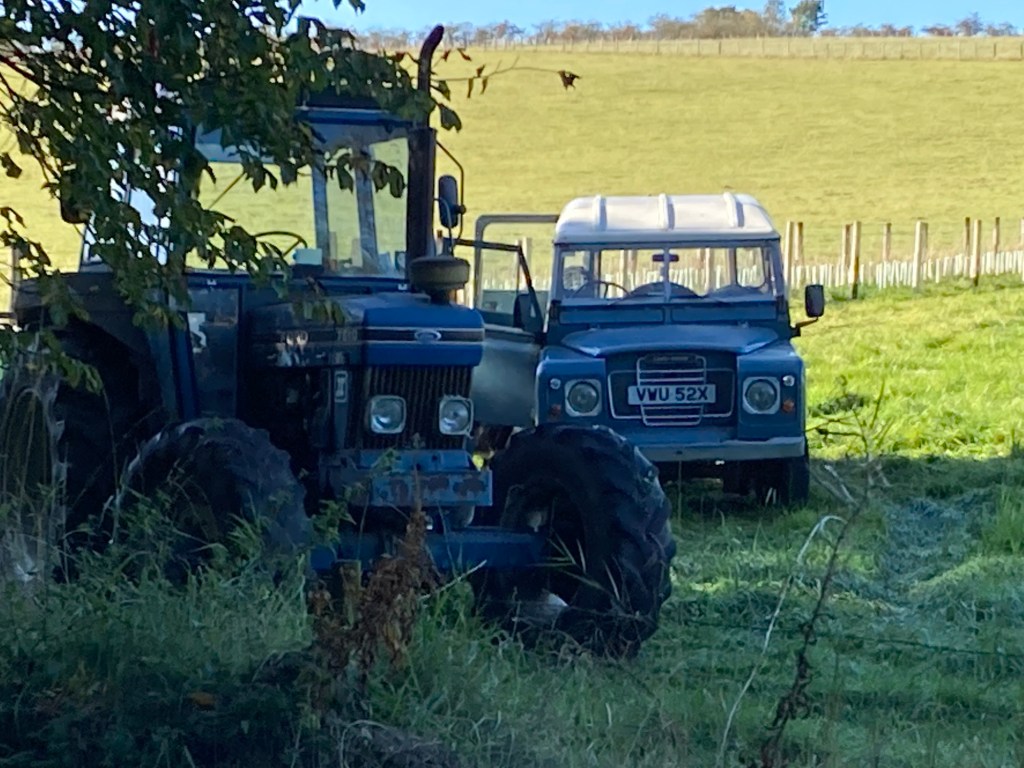
One ambient summer sound of the Lancashire countryside is the constant whirring sound of farm machinery cutting, rowing up, and baling grass to make into silage, though many farmers have been late to get it in this year due to the exceptionally wet spring. Silage doesn’t have to be completely dry when it is baled, like hay does, but it makes a better feed for sheep if it is fairly dry, so many farmers will wait for a decent stretch of dry weather and the opportunity to get this job out of the way.
With so much expensive machinery needed, most silage making is now done by farm contractors, who can get most of a farm’s silage cut in a couple of days, this is a far cry from what it would have been like 80 to 90 years ago when it might have taken a week and a small army of men and horses drafted in from all over the local countryside and villages.
Although you’d think this gives more time for the farmer to relax, lean on a gate and take stock of the beauty of the scenery and nature around him, this gap just seems to have been filled with more jobs, (I am glad I’ve only ever helped out and don’t do it for a living!) there are however a few days they have to unwind and see what the wildlife is up to around the farm.
Harriers, Cuckoos and Deer
I’m fortunate enough to have spent most of my life here in the wonderful countryside of northern England with its great array of wildlife, and whilst most of what I see during the year is not particularly rare, it can still bring a sense of awe. Hen Harriers are doing increasingly well and commonly seen on the moors now, Deer are to be seen on the fringes of the fields most mornings, the hypnotic call of the Cuckoo has echoed across the valleys this summer, and an Osprey has even graced us with its presence once or twice, calling in to visit the local reservoir and Trout fishery on its way through.
One summer regular here that is not seen very often by walkers and other visitors, and if it was it might well create a degree of apprehension, is the Adder, which finds our heather moorland to be a particularly fine place to call home. If you know where to look they are quite numerous along the rockier fellsides, on the bare peat sheep-tracks, lying on rocky ledges, or in the top of clumps of heather trying to catch the warmth of the summer sun.
Last year I had spotted several on a south-facing slope here which is locally well known for Adders and earlier this year set off to see if I could find them again, I found one male which seemed familiar to me and it felt like he was less shy than they they usually are too, an older Adder with a prominent V on his head who was perhaps more jaded and used to being disturbed by lumbering Sheep and Humans.
He was to be seen here most sunny mornings throughout early May, and I managed to photograph him, although by the time I’d got my camera out of its bag and fumbled with the lens cap he’d almost made it to his hole. He has recently disappeared, he might have moved on, although the presence of a Raven close by one morning leads me to suspect that he might have met a different fate, he was near a location known as the Raven’s Castle after all so maybe he should have known better!

Zig-zags, chevrons and diamonds
Adders come in a wide array of colours and patterns, I’ve seen them in various zig-zags, chevrons and diamonds of black, brown and green. They are usually only a foot or two long although a few years ago there was an Adder to be seen regularly on one of the mountain bike tracks up in Gisburn Forest which was allegedly 3 feet long!
They are shy creatures for the most part and usually slither away into the rocks or undergrowth when disturbed, but I’m always a little wary of the dog being bitten (she’s only got 3 legs as it is!) An Adder bite is potentially fatal to a dog, but I’ve been assured by the vets that, if quickly treated, recovery rates are fairly good.
A B-H
(Aug 2024)
 Northwest Nature and History
Excellent post. I am 70 in a couple of months, and have spent 60 of them walking the moors and Dales, sometimes 3 or 4 times a week. I have never seen an Adder…maybe I make too much noise 🙂
LikeLiked by 1 person
Thank you, they are really localised so there’s spots where you might see a few and other places where you’ll never see them, I’ve spent a lot of times just sitting out on the fells and that’s when I’ve seen a lot of wildlife
LikeLiked by 1 person