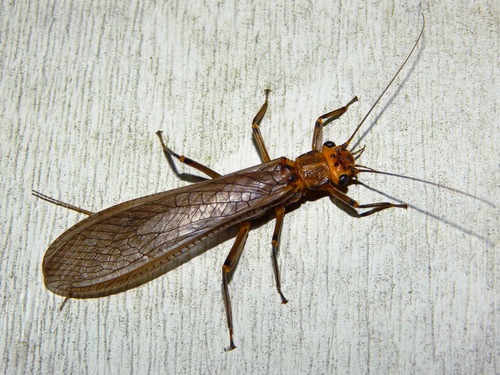
The Common Stonefly, Diura bicaudata, (Diura meaning ‘day’ and bicaudata meaning ‘two tailed’) is a common insect in the rocky cloughs and streams of our uplands. It belongs to the order Plecoptera (from the Greek, ‘pleated wing’), which is an ancient order of insects originating at least 250 million years ago.
There are 34 species of Stonefly in the British isles which are very hard to tell apart, this article is about the Common Medium Stonefly.
in Rome (Sailko)
Complicated Lifecycle
This Stonefly has wings and emerges around about late March to early April after going into hibernation as an adult in the previous autumn, it has a rather complicated lifecycle and doesn’t waste any time either. The first thing both the female and male Stonefly does is communicate their presence to each other, they do this by ‘drumming‘, striking their abdomens on the rocks and gravel of their home, each having their own morse code of raps and knocks interspersed with pauses to listen.
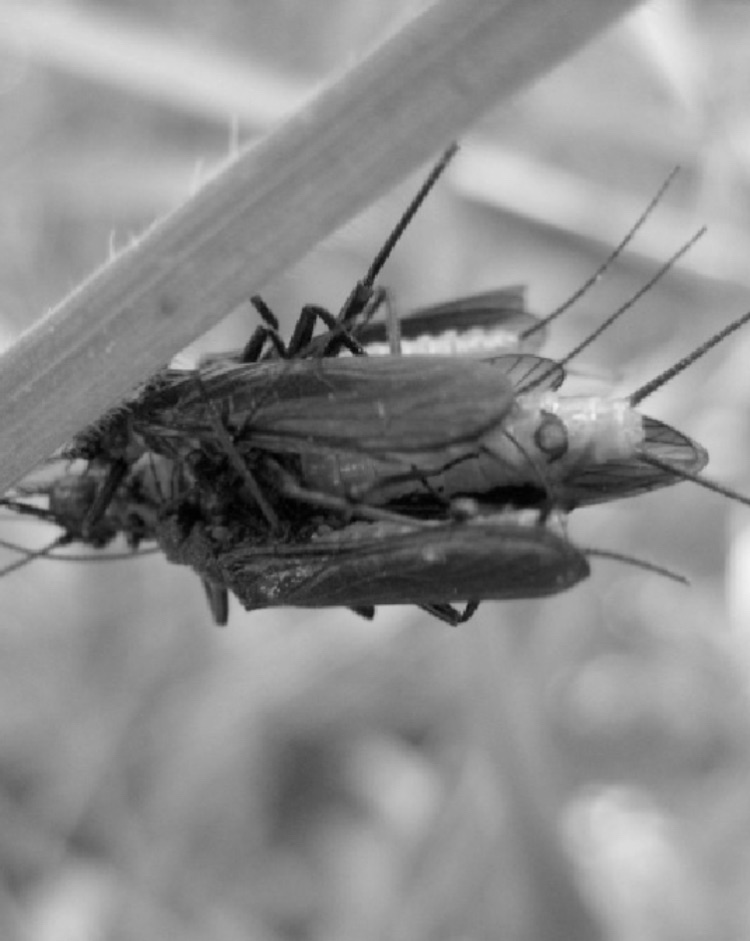
When they mate several male Stonefly will surround the newly emerged female in a ‘mating ball’ on the ground and the fertilised eggs will then mature for several days within the female. She will fly about her territory laying these on the water surface in two to three egg masses and as soon as they touch the surface they will sink to the bottom of the water.
After hatching the young, which are called ‘nymphs’, will spend the rest of the year moulting, remaining in the water until the following spring to emerge as adults.
Omnivorous Diet
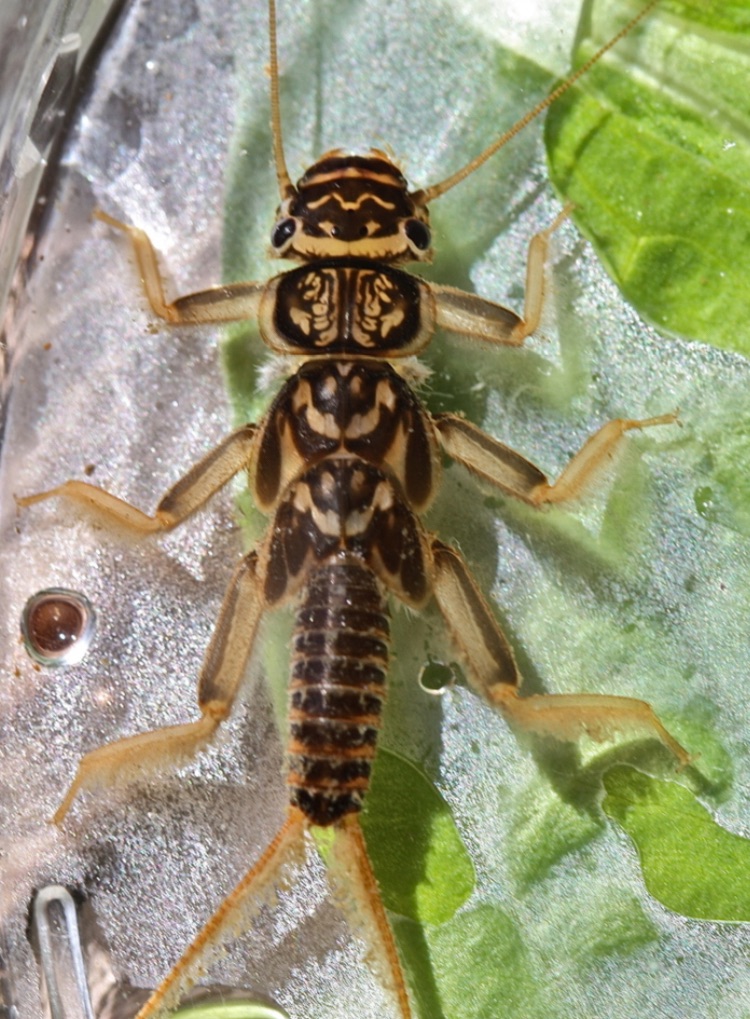
The nymphs are omnivorous and live off plants and anything they can hunt in the water, staying there until going into hibernation late in the year before the water freezes.
The adults of the Common Stonefly can fly and live out of the water, hunting for smaller insects for the short time they are alive as they are usually dead by June. Some other species of Stonefly found in the British isles only live for a few days, yet others are vegetarian or and only eat specific foods such as pollen grains and some species do not feed at all during their adult stage.
Stonefly prefer cool, well oxygenated waters and can be the most common invertebrate fauna in some of our watercourses, so they are frequently used to gauge water quality. The aquatic nymphs are particularly sensitive to pollution and as they require high levels of oxygen in the water are often one of the first species to disappear if there is a lot of pollution, especially organic pollution such as from silage run-off or excessive silt.
(Bob Henricks)
Tolerant of Acidic Conditions
They are, however, very tolerant of high acidity so are right at home in the cloughs and streams which drain the peat bogs and those that run through areas of forestry such as Gisburn forest. In waters like these the nymphs make up a high percentage of the diet of fish such as Trout, Grayling and Salmon, birds such as the Dipper and bats such as the Daubenton’s bat.
The various stages of nymph and the adult Stonefly are often replicated by fly fishermen in the form of flys which will be carefully tied to look like whichever nymph is predominant the watercourse at that time.
Freshly moulted nymphs are a lighter colour as their shells are softer, this makes them easier for fish to digest, a clever fly-tyer will therefore make his nymph flys a lighter colour to make them more appetising to fish.
There is a whole different science to this though which I may cover in other articles, as for now we’ll just appreciate the real Stonefly and the important role it plays in the upland ecosystem.
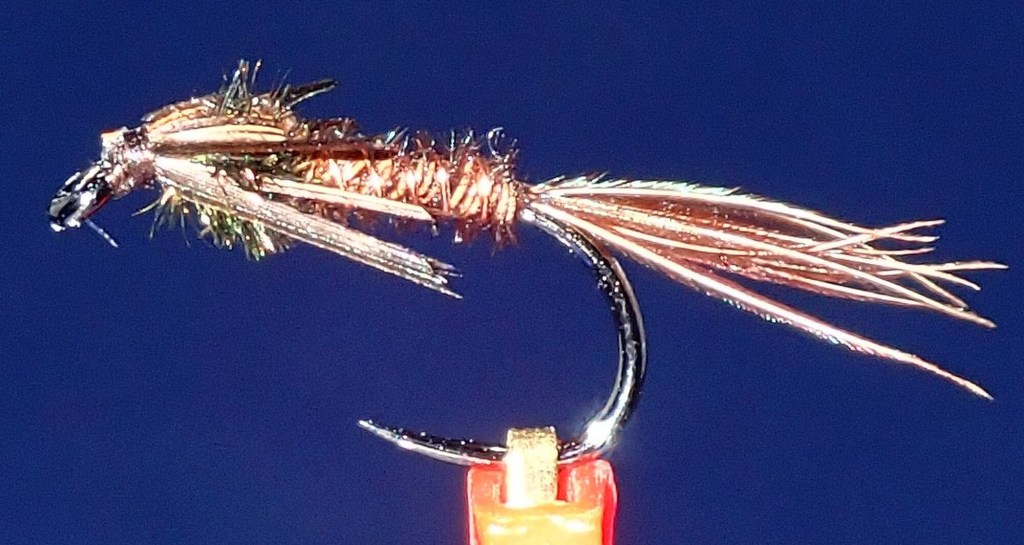
(Mike Cline)
Do unto those downstream as you would have those upstream do unto you (Wendell Berry)
A B-H
(Oct 2024)
 Northwest Nature and History
Nice post 👍🍷
LikeLiked by 1 person