
(Bill Boaden)
May
Though every month for me’s a cherm,
Aw’m fain as Winter’s hed his term;
For thy breath’s gradely sweet an’ werm,
Aw like thee, May!
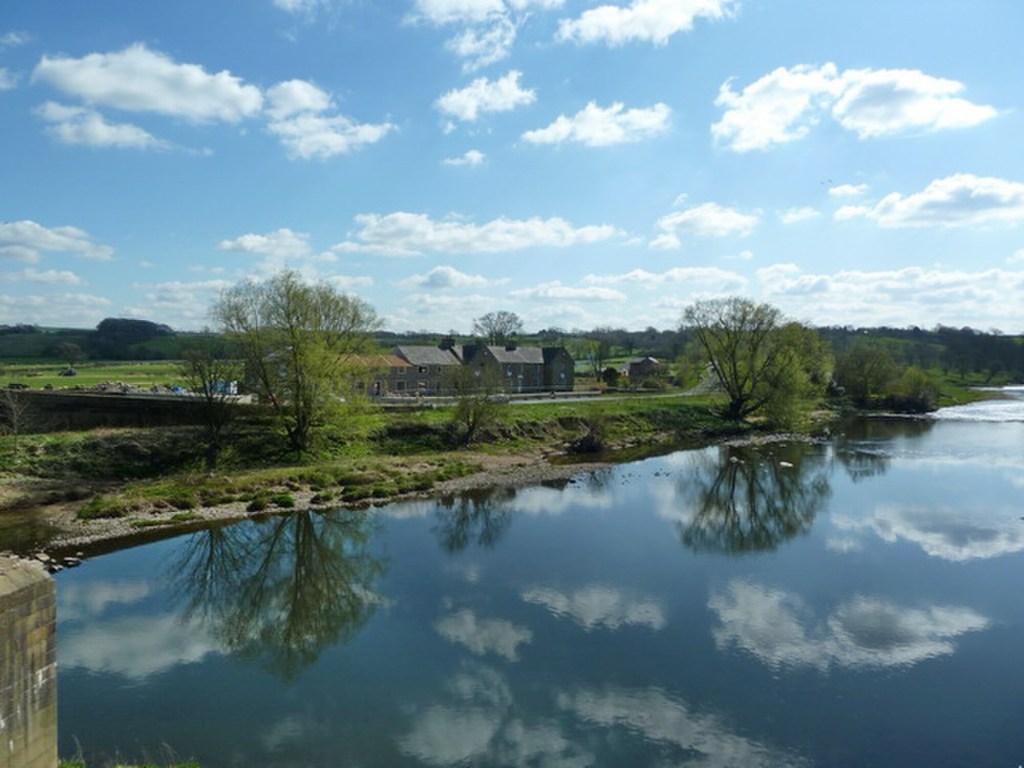
Tha looks best deawn bi th’ owd Stydd ferm
At break o’ day.
Wheer th’ banks o’ Ribble’s weshed wi’ t’ flood,
Aw tramped through mony a field an’ wood;
Aw see tha’s painted every bud
Wi’ dapple green!
Thad shadin’, too, is fairly good,
Just in between.
An’ then, tha browt thi varnish brush,
An’ touched each flower, an’ bud, an’ bush;
An’ music browt for t’ lark an’ thrush
To tune their throoats;
To t’ young ‘uns, too, when nice an’ flush,
Tha’ll gi’e some nooats.
Tha’s smoothed rough spots i’ mony a place,
An’ trimmed um o wi’ floral lace;
When aw see’ th’ smile on Nature’s face
Aw knew tha’d bin;
Aw feel aw s’ like a th’ human race
Sin’ theaw coom in.
Tha’s decorated ‘Nature’s shrine,
Where t’ rays o’ th’ sun neaw dance an’ shine;
Tha fairly seems thad dress o’ thine,
So nice an’ new;
Wi’ daisy spots to intertwine
Wi’ spots o’ blue.
The Bards of Blackburn
John and his brother Richard were both poets and weavers associated with the ‘Blackburn cluster’ of poets or ‘Blackburn bards’, a group of poets active in Blackburn in the mid-19th century.
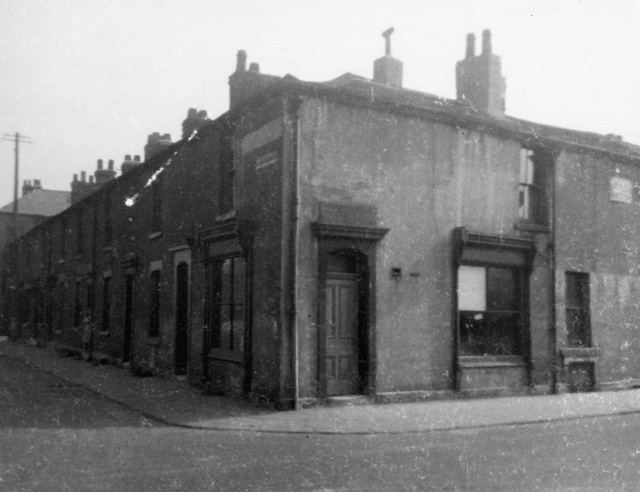
They frequently gathered at an alehouse known as ‘Poet’s Corner’ on the corner of Bradshaw Street and Nab Lane.
They included the poets William Billington, John Baron, John Critchley Prince, and Richard Dugdale.
(Blackburn with Darwen council)
John Rawcliffe’s Life
John Rawcliffe was born in Ribchester on the 10th of February, 1844. In 1858 at the age of 14, John left Ribchester (about two weeks after his brother) and moved to Blackburn. He had previously worked as a bobbin winder and handloom weaver and immediately found employment there as a powerloom operator. Whilst living in Blackburn John met Eleanor Hindle whom he married in 1867.
In 1888, at the age of 44, despite having no formal education, John made his first attempt at writing verse. He did this during a period of illness resulting from a tumour he supposedly developed working in the mill (but this has never been confirmed).
He had his first poem published the same year in the Blackburn Times and became an accomplished writer in Lancashire dialect.
Sometime in the late 19th or early 20th century, John emigrated from England to New Bedford, Massachusetts, the hub of the weaving industry in the United States.

(Blackburn with Darwen council)
I’ll write more about the Blackburn bards in the future (adding it to my ever-growing list of things to write about!) but for now; can you understand Lancashire dialect?, and have you ever known anybody that speaks in a local dialect, Lancashire or otherwise?
If you enjoyed this article you can show your appreciation by buying me a coffee, every contribution will go towards researching and writing future articles,
Thank-you for visiting my site,
Alex Burton-Hargreaves
(May 2025)
 Northwest Nature and History
Thanks for digging out that dialct poem. It has a good rhythm to it and I can understant 90% of it.
Though not native to Lancashire I have lived here for 50 years, involved with the rural community. My wife was Dutch and couldn’t understand a word of the local farmers.
Chipping was always a good starting point for the rural dialect, but it was also common in the mill towns.
LikeLiked by 1 person
Loved that, thanks. I could hear it in my head as I read it. I’d hear the dialect spoken quite naturally in the village where I grew up, but very rarely now, even among old-timers. We could do with some more poets corners. 🙂
LikeLiked by 1 person
Thank you, I’m glad you liked it, I knew a couple of people in Clitheroe when I was growing up that spoke in this dialect, there are (or used to be) hyper-local variations of it, so you could tell if someone was from Blackburn or Accrington, Clitheroe or Whalley, I think that’s mostly gone now though.
LikeLiked by 1 person
Yes, I grew up in Coppull, about half way between Chorley and Wigan, not many miles either way yet a world of difference between those accents. I had family in Blackburn and Burnley, same thing.
LikeLiked by 1 person