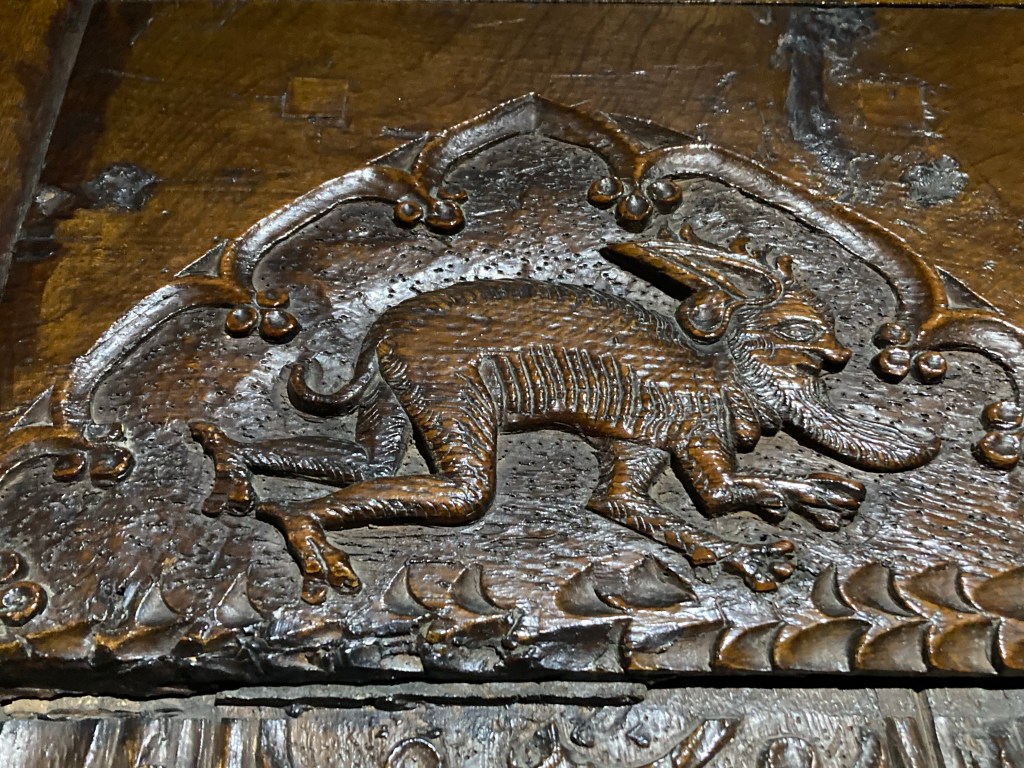
Lancashire’s misty moors and ancient lanes are inhabited by all sorts of weird and eldritch beings; witches, spectral dogs and highwaymen have haunted these parts for centuries. Yet few of these mythical entities evoke as much intrigue and trepidation as the boggart.
Benign or Baleful
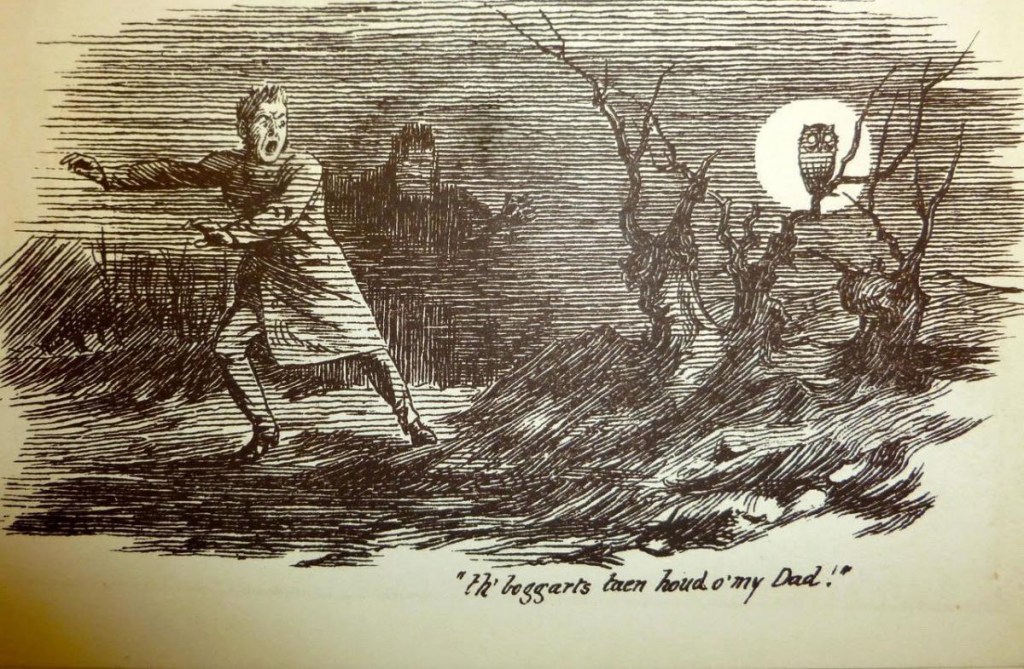
Thought to originate from the Middle English word “bugge,” meaning a spirit or monster, and the origin of “bogey” or “bogeyman,” boggarts are often described as shape-shifting spirits that can be playful helpers or malevolent tricksters.
They are one of folklore’s more versatile creatures, capable of assuming various forms, from hairy, squat humanoids with unnaturally long arms to beast-like apparitions such as enormous horses or black dogs.
Often tied to specific locations, like farms, bridges, or caves, they can exhibit behaviors ranging from helping with domestic chores to outright malice, such as pulling bedclothes off sleepers or causing milk to turn sour.
Unlike poltergeists, which are seen as mindless noisy ghosts linked to a person rather than a place, boggarts always possess a personality and motivation, often reacting to slights or mistreatment with vengeful pranks.
In Lancashire, boggarts were once so feared that naming them was taboo, as it could unleash their wrath. They might inhabit “boggart houses” known for eerie disturbances or lurk in the wilderness, preying on the unwary. Folklore warns that getting lost in the wilds could mean falling victim to a boggart’s tricks.
While some boggarts, like helpful hobs, assisted farmers by working at night, most were nuisances or worse, leading to exorcisms or “laying” rituals to banish them.
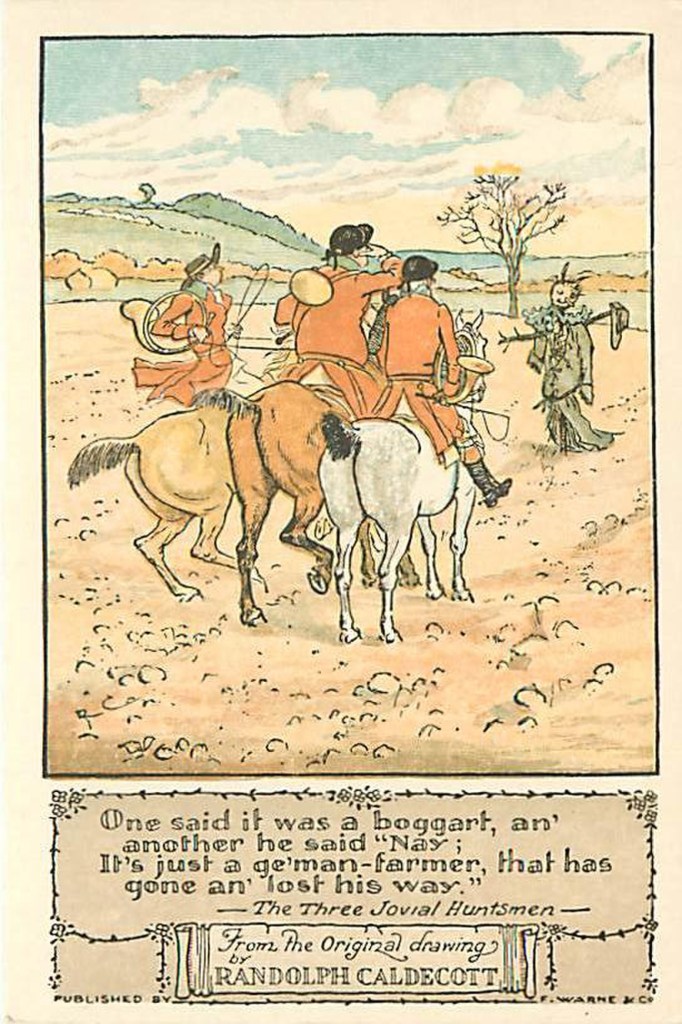
One said it was a boggart, an’
another he say “Nay;
It’s just a ge’man-farmer, that has
gone an’ lost his way”
A Randolph Caldecott ‘Three Jovial Huntsmen’ postcard
Lancashire has many boggarts, they inhabit all corners of the county and come in many weird and wonderful guises, I would like to write about all of them here but there are simply too many, so let’s begin with a boggart hotspot, the old mill-town of Burnley.
Burnley’s Boggart Lore
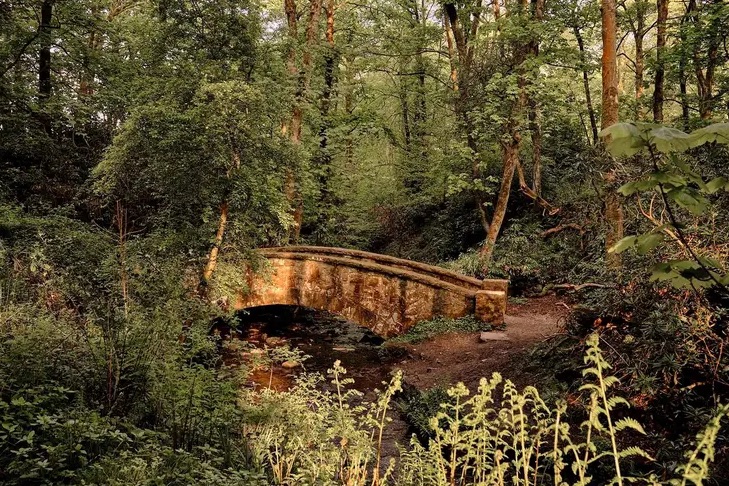
Burnley has its own boggart lore, tied to specific sites, each with its own particular story and boggart. Perhaps the most famous is Boggart Bridge, located in the wooded grounds of Towneley Park behind Towneley Hall. This ancient stone bridge spans a babbling stream, called Copy Clough, and legend holds that a demonic boggart once resided under it and demanded a tribute from anyone crossing; a living soul or forfeit your own.
Clever locals outwitted the creature by agreeing to give it the soul of the next living thing to pass over, then sending an old hen across. The boggart claimed the bird in a dramatic puff of sulphur, granting safe passage thereafter.
Today, the bridge is very popular with tourists and nobody has to pay anything to use it, not even a soul, so it seems that this boggart was too ashamed to return.
Another notorious spot is the Bee Hole area, where a particularly vicious boggart ambushed solitary wanderers. One grim story recounts how it killed a woman and gruesomely displayed her skin on a rose bush as a stark warning to travelers.
Further afield, the Holden Boggart above Worsthorne disguised itself as a rag on a hedge, only to transform into a menacing black dog when passersby approached.
In the 1930s, a barn on Coal Clough Lane was reputedly haunted by a boggart, causing unexplained disturbances that locals attributed to the spirit’s mischief.
Boggart Revival
In recent years, interest in boggarts has been revived by scholars like Burnley-born historian Simon Young.
Now based in Italy, Young conducted a “boggart census” in 2019, collecting over 1,100 accounts from across England, with a focus on Lancashire memories from older generations. His work highlights how boggarts varied by family and locale, sometimes as ghosts, elves, or even hybrid creatures, and aims to document fading oral histories.
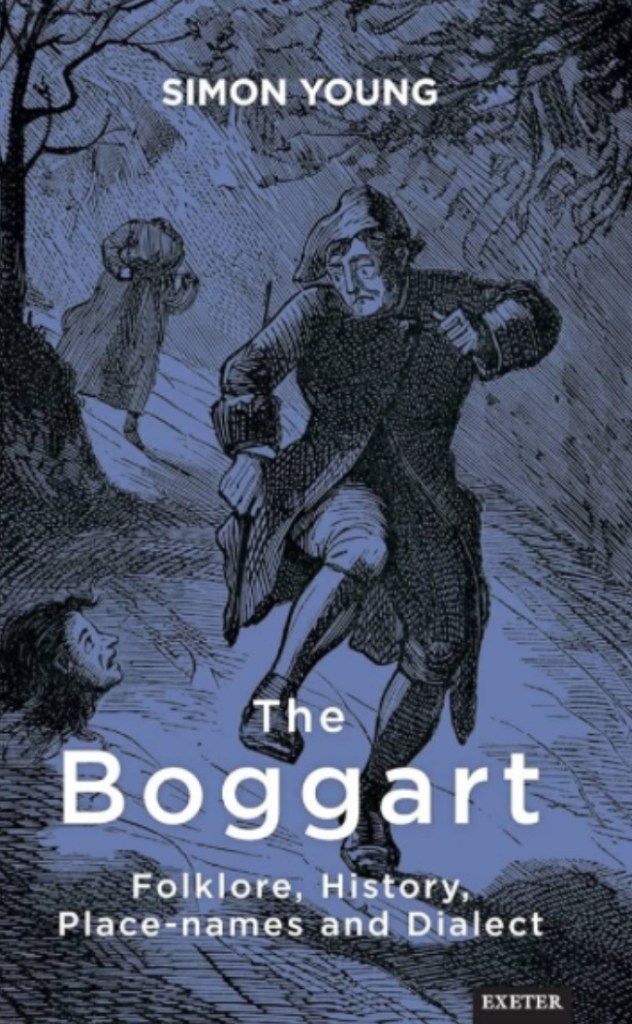
Young’s findings culminated in his 2022 book; The Boggart, a Study in Shadows published by the University of Exeter Press, which explores the “boggart ecosystem” through folklore, history, and dialect. Burnley’s rich historical records allowed Young to map local boggart populations, each with unique traits, marking the town’s role in this mythology.
Such efforts ensure that these tales, once whispered around hearths, continue to captivate in an era of podcasts, youtube videos and folklore tours.
So if you should ever find yourself lost in the depths of the Lancashire countryside, and feel that you are being watched by inhuman eyes, you’d better pray that if they belong to a boggart, he is of the benevolent type!
The Last Days of the Lancashire Boggarts
By David Swann
They were maybe on their last legs
even when Manchester first stuck its fingers
into the wound and began pulling out peasants.
Poor old monsters, who had clung
to their hosts’ dark places! What a wrench
to see those hungry farmers ride away!
No wonder a few of them smuggled aboard
the carts – rode the moors to Salford and Ancoats.
I imagine them there, in that iron world,
those jealous creatures who had feared only horseshoes.
Who had survived the Norsemen’s voyages,
the long centuries of rain.
Experts in growling, overturners of pails –
how did they cope, out-roared
by the looms, no livestock to lame?
Slowly they must have faded away, recalled only
in the folding of thumbs inside fingers,
the burning of nail-pairings and hair,
hoarded witcher marbles, crooked coins –
or come down to us as names: the Skryker,
Old Trash, Lubberfiends, Grindy Low.
Most of them were dead and gone by the time
I fell into the drizzle which had once
kept cotton soft. Manchester was old now,
its mills shushed. But you could still find
one or two of the old ghosts if you searched
the dark parts of the dead factories.
There, in those derelict places under the moor,
they roved their last stronghold, watching
as we went from our mothers to play.
If you enjoyed this article please consider showing your appreciation by buying me a coffee, every contribution will go towards researching and writing future articles,
Thank-you for visiting,
Alex Burton-Hargreaves
(Oct 2025)
 Northwest Nature and History
Thank you for this insightful piece. It’s given me a lot to think about.
LikeLiked by 1 person
Thank-you for your comment, I’m very happy that it’s inspired thought, I hope you don’t have nightmares about boggarts though!
LikeLike