When the Godmother of Rock and Roll visited Manchester
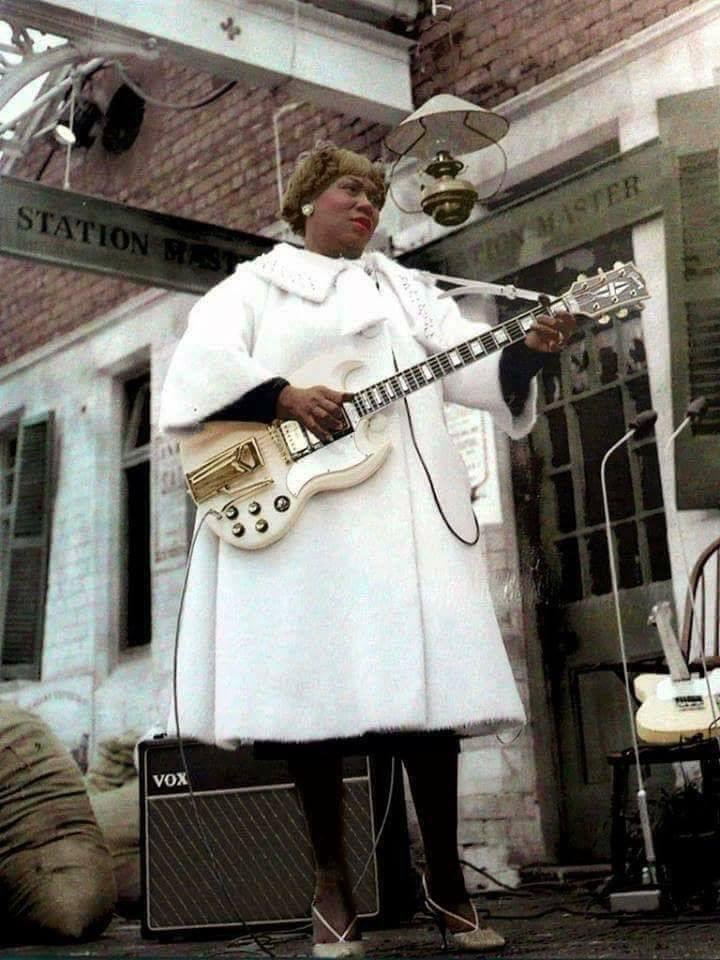
On one rainy evening in May 1964, an abandoned railway station in Manchester became alive with the soul-stirring sound of gospel and blues.
As part of Granada Television’s “Blues and Gospel Train” program, Sister Rosetta Tharpe descended from a horse-drawn carriage, strapped on her electric guitar, and delivered an electrifying performance of “Didn’t It Rain” in the drizzle.
Backed by musicians like Otis Spann on piano, Ransom Knowling on bass, and Willie ‘Big Eyes’ Smith on drums, Tharpe captivated a crowd of about 200 fans who had boarded a special train from Manchester’s Central Station.
This event, filmed for broadcast, marked a pivotal moment in music history and heavily influenced Britain’s burgeoning rock scene.
From Cotton Plant Arkansas to Cottonopolis Lancashire
Born Rosetta Nubin on March the 20th, 1915, in Cotton Plant, Arkansas, Sister Rosetta Tharpe grew up in a family steeped in music and faith. Her parents, Katie Bell Nubin and Willis Atkins, were singers and religious figures in the Church of God in Christ (COGIC), where young Rosetta began performing at the age of four, singing and playing guitar with an evangelist troupe.
At six, she was touring the Deep South, then later in the 1920s Tharpe and her mother settled in Chicago, where she absorbed jazz and blues influences as she performed with Duke Ellington and Dizzy Gillespie, then with swing bandleader Lucky Millinder, mixing gospel with secular styles that would define her career. In 1934 she married the preacher Thomas Tharpe, adopting his surname, though the marriage ended in divorce by 1943.
Signing with Decca Records in 1938, Tharpe became gospel’s first real superstar, crossing over with hits like “Rock Me” and “This Train“. Her innovative use of electric guitar, playing melodies and riffs rather than just chords, bridged gospel, blues, and emerging rock and roll in a way that had never been seen before.
Dubbed the “Godmother of Rock and Roll,” she performed in nightclubs and concert halls, introducing spiritual passion to secular audiences, her career spanned four decades, including tours in Europe and collaborations with jazz legends. She faced criticism from some gospel purists for her secular blends but remained rooted in faith.
After suffering a stroke in 1970, she passed away on October 9, 1973, in Philadelphia at the age of 58.
Posthumously, Rosetta was inducted into the Rock and Roll Hall of Fame in 2018 and the Blues Hall of Fame.
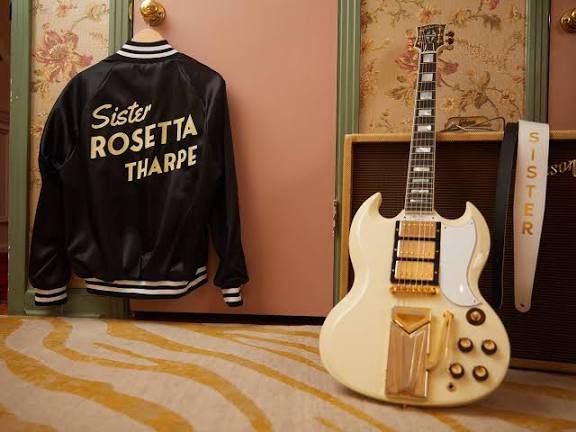
Rosetta always played Gibsons.
Her guitars included a Barney Kessel, a 1952 Les Paul Goldtop, a 1940s L-5 acoustic and an ES-330TD thinline with P-90 pickups, most famously she played an early-60s SG Custom with sideways Vibrola, she always used a thumb-pick as she started out on acoustic
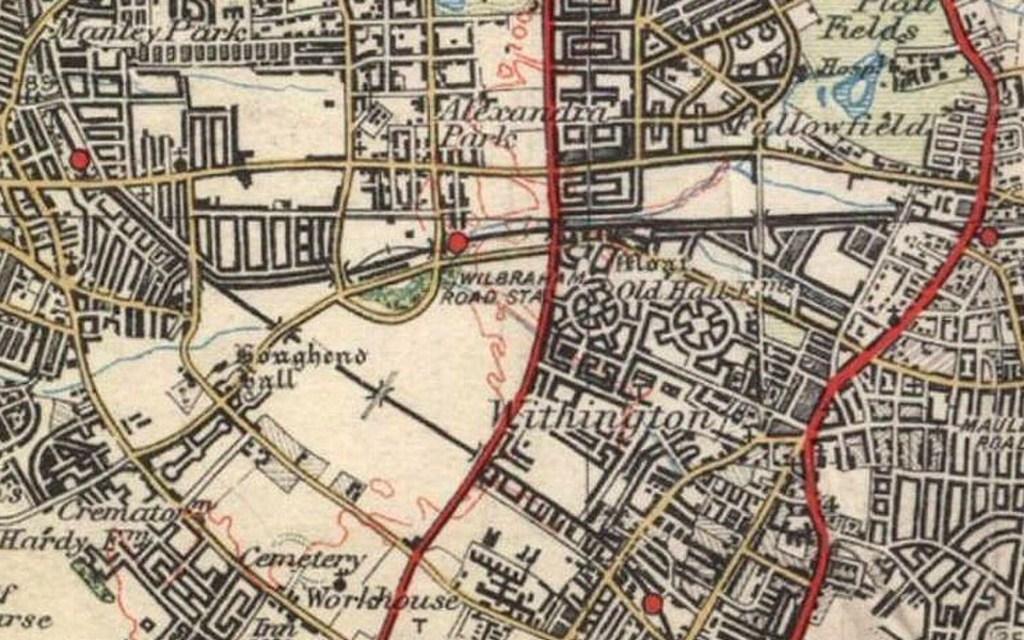
Wilbraham Road Railway Station
Wilbraham Road railway station, originally named Alexandra Park, opened on May the 2nd, 1892, as part of the Manchester, Sheffield and Lincolnshire Railway’s Fallowfield Loop line, located in Whalley Range, near the junction of Alexandra Road South and Mauldeth Road West, it served the growing residential suburb close to Alexandra Park.
The station featured two platforms and a handsome red-brick building typical of Victorian-era architecture, and connected Manchester Central to Fairfield, facilitating commuter travel through areas like Chorlton-cum-Hardy.
Renamed Wilbraham Road on July the 1st, 1923, to avoid confusion with London’s Alexandra Park station, it operated under the Great Central Railway and later British Railways.
Passenger services ceased on July the 7th 1958, due to post-war rail rationalisation (before the infamous Beeching Cuts), though freight trains continued to pass through until 1988.
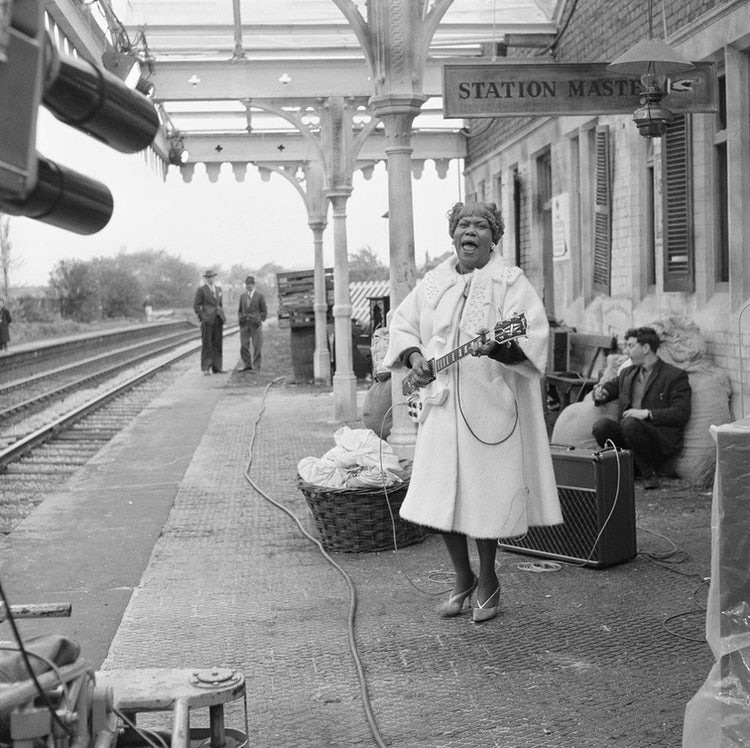
By 1964, the station was disused, its platforms abandoned, making it a novel and very unique setting for Granada TV’s “Blues and Gospel Train.”
“All this new stuff they call rock ’n’ roll, why, I’ve been playing that for years now . . . Ninety percent of rock ’n’ roll artists came out of the church, their foundation is the church.”
Chorltonville Station
The May 7th, 1964, event was producer Johnnie Hamp’s brainchild, and involved transforming the derelict station into a mock Southern States platform called “Chorltonville.”
Fans boarded a steam locomotive at Central Station (now the GMEX), unaware of the destination until arrival.
Appropriately Manchester’s rainy reputation delivered, as Tharpe’s set included her hit number “Didn’t It Rain,” a fitting choice that had the audience clapping on the backbeat, a rare phenomenon in Britain at the time.
She shared the bill with Muddy Waters, Sonny Terry, Brownie McGhee, and others, ending with a group rendition of “He’s Got the Whole World in His Hands.”
British rock luminaries Eric Clapton, Jeff Beck, Keith Richards, and Brian Jones were amongst the attendees, witnessing Tharpe’s guitar prowess firsthand, and the broadcast helped popularise American blues in the UK, influencing many more musicians and aiding its invasion into the British music scene.
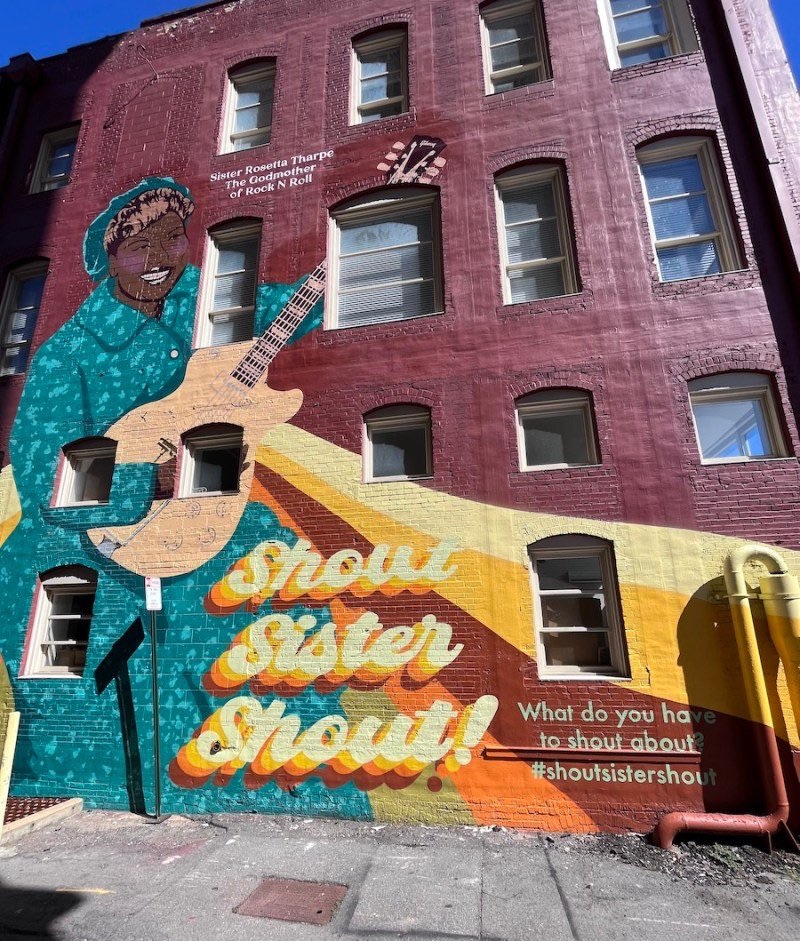
The Site Today
Today, little remains of Wilbraham Road station. The buildings were demolished after the line’s full closure in 1988, leaving only residual brickwork at the platform edges.
The former railway has been repurposed as part of the Fallowfield Loop, a popular cycle path connecting the suburbs of South Manchester.
The Station Master’s house survives as a private residence, and the spot where Eric, Jeff, Keith and Brian once sat, enthralled by Rosetta in her white woollen coat with her electric guitar is now an urban green space.
While these physical structures may be long gone, the location’s musical legacy endures to the modern day.
The Godmother’s Spell; Artists Inspired by Rosetta
Tharpe’s fusion of soulful gospel swing, electric guitar distortion, and captivating rhythmic energy profoundly influenced a whole generation of musicians.
Elvis Presley admired her guitar picking and singing, incorporating her style into his rockabilly sound.
Johnny Cash cited her as his favorite singer, attending her shows and drawing from her spiritual themes.
Chuck Berry called his career “one long Sister Rosetta Tharpe impersonation,” emulating her epic guitar riffs.
Little Richard discovered his calling after performing with her in 1945, and Jerry Lee Lewis, Carl Perkins, and Tina Turner all credited her crossover appeal.
Here in Britain Eric Clapton, Jeff Beck, Keith Richards, and Brian Jones were all inspired by her 1964 tour, fueling the British blues revival with new energy and zeal.
Bob Dylan praised her as a “powerful force of nature,” while Aretha Franklin and Mavis Staples both drew from her gospel-soul blend.
Even later artists like Isaac Hayes, Neil Sedaka, and Karen Carpenter have acknowledged her rhythmic influence.
The rain that fell 62 years ago on an abandoned railway platform in Manchester didn’t dampen any spirits, if anything it watered the buds of rock and roll and helped them bloom, and Rosetta’s legacy still resonates through every electric guitar riff and soulful melody played in every garage, bar, club and stadium in Manchester and around the world.
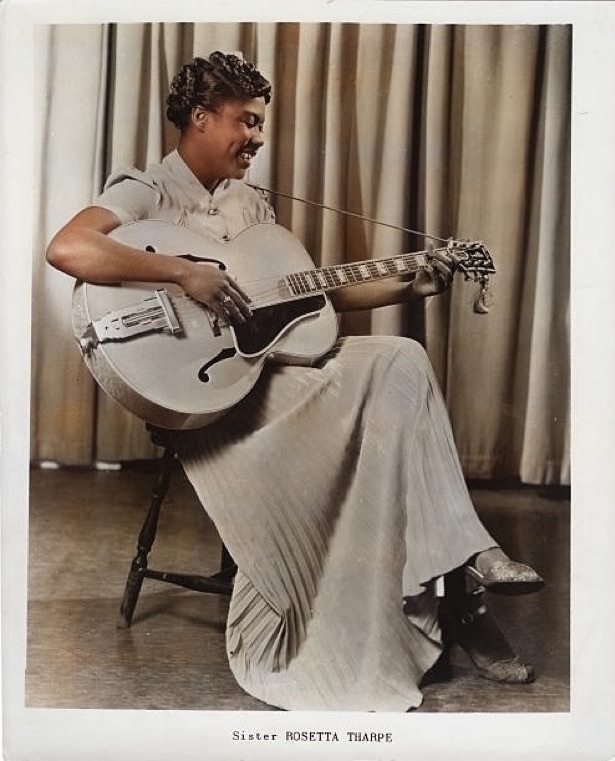
Bob Dylan once said
“I’m sure there are a lot of young English guys who picked up electric guitars after getting a look at her”
Didn’t it rain, children
Talk ’bout rain, oh, my Lord
Didn’t it, didn’t it, didn’t it oh my Lord
Didn’t it rain?
Didn’t it rain, children
Talk ’bout rain, oh, my Lord
Didn’t it, didn’t it, didn’t it, oh my Lord
Didn’t it rain?
It rained 40 days, 40 nights without stopping
Noah was glad when the rain stopped dropping
Knock at the window, a knock at the door
Crying brother Noah can’t you take on more
Noah cried no, you’re full of sin
God got the key and you can’t get in
Just listen how it’s rainin’
Will you listen how it’s rainin’
Just listen, how it’s rainin’
All day, all night
All night, all day
Just listen how it’s rainin’
Just listen how it’s rainin’
Just listen how it’s rainin’
Some moaning, some groaning
Some groaning, some praying
Well, a whole
Didn’t it rain till dawn
Rain on my Lord
Didn’t it, didn’t it
Didn’t it, oh
Oh, my Lord
Didn’t it rain
Oh, God sent a raven to spread the news
To hoist his wings and away he flew
And to the north, and to the south
And to the east, and to the west
All day, all night, all night, all day
Well just listen how it’s rainin’
Well just listen how it’s rainin’
Oh, listen how it’s rainin’
Some prayin’, some cryin’
Some runnin’, some moanin’
Will you listen how it’s rainin’
Just listen how it’s rainin’
Just listen how it’s rainin’
Didn’t it rain, children
Rain on my Lord
Didn’t it, didn’t it, didn’t it, oh
Oh, my Lord, didn’t it rain
Rain, rain, rain, rain, rain
If you enjoyed this you can show your appreciation by buying me a coffee, every contribution will go towards researching and writing future articles,
Thank-you for visiting,
Alex Burton-Hargreaves
(Jan 2026)
 Northwest Nature and History