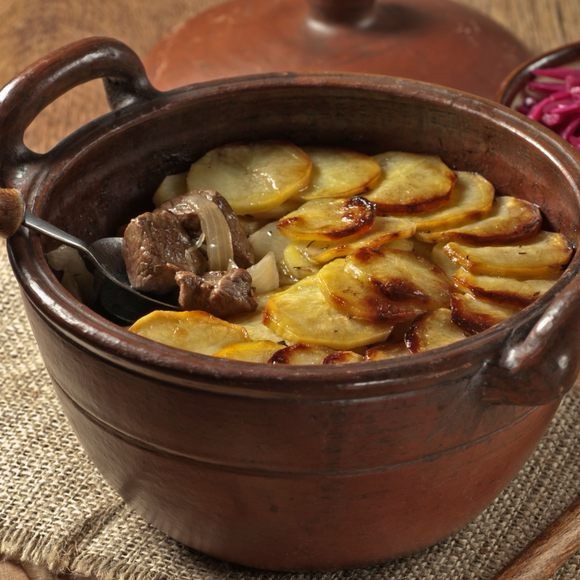
Back in the 17th century, the term ‘hotpot’ didn’t refer to food at all; instead it described a hot spiced ale drink, sometimes mixed with spirits. The word gradually shifted meaning, and by the 1830s to 1840s, ‘hotpot’ or similar terms started appearing for meat stews in places like Liverpool.
Early printed mentions crop up around that time, with the Oxford English Dictionary noting the dish being served in Liverpool in 1842. Elizabeth Gaskell’s 1854 novel North and South describes ‘hotpot’ as a prized dish among cotton workers in a fictional northern industrial town; ‘Milton’ (based on Manchester), showing how it was already a beloved staple in working-class homes.
The dish as we know it, made of layers of lamb (or more often mutton in those days, being cheaper and tougher), onions, sometimes carrots or other odds and ends, all topped with sliced potatoes and slow-baked, really took shape in the 19th century.
Lancashire’s Cotton mills boomed from the late 18th century onward, drawing in tens of thousands of workers to places like Manchester, Bolton, Oldham, and Preston. Families lived in cramped terraced houses with limited cooking facilities. Ovens (or ranges) were becoming more common thanks to cheap local coal, allowing dishes to simmer unattended for hours while people were at work.
The hotpot was ideal: economical, using inexpensive cuts like neck, scrag end, or shoulder (often with a bone left in for flavour and marrow), onions that stored well, and potatoes that grow abundantly in the region’s damp climate. It could be prepared in the morning, left in a low oven all day, and ready when the shift ended, warm, hearty, and stretching a little meat a long way. Some early, fancy “lardi-dar” versions might have included kidneys or even oysters, but the classic working-class one stays simple.
The name likely comes from the tall earthenware pot (‘hotpot’) it was cooked in, or perhaps from “hodgepodge,” after the layered mix of ingredients. By 1859, a recipe appeared in The English Cookery Book, helping spread it beyond Lancashire, and Mrs Beeton’s famous 1861 book included similar stews under names like ‘hotchpotch’.The ‘Lancashire’ label stuck firmly, linking it forever to the county. Pubs and homes across the North West kept the tradition alive, often serving it with pickled red cabbage to cut the richness.
Today, it’s regarded as Lancashire’s signature dish, much like Yorkshire puddings and Cornish pasties, and there really couldn’t be a more appropriate one, as, like the county’s people it’s an honest, plain-speaking, wholesome food born from necessity that warms body and soul when it’s a bit “nesh” out (cold).
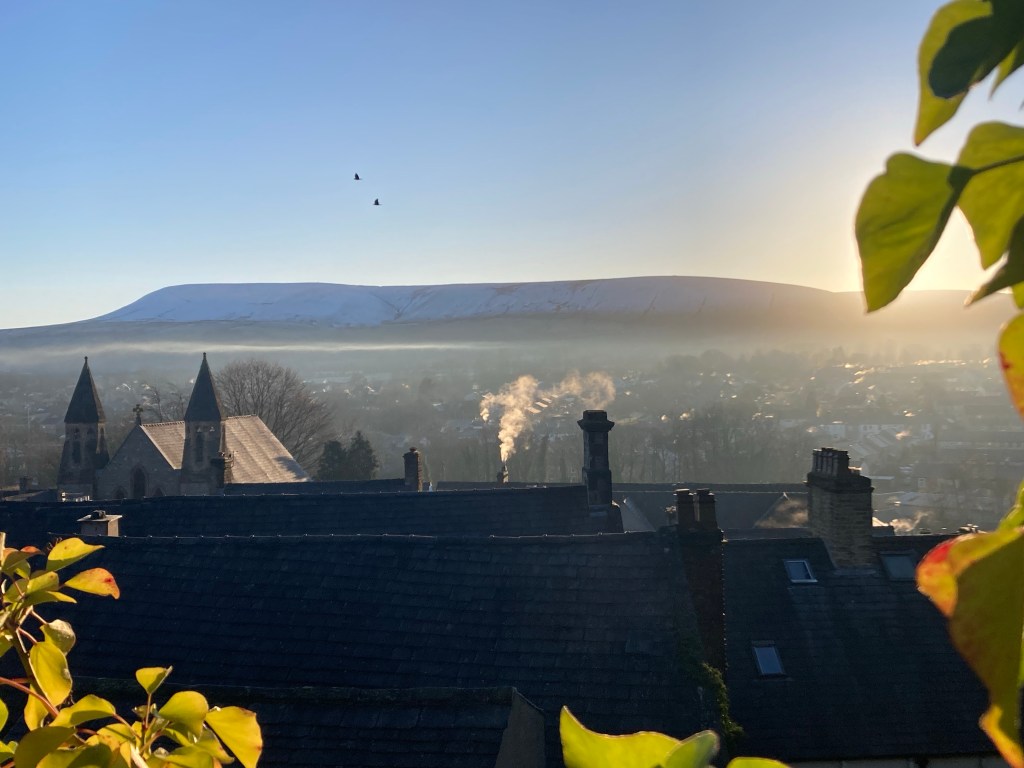
Sunrise over Pendle on a frosty winter’s morning
Generations of Lancastrians have passed down their own recipes with little tweaks here and there, but the essence remains, here’s mine:
Ingredients
To serve 4 to 6 (generous helpings though, as it should be up here)
- 1kg stewing lamb or mutton (neck, shoulder, or scrag end mutton is traditional and fuller of flavour, avoid lean cuts though or it’ll dry out)
- 2 large onions, peeled and thinly sliced
- 3 carrots, peeled and sliced (optional but common in many old Lancashire versions for a bit of sweetness)
- 1 to 1.5kg potatoes (floury ones like King Edwards or Maris Piper are perfect), peeled and thinly sliced (about 3 to 4mm thick)
- 2 tbsp plain flour
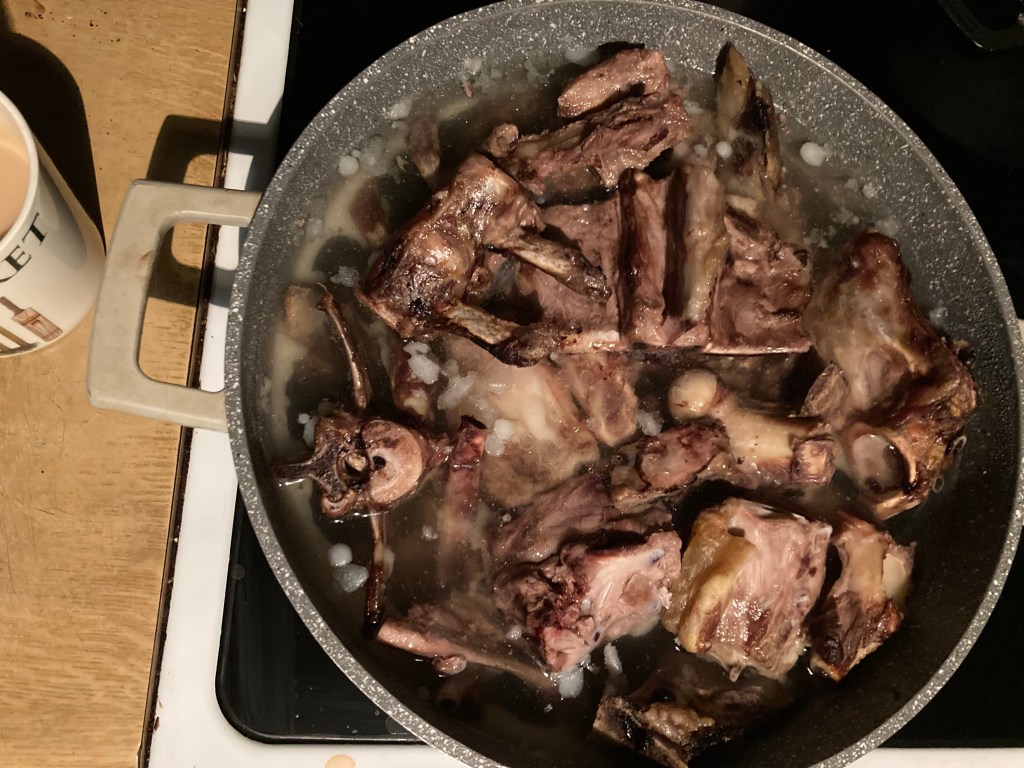
- 600 to 700ml lamb stock (or beef stock, or water with a couple of stock cubes if that’s what you’ve got) we make our stock by simmering up lamb bones for a few hours to separate the fat, and freezing it to use when needed, it’s very useful for making a quick broth too.
- A few sprigs of fresh thyme or 1 tsp dried thyme (optional, some old recipes skip herbs altogether)
- 1 bay leaf (optional)
- Salt and black pepper
- 25g butter or dripping (for dabbing on top and richness)
- A little extra butter or oil for browning
Pairings
As always I like to suggest some music to listen to while preparing a dish and something to drink with it. For this one I recommend the folk group Fivepenny Piece, formed in 1967 in Stalybridge and famous for their catchy songs sang in the Lancashire dialect including ‘Big Jim’, ‘Tell you Owt’ and ‘Ee by gum’.
For drinking I recommend Pictish Porter by Pictish Brewery of Rochdale, a good old-fashioned English Porter with enough of a malty backbone to stand up to this recipe’s savouriness and a favourite guest ale back when I used to run the pub.
Method
- First heat the oven to 160°C (fan 140°C) or Gas Mark 3, a long, slow cook is what the lamb needs to bring out its best, then pour yourself a nice big mug of ale.
- If your lamb isn’t already in chunks, cut it into decent bite-sized pieces. Season well with salt and pepper, then toss in the flour to lightly coat (shake off any excess).
- In a large casserole dish (or heavy pot that can go in the oven), heat a knob of butter or dripping over medium heat. Brown the lamb in batches so it develops a nice colour, don’t crowd the pan though or it’ll stew instead of sear. Lift out and set aside.
- In the same pot, add the sliced onions (and carrots if using) with a touch more fat if needed. Cook gently for 8 to 10 minutes till soft and starting to turn golden. Stir in any leftover flour from the lamb and cook for another minute to lose the raw taste.
- The proper way to assemble a hotpot is to layer. Start with half the browned lamb at the bottom, then half the onions (and carrots), season with a bit more salt and pepper, add thyme and bay if using. Repeat with the rest of the lamb and onions.
- Pour over the hot stock, it should come to just about level with the top layer of meat, maybe a touch more if it looks dry. Give the pot a gentle shake to settle everything.
- Now the potatoes: arrange the slices overlapping like roof tiles over the top, covering everything completely (this seals in the steam and makes that lovely crust). Season the potatoes with salt and pepper, then dot with small knobs of butter or brush lightly with melted dripping.
- Put the lid on and slide into the oven for 2 hours. After that, remove the lid, turn the heat up to 190 to 200°C (fan 170 to 180°C), and give it another 30 to 45 minutes so the potatoes brown and crisp nicely on top. If they need more colour, you can brush with a bit more butter halfway through.
- Leave to rest for 10 minutes before serving straight from the pot at the table, with perhaps some pickled red cabbage on the side or steamed greens. Nothing else is needed as it’s a meal in itself.
There you have it, simple, sturdy, and full of that warm Lancastrian soul. Made the same way for generations in terraced houses from Preston to Oldham. Enjoy it on a cold, wet evening and it’ll set thee reyt!
A Lancashire Grace
For what we ha’n tu eyt gi’ thanks,
let’s hope it’s tu yo’r likin’,
if yo’ ha’n teyth then use ’em weel
we want no pickin’ an pikin’
If some o’ yo’ ha’n loyst yo’ore teyth
then yo’ll ha’tu use yo’r gums,
so get agate, an settle to
an’ tackle ow ’at comes.
Translated:
For what we have to eat give thanks,
let’s hope it’s to your liking,
if you have teeth, then use them well
we want no picking and poking
if some of you have lost your teeth
then you’ll have to use your gums,
so get started and stuck in
and tackle all that comes.
(from Harvey Kershaw’s Lancashire Sings Again, 1958)
If you enjoyed this you can show your appreciation by buying me a coffee, every contribution will go towards researching and writing future articles,
Thank-you for reading,
Alex Burton-Hargreaves
(Feb 2026)
 Northwest Nature and History
I live on Lundy but from a Lancashire mill town originally. What struck me in your blog was the geographic land profile of Pendle is the same as Lundy island ! Do you mind if I use and credit the photo some time in one of my
blogs.. I wasn’t to do one sometime about the North !
LikeLiked by 1 person