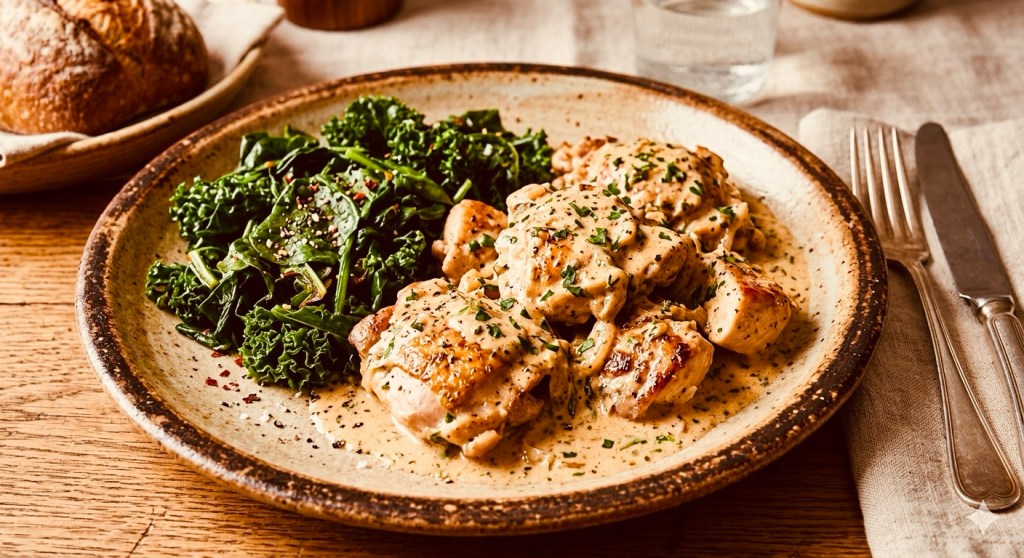
The notion that traditional English food is inherently bland and unseasoned is a stubborn modern myth, one largely born from the austerity and rationing of the mid-20th century, when wartime shortages and postwar frugality stripped many tables of flavour and variety.
In truth, English cookery, especially in the medieval and early modern periods, was, as we can see here, rich with seasoning, colour, and aromatic complexity.
Chekyns in Cretene
Harking back to the kitchens of medieval Lancashire the latest addition to my Northwest Recipes collection is taken from the Liber Cure Cocorum, a remarkable little cookery book composed in verse around 1430 in northwest England.
It’s a comforting pottage, made of tender chicken pieces simmered in a spiced, thickened milk sauce, gently sweetened and coloured with precious saffron. Think of it as a precursor to more modern creamy sauces, using ingredients that would have been accessible (or aspirational) in a Lancashire manor or yeoman’s hall; milk from the cow byre, spices traded through coastal ports, and saffron for a touch of golden luxury.
The original recipes in the manuscript are (very cleverly) all in rhyming verse, making them memorable for cooks who learned by ear and memory rather than by printed page. This one reflects the practical, resourceful cooking the region is still famous for, making the most of fresh poultry and dairy while adding warming spices to lift the dish.
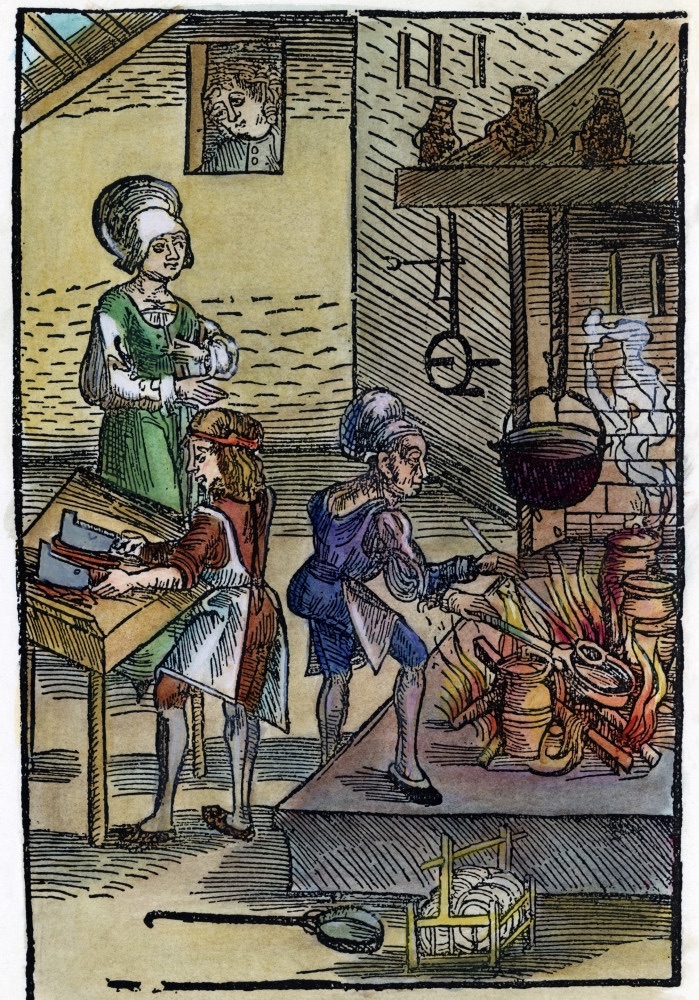
Ingredients (serves 4 to 6 as a main pottage)
- 1 good-sized chicken (or 4 to 6 chicken portions), jointed into quarters
- 600 ml (1 pint) of whole milk
- 2 to 3 tablespoons of flour or wheat starch (amidon, if you can source it, is more authentic, rice flour works well as a substitute)
- ½ a teaspoon of ground galingale (or a pinch of galangal powder; substitute with extra ginger if unavailable)
- 1 teaspoon of ground ginger
- ½ teaspoon of ground cinnamon
- ½ teaspoon of ground cumin
- A good pinch of saffron threads (steeped in a little warm water or milk)
- 1 to 2 tablespoons of sugar (to taste, bearing in mind that medieval “sweet” was a lot more subtle than we are used to)
- Salt to taste
- Water for boiling the chicken initially
Wine and Music Pairings
As always I like to recommend something to listen to when preparing and cooking my recipes, and for this one may I suggest a bit of bardcore, (an underrated music form in my opinion).
To drink; an amber ale works very well with any creamy chicken dish. The full-bodied and malty nature of Pendle Witches Brew by Moorhouses Brewery of Burnley is ideal, alternatively if you prefer wine a light, fruity Grenache pairs perfectly with this recipe, Byrne & Co of Clitheroe will happily root out a bottle of this from their labyrinthine cellar.

Please buy your chicken and other ingredients from your local butchers and independent shops if you can
Method
- To begin with, (after ordering your bard to strike up his lute, and your cupbearer to fetch you a flagon of ale), place the jointed chicken pieces in a pot with enough water to cover. Bring to a gentle boil and seethe (simmer) until the chicken is just cooked through and tender, this takes about 20 to 30 minutes depending on size. Next remove the pieces, quarter them if not already done, and set aside. Reserve a little of the broth if you wish to loosen the sauce later.
- In a clean pan, pour the milk and mix it well with the flour or starch to form a smooth thickening base, then place over a gentle heat and stir as it comes to the boil, taking care that it does not catch.
- Season the milk sauce with the galingale, ginger, cinnamon and cumin, stir in the steeped saffron for a beautiful golden hue, and let it simmer gently until it thickens to a good consistency, like a light custard or sauce.
- Add the quartered chicken pieces to the sauce, bring everything back to a gentle boil together so the flavours marry, adding a splash of the reserved broth if it needs loosening, and season with sugar to sweeten subtly and salt to balance.
- Serve forth straight away while hot, in bowls or on trenchers of good bread, it makes a wholesome, warming dish, perfect for our often damp Northern evenings.
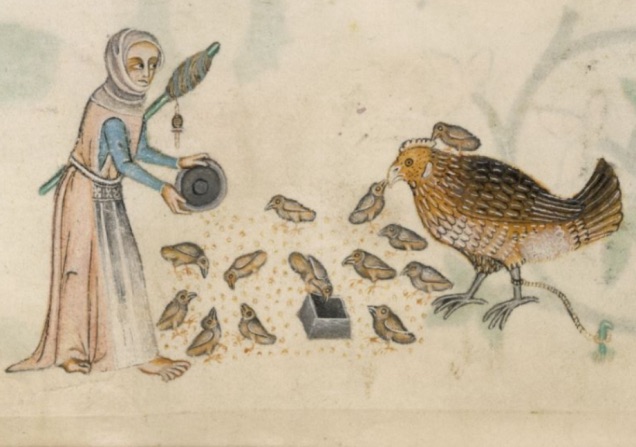
Notes from the hearth
The original verse from Liber Cure Cocorum runs roughly like this (in modernised spelling for readability, with the flavour of the Northern dialect preserved):
Take cow mylke, lye hit anone
with flowre, or ellis with amydone;
fors hit with galyngale and gode gyngere,
with canel and comyn, alle in fere,
coloure hit with safron þo;
Þe chekyns by hom selfe þo sethe þer to,
hew hom in quarteres and lay hom inne,
boyle hom up with alle, no more ne mynne;
but seson hit with sugur suete,
and serve hom for the for þay ben sete.
Translation:
Take cow’s milk, mix it anon with flour or else with amidon; season it with galingale and good ginger, with cinnamon and cumin all together; colour it with saffron then. Seethe the chickens by themselves thereto, hew them in quarters and lay them in; boil them up withal, no more nor less; but season it with sugar sweet, and serve them forth for they are wholesome.
You can tweak the spices to your taste, medieval cooks were fond of these warming aromatics to aid digestion and add interest to plainer fare. For a more period feel, use a heavy pot over a low fire or modern hob. Serve with simple, seasonal greens or root vegetables, and don’t forget to pour some more ale or wine!
There you have it, a taste of medieval Lancashire brought into the modern kitchen, now who said English food was bland?

If you enjoyed this you can show your appreciation by buying me a coffee, every contribution will go towards researching and writing future articles,
Thank-you for visiting,
Alex Burton-Hargreaves
(March 2026)
 Northwest Nature and History