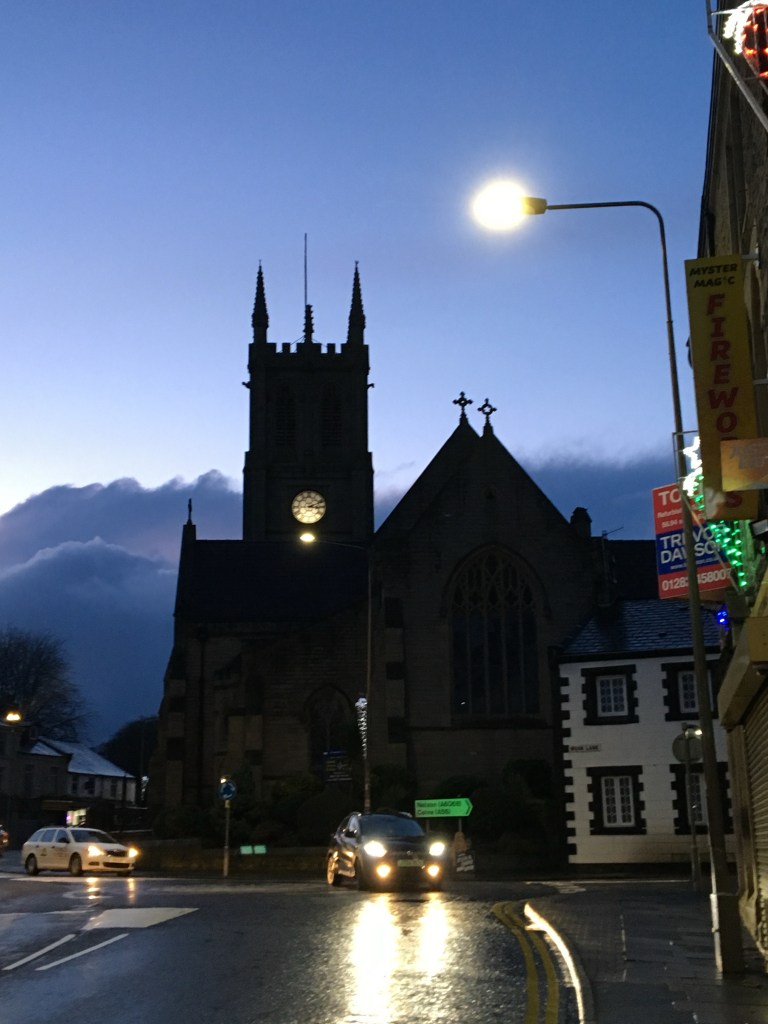
St Leonard’s Church stands proudly in the heart of Padiham, Lancashire, and is a striking example of Victorian Gothic Revival architecture that continues to serve its original purpose. While its current building dates from the late 1860s, the story of worship on this site stretches back further, more than 570 years, and traces the changing fortunes of the community from medieval village through industrial mill-town to the place we know and love today.
Medieval Origins: A Chantry Chapel
The history of St Leonard’s begins in the mid-15th century. In 1451 King Henry VI granted a licence to Sir John Marshall, a local official connected to Cardinal Thomas Langley, to purchase land in Padiham for a chantry chapel dedicated to St Leonard.
A chantry was a foundation where a priest said masses for the soul of the founder and his family. Marshall, a native of the township, endowed the chapel to support a chantry priest. Some accounts suggest there may have been even earlier worship on or near the site, possibly dating to Anglo-Saxon or Norman times, but the first documented place of worship here was this chantry chapel of St Leonard.
The chapel was rebuilt or enlarged in the 1520s, a period when many Lancashire churches received improvements during the final flowering of pre-Reformation piety. By the time of the English Reformation, it had transitioned from a private chantry into a chapel of ease, serving the growing township within the ancient parish of Whalley.
18th-Century Rebuilding
By the mid-18th century, Padiham found that its population was increasing rapidly and the medieval building had become inadequate and dilapidated, so in 1766, the church was largely rebuilt and widened to accommodate more worshippers. Only parts of the earlier structure, namely the tower and some medieval fabric, were retained or incorporated. This Georgian-era church served the community through the early decades of the Industrial Revolution, when Padiham transformed from a rural township into a bustling cotton-manufacturing centre.
Parish Registers from St Leonard’s survive from as early as 1573, providing a rich record of baptisms, marriages, and burials that illuminate local family histories through centuries of agricultural life, handloom weaving, and later factory work.
The Victorian Rebuild: A Grand New Church
By the 1860s, the 1766 church had once again become unsafe and too small for the expanding population of the booming mill-town. From 1866 to 1869, the old building (except for some recoverable stone reused in the foundations) was demolished and replaced by an entirely new church.
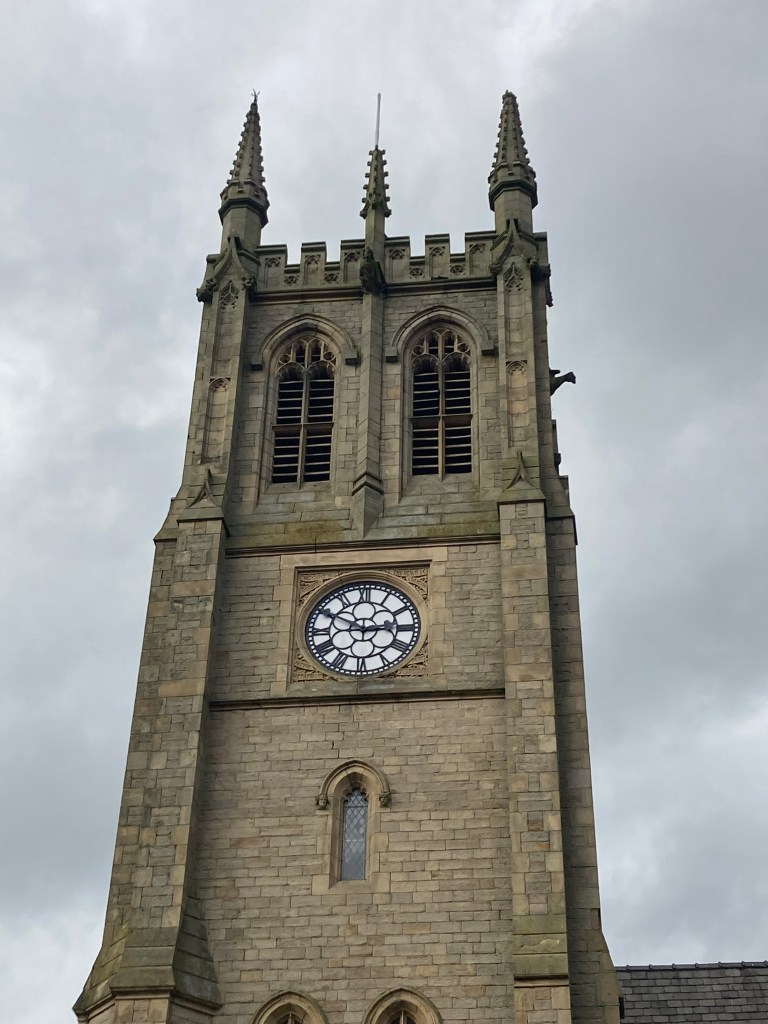
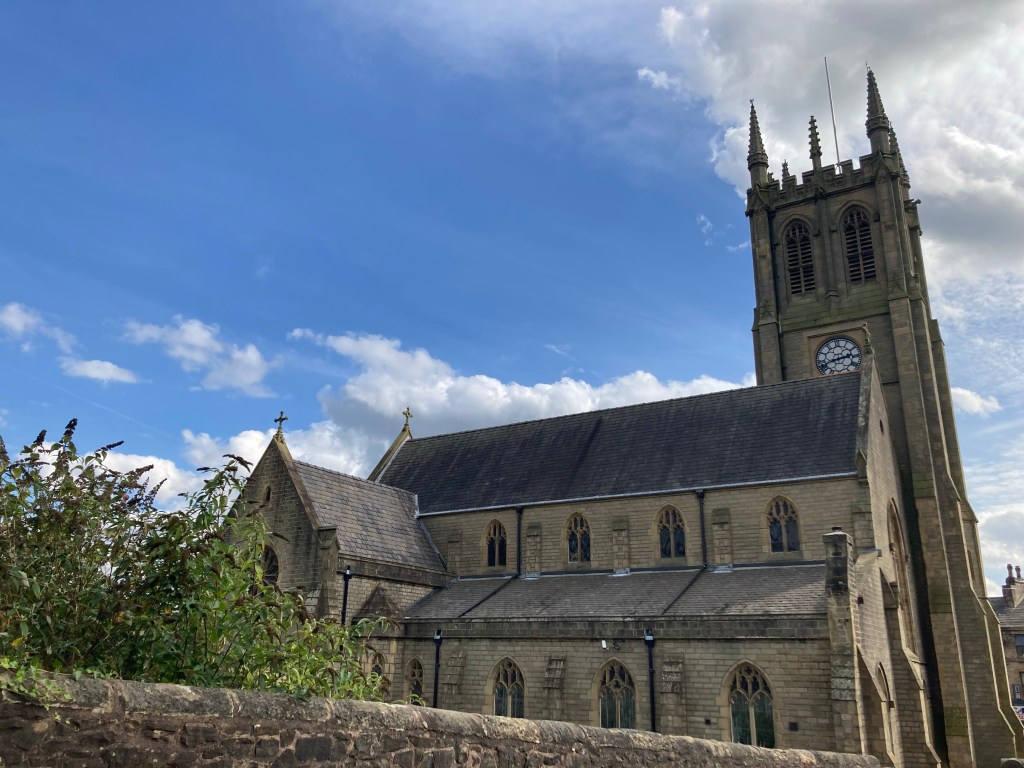
The architect was William Waddington, a local parishioner and talented designer who created the present structure in a modern Perpendicular Gothic (15th-century style) at a cost of around £8,000. The new St Leonard’s features a cruciform plan with aisles to the nave and chancel, an imposing four-sided tower containing eight bells, hammer-dressed sandstone walls with ashlar dressings, and steeply pitched slate roofs. Some medieval elements, including an old chancel window, were carefully reinstated too.
The church was consecrated in its new form in 1869 and has stood ever since as one of the most impressive Anglican buildings in the area. It is now a Grade II listed building, recognised for its architectural quality.
Further restorations and improvements followed in the Victorian period, notably in 1875 and 1887, involving significant expenditure and input from leading architects of the day.
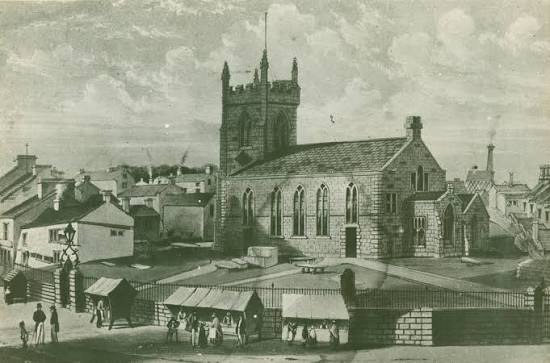
(Red Rose Collections)
The Church Today
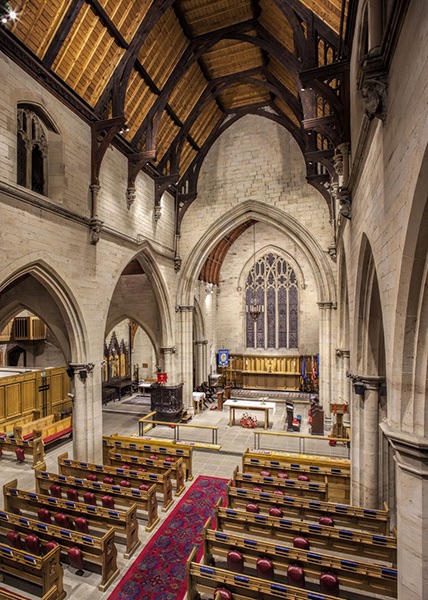
St Leonard’s remains an active parish church, welcoming visitors and holding regular services. Its churchyard, extended over the years, contains thousands of memorials and continues to tell the story of Padiham families through the generations. The tower and bells still ring out over the Calder Valley, while inside, the spacious Gothic interior provides a peaceful setting for worship and community events.
From its modest beginnings as a 15th-century chantry founded by a local worthy, through Georgian enlargement and Victorian ambition, St Leonard’s has mirrored the history of Padiham itself; from quiet township to industrial powerhouse and now to a lively residential community that values its heritage.
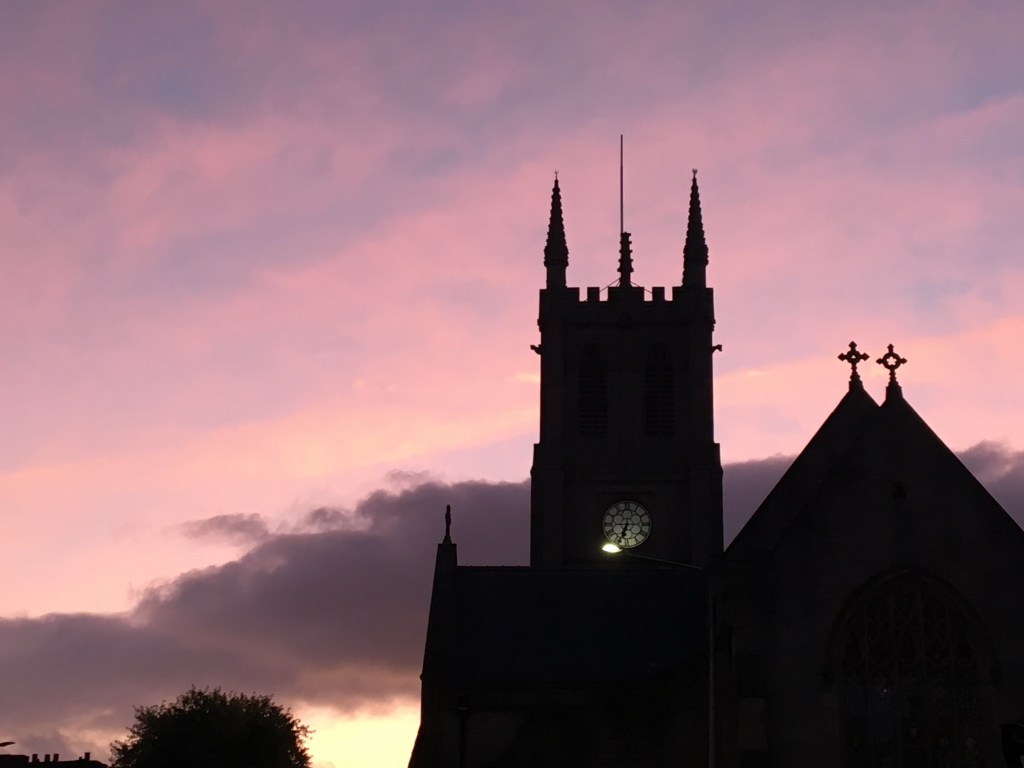
To learn more about St Leonards & Padiham Parish please visit padihamparish.org
“How lovely is your dwelling place, Lord Almighty!
My soul yearns, even faints, for the courts of the Lord;
my heart and my flesh cry out for the living God.
Even the sparrow has found a home, and the swallow a nest for herself, where she may have her young—
a place near your altar, Lord Almighty, my King and my God.
Psalm 84:1-4, 10 (NIV)
Alex Burton-Hargreaves
(April 2026)

