Ecology, Identification, Behaviour and Conservation of Sterna hirundo, the Common Tern
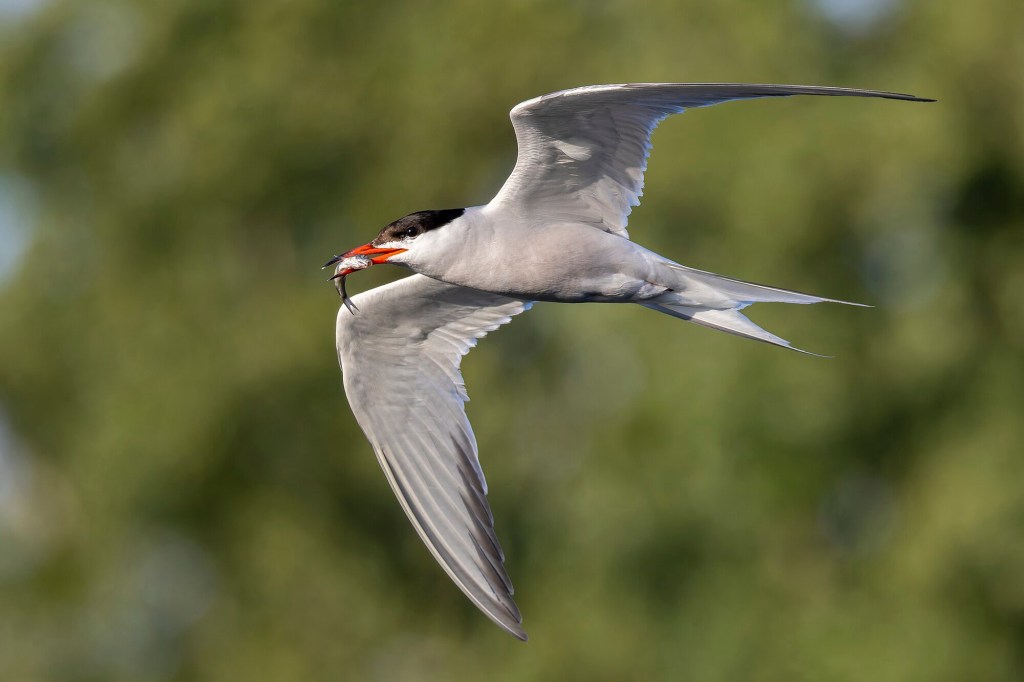
Common Terns, known scientifically as Sterna hirundo, are elegant seabirds often called “sea-swallows” due to their graceful flight and long, forked tails.
In Britain they grace coastal estuaries, shingle beaches, and inland waters during the summer months and their population currently stands at around 12,000 breeding pairs. They hold Amber status on the Birds of Conservation Concern list, mainly due to ongoing pressures on their habitats and breeding success.
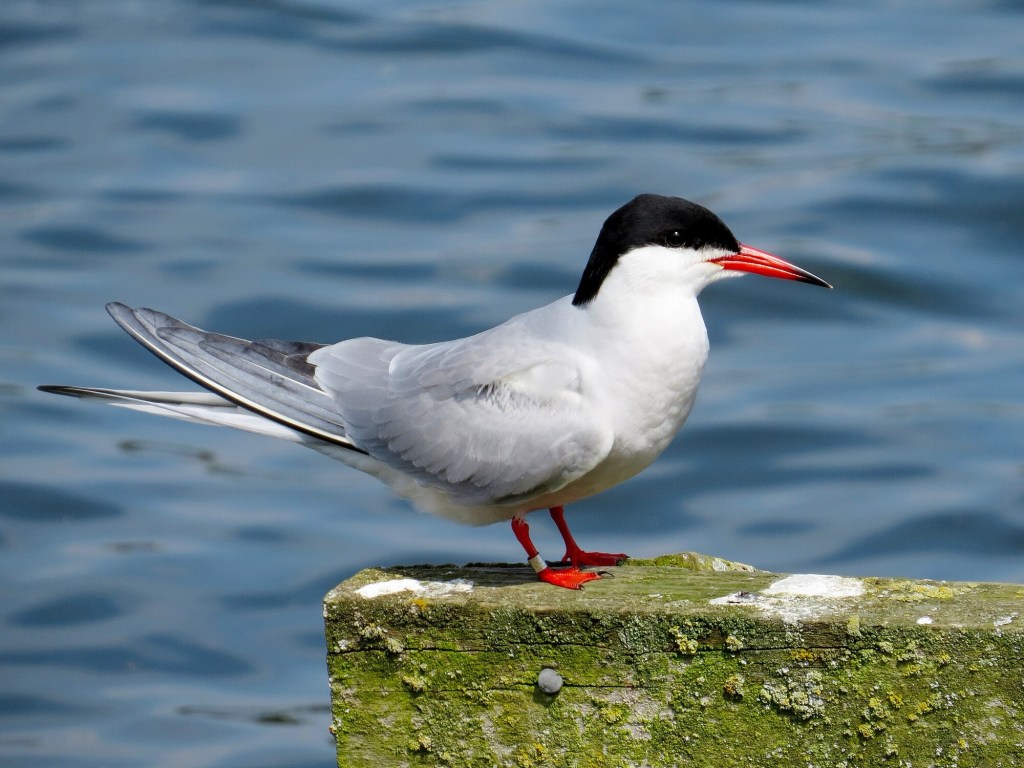
(Image by Alexis Lours)
Distinguished and Delightful
Common Terns are medium-sized members of the Laridae (gull) family at 31 to 35cm in length, with a wingspan of 77 to 98cm and a weight of 90 to 150g.
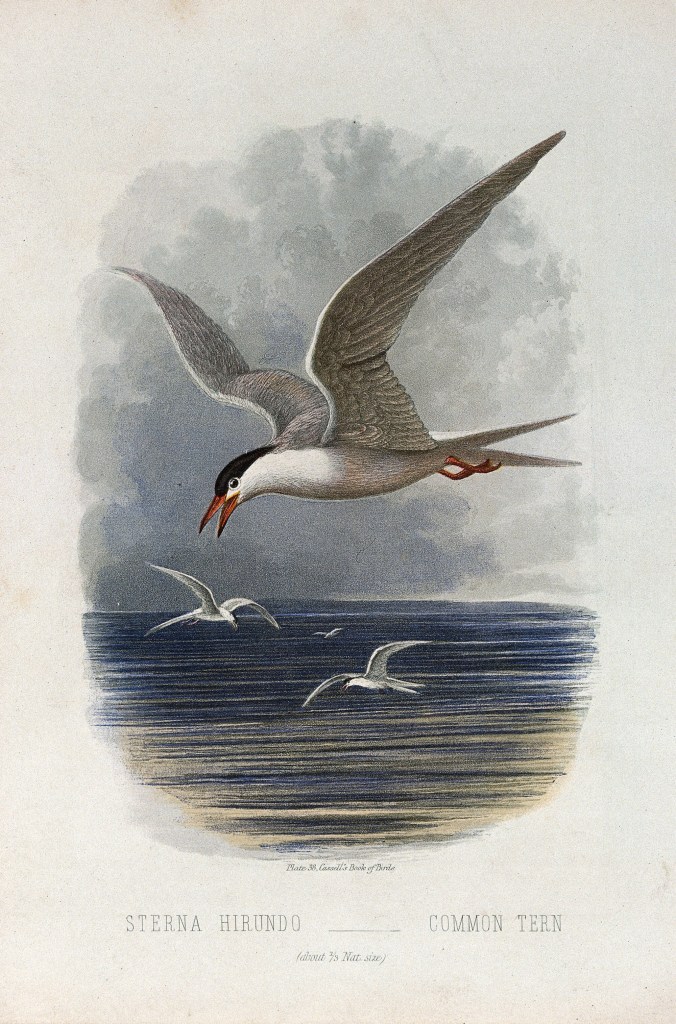
Adults are very smart and distinguished in their breeding plumage, sporting a silvery-grey back and upperwings, a clean white underbody, and a distinctive black cap. Their bill is long and orangey-red with a black tip, while their legs are short and red. In flight, they show a buoyant, floating style with narrow, angular wings, often hovering before plunging to catch prey.
Their tail streamers are relatively short compared to the Arctic Tern, making it fairly easy to distinguish the two similar-looking species, and they lack the yellow tip to the bill and the shaggy crest of the Sandwich Tern.
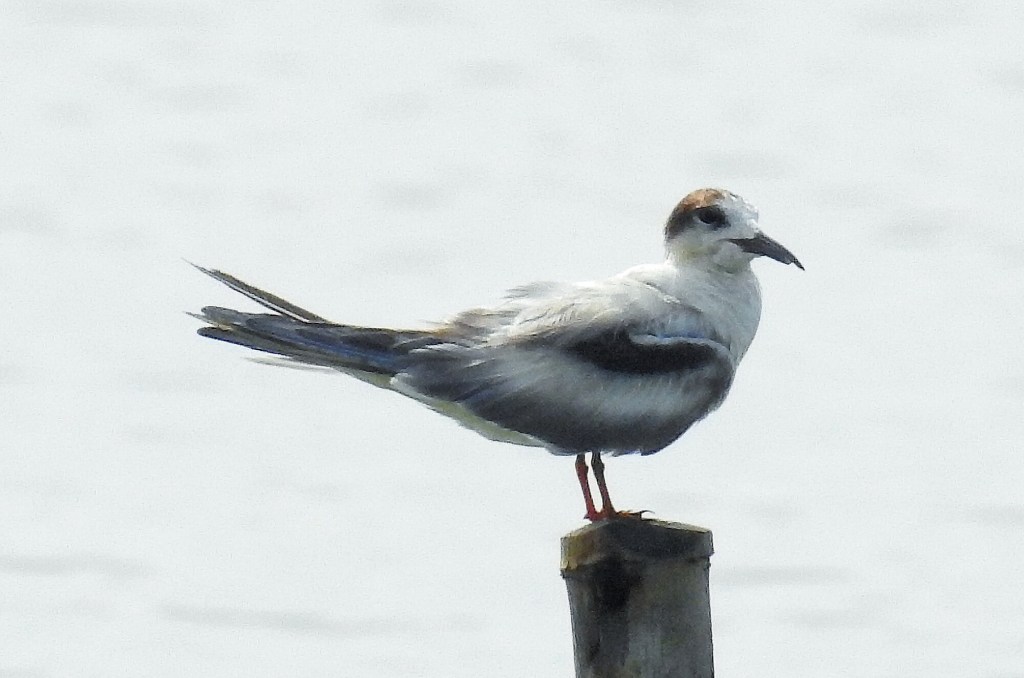
Juveniles and non-breeding adults have more mottled plumage and a white forehead.
Long-lived and Adaptable
Long-lived (average lifespan is around 12 years) and adaptable birds Common Terns breed in colonies on shingle beaches, rocky islands, gravelly shores of lakes and rivers, and increasingly on artificial structures like floating rafts or gravel islands in reservoirs and gravel pits. In fact they have become the tern species most frequently seen inland in Britain.
These colonies are easy to find too as they are noisy and social birds, defending nests aggressively by dive-bombing any and all intruders.
Their diet consists primarily of small fish, caught via plunge-diving after hovering, though, like their Swallow name-sake (with which, though unrelated, they share their scientific name hirundo) they also take insects.
Hunting grounds are over coastal waters, estuaries, and inland waterbodies, of which northwest England boasts many including the Lune Estuary, Morecambe Bay, and sites around the Ribble and Mersey.
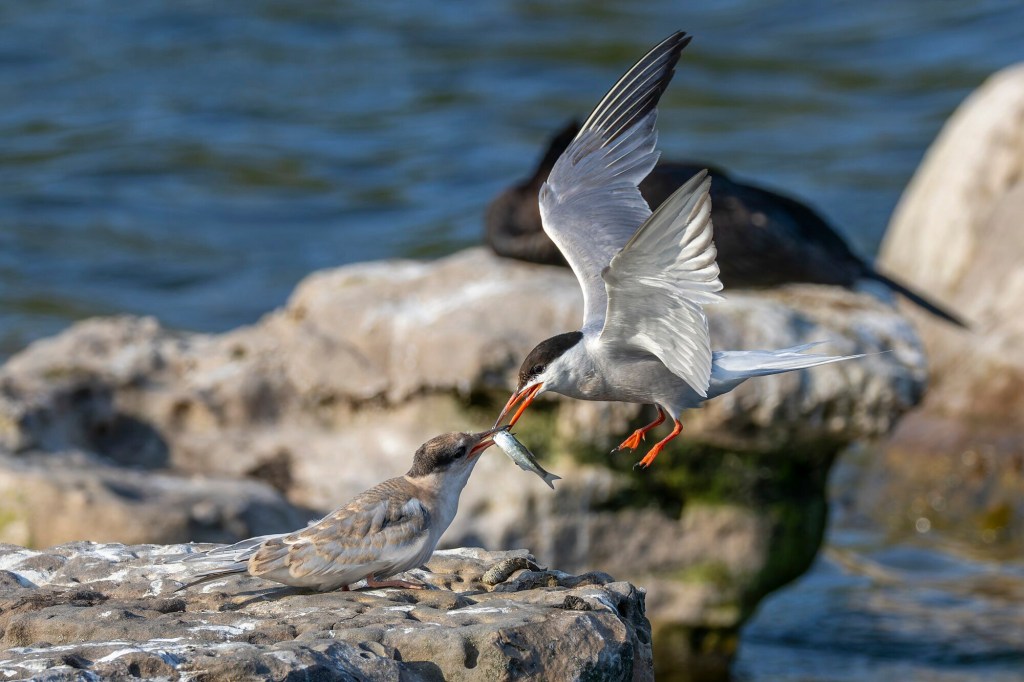
(Alexis Lours)
Where to See in the Northwest
Common Terns arrive in the region from April and depart by September or October. They form colonies that can number from a few pairs to several hundred. Historically, larger colonies existed on saltmarshes in the Lune Estuary in Lancashire, but many faced challenges as covered below.
Notable sites include:
- Conder Pool and the Lune Estuary: Once home to several hundred pairs, the colony largely disappeared around 2008 due to habitat loss, disturbance, and predation. Recent conservation work has brought signs of recovery.
- South Walney Nature Reserve: Managed by Cumbria Wildlife Trust, this shingle spit supports various terns including Arctic, Little, and Sandwich too, all living side-by-side with a thriving grey seal colony.
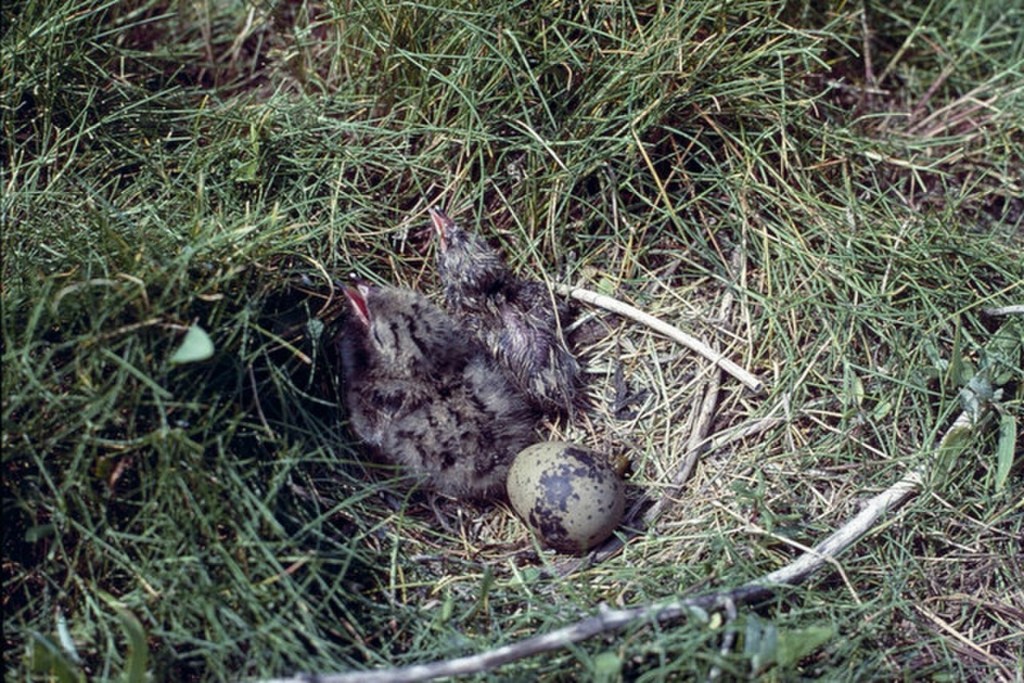
(Mike Pennington)
Breeding and Migration
Common Terns are long-distance migrants. British birds, including those from northwest England, typically winter along the coasts of West and South Africa. Each spring they return, their journeys involving coastal and overland routes covering thousands of kilometres, with some one-year-olds remaining on the wintering grounds.
When here, after a period of rest and recuperation from their long journey, they initiate a series of elegant, elaborate and energetic courtship rituals which proceed as thus:
- Aerial phase: The males perform high flights, sometimes carrying a fish in their bill, if interested the female follows, leading to a paired zigzag glide down to the ground.
- Ground display: Once on land, the male bows his head, holds his wings drooped and slightly out (like a skirt), and struts or circles around the female while she often points her bill upward. This display includes high-stepping “happy feet” walking and mutual posturing with necks extended.
- Courtship feeding: The courtship dance’s final coda involves the male offering a small fish (held crosswise in the bill) to the female. He parades with it, sometimes shaking his head to display it, if impressed she may accept it with noisy calling from both birds. This feeding can continue intensively before and during egg-laying, helping to cement the pair bond and providing the female with extra nutrition for egg production.
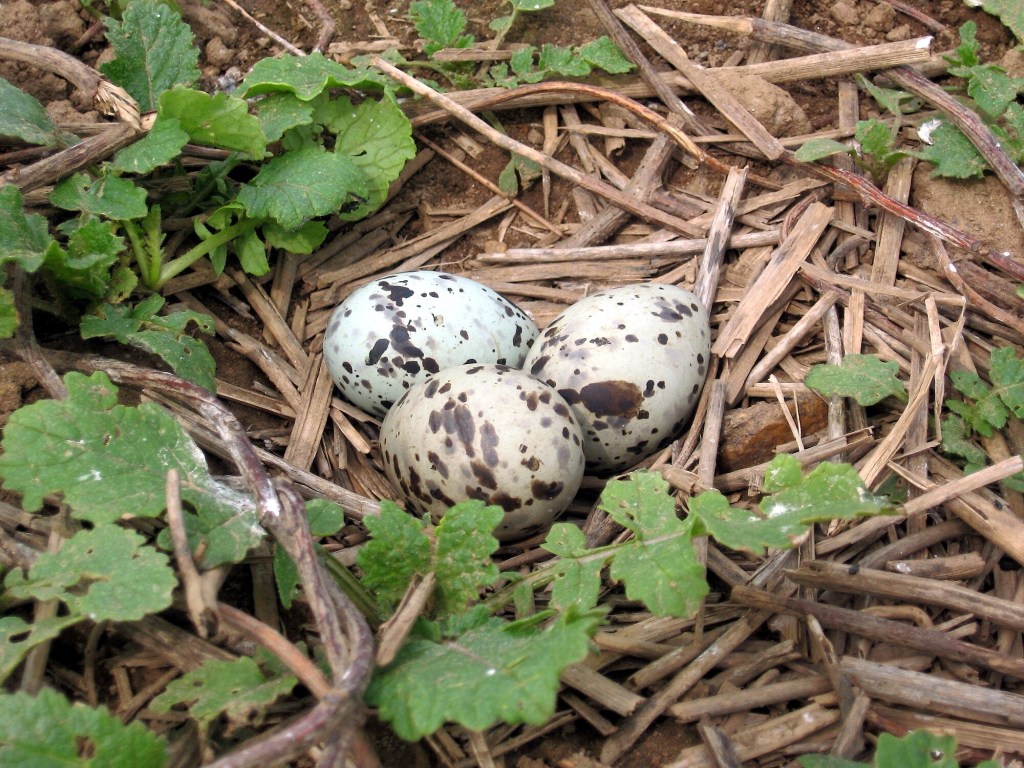
The whole ritual is accompanied by loud, rasping calls and can involve territorial disputes between rival males, these may continue after the female has laid her clutch of 2 to 3 eggs (rarely 4) in a shallow scrape on bare or sparsely vegetated ground.
Both parents incubate and feed the chicks, which fledge after about 4 weeks but remain dependent on parents, leaving the nesting colony for staging areas 10 to 20 days later. While they begin short flights, they often continue receiving food for several weeks, departing for migration with parents around late August or September.
Conservation Challenges
Threats to Common Tern include habitat loss and erosion (especially on saltmarshes), human disturbance from recreation, dogs, boats, and vehicles, predation by foxes and other mammals, and reduced food availability linked to overfishing or environmental changes. Seabird colonies face pressure from avian flu, though Common Terns remain Amber-listed rather than Red-listed in the latest assessments.
In northwest England, targeted projects offer hope. In the Lune Estuary, Natural England and partners (including the Environment Agency, RSPB, Fylde bird club, Lancaster University, and local birdwatching groups) have restored habitats by reprofiling islands, repairing sluices, and installing floating nesting rafts.
A pontoon at Conder Pool in 2021 encouraged returns, with additional rafts added in subsequent years, including one launched in late 2024. These efforts have led to successful chick-rearing over multiple seasons, with breeding pairs increasing and a 64% rise in fledged chicks in 2024 compared to 2023. The rafts provide safe, monitorable sites with minimal disturbance and even support local wildlife tourism.
If you would like to admire our Terns this summer please respect signs, keep dogs on leads, and use hides to avoid disturbance, after all we are visitors to their world and they have been been here a lot longer than us!
Stormas þær stanclifu bēotan,
þær him stearn oncwæð
īsigfeþera; ful oft þæt earn bīgeal,
ūrigfeþra; nænig hlēomǣga
feasceaftig ferð frēfran meahte.
Translation:
Storms there beat the stone-cliffs,
where the tern answered him,
icy-feathered; very often the eagle screamed,
dew-feathered; no sheltering kinsman
could comfort the desolate spirit
(From the Anglo-Saxon poem The Seafarer)
Thank-you for reading. If you enjoyed this piece and would like to support further articles on the wildlife and history of the Northwest, you can buy me a coffee here.
Alex Burton-Hargreaves
(April 2026)

