Identification, Biology, Ecology and Conservation of the Speckled Wood Butterfly Pararge aegeria
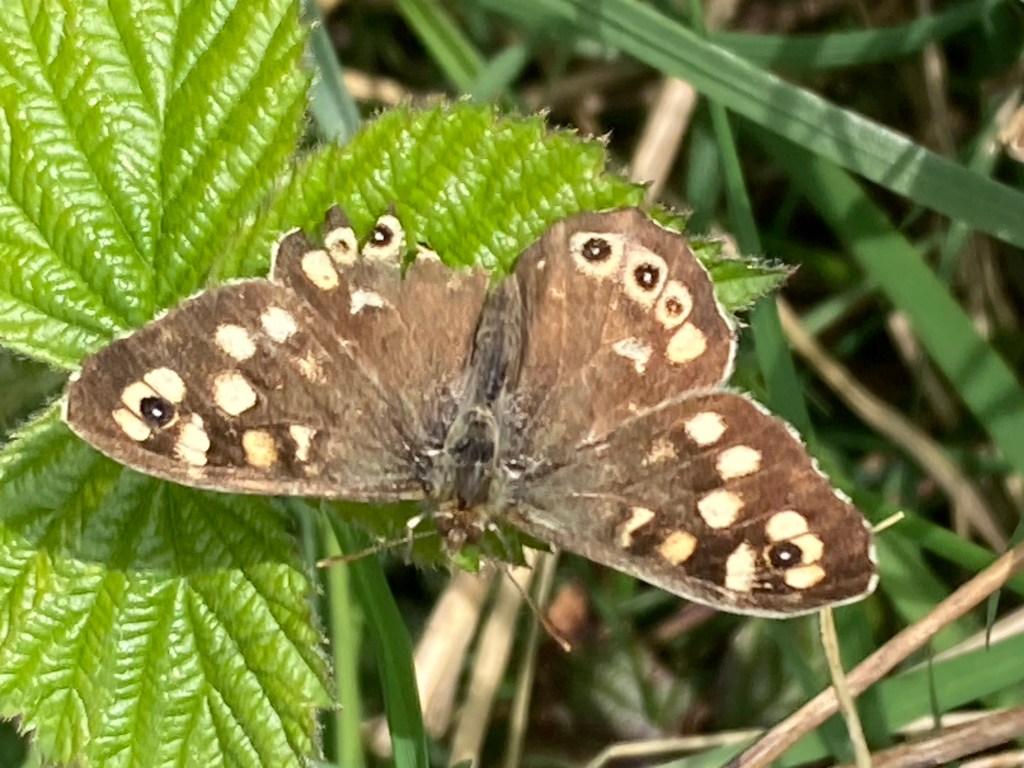
Speckled Woods are a familiar butterfly to most of us here in Britain yet are often overlooked in favour of flashier species like the Peacock or Red Admiral.
Understated and widespread they may even appear dowdy compared to their lepidopteran cousins yet, as with any wild creature, patient observation reveals them to possess more beauty and character than you would ever suspect.
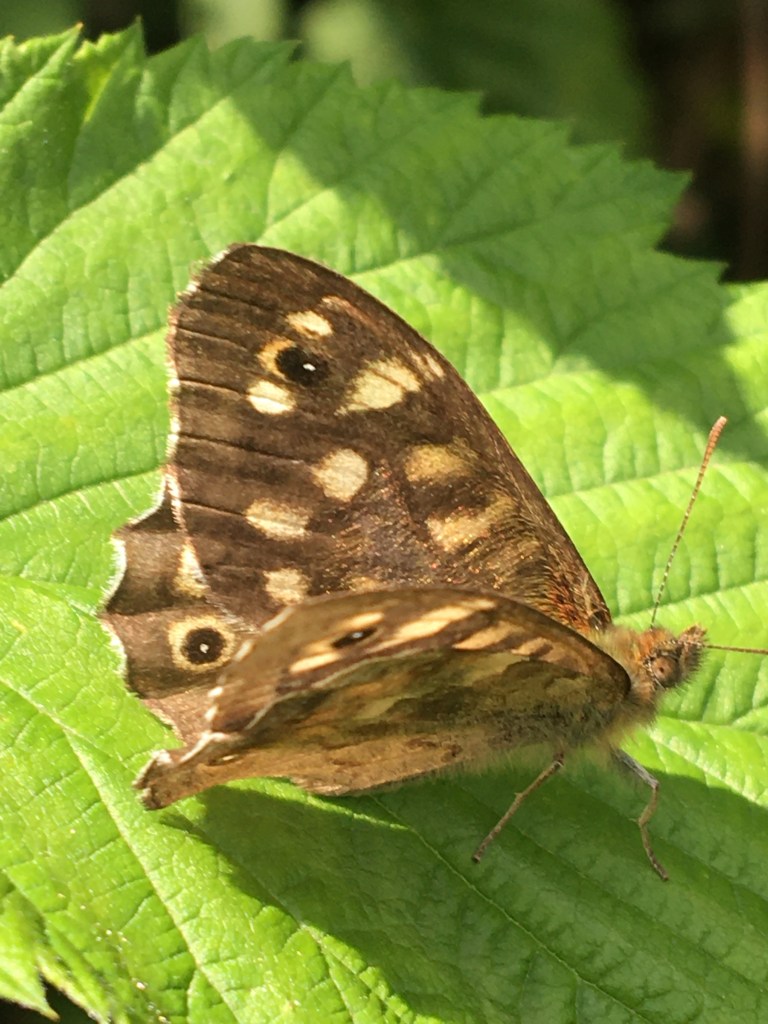
Pararge comes from the Greek Para (παρά), meaning ‘proximity’, ‘comparison’ or ‘exception’, and arge (Ἄργη) is often interpreted to mean ‘bright,’ referring to the spots on the wings.
Aegeria refers to Egeria, a woodland nymph and advisor to Numa Pompilius, the legendary Second King of Rome after Romulus
Identification and Appearance
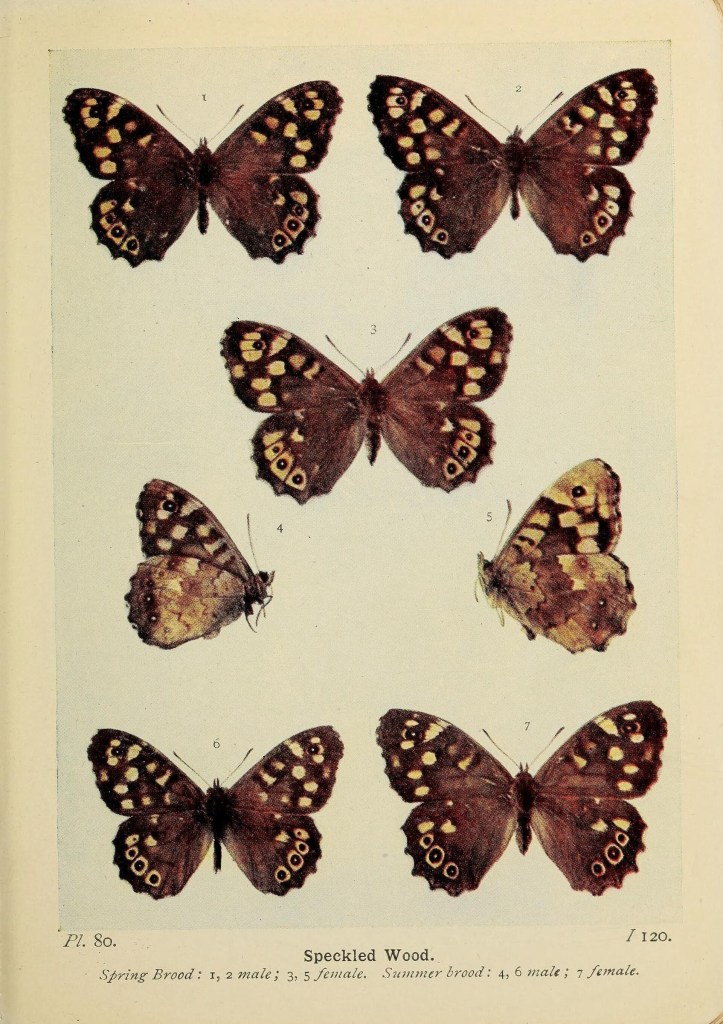
With a wingspan of around 4.6 to 5.6cm this medium-sized member of the Nymphalidae family is easily recognised by its dark brown wings liberally sprinkled with creamy-white or orange-yellow spots. The exact patterning shows a north-south cline: individuals in more northerly parts of Britain tend to have paler, creamier spots, while southern forms lean towards warmer orange hues.
Prominent eyespots on the forewings and hindwings help deflect predator attacks and when at rest or basking, it often holds its wings partially open or closed, revealing the intricate mottling that gives it its name.
Males are particularly active, perching in sunny patches and darting out to investigate intruders, sometimes engaging in spiralling aerial combat with rivals. Unlike many butterflies that prefer bright sunshine, the Speckled Wood is well-adapted to shade and can be seen flying in the dappled woodland understory on overcast days.
Habitat
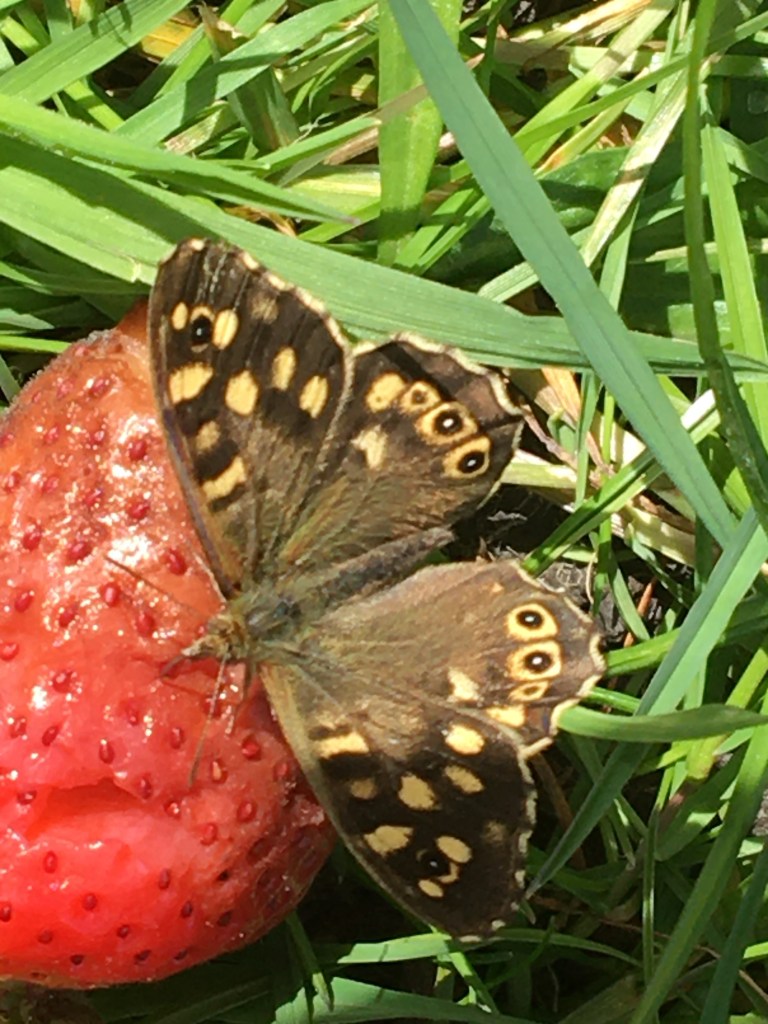
True to its name, the Speckled Wood favours woodland edges, rides, and clearings where sunlight filters through the canopy, it is also common in urban parks and gardens where sufficient scrub and shade exists. If conditions are right it will be found in more open habitats with scattered trees and tall vegetation, including some mossland edges and coastal woodlands.
This adaptability has allowed it to remain relatively common even as other woodland species have faced challenges. It is widespread throughout much of England, Wales, and Northern Ireland, and is expanding its range northward into parts of Scotland.
Life-cycle and Behaviour
Uniquely among British butterflies P. aegeria overwinters in two different stages, either as a caterpillar or as a chrysalis, leading to a protracted flight period from late March right through to October, often in two or three overlapping broods.
This clever reproductive strategy gives it an evolutionary hedge against unfavourable weather conditions, ensuring that at least some of a population will survive a late cold snap in spring. It also gives the males more time to hone their territorial fighting skills to vie for the females that have found the best shaded spots for egg-laying.
Females lay their eggs singly on various coarse grasses, particularly Cock’s-foot (Dactylis glomerata), Yorkshire-fog (Holcus lanatus), and Common Couch. The caterpillars are green with subtle striping and feed mostly at night or in shade. After pupating, the adults emerge to feed on honeydew from aphids high in the trees, as well as nectar from bramble, Ragwort, and other flowers when available.
Males are strongly territorial, choosing a sunny spot and defending it vigorously. This behaviour, combined with their preference for dappled light, makes them a delight to watch along a woodland path on a warm summer afternoon.
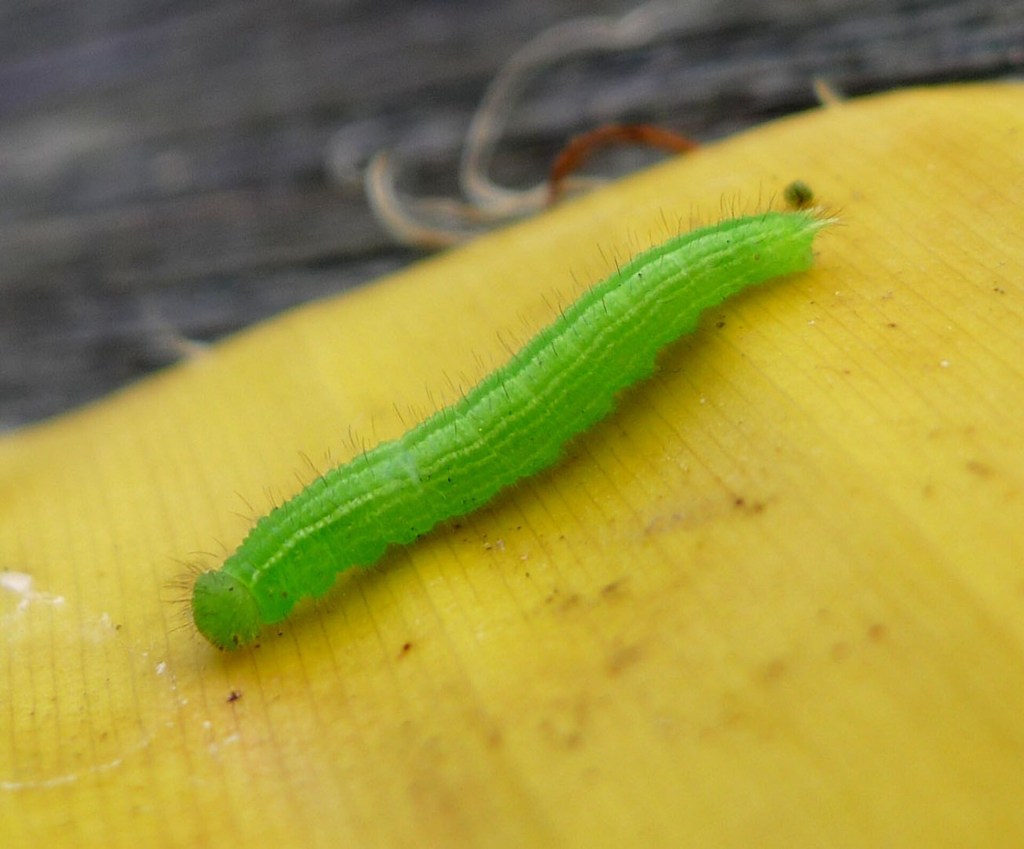
(Gail Hampshire)
Conservation
While generally stable and not currently a priority species, it’s still worth encouraging Speckled Woods as this helps a whole suite of other species, many of which are less hardy and resilient.
They benefit from sensitive woodland management that maintains open rides, glades, and edges rather than dense, closed-canopy plantations, this entails knowing which trees/shrubs to remove and which to leave, whilst avoiding being overzealous in tidying.
A woodland manager will know that they are doing their job properly if Speckled Woods move in as its presence is a sign of a healthy, structurally diverse woodland edge.
Gardeners can easily encourage it by allowing patches of long grass and planting nectar sources, or by tolerating a bit of “untidiness” in shady corners.
It’s worth having these fascinating little creatures around for purely selfish reasons too, as there’s simply nothing better to do on a lazy summer’s evening than relaxing in the garden with a g&t and watching the butterflies busily flutter around you.
In the dappled shade where the sunbeams break,
a wood-nymph stirs for the morning’s sake.
With wings of chocolate, cream, and gold,
a story of shadows and light is told.
A story of secrets,
and sylvanian treasures,
of simple lepidopteran pleasures.
A tale of aphids and honeydew,
of Stitchwort pollen and Couchgrass too.
Told through the medium of flight and dance,
Mesmerising enough to put one in a trance!
Thank-you for reading. If you enjoyed this piece and would like to support further articles on the wildlife and history of the Northwest, you can buy me a coffee here.
(Apologies for subjecting you to my awful poetry!)
Alex Burton-Hargreaves
(May 2026)

