Biology, Ecology, Conservation and Distribution of Purple Saxifrage (Saxifraga oppositifolia) in the Cumbrian Mountains
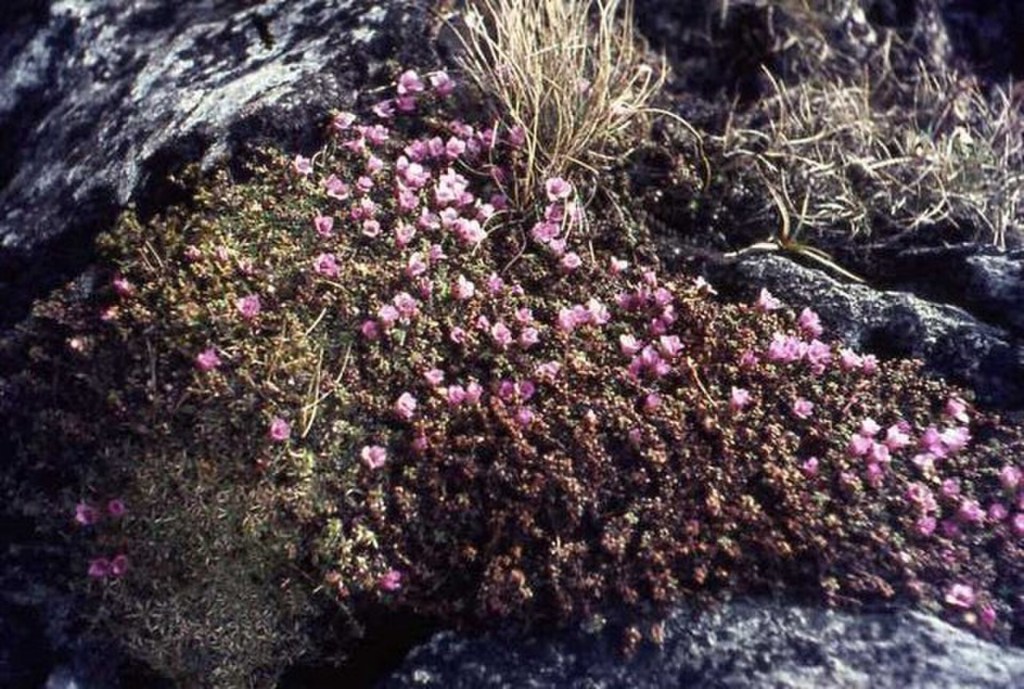
The Lake District’s dramatic fells, deep valleys, and rugged crags are home to many of our native flora & fauna species including a remarkable array of Arctic-alpine plants.
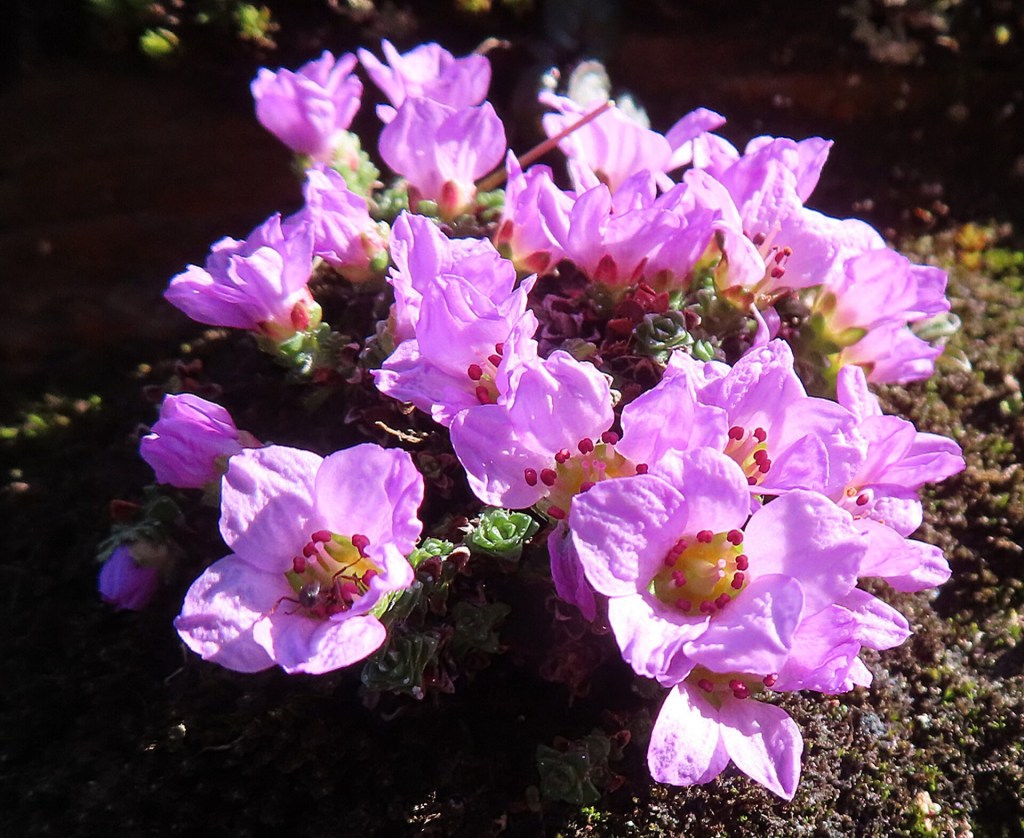
Among the most beautiful and hardy of these is Purple Saxifrage (Saxifraga oppositifolia), a low-growing perennial producing vivid lilac to deep purple flowers that brighten rocky ledges and north-facing cliffs from late winter to early summer.
Description and Ecology
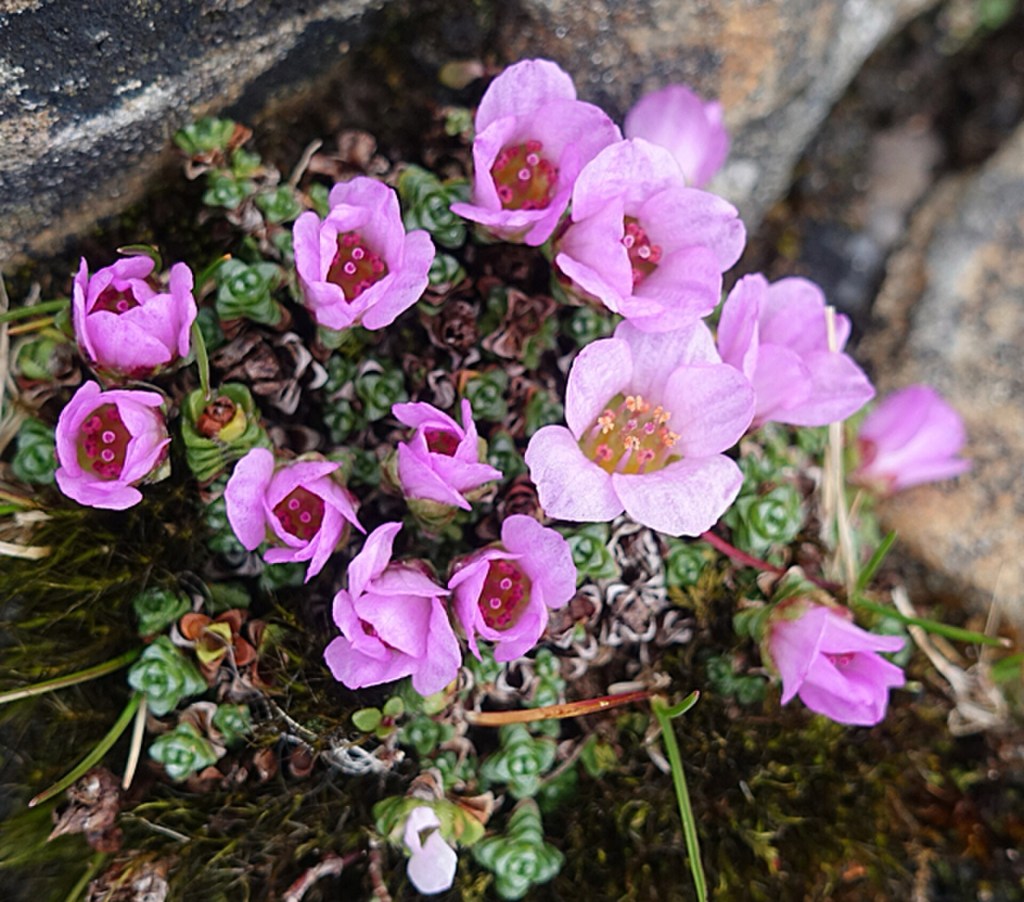
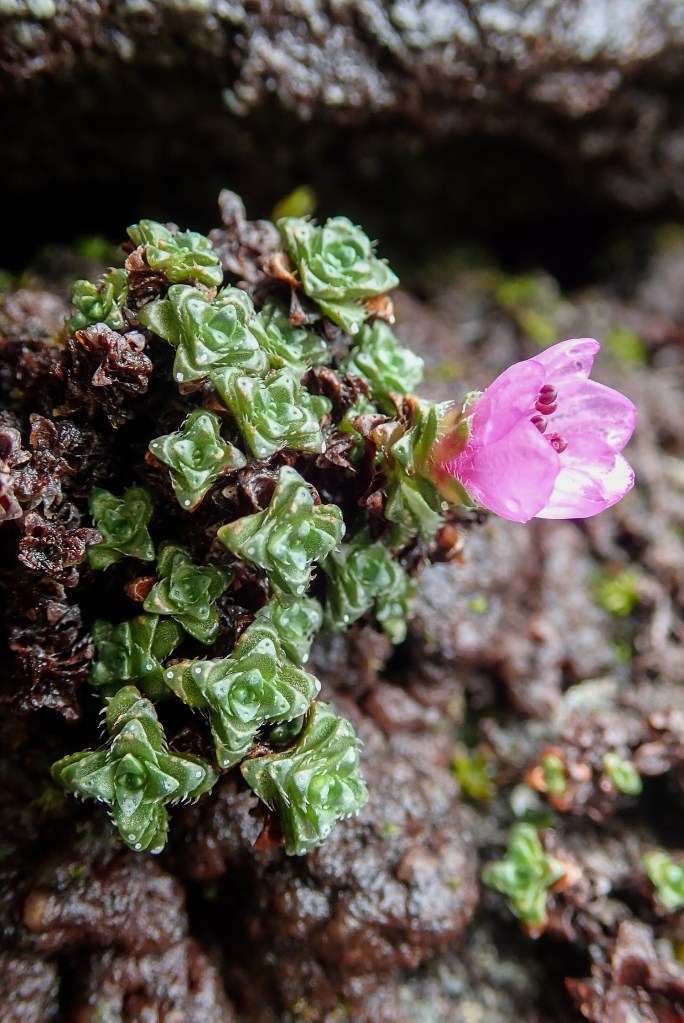
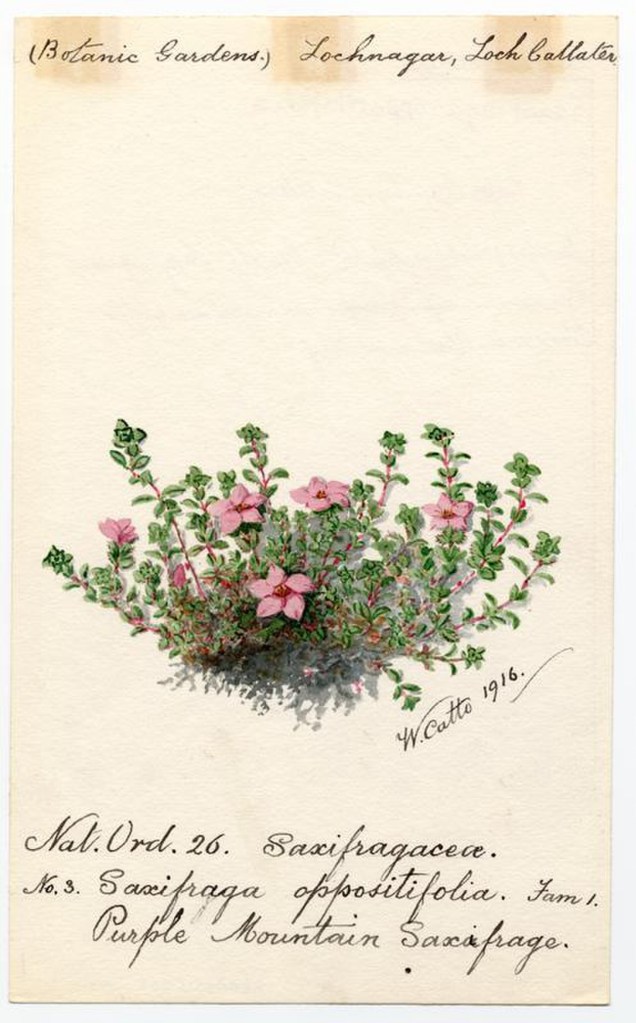
A creeping, mat-forming plant Purple Saxifrage possesses small, opposite, overlapping leaves (hence the latin epithet oppositifolia) that are fleshy with a tiny pore at the tip which can exude lime in calcareous conditions. Its solitary flowers, typically 1 to 2cm across, sit on short stalks and feature five petals ranging from a pale pinkish-purple to rich violet, sometimes with darker veining.
The plant is exceptionally hardy, capable of surviving extreme cold, wind, and short growing seasons, traits that allow it to thrive from the high Arctic down to southern mountain ranges.
In the British Isles it is an Arctic-alpine species with a disjunct distribution following post-glacial patterns. It prefers base-rich (calcareous) substrates, often growing in damp crevices, on wet boulders, or on north- and east-facing rock faces where snow lingers and competition from taller vegetation is minimal. It can even flower while snow is still present nearby, wasting little time in order to get a head start in the short mountain summers.
Ecologically, it plays a role in pioneer communities on rocky slopes, helping to stabilise thin soils and providing early nectar for insects. Its presence often indicates sites with some mineral enrichment, such as areas influenced by certain volcanic or limestone rocks within the otherwise acidic Borrowdale Volcanic Group of the Lake District.
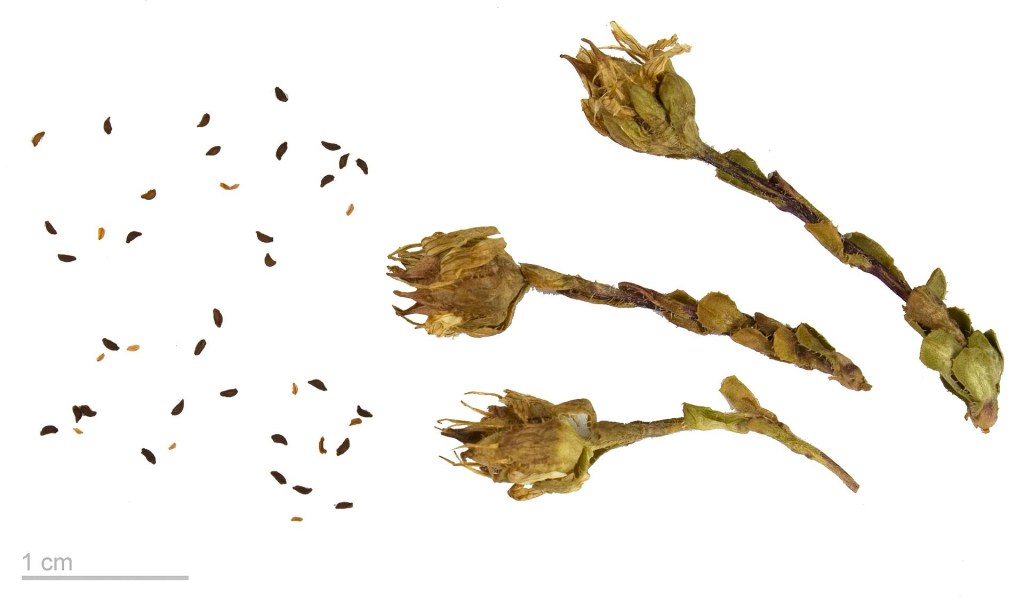
(Roger Culos, from the collection of the Muséum de Toulouse)
Distribution in the Lake District
In England, S. oppositifolia has a very limited range. It occurs sparingly in the Lake District (vice-counties 69 and 70 for the keener botanists reading this) and on parts of the northern Pennines.
Within the Lakes, it is found on very specific high crags and gullies, particularly where calcareous influence creates suitable microhabitats, notable areas including north-facing cliffs and ledges in the Helvellyn range, around Glenridding, and other upland sites with base-rich rocks. Populations are often small and confined to inaccessible ledges, safe from heavy grazing by deer and sheep.
It grows alongside other montane specialists such as Alpine Cinquefoil, Mountain Avens, and Alpine Lady’s Mantle and because it flowers early (sometimes from February or March in mild conditions), many summer visitors miss its spectacular display.
Conservation Efforts
As a nationally scarce Arctic-alpine plant with restricted habitats, S. oppositifolia faces several pressures in the Lake District:
- Climate change may pose a long-term threat by altering snow lie patterns, increasing competition from upslope vegetation shifts, and potentially increasing extreme weather events.
- Grazing by deer and sheep can damage populations on more accessible ledges, although the Lake District’s ancient flock is in decline.
- Recreational pressure (footfall and climbing) on popular crags is an increasing and particularly concerning threat as the area becomes more popular with tourists.
Historical records, such as those by ecologist Derek Ratcliffe, show that some sites have persisted for decades, but others need active monitoring. Conservation work in the region often occurs within the framework of the Lake District High Fells Special Area of Conservation (SAC) and various Sites of Special Scientific Interest (SSSIs).
Key conservation efforts include:
- Grazing management: Reducing sheep numbers or implementing seasonal restrictions in sensitive upland areas to allow montane vegetation to recover. Projects led by organisations such as Natural England, the National Trust, and United Utilities (which manages large water catchment areas like Thirlmere) aim to balance farming with biodiversity.
- Habitat restoration: Initiatives like the John Muir Trust’s work at Glenridding and Thirlmere involve propagating rare montane plants, including saxifrages, in nurseries before carefully planting them out into suitable sites, this helps bolster smaller populations.
- Landscape-scale partnerships: The Endangered Landscape Programme and collaborations between the RSPB, United Utilities, and Natural England focus on restoring natural processes across Cumbrian uplands, benefiting Purple Saxifrage by improving habitat connectivity and reducing pressures on fragile crags.
- Monitoring and research: Botanists and volunteers from groups like the Botanical Society of Britain and Ireland (BSBI) track populations. The plant’s preference for calcareous microsites within a predominantly acidic landscape makes it a useful indicator of habitat quality.
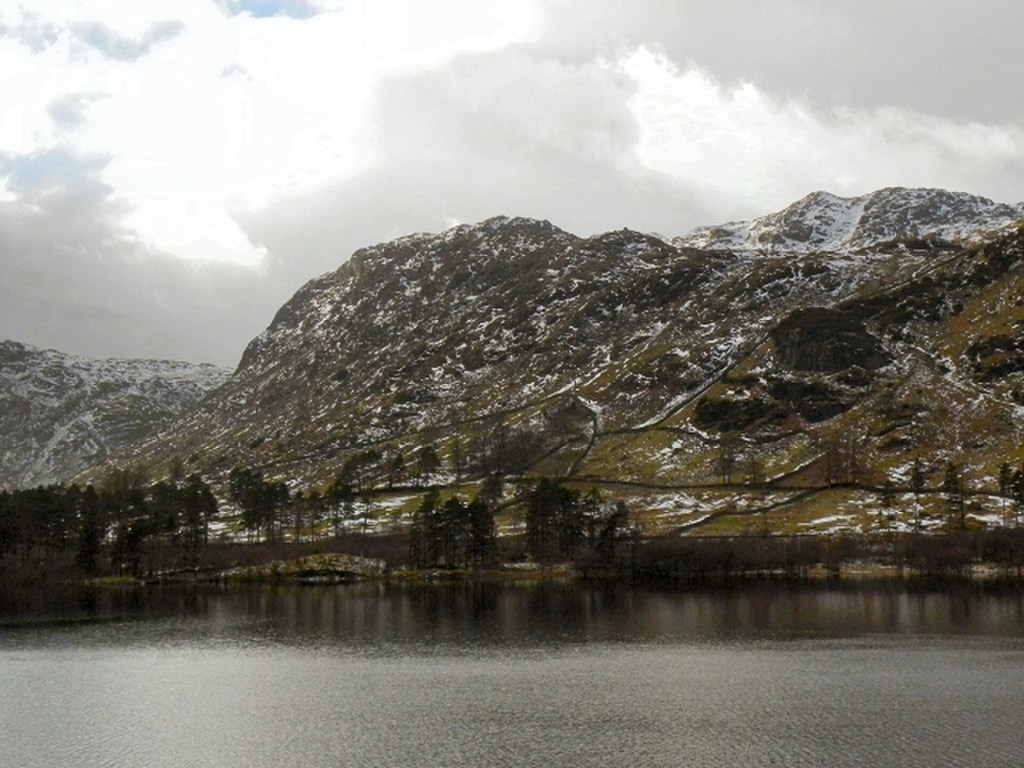
(David Dixon)
Seeking Saxifrage
If you plan to seek out Purple Saxifrage yourself please stick to established paths, avoid trampling vegetation, and never remove plants. Early spring (March to May) offers the best chance to see it in flower, but always check weather conditions as the high fells can be hazardous, and remember that your presence on the fells can disturb breeding birds. Please respect access rights and any local restrictions on crags used for climbing too. Good Luck!
The Rock-breaker
As a descriptive name Saxifrage has been used for many different plants down the centuries, some of them belonging to entirely different genera, such as Chrysosplenium and Bergenia. The name stems from one common root though, translating as ‘rock-breaker’, with saxum meaning ‘rock’ and frangere; ‘to break’.
This is widely said to be due to the plant’s ability to break up the rocky substrate of its mountain home with its roots, but is more likely to have been bestowed upon it as an indicator of its use in breaking up gall-stones, as the famous English herbalist John Gerard described in his 16th century ‘Herbal’:
Quidam dicunt cam Scolopendriam, alii Scoliomos, alii Vitis canum, quidam vero Brucos. Itali Saxifragam. Egyptii Peperem, alii Lamprocam eam nominant.
Nascitur enim in montibus & locis saxosis.
Una cura ipsius ad calculos expellendos.
Herbam istam Saxifragam contusam calculoso potum dabis in vino. Ipse vero si febricitaverit cum aqua calida, tam presens effectum ab expertis traditum, ut eodem die perfectis eiectisque calculis ad sanitatem usque producit.
Translated:
Some call this Scolopendria, others Scoliomus, others Vitis canum, others the true Brucus. The Italians, Saxifraga. The Egyptians, Peperis, others name it Lamproca.
It grows on mountains and rocky places.
A prescription for expelling the stone.
You will give this herb Saxifrage, bruised in wine, and drunk. If the patient has a fever, the same medicine mixed with hot water, will on the same day perfectly expel the stone and restore him to health, as has been proved by experience.
Thank-you for reading. If you enjoyed this piece and would like to support further articles on the wildlife and history of the Northwest, you can buy me a coffee here.
Alex Burton-Hargreaves
(May 2026)


Thanks for that – it was interesting. I was on the cusp of thinking I had seen Purple Saxifrage when stumling about the fells and Dales, but when I got to the section about distribtion I though, “perhaps not”. Fascinating etymology and its link to suggested medical properties!
LikeLiked by 1 person
Thank-you, it’s entirely possible that you have seen it as it is found in parts of the Dales and Pennines, I was just concentrating on the sites in the Lake District, the etymology is fascinating, I always like writing about that 🙂
LikeLike