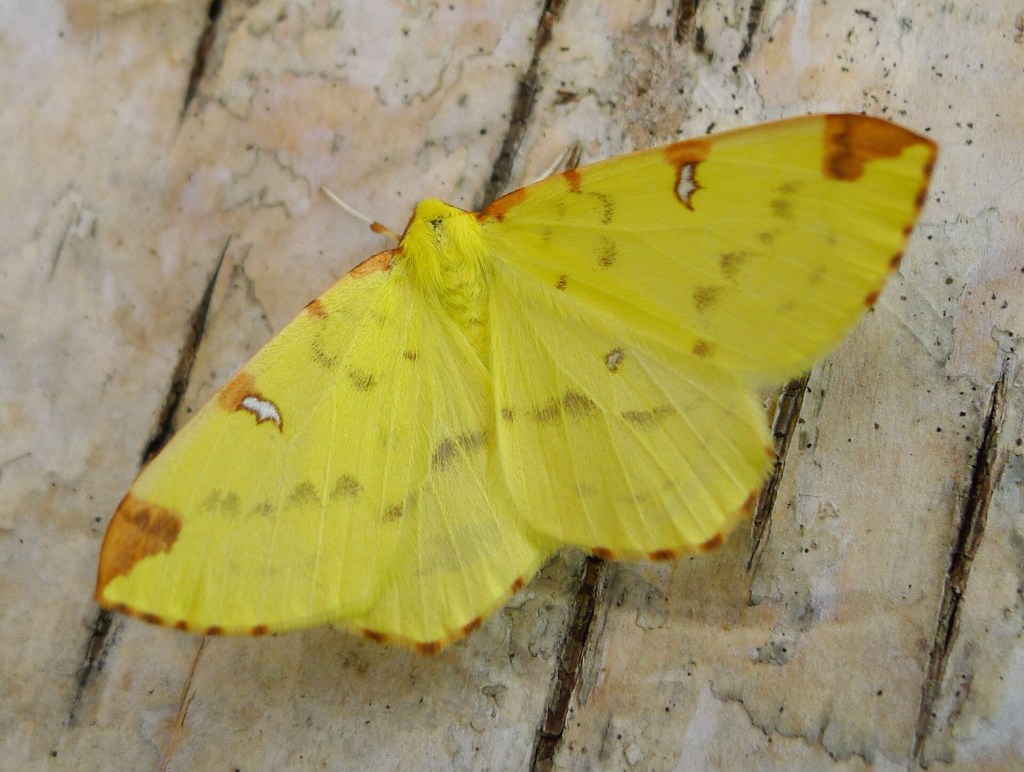
Brimstone moths (Opisthograptis luteolata) are one of the most striking and easily recognised members of the Geometridae family, often referred to as ‘geometer moths’ or ‘inchworms’ due to the looping movement of their caterpillars.
With its bright lemon-yellow wings and distinctive markings, it brings a splash of colour to gardens, woodlands, and hedgerows across much of the British Isles. Despite being primarily nocturnal, it is frequently encountered by mothicionados and gardeners alike, especially when attracted to light.
Description
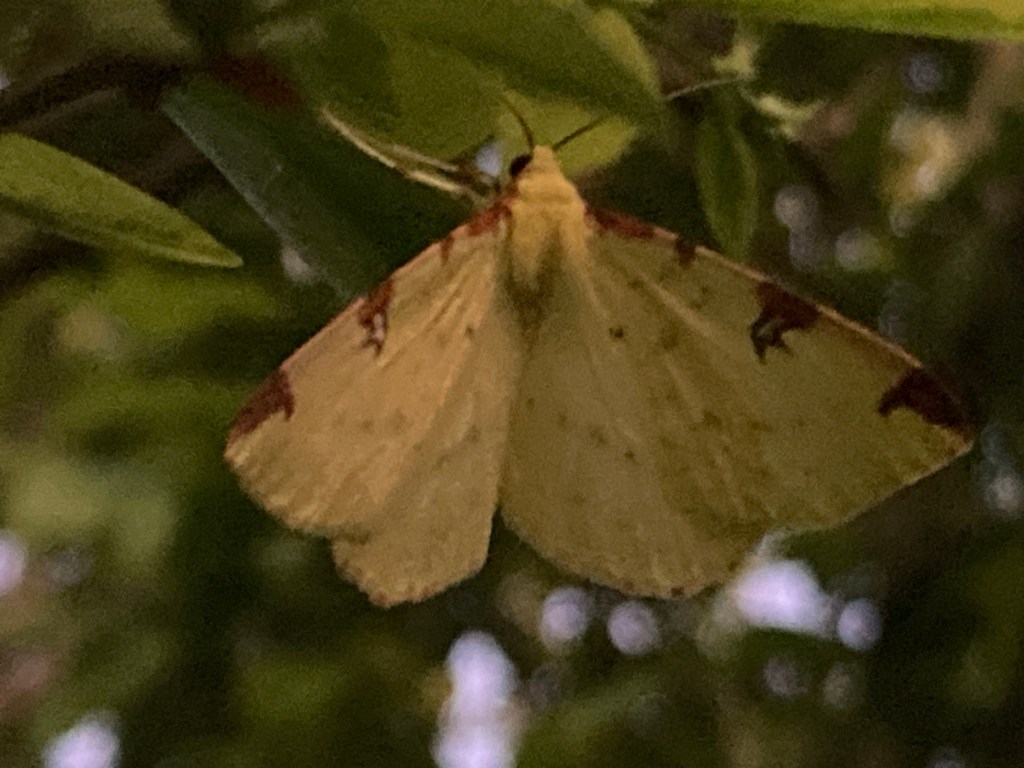
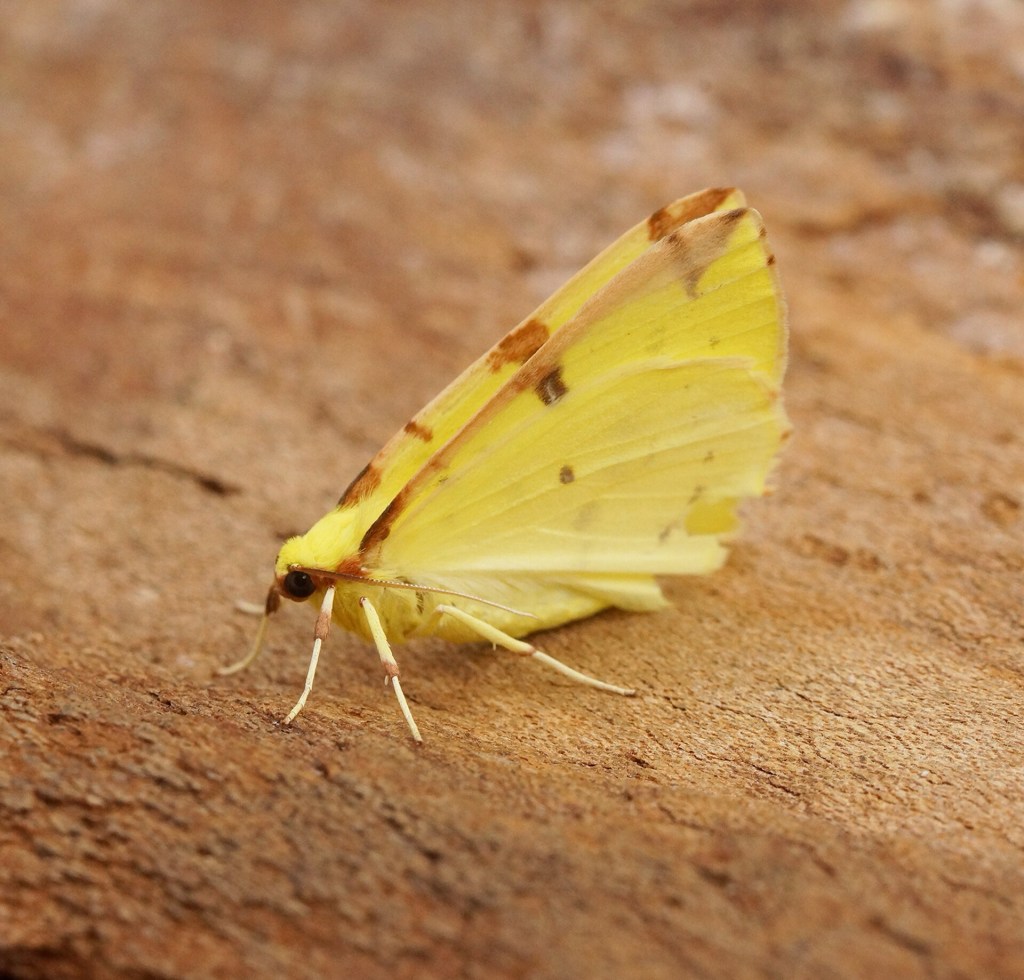
This moth’s forewings and hindwings, which at approximately 30 to 45mm make it quite a large moth for this country, are a vivid sulphur-yellow, earning it its common name. A key identifying feature is the series of small brown or reddish-brown spots or streaks along the leading edge (costa) of the forewings, often accompanied by a faint brownish line or band near the wing tips. When at rest, it holds these striking looking wings flat against the surface, sometimes resembling a small yellow leaf or piece of debris.
The caterpillars are masters of camouflage, resembling thin brown or green twigs. They feed on a variety of plants in the Rosaceae family, including Hawthorn, Blackthorn, Rowan, and occasionally cultivated fruit trees. This twig-mimicry helps protect them from predators during the day.
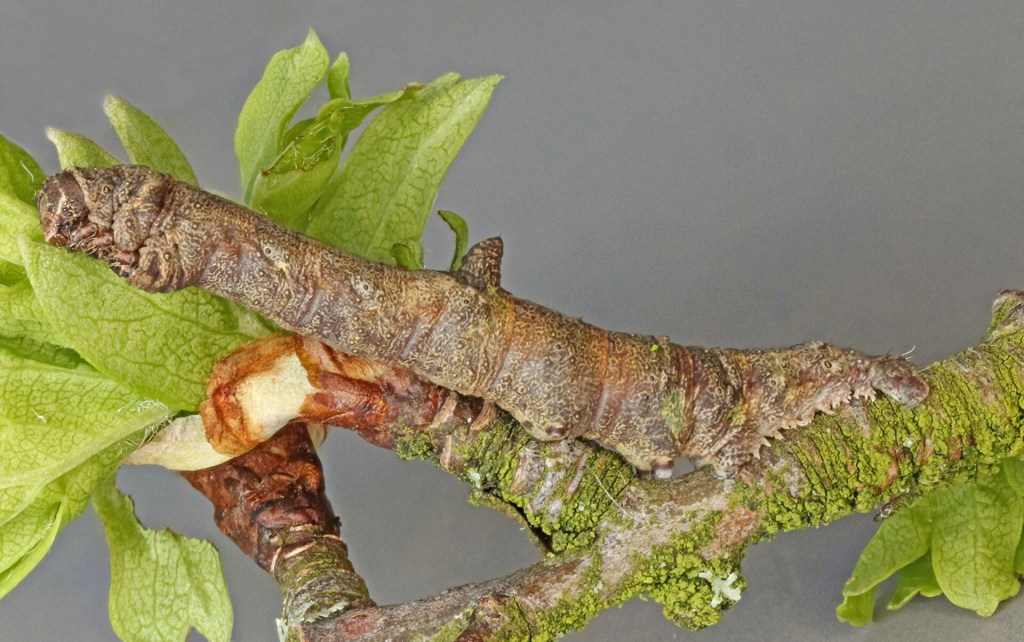
(Janet Graham)
Life Cycle and Behaviour
Adult Brimstones are typically on the wing from April to October. In southern regions there are often two or even three overlapping generations, while in our cooler northern parts this may reduce to a single brood. The species is strongly attracted to light and can often be found resting on walls or fences near outdoor lamps.
The moths are active at night but can be disturbed from vegetation during the day, their flight is relatively weak and fluttering, typical of many geometrid moths.
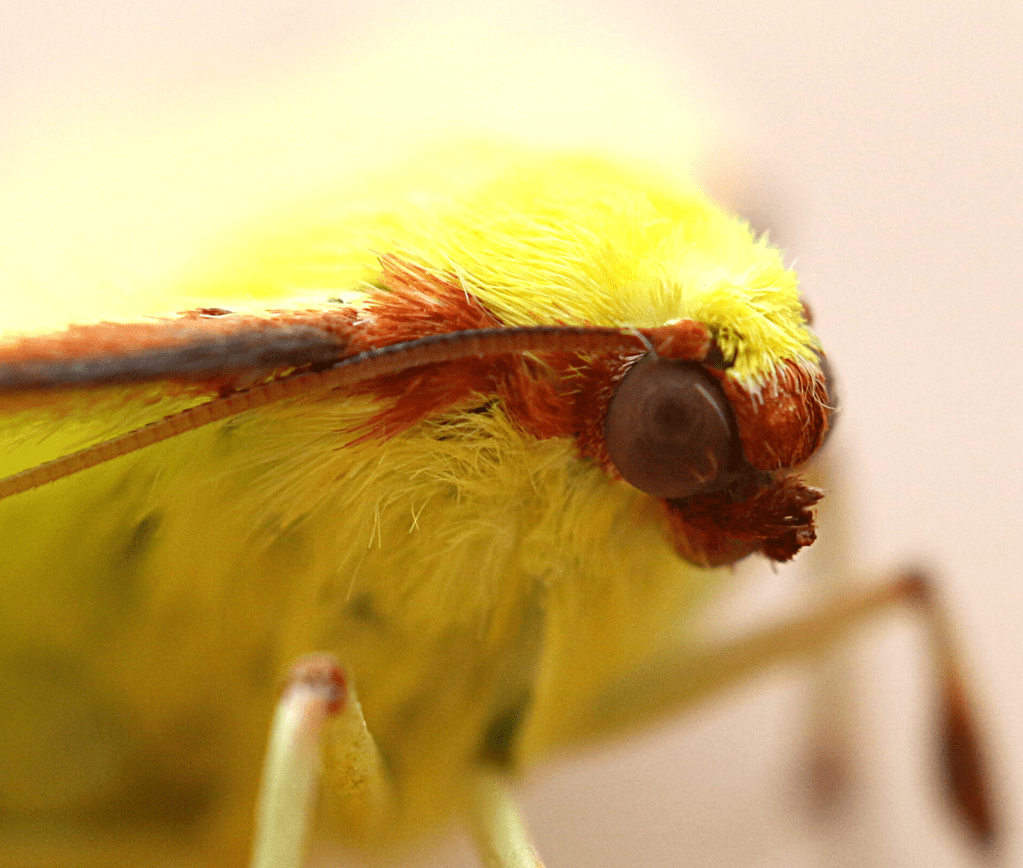
(Image by Nick Goodrum)
The origin of its name
The Brimstone moth’s binomial name Opisthograptis luteolata was assigned by Carl Linnaeus in 1758. Opisthograptis derives from Greek roots; Opistho meaning ‘behind’ or ‘rear’, and graptis relating to writing or marking (from graphein, to write or engrave). The name may refer to the distinctive markings or patterns on the wings, possibly alluding to their placement or appearance toward the rear or edges of the wings. Interpretations vary, but Linnaeus may have wanted to express to us the insect’s ornate wing features.
The origin of luteolata is clearer; it comes from the Latin luteus, meaning ‘yellow’or ‘golden’, with the diminutive olata suggesting ‘yellowish’ or ‘somewhat yellow’. It directly describes the moth’s characteristic bright yellow coloration.
Together, the scientific name poetically captures the essence of this sulphur-hued insect with its beautifully marked wings. It was first formally described in Linnaeus’s Systema Naturae, and it should not be confused with the Brimstone butterfly (Gonepteryx rhamni), which shares the common name due to its similar yellow hue but belongs to the entirely different family of Pieridae.
Distribution & Conservation
The Brimstone moth is common and widespread throughout the British Isles, occurring in England, Wales, Scotland, and Ireland, and thrives in a variety of habitats including gardens, hedgerows, scrub, woodland edges, and grasslands.
In northern England, the species remains common and well-established, though its flight period is often more condensed compared to southern populations. While it may produce only one main generation in the far north due to cooler temperatures, it is still regularly recorded by moth trappers and remains a reliable sight for those monitoring local biodiversity.
As a common species it is not currently of conservation concern but it plays an important role in the ecosystem as both a pollinator (adults visit flowers for nectar) and as prey for birds, bats, and other insectivores, and its caterpillars contribute to the food web while feeding on common shrubs.
As such gardeners and naturalists should consider encouraging this species by planting native hedgerow plants like hawthorn and blackthorn, and because it is attracted to light, simple moth traps or lighted windows can provide excellent opportunities for observation and citizen science recording.
Moth
By David L. Harrison
The moth is busy all night long,
but does he make a peep?
No, he’s too considerate about our need for sleep.
So when we spy a drowsy moth tucked in for the day,
shh, let’s be as thoughtful as he and let him snore away.
Thank-you for reading. If you enjoyed this piece and would like to support further articles on the wildlife and history of the Northwest, you can buy me a coffee here.
Alex Burton-Hargreaves
(May 2026)

