The History of St Patrick’s Chapel at Heysham on the Lancashire Coast
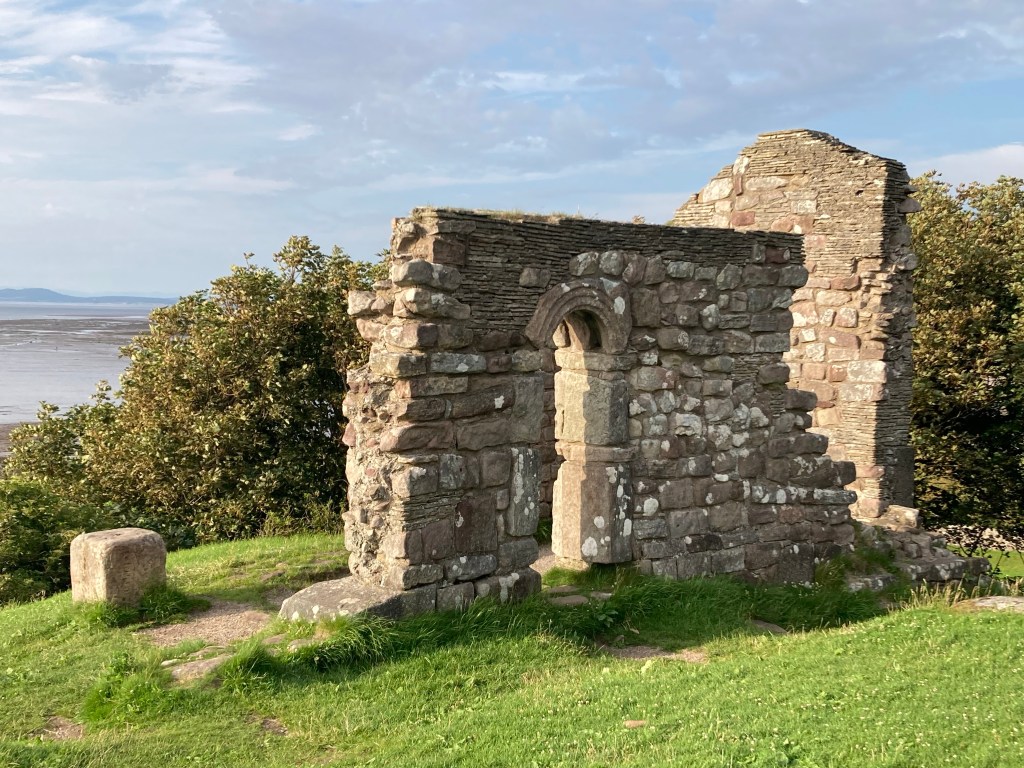
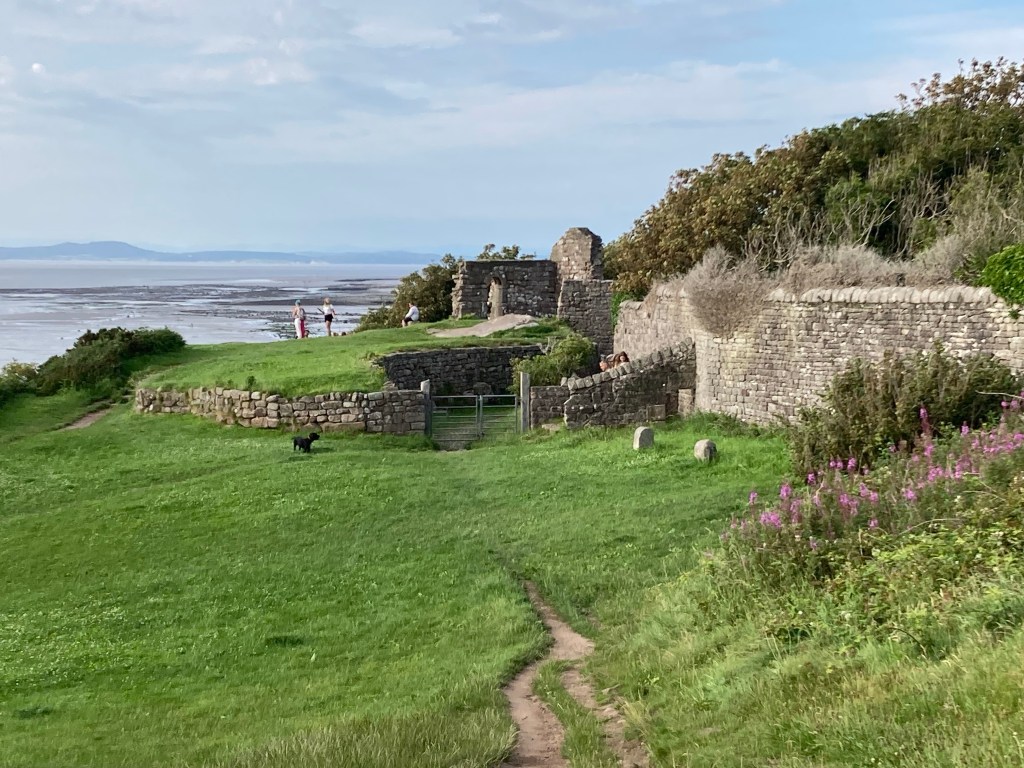
Perched dramatically on its rocky headland, overlooking the wild expanse of Morecambe Bay, the ruins of St Patrick’s Chapel are one of the most evocative early medieval sites in the British Isles.
With commanding views towards the distant Cumbrian mountains the site, with its ancient architecture and mysterious rock-cut graves, possesses a deep aura of historical and spiritual significance.
Here we delve into the long history of this magical part of the Lancashire coastline to uncover what little we know about its purpose and origins.
Early History
Designated a Grade I listed building and Scheduled Ancient Monument, St Patrick’s Chapel attracts visitors from all over the world seeking a tangible connection to our Anglo-Saxon Christian past.
The ruins date from the 8th or 9th century (around 750 AD), making it a rare survivor of early Saxon ecclesiastical architecture and legend links it to St Patrick himself, suggesting he was shipwrecked nearby and built a chapel on the cliff. While there is no firm documentary evidence for this, the dedication reflects the influence of Celtic Christianity in the region during the post-Roman period.
Excavations in the late 1970s (led by Timothy Potter and R.D. Andrews) revealed that the site had even earlier significance, with activity dating back to the late 6th or early 7th century. Prehistoric use of the headland extends much further, with Mesolithic artifacts indicating human occupation around 12,000 years ago, at the end of the last Ice Age.
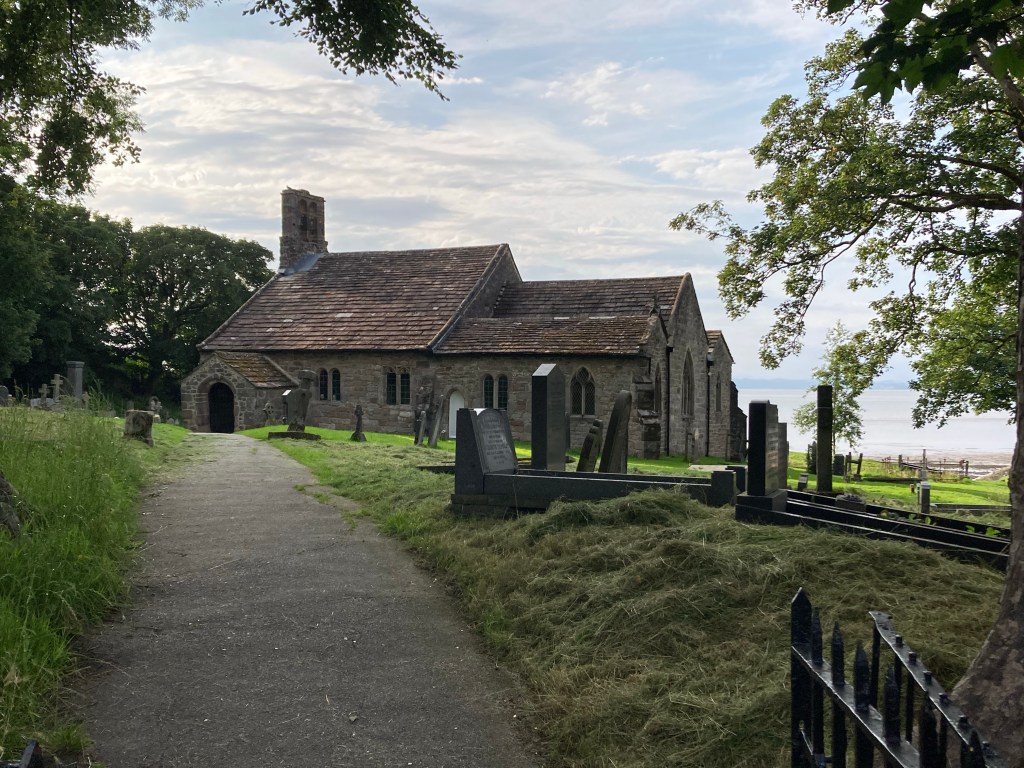
The chapel likely served a monastic or high-status religious community rather than everyday parishioners, and formed part of a broader ecclesiastical landscape that includes nearby St Peter’s Church (still in use today), which contains its own Anglo-Saxon and Viking-era artifacts, such as a hogback stone.
The Ruins Today
The original structure was a small, simple rectangular (slightly trapezoidal) building measuring roughly 8m by 3m, constructed from local sandstone rubble. Over time, it was enlarged and key surviving elements include:
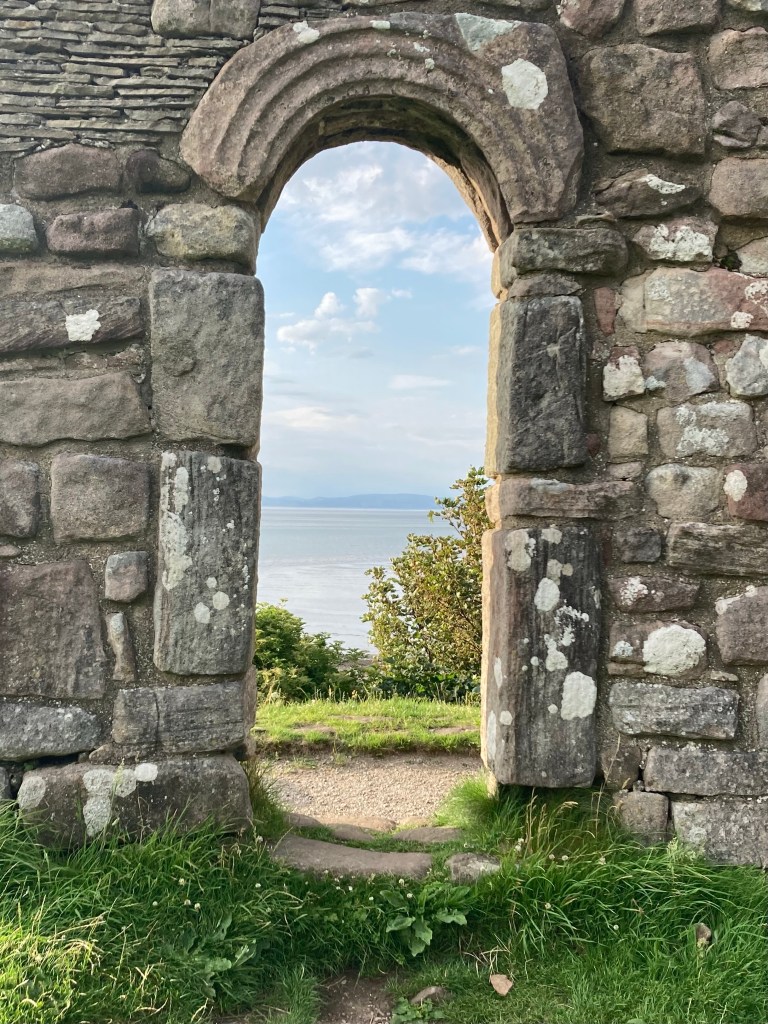
- Much of the south wall, featuring a distinctive doorway with long-and-short jambs and an arch with concentric grooves, characteristic of Anglo-Saxon workmanship.
- The east gable wall (nearly intact) and part of the north wall.
- Evidence of rendered and painted plaster, both inside and out, with fragments bearing painted letters (possibly spelling elements related to mulie, Latin for ‘woman’), suggesting that the interiors were decorated with religious imagery or text.
Consolidation work in 1903 helped preserve the ruins using stone tiles and the narrow dimensions give modern visitors a strong sense of the intimate scale of early Christian worship spaces.
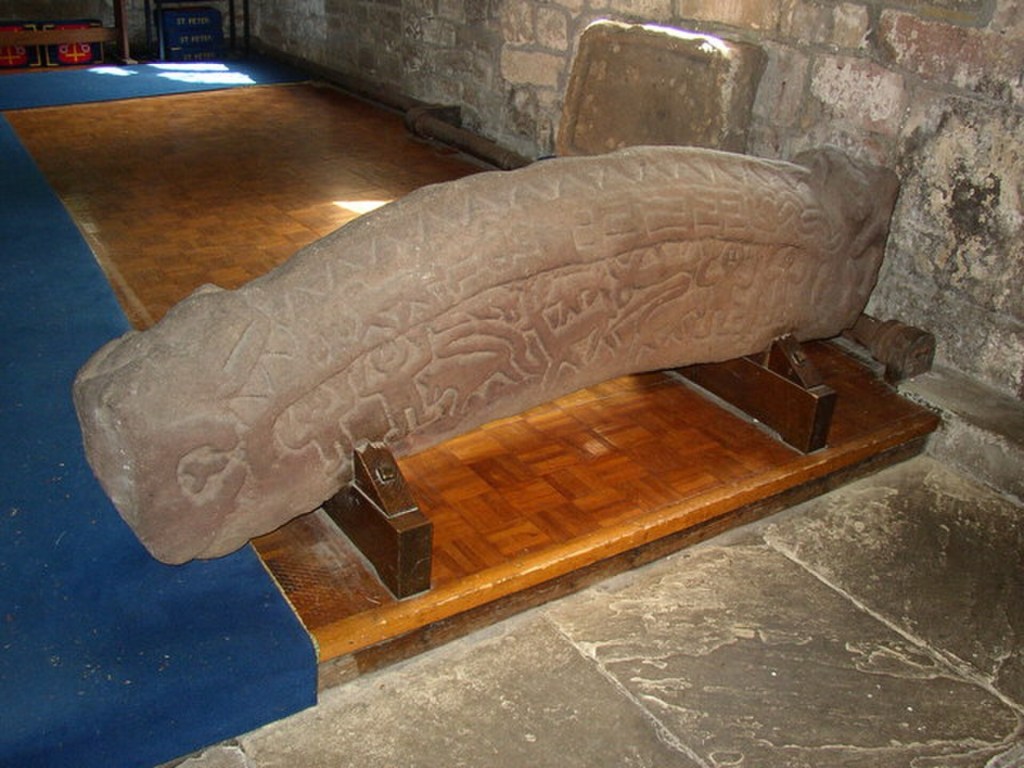
arched roof with a bear’s head at each end. (Image and text by Humphrey Bolton)
Tombs of Rock
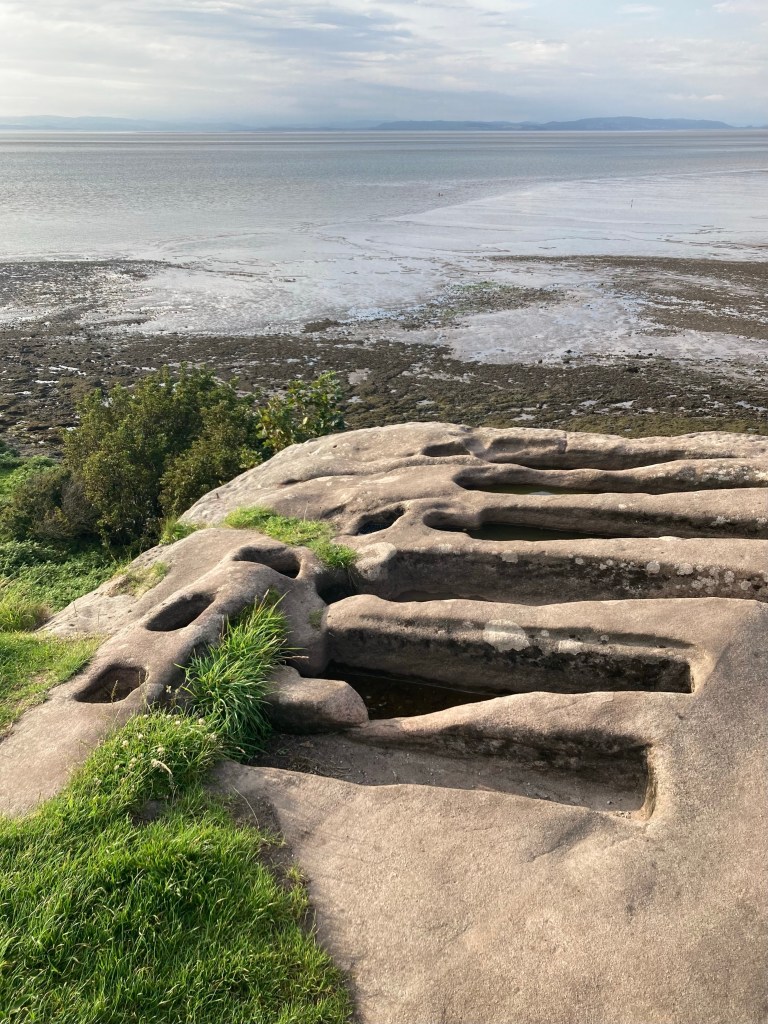
One of the most striking features at the site is the group of rock-cut tombs hewn directly into the millstone grit bedrock. There are two main sets; one is a group of six graves (some with sockets for timber or stone crosses at the head), then there is a separate group of two graves.
These are believed to predate or be contemporary with the earliest chapel phase (late 7th or early 8th centuries). Many are too shallow for full adult burials, leading archaeologists to suggest they may have served as shrines or reliquaries for the bones of revered individuals, possibly saints or high-status figures. Some may have held disarticulated remains or been used for special infant/child burials.
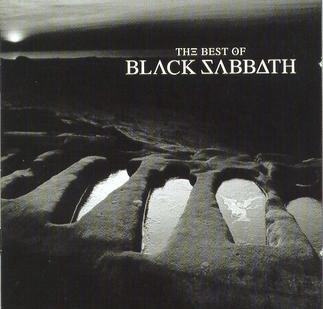
These graves are exceptionally rare in Britain and contribute to the site’s atmospheric quality. They famously appeared on the cover of Black Sabbath’s 2000 album The Best of Black Sabbath.
The Cemetery and Later Use
Excavations at the site have uncovered a multi-phase cemetery around the chapel with dozens of burials (men, women, and children) dating mainly from the 10th to 12th centuries.
Bodies were typically laid east-west in Christian fashion, some in stone-lined graves or with evidence of coffins or shrouds. One notable find was a woman buried with a Viking-style hogback bone comb, hinting of a cultural mingling between Christian Anglo-Saxon and Norse traditions in the region.
Some burials even occurred inside the chapel itself, though the site’s use appears to have declined in the late 11th or early 12th century, possibly as the focus shifted to St Peter’s Church below.
Significance and Legacy
St Patrick’s Chapel offers many valuable insights into early medieval death, memory, and Christianisation in northern England. Its coastal location, dramatic setting, and combination of architecture, sculpture, and burial practices make it a kind of ‘fossilised’ early ecclesiastical landscape, and the presence of high-status features suggests it may have been a place of pilgrimage.
Today, the site remains open to the public and is well worth visiting for its stunning panoramic views alone. It is easily accessible via a short walk from the village of Heysham and there is a car park nearby St Peter’s Church.
The headland offers a peaceful, contemplative atmosphere ideal for those of us who desire to escape from modern life, if only for an afternoon, and for those of us who are sensitive to the Caol Áit, or thin places, a chance to peer into the Sidhe, or Otherworld.
“Tá neamh agus talamh ach trí troigh óna chéile, ach sna háiteanna caola tá an fad sin níos lú fós.”
“Heaven and earth are only three feet apart, but in the thin places that distance is even smaller.”
Thank-you for reading. If you enjoyed this piece and would like to support further articles on the wildlife and history of the Northwest, you can buy me a coffee here.
Alex Burton-Hargreaves
(May 2026)

