Ecology, Biology, and Migratory Habits of the Painted Lady Butterfly (Vanessa cardui)

The Painted Lady (Vanessa cardui) is one of the world’s most widespread and recognisable butterflies, found on every continent except Australia and Antarctica.
Its striking orange wings, intricately marked with black spots and white patches, make it a familiar sight in gardens, meadows, and open landscapes everywhere from Tanzania to Tromsø, St Petersburg to right here in Padiham where I sit writing this.
Biology of a Butterfly
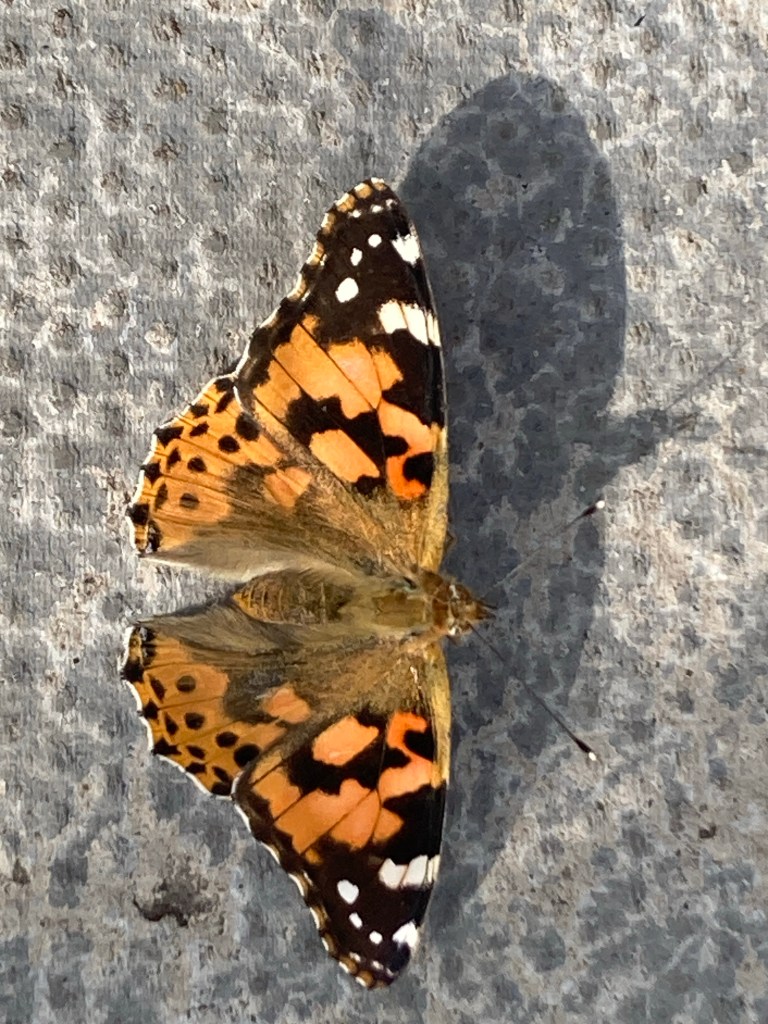
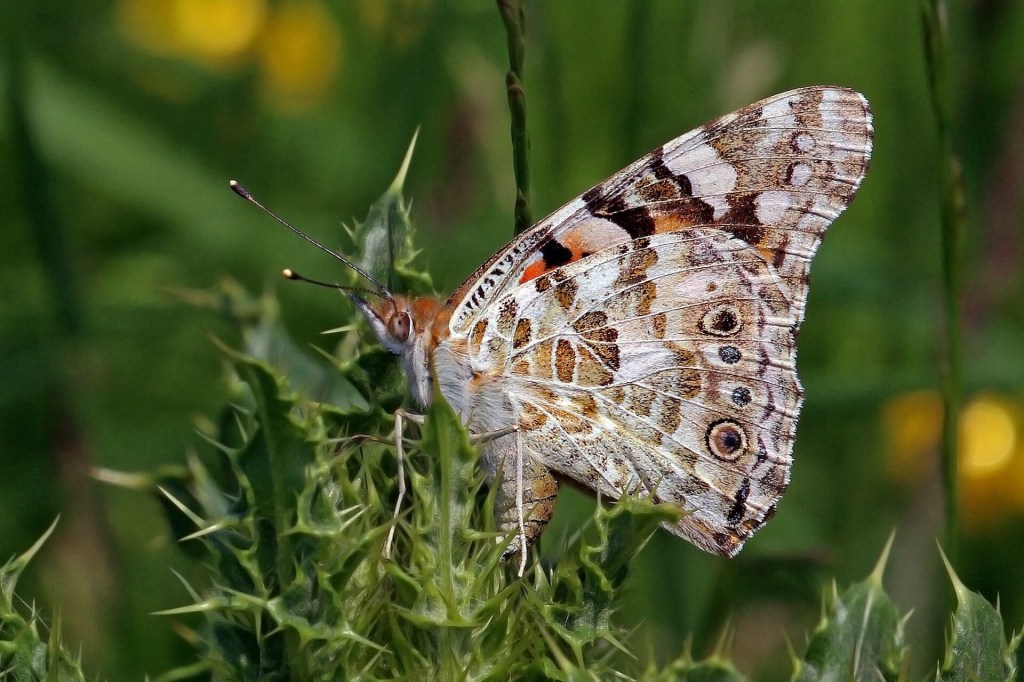
The Painted Lady belongs to the Nymphalidae family (brush-footed butterflies) and is a medium-sized species with a wingspan of approximately 50 to 56mm. Its upper wings are vibrant orange with black tips and white spots, while the underwings feature a more muted, mottled pattern that provides camouflage when resting.
Like other butterflies, it undergoes a complete metamorphosis with four stages: egg, larva (caterpillar), pupa (chrysalis), and adult. Females lay pale green, ribbed eggs singly on host plants and the caterpillars are spiny, grayish-brown or purple-black with yellow stripes, they feed voraciously, undergoing five instars (molts) before pupating.
The chrysalis is brownish and hangs from the host plant with adults emerging after about 7 to 10 days in the pupal stage and reproducing shortly after. The entire life cycle can be complete in as little as a month under favourable conditions, enabling rapid population growth.
Adults are generalist nectar feeders, visiting a wide variety of flowers, particularly those in the Asteraceae family. They are strong fliers capable of speeds up to around 30 mph when aided by winds, fast enough to evade most predators.

(Harald Süpfle)
Ecology & Habitat
The Painted Lady is an ecological generalist, thriving in diverse habitats including dry open areas, fields, meadows, gardens, agricultural lands, deserts, mountains and even tundra. In Britain and Ireland, it prefers open, flowery landscapes but can appear almost anywhere during peak years.
Its larvae feed on a broad range of plants, over 100 species worldwide, with thistles (Cirsium and Carduus) being preferred here. Other hosts include mallows (Malva), Common Nettle (Urtica dioica), Viper’s-bugloss (Echium vulgare), and various cultivated plants. This dietary flexibility allows the species to exploit temporary resource booms wherever they occur.
Ecologically, Painted Ladies play a role as pollinators and as prey for birds, spiders, and other predators. Their populations fluctuate dramatically based on breeding success in distant regions, making them indicators of broader environmental conditions like rainfall in their arid homelands.
The author Johnathan Swift invented the name Vanessa around 1713 as a pseudonym for his close friend and lover, Esther Vanhomrigh, immortalising it in his poem Cadenus and Vanessa. In 1763 the Swedish naturalist Carl Linnaeus used the name for the genus which includes the Painted Lady and the Red Admiral.
Cardui simply means ‘thistle’
(Image by Charles J Sharp)
The Marvel of Migration: Routes, Radar, Weather, and ‘Painted Lady Years’
The Painted Lady’s migration is one of the most extraordinary in the insect world, involving a multi-generational round trip of up to 9,000 miles (around 15,000 km) from tropical Africa to the Arctic Circle, far longer than the more famous Monarch butterfly migration in North America. No single individual completes the full journey though; instead, it is achieved through successive generations (up to six or more).
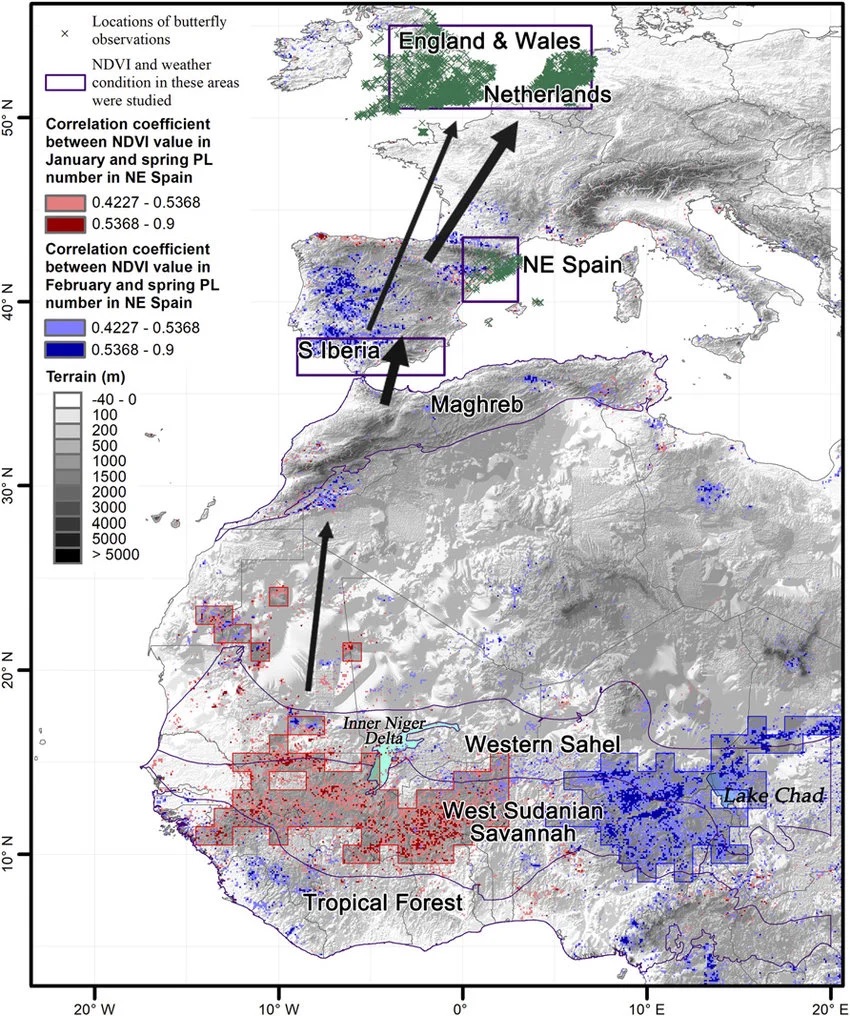
In spring, butterflies (or their descendants) move northward from the desert fringes of North Africa, the Middle East, and central Asia, recolonising Europe and eventually reaching Britain and Ireland. They breed along the way, with offspring continuing the northward push, and in autumn, later generations head south, often at high altitudes, to warmer African breeding grounds where conditions support the next cycle.
‘Painted Lady Years’:
Some years see massive influxes to Britain and Ireland, making the butterfly a common sight in gardens and countryside. These ‘Painted Lady years’ (notable ones in recent times were 2009 and 2019) result from favourable breeding conditions in source regions, most often triggered by heavy winter rains in African deserts that promote abundant larval food plants, combined with ideal weather for northward dispersal. In these peak years, millions arrive, sometimes in spectacular visible migrations.
Radar Tracking:
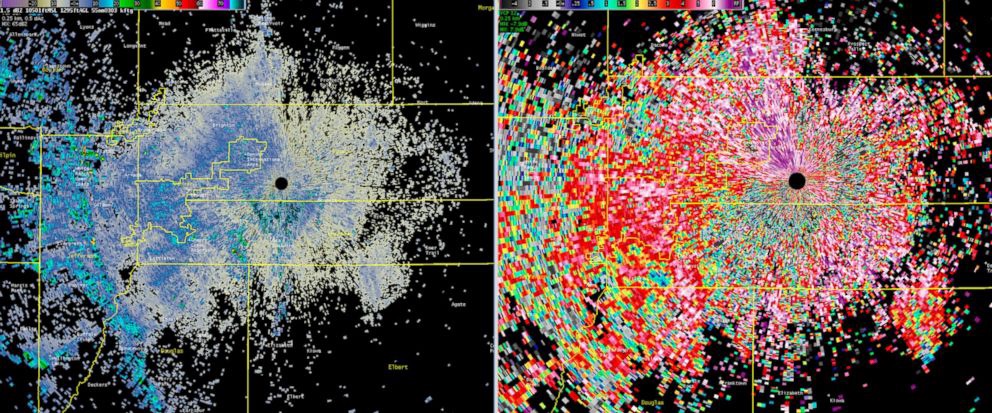
A major breakthrough in understanding their migration came from studies around 2009, involving citizen science (over 60,000 sightings across Europe) and vertical-looking entomological radars operated by Rothamstead Research at Harpenden in southern England. These radars revealed that while northward spring migrations are often low and visible, southward autumn flights frequently occur at high altitudes (average over 500 meters, but sometimes up to 1,200 meters), out of sight of ground observers. This explained why return migrations were mysterious to entomologists for so long.
This Radar data showed around 11 million Painted Ladies entering the UK in spring 2009, with about 26 million departing in autumn. The butterflies select favourable wind conditions, achieving ground speeds of up to 30 mph or more by riding winds that can be 4 to 5 times faster than their own flight speed.
As Richard Fox, surveys manager at Butterfly Conservation said: “The Painted Lady was once thought to be blindly led, at the mercy of the wind, into an evolutionary dead end in the lethal British winter,” but that the study “has shown Painted Ladies to be sophisticated travellers.”
Weather and Routes to Britain:
Migration is heavily influenced by weather patterns, particularly winds from Africa and southern Europe. Southward movements correlate with African wind currents, while northward pushes benefit from southerly or south-westerly winds. Hot, settled weather in summer can also boost visible numbers in Britain.
Routes to Britain typically involve crossing the Mediterranean and Europe in stages. From North Africa, they move through Spain or other southern entry points into mainland Europe before island-hopping or crossing the Channel to the UK. The full circuit exploits seasonal resources: lush growth in Europe during summer and suitable conditions in sub-Saharan Africa during the northern winter.
Encouraging Painted Ladies
You can encourage Painted Ladies to your garden or local green space by planting a variety of nectar-rich flowers, especially those in the Asteraceae family such as thistles, asters and cosmos.
Including larval host plants like thistles (Cirsium and Carduus species), mallows (Malva), hollyhocks, and nettles supports egg-laying and caterpillar development.
Creating sunny, open areas with diverse flowering plants and allowing some ‘weedy’ patches will make your space more attractive to these migrants, particularly during peak summer influxes.
It’s very helpful and straightforward to record sightings too, if you download the free irecord butterflies app developed by Butterfly Conservation you can submit details like location, date, number seen, and photos. These records feed into national monitoring schemes, helping scientists track migrations and population trends, every observation counting toward protecting these incredible travellers.
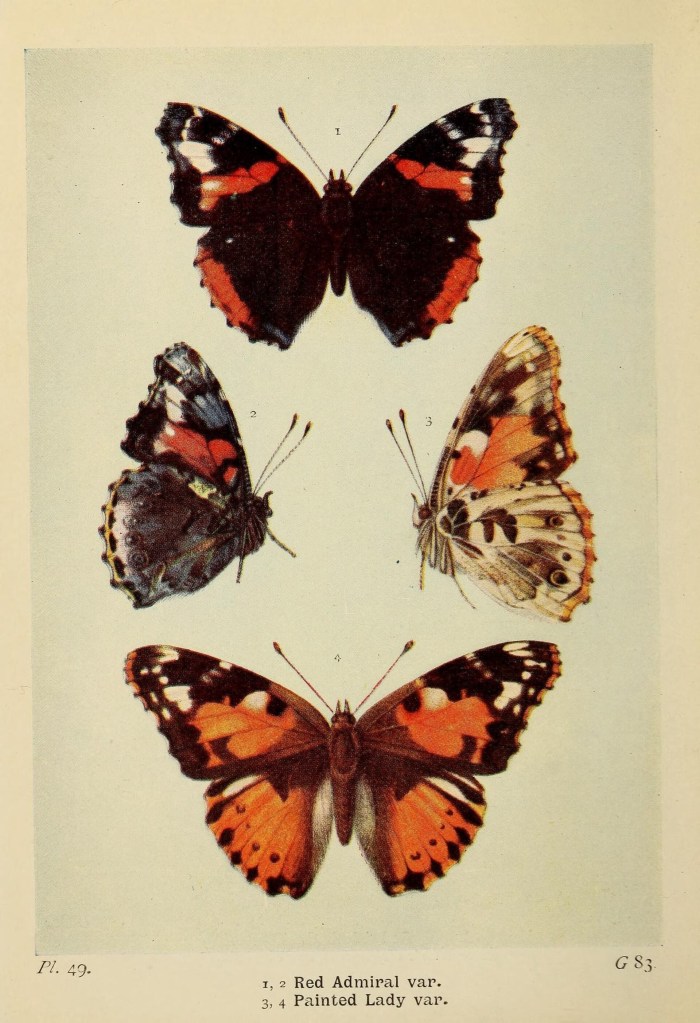
1, 2 Red Admiral
3, 4 Painted Lady
“Vanessa be the name
by which thou shalt be known to fame:
Vanessa, by the gods enroll’d:
her name on earth shall not be told”
(From Cadenus and Vanessa by Johnathan Swift)
Thank-you for reading. If you enjoyed this piece and would like to support further articles on the wildlife and history of the Northwest, you can buy me a coffee here.
Alex Burton-Hargreaves
(July 2026)

