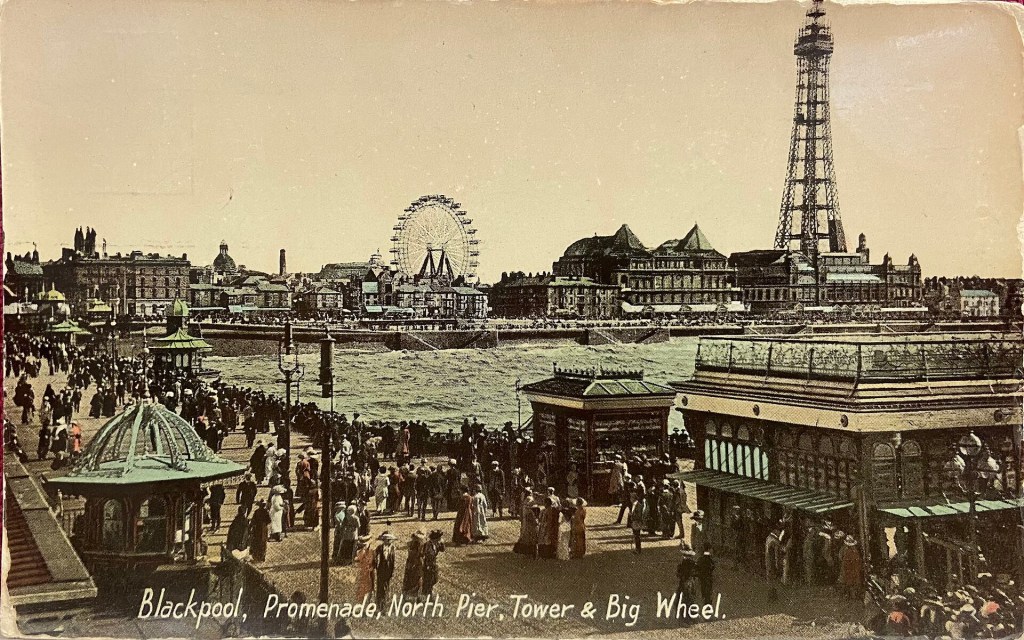
‘The Victorians built the future when the future had no fear’
(John Robb, Frontman, The Membranes, from the track ‘A Murmuration of Starlings on Blackpool Pier’)
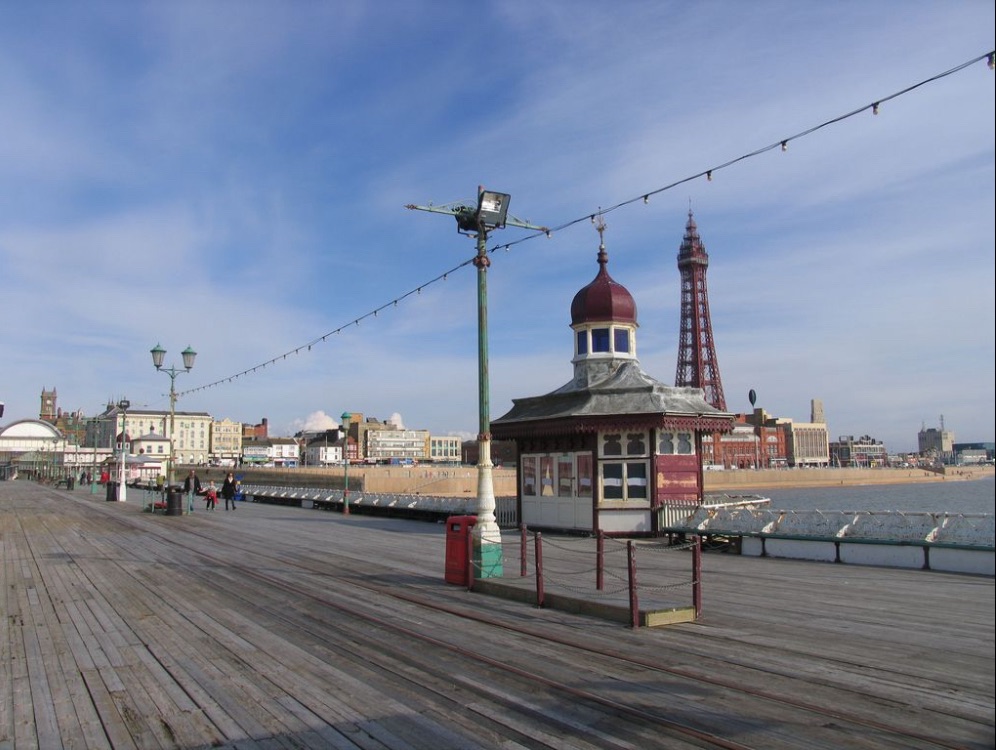
Jutting out into the misty expanses of the Irish Sea, like a never-to-be-completed bridge to the semi-mythical isle of Manainn, Blackpool’s North Pier stands proud as a legacy of Lancashire’s golden Victorian age.
The oldest and longest of the town’s three famous piers, the cast-iron Grade II listed structure has weathered storms, fires, changing tastes, and the relentless tides of history for over 160 years.
Much like Blackpool itself, this ingeniously-engineered monument to leisure has evolved from a genteel and sophisticated promenade into a beloved, if somewhat battered, tourist attraction visited by thousands every year.
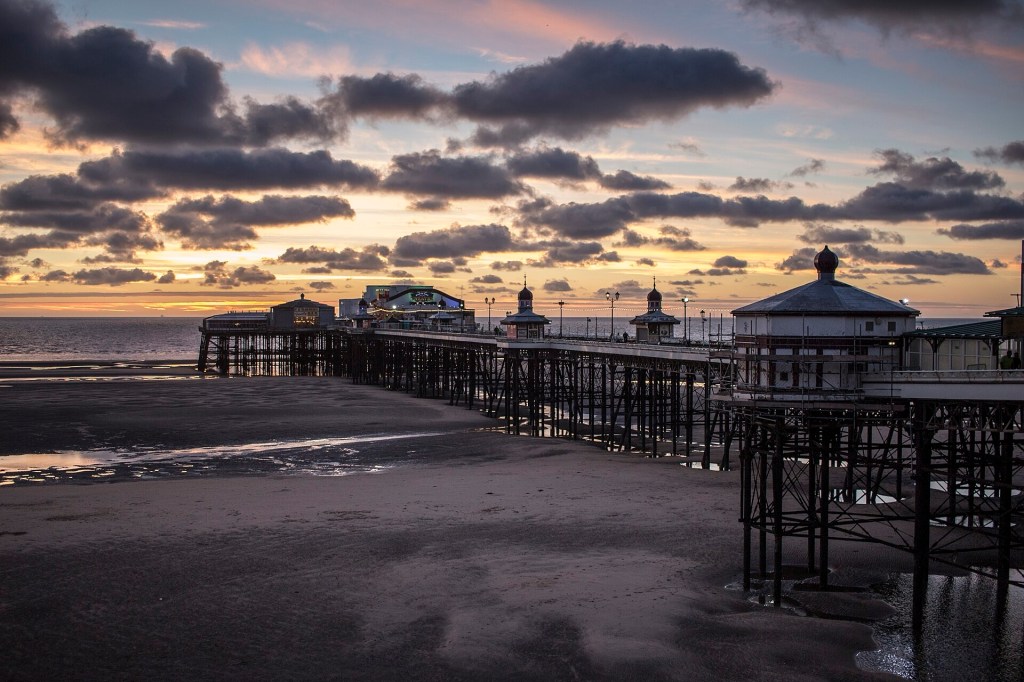
Victorian Ambition
The pier’s story begins in the early 1860s, when Blackpool was rapidly transforming from a modest bathing resort into a booming destination for industrial workers seeking fresh air and entertainment. In 1861, prominent local businessmen gathered at the Clifton Arms Hotel to discuss building a pier. They appointed the renowned pier designer Eugenius Birch, whose innovative cast-iron structures (he designed 14 piers altogether) would define many British seaside landmarks.
Construction by the Glasgow firm Richard Laidlaw and Son began in May 1862. The pier was built with a wooden deck supported on cast-iron columns and girders, designed primarily as a promenade rather than a working jetty. It opened with great fanfare on the 21st of May 1863, drawing an estimated 20,000 spectators, many arriving by the newly convenient railway to Blackpool North station, right at the pier’s entrance. Admission was a relatively steep 2d as its initial aim was to cater to a more refined crowd.
In its first year, it attracted around 275,000 visitors, rising to 400,000 the next. A landing jetty was added in 1866 and extended in 1869, bringing the total length to about 1,410 feet (around 430 metres), this allowed pleasure steamers to dock, thus increasing its popularity with well-heeled day-trippers. Birch’s design proved robust; even after severe storms in 1862 prompted raising the height, the pier has largely survived where others have sadly not.
The Promenade Era
Early visitors to the North Pier enjoyed a genteel experience: strolling above the waves, listening to band concerts (introduced in 1869), and taking in the sea air. It was intended as a place for ‘ladies and gentlemen’, in contrast to the more boisterous attractions that would follow elsewhere in Blackpool.
However, the rise of affordable rail excursions brought ‘trippers’ in large numbers, challenging the directors’ vision of exclusivity. This competition helped spur the building of what became Central Pier (opened 1868) and later South Pier, bridging Blackpool’s appeal across social divides. The North Pier adapted, adding pavilions and amusements while retaining much of its Victorian elegance.
An Arcade Pavilion arrived in 1903, packed with entertainments, and over the subsequent decades the pier hosted theatres, bars, and performances. Famous acts and even Sooty the puppet (bought on the pier in 1948) performed here. Tragically, fires damaged structures, including the loss of the original Indian Pavilion in 1921.
The Original Sooty, discovered by Harry Corbett on the pier in 1948, is on display in the pier’s ticket booth, Sooty & Co is now the world’s longest-running children’s television program
20th Century Challenges
The 20th century brought both highs and lows. The pier survived economic shifts, world wars, and the decline of traditional British seaside holidays, remaining a focal point for family entertainment, with a theatre, amusement arcade, and cafes. A tramway once ran along part of it, remnants of which were still visible up until the 2010s.
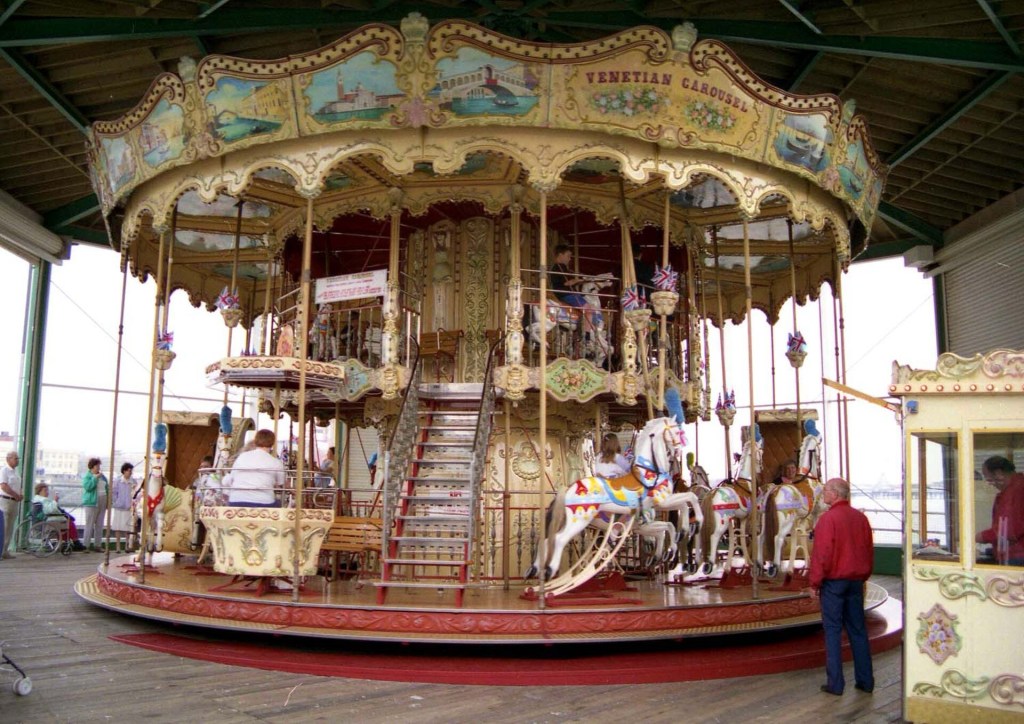
Ownership has passed through various hands. In 2011, the Sedgwick family, already owners of the other piers, acquired it, focusing their attention on restoration and family-friendly offerings. The structure has seen ongoing efforts to preserve its heritage while adapting to modern visitors, including the refurbishment of the Joe Longthorne Theatre, a Victorian-style carousel, and bars like the Sunset Lounge.
Storms, collisions (such as the Ship Sirene Incident), and fires tested its durability, yet it endured to become a Grade II listed landmark, and one of the finest surviving examples of Eugenius Birch’s work.
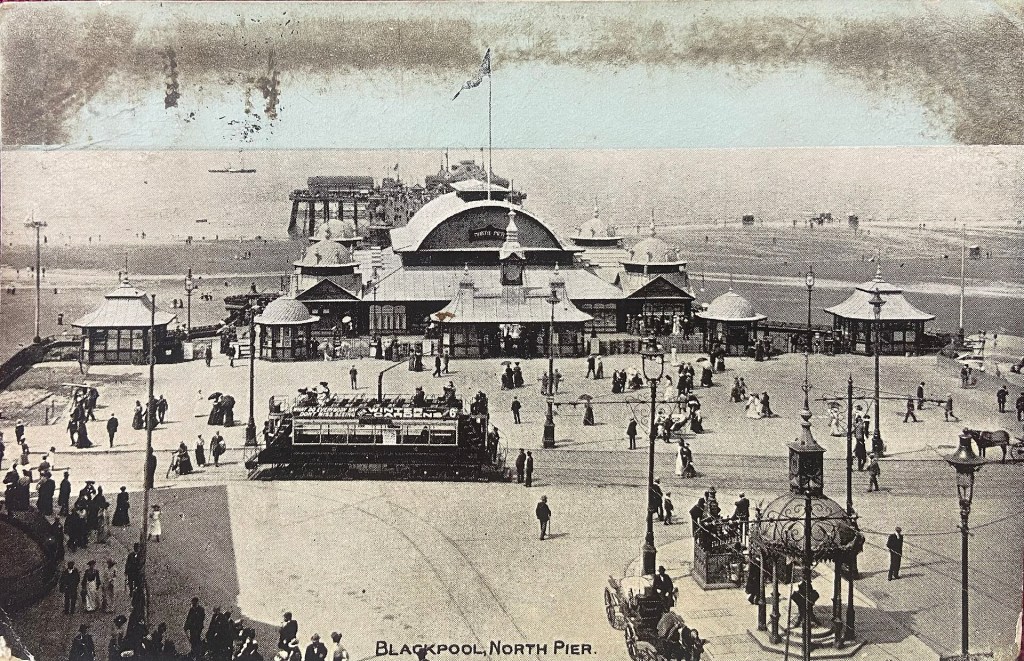
A Living Landmark
As of recent years, the pier continues to draw locals and tourists alike with its mix of Victorian nostalgia and traditional seaside fun. In 2025, it was put up for sale by the Sedgwick family and subsequently acquired by Okken Limited, with promises of significant investment to secure its future.
To take a stroll along its length of sun-bleached timber decking today is one of the best ways to step back in time to Blackpool’s past, and it’s quite exhilarating to peer between the planks and catch a glimpse of the waves churning below (don’t get too worried about all the rust and scorch marks tbough!)
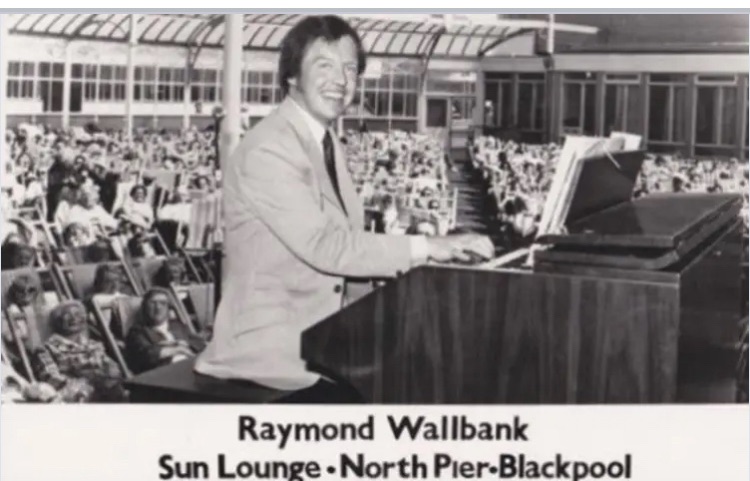
At the end of the pier the covered Sunset Lounge provides respite from Blackpool’s famously brisk winds, and if you turn up at the right time (Sunday afternoon is best) you may be entertained in the same manner as many have before you over the past 160 years, your soul stirred by the sound of the lounge’s Wurlitzer Organ, currently played by Dr Alan Butterfield, who also performs at Blackpool Tower’s Ballroom.
I Do Like to Be Beside the Seaside
Written in 1907 by John H. Glover-Kind
Everyone delights to spend their summer’s holiday
down beside the side of the silvery sea.
I’m no exception to the rule, in fact, if I’d my way,
I’d reside by the side of the silvery sea.
But when you’re just the common garden Smith or Jones or Brown,
At business up in town, you’ve got to settle down.
You save up all the money you can till summer comes around
Then away you go to a spot you know where the cockleshells are found
Oh! I do like to be beside the seaside!
I do like to be beside the sea!
Oh I do like to stroll along the Prom, Prom, Prom!
Where the brass bands play, “Tiddely-om-pom-pom!”
So just let me be beside the seaside!
I’ll be beside myself with glee
and there’s lots of girls beside,
I should like to be beside, beside the seaside,
beside the sea!
…
Timothy went to Blackpool for the day last Eastertide
To see what he could see by the side of the sea.
As soon as he reached the station there the first thing he espied
Was the wine lodge door stood open invitingly
To quench his thirst, he toddled inside and called out for a wine
Which grew to eight or nine, till his nose began to shine.
Said he ‘What people see in the sea, I’m sure I fail to see’
Then he caught the train back home again and to his wife said he
Oh! I do like to be beside the seaside!
I do like to be beside the sea!
Oh I do like to stroll along the Prom, Prom, Prom!
Where the brass bands play, “Tiddely-om-pom-pom!”
So just let me be beside the seaside!
I’ll be beside myself with glee
and there’s lots of girls beside,
I should like to be beside, beside the seaside,
beside the sea!
William Sykes the burglar he’d been out to work one night
filled his bags with jewels, cash and plate.
Constable Brown felt quite surprised when William hove in sight.
Said he, “The hours you’re keeping are far too late.”
So he grabbed him by the collar and lodged him safe and sound in jail.
Next morning looking pale, Bill told a tearful tale.
The judge said, “For a couple of months I’m sending you away!”
Said Bill, “How kind! Well if you don’t mind, Where I spend my holiday!”
Oh! I do like to be beside the seaside!
I do like to be beside the sea!
For the sun’s always shining as I make my way,
And the brass bands play, “Ta-ra-ra-boom-de-ay”
So just let me be beside the seaside!
I’ll be beside myself with glee
and there’s lots of girls beside,
I should like to be beside, beside the seaside,
beside the sea!
Thank-you for reading. If you enjoyed this piece and would like to support further articles on the wildlife and history of the Northwest, you can buy me a coffee here.
Alex Burton-Hargreaves
(July 2026)

