
Swaledales are one of the most distinctive and well-known hill sheep breeds in the British Isles. Instantly recognisable by their striking black face with white muzzle and eye rings, and impressive curled horns. They are symbolic of, and perfectly adapted to, the harsh, exposed dales and fells of northern England, including the eponymous Yorkshire dale.
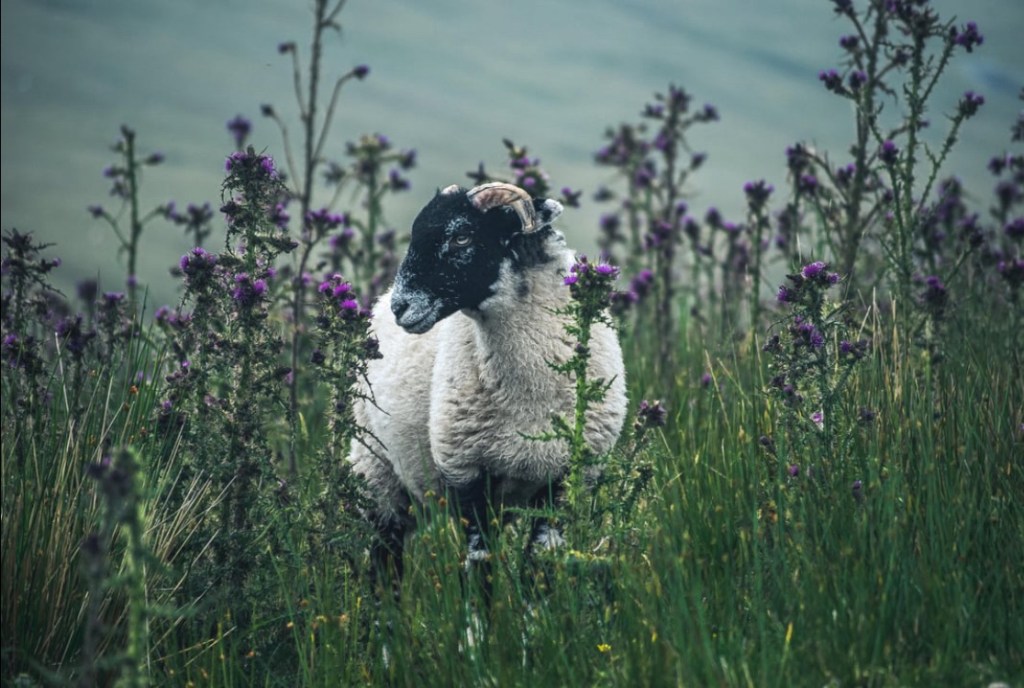
(“Have you seen a Swaledale Ewe?”)
Ovine Origins
The precise origins of the Swaledale, like many of our native sheep breeds, remains somewhat shrouded in the mists of time. What is known is that it belongs to a group of horned, black-faced sheep that evolved in the upland regions of northern Britain, and shares genetic roots with the Scottish Blackface and Rough Fell. These descend from hardy ‘Linton’ type sheep prominent in the 17th and 18th centuries, named after the Southern Scottish market-town they were traded at in Peebleshire.
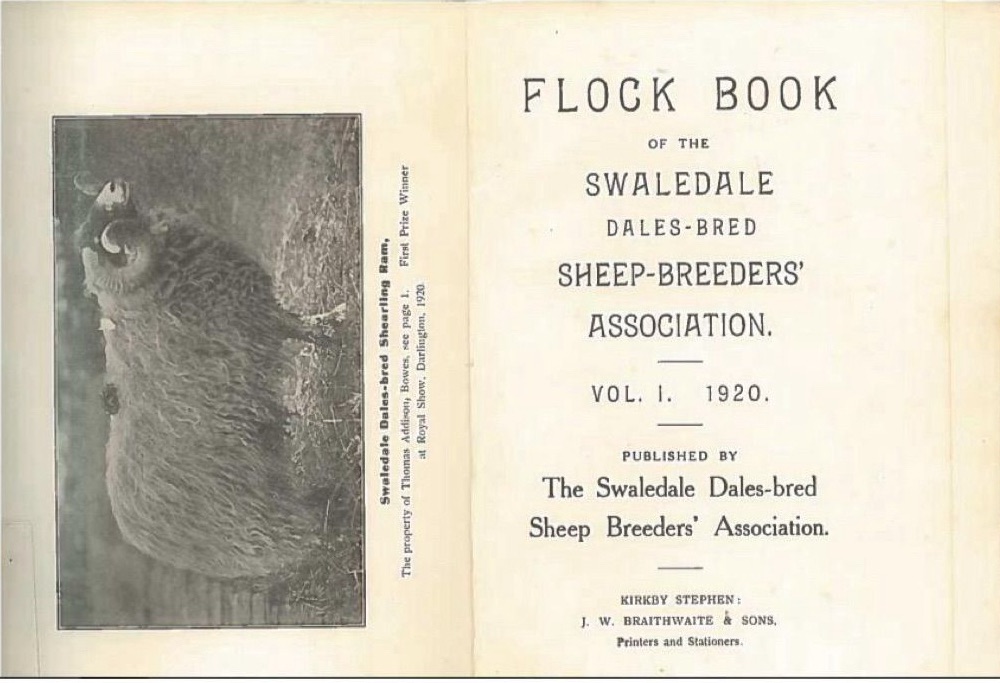
By the 18th century, a distinct Swaledale type had emerged in the Yorkshire Dales through natural selection and local breeding. This breed was realised by The Swaledale Sheep Breeders Association (SSBA), founded in 1919 by farmers near the Tan Hill Inn, initially within a seven-mile radius, and the first flock book appeared around 1920, formalising standards for the breed.
Physical Characteristics and Genetics
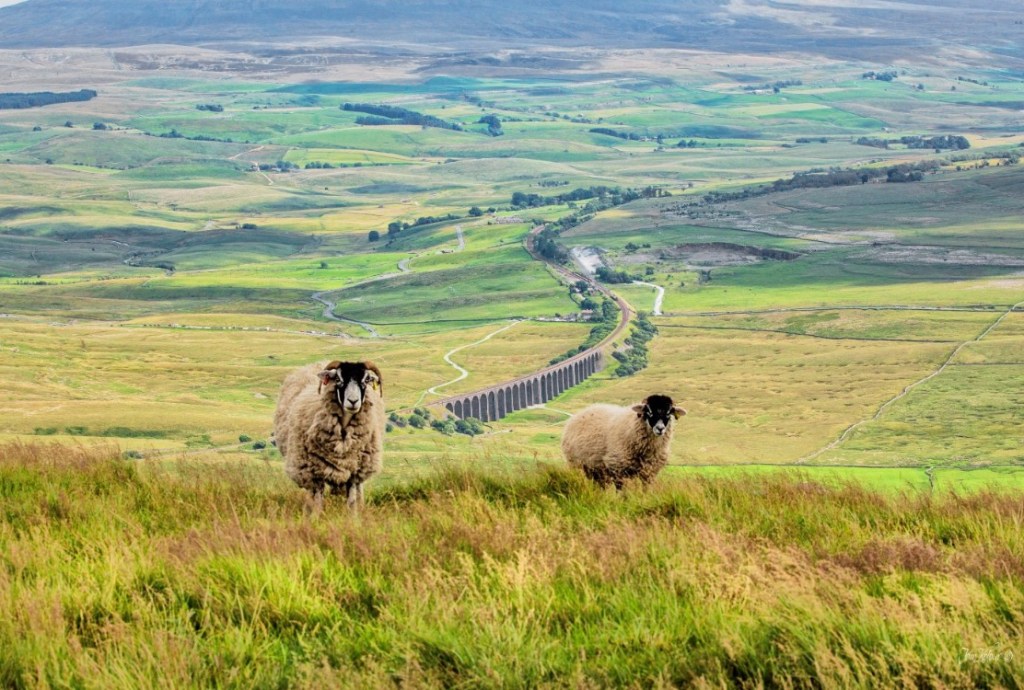
Swaledales are medium-sized, bold, and exceptionally hardy. Key traits include a black face with bright white markings, curled horns (larger in rams), and a weatherproof off-white fleece that is dense and durable. Their strong legs and feet, combined with excellent foraging ability, allow them to thrive on heather, rough grass, and sparse vegetation.
Breeding focuses on maintaining this hardiness, conformation, fleece quality, and the distinctive head markings while improving productivity. Purebred flocks have a strong emphasis on hefting (site fidelity to specific fells, see my piece about Herdwicks to learn more), mothering ability, and lamb vigour. Rams are selected rigorously for horn shape / strength, face colour, fleece (a wiry outer coat with good staple is desirous), and overall type. The ‘hard hair’ on a ram’s face is a practical indicator of desirable fleece characteristics.
The breed operates within the traditional British ‘sheep pyramid’: Swaledale ewes are crossed with Bluefaced Leicester rams to produce North of England Mule females. These mules excel on lowland farms for prolificacy and hybrid vigour. Purebred breeding uses natural mating, with careful ram-to-ewe ratios (often 1:40 to 50 on hills) and selection via shows and performance records.
Artificial insemination is less common but used by some pedigree breeders for top genetics, line breeding within closed flocks helps fix the required traits, balanced by periodic outcrossing to avoid inbreeding.
Flocks and Marts
Several long-established family farms maintain influential flocks. Prominent examples include the Ghyll House Flock (W.Richardson & Son), which has achieved record-breaking sales. Other notable breeders and families have contributed across generations in areas like Swaledale, Arkengarthdale, and the upper Dales. The SSBA supports pedigree work through shows, sales, and flock books, with active members preserving bloodlines dating back to the association’s founding.
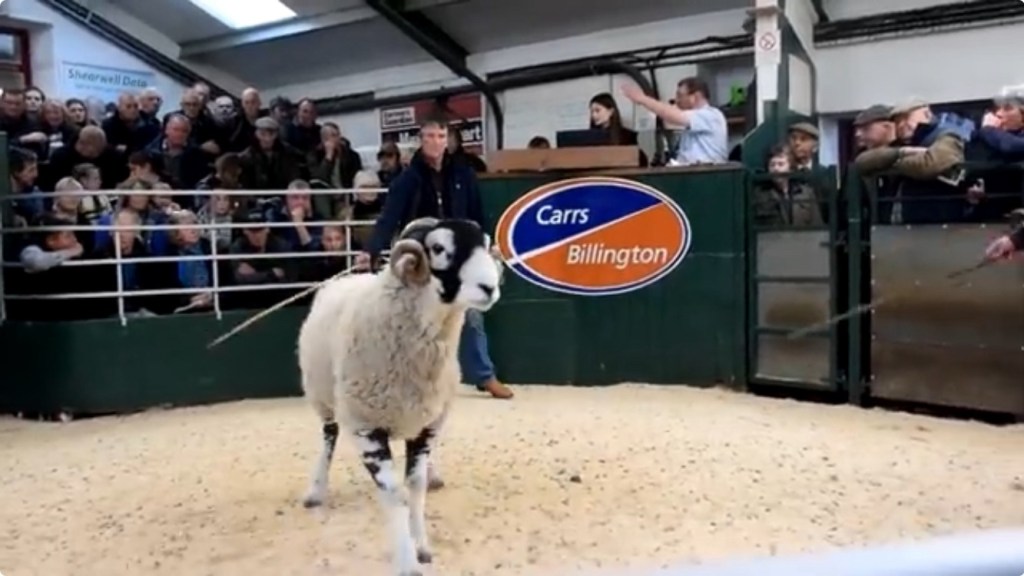
Swaledales are primarily sold through specialist auctions at marts like Hawes and Kirkby Stephen. These events are major social and commercial occasions in the Dales calendar, featuring aged rams, shearlings, ram lambs, and females (ewes, gimmers, and ewe lambs). Sales often include breed shows where judges assess conformation, horns, faces, and fleece.
Clearance rates are typically high for quality stock, with strong demand from hill farmers seeking replacement tups and from those producing mules.
Prestigious Prices
Prices reflect the breed’s prestige at the top end. Historically, top tups have always commanded premiums, but the market has seen some dramatic highs in recent decades.
- Record prices: A Ghyll House shearling ram sold for a breed record £105,000 at Kirkby Stephen in 2023. Other notable highs include a £38,000 ram and multi-thousand pound sales for leading animals.
- Averages: Pedigree shearling/aged rams commonly average in the low thousands, with top pens reaching £10,000+. Commercial or draft ewes and gimmers sell for more modest sums (often £100 to £300+ depending on age and type).
- Current trends: Strong averages continue, with recent Kirkby Stephen and Hawes sales showing uplifts with shearlings up significantly year-on-year. Ewe lambs and gimmers also see a consistently steady demand.
Such prices are healthy, as they sustain pedigree breeding while supporting the wider hill farming economy.
With around 1,200 pedigree flocks, Swaledales remain stable despite broader declines in hill sheep numbers. They continue to define the upland landscape, support biodiversity through grazing, and contribute to the local economy. Challenges include policy changes, such as the recent IHT reforms that have wiped out many small hill-farms, but demand for their genetics keeps the breed robust.
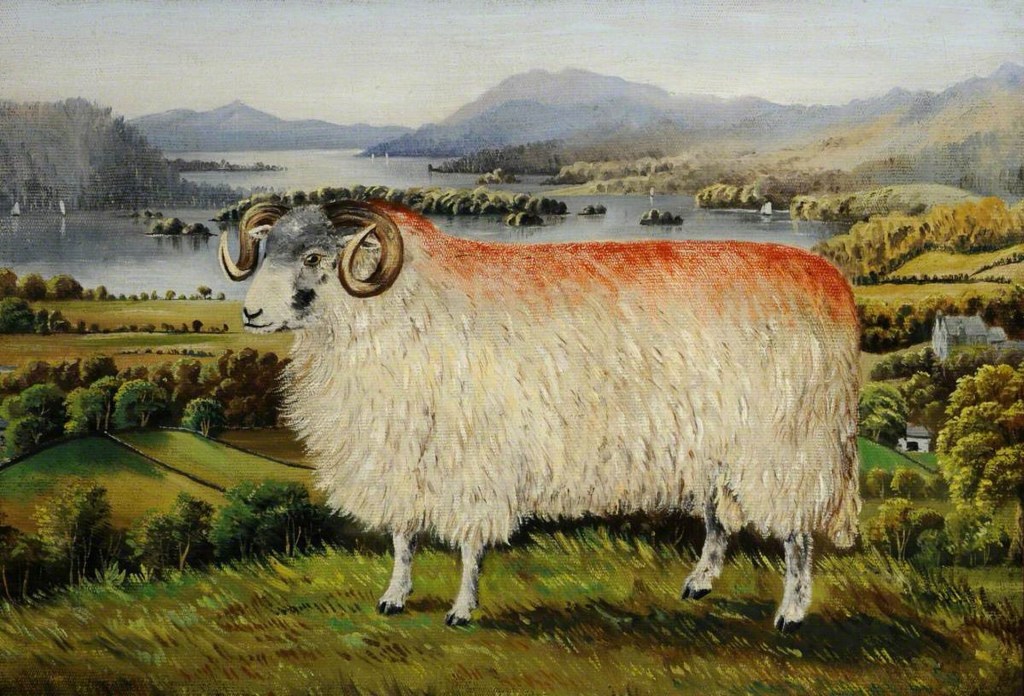
‘Swaledale Ram from Troutbeck, Looking South down Lake Windermere’, William Taylor Longmire (1841-1914), currently owned by the National Trust
Further Reading
To learn more about Swaledales and hill farming in the Northwest of England see:
Yain Tain Tethera, for an article about the ancient way of counting sheep.
Some of the breeds of Hill Sheep that can be found in the Northwest, which looks at other breeds of hill sheep.
Baa, Ram, Ewe! A non-exhaustive list of sheep terminology.
The Hills are Alive with the sound of Bleating! For a little look at Lambing.
Sheep Scanning The scientific process of scanning ewes for lambs.
Yan Tan Tether
John Siddle
When shepherds of old set out to watch flocks,
they used a tally system to guard their stocks,
a system of tally that came from long ago,
Yan Tan Tether to keep them on the flow.
In old “North Brythonic” they could all see,
count up to twenty then notch it on a tree,
a bit of old bark to tally all that’s said,
if you aint got bark then keep it in your head.
Yan Tan Tether is one two and three,
Flossy & Heather and there goes old Dee,
count twenty sheep then round them on by,
then start it all again while the sun is in the sky.
Mether Pip Azer is four five and six,
sheep dog moving and shift ’em through the sticks,
Sezar Akker Donter is seven eight and nine,
Dick Yanadick Tanadick they’re moving all the time.
Now thirteen’s unlucky for some,
that’s Tetheradick on the run,
Metheradick just ran by,
Bumfits lying in a sty.
Yanabum Tanabum Tetherabum’s now clear,
that leaves Metherabum and Jigged now to steer,
the whole twenty done and passed to lower field,
then count another twenty Tally Ho to yield.
The Swaledale Counting System
In the ‘Swaledale Counting System’ 20 sheep are counted from one pen or field to the next using the ‘Yan Tan’ counting system (see link above), when 20 is reached the count begins again. This system is still in use and traditionally notches on the shepherd’s crook would be felt with the thumb to count them off (I haven’t heard of bark or notching trees before), it’s called a ‘vigesimal’ counting system and is naturally intuitive to us as, of course, our digits are in sets of 5.

Thank-you for reading. If you enjoyed this piece and would like to support further articles on the wildlife and history of the Northwest, you can buy me a coffee here.
Alex Burton-Hargreaves
(July 2026)

