Biology, Ecology, Habitat etc of the Northern Oak Eggar Moth Lasiocampa quercus callunae
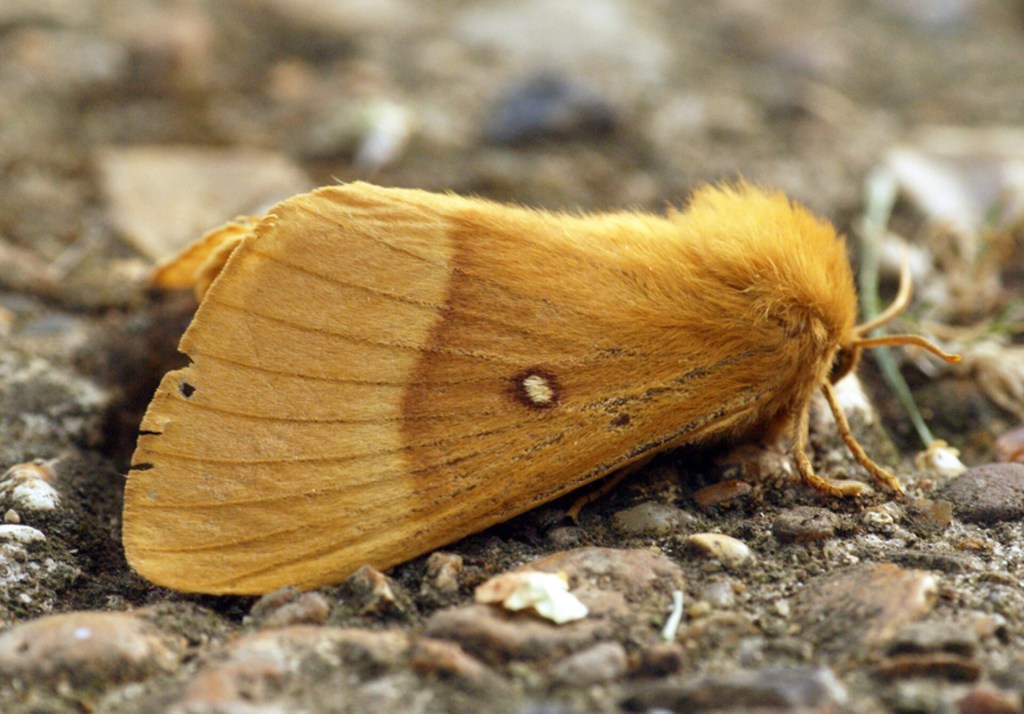
The Oak Eggar moth (Lasiocampa quercus) is one of Britain’s most distinctive and widespread large moths. Despite its name, it has no connection with oak trees, the ‘eggar’ refers to the tough, oval, acorn-like cocoon in which the pupa develops, this is referred to in the epithet of its scientific name: quercus, which is the latin name for Oak.
In southern and eastern England the species typically follows a one-year life cycle and is relatively smaller and paler, but further north, especially on the cooler, more exposed uplands of northern England, populations are larger and darker. These are traditionally referred to as the Northern Eggar (Lasiocampa quercus callunae), and although modern taxonomy no longer treats the northern form as a fully distinct subspecies in a rigid sense (there is a zone of intermediate populations and some variation even within regions), the ecological and morphological differences remain clear in the field.
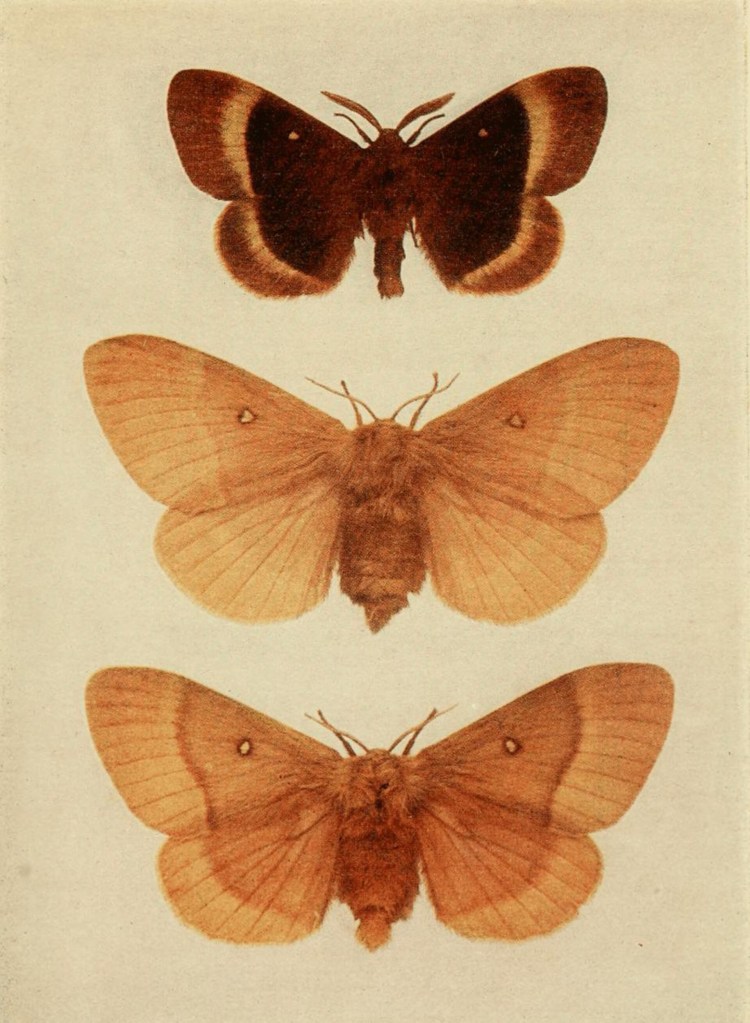
Males of the northern form are robust, reddish-brown day-fliers with a broad yellowish band across the wings and a bold white discal spot. Females are larger still, often a darker buff or brownish tone than their southern counterparts, and fly mainly from dusk.
On sunny afternoons in late May to early July, the males can be seen flying in rapid, zig-zag paths low over heather and bilberry, searching for newly emerged females.
And kampē (κάμπη) means ‘caterpillar’.
Semivoltine Cycle
The Oak Eggar’s most effective adaptation to the cooler northern climate is its extended life cycle.
In the uplands, development normally takes two years; the eggs hatching in summer, and the young caterpillars feeding for a while before overwintering while still small. They resume feeding the following spring and summer on upland plants, especially Heather and Bilberry, and continue growing through the second season. Pupation occurs in autumn among the litter or low vegetation, and the moths emerge the next May or June after a second winter spent as a pupa.
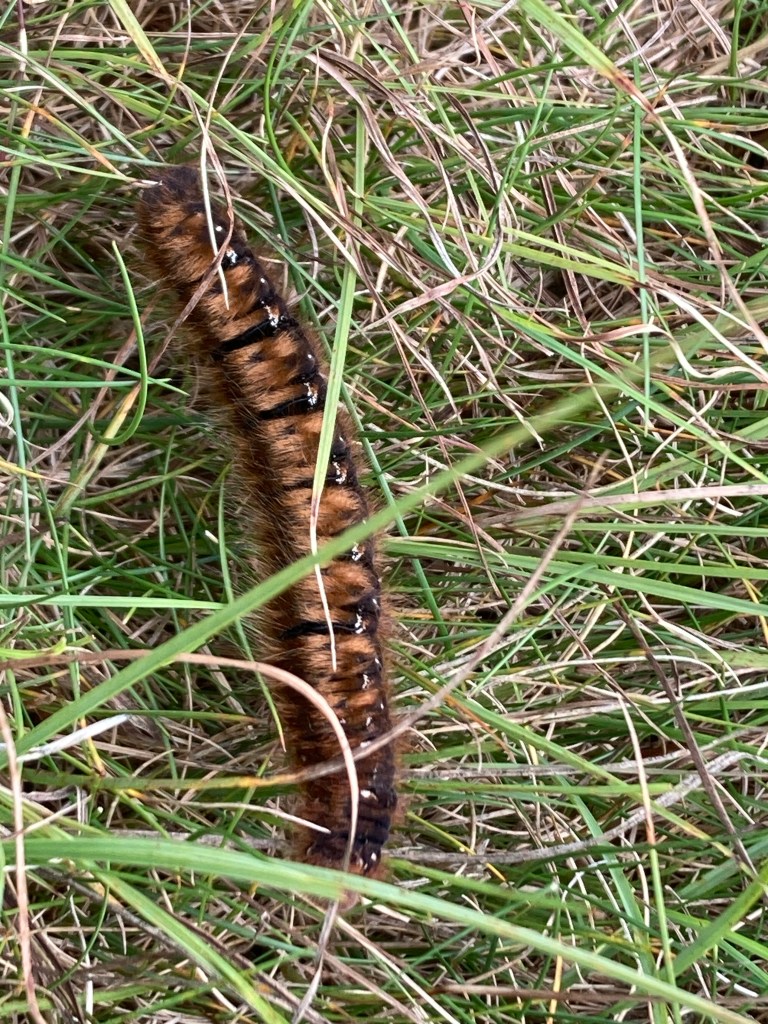
This biennial strategy, known as semivoltine, allows the caterpillars to take full advantage of the short growing season and the abundant, tough foliage of the moorland plants. The larvae themselves change appearance markedly as they grow: early instars are often bluish with orange hairs, while fully grown caterpillars are large, densely hairy and reddish-brown with darker markings.
They are polyphagous, meaning they will feed on a wide variety of species including bramble, Blackthorn, sallows, Hawthorn and other shrubs when available, but on the open uplands heather and bilberry dominate their diet.
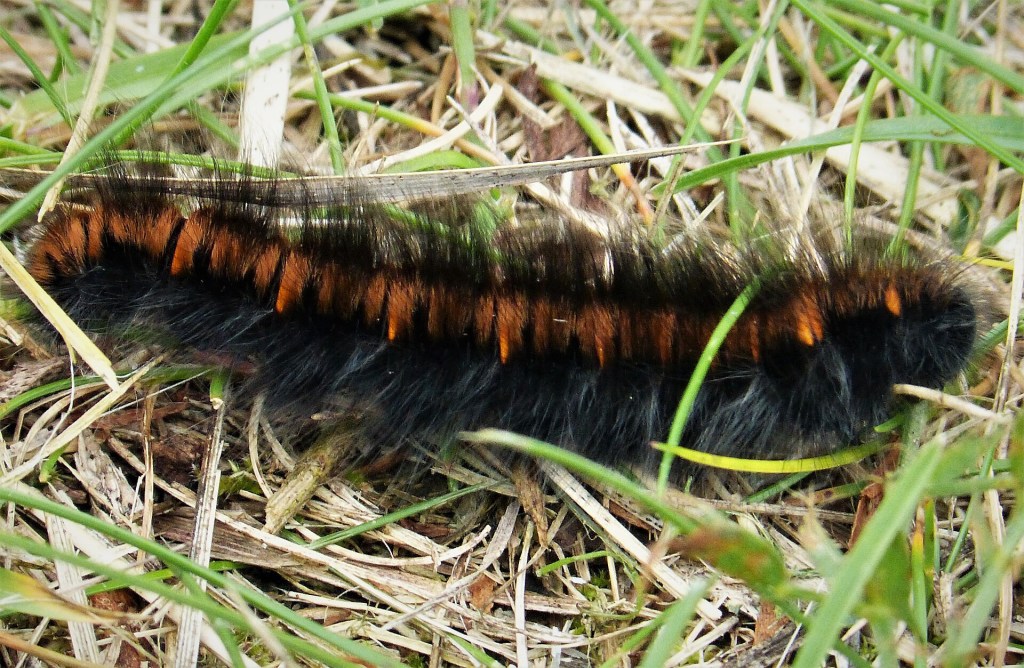
(Gail Hampshire)
Habitat and Distribution
Oak Eggars are strongly associated with open, scrubby habitats.
In northern England this means heather moorland, upland heath, rough grassland with bilberry, and the edges of wooded valleys and hill farms. It is common and widespread across suitable habitat from the Yorkshire Dales and North Pennines through Cumbria and into the Scottish Borders. Records from county moth groups (for example Durham) confirm its regular presence on the eastern side of the Pennines as well.
Because the larvae feed low down on common plants and the adults are mobile, the species tolerates a range of management regimes provided the vegetation structure remains open and the key foodplants persist. Overgrazing, wildfires, over-intensive burning that removes too much bilberry and heather cover, or conversion to improved grassland can reduce local populations, as can succession to woodland, but overall the moth remains classified as common and is not a conservation priority.
Northern England’s uplands provide ideal conditions for the two-year life cycle and the larger, darker phenotype. The cooler climate, acidic soils supporting extensive heather–bilberry communities, and relatively low-intensity land use creates a landscape in which the Northern Eggar thrives. Watching males zig-zagging over purple heather on a bright June afternoon is one of the most characteristic wildlife experiences of these hills.
The species also reminds us of how subtle climatic and habitat gradients can shape even familiar species. What appears as a single common moth across Britain actually shows clear regional adaptations, nowhere more clearly expressed than on the open uplands of the north.
The Moth-Signal
by Thomas Hardy
“What are you still, still thinking,”
He asked in vague surmise,
“That you stare at the wick unblinking
with those deep lost luminous eyes?”
“O, I see a poor moth burning
in the candle-flame,” said she,
“Its wings and legs are turning
to a cinder rapidly.”
“Moths fly in from the heather,”
He said, “now the days decline.”
“I know,” said she. “The weather,
I hope, will at last be fine.
“I think,” she added lightly,
“I’ll look out at the door.
The ring the moon wears nightly
may be visible now no more.”
She rose, and, little heeding,
her life-mate then went on
with his mute and museful reading
in the annals of ages gone.
Outside the house a figure
came from the tumulus near,
and speedily waxed bigger,
and clasped and called her Dear.
“I saw the pale-winged token
you sent through the crack,” sighed she.
“That moth is burnt and broken
with which you lured out me.
“And were I as the moth is
it might be better far
for one whose marriage troth is
shattered as potsherds are!”
Then grinned the Ancient Briton
from the tumulus treed with pine:
“So, hearts are thwartly smitten
in these days as in mine!”
Thank-you for reading. If you enjoyed this piece and would like to support further articles on the wildlife and history of the Northwest, you can buy me a coffee here.
Alex Burton-Hargreaves
(August 2026)

