Ecology, Biology, Identification etc of the Amethyst Deceiver, Including a Short Poem by the Author
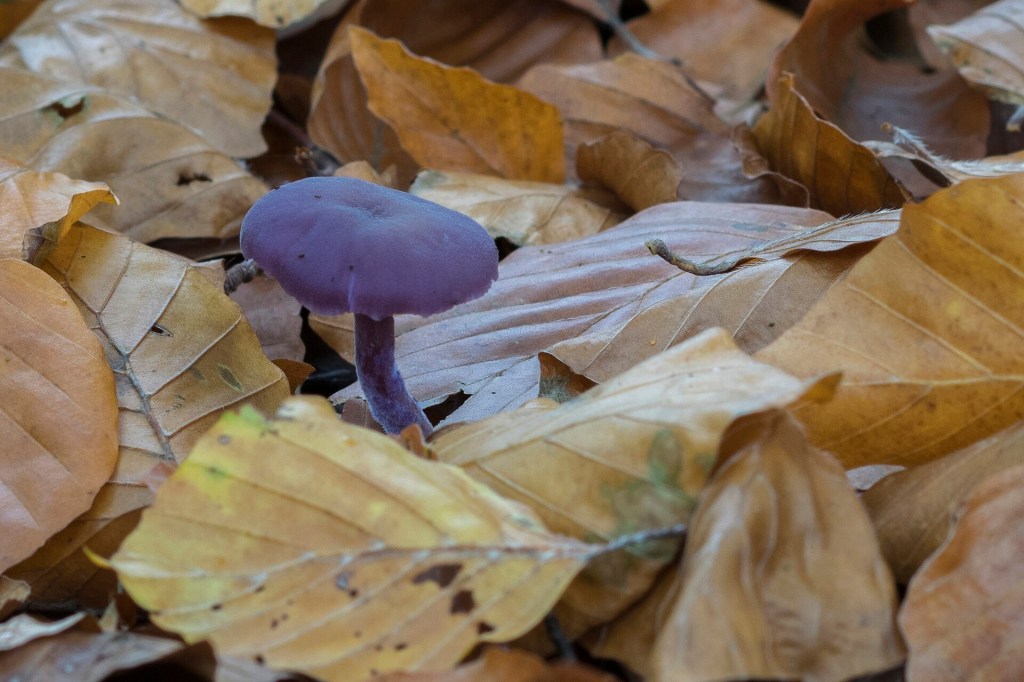
Northwest England’s climate is famously damp and drizzly for much of the year, which provides ideal conditions for fungi to flourish. Among the many species that appear in our woodlands from late summer into the colder months is one of the most striking and aptly named: the Amethyst Deceiver, Laccaria amethystina.
When fresh and moist, this small mushroom is a vivid, deep violet-purple and stands out against the leaf litter and moss of the woodland floor like a jewel. As it dries or ages, however, the colour fades dramatically to a pale lilac, grey or almost white. This rapid change is what earns it the name “deceiver”, shared with its close relative the Common Deceiver (Laccaria laccata). What looks like one species in wet weather can appear completely different a day or two later.
Description
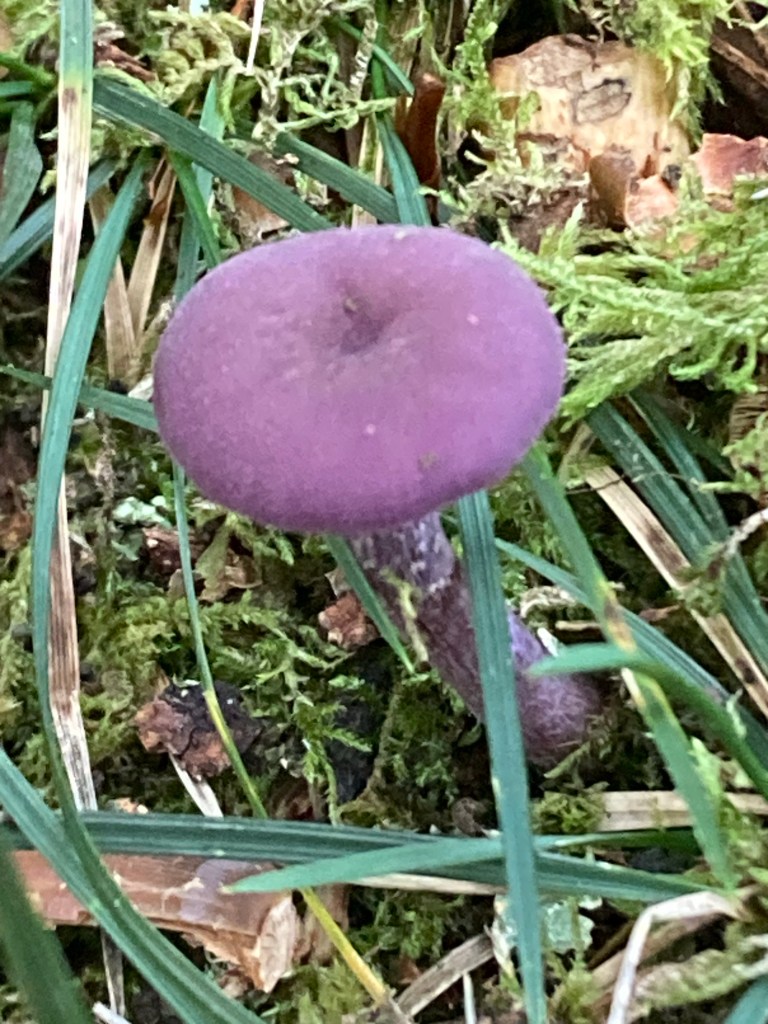
The cap is typically 1.5 to 6cm across and begins convex or dome-shaped and later flattens, often developing a shallow central depression.
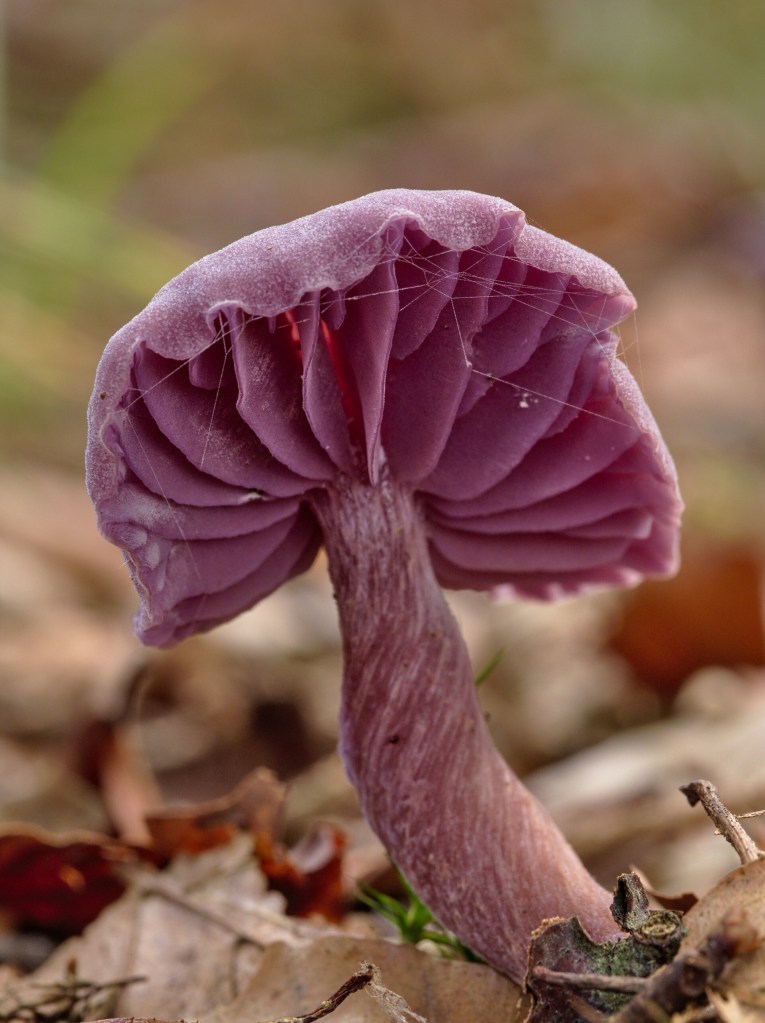
When moist the surface is smooth and a rich amethyst or lilac-purple; as it dries it becomes paler and sometimes slightly scurfy or scurfy-scaled. The gills are thick, widely spaced, and the same purple colour as the young cap (this residual purple on the gills and stem often helps identify faded specimens).
The stem is slender, tough, fibrous and usually hollow, matching the cap in colour when young and often twisted or flattened. Its spore print is white and there is no distinctive smell or taste.
Habitat and Distribution
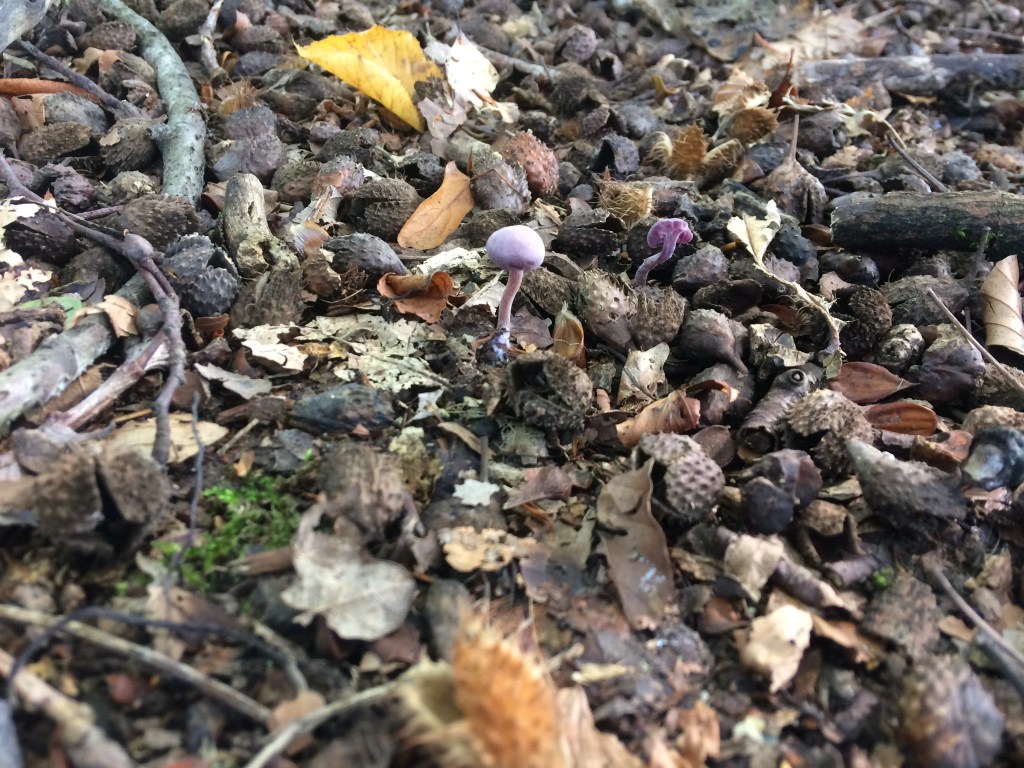
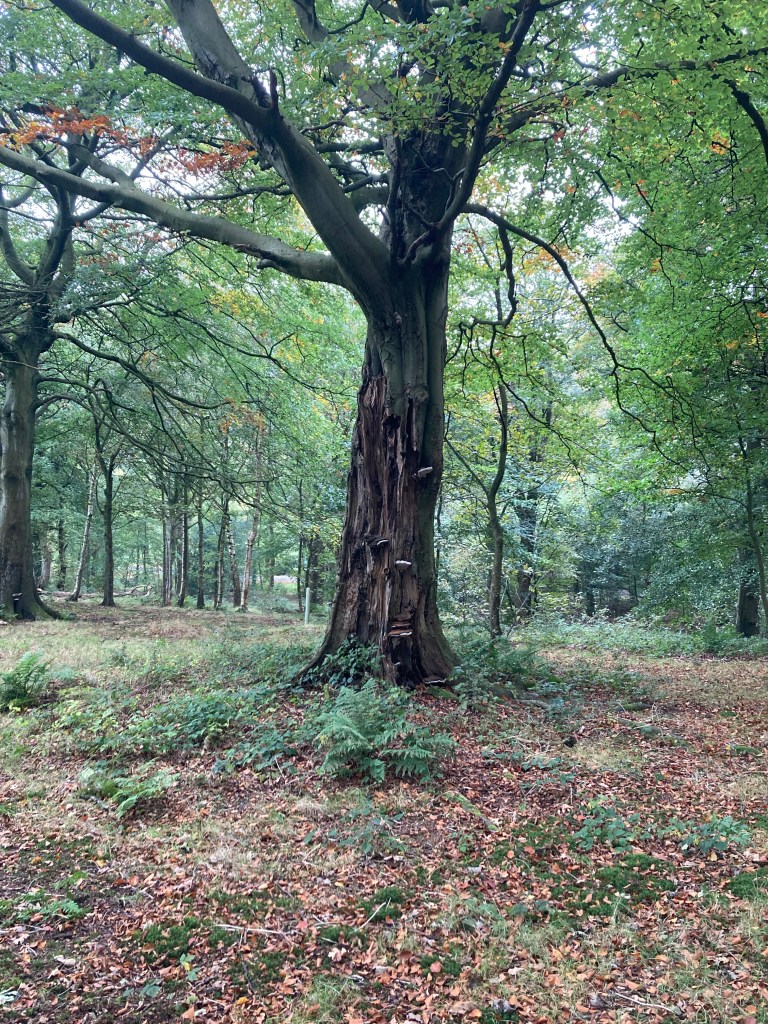
Laccaria amethystina is ectomycorrhizal, forming symbiotic relationships with the roots of trees. It is most often found with beech, oak and Birch, though it also occurs under conifers, and grows in leaf litter and moss in both deciduous and mixed woodland, frequently in scattered groups or small troops.
It is widespread and common across Britain and Ireland, and well represented in the Northwest. The region’s extensive mixed woods, the damper valleys of the Forest of Bowland, the wooded edges of the Lake District and the older plantations and parklands of Lancashire all support it.
Look for it from late summer through autumn and, in mild spells, into early winter. After rain, when the caps are fully coloured, is the best time to spot it, in dry weather the pale specimens can be easily overlooked among the leaf litter.
Ecology
Like other Laccaria species, the Amethyst Deceiver plays a quiet but important role in woodland ecosystems. Its mycelium exchanges nutrients with its host trees, helping the trees access minerals while receiving carbohydrates in return. Although the fruiting bodies can appear in large numbers, the fungus itself is perennial underground.
Identification and Lookalikes
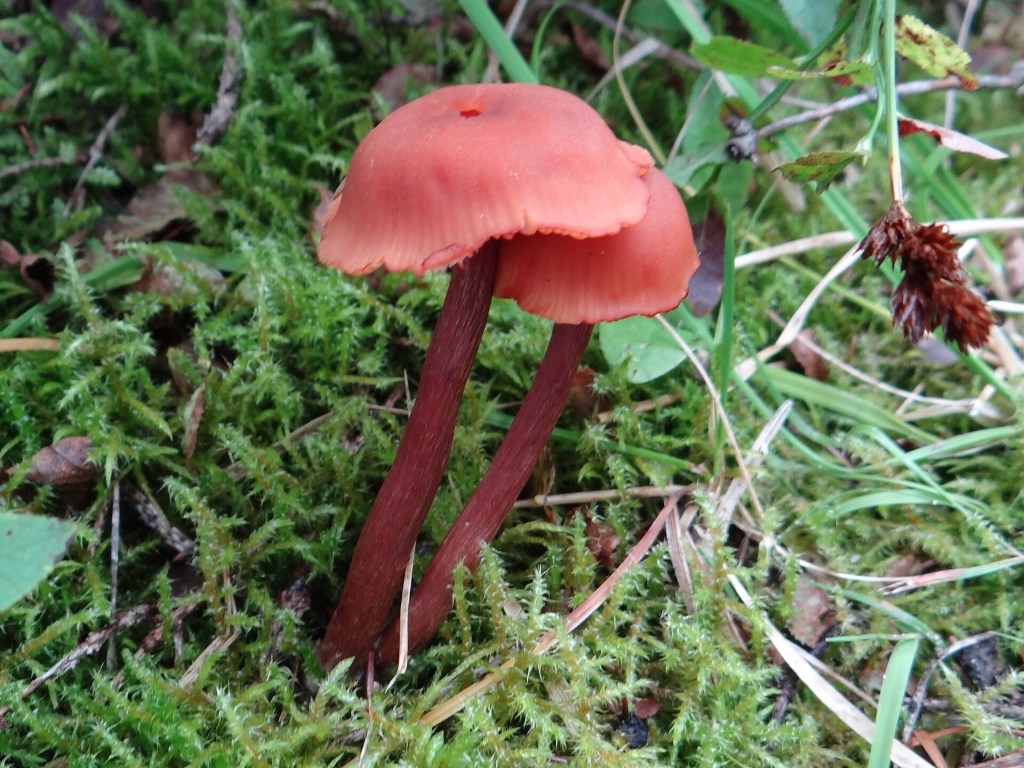
When wet and purple the Amethyst Deceiver is relatively straightforward to identify, once faded it can be confused with the Common Deceiver (Laccaria laccata), which is more orange-brown or flesh-coloured when fresh.
Residual purple tones on the gills and stem usually distinguish the Amethyst. Other potential lookalikes include the Lilac Bonnet (Mycena pura), which has a more pinkish tone, thinner stem and a radish-like smell, and certain Inocybe species such as the Lilac Fibrecap, which tend to be paler overall and have different gill and spore characteristics. Always check the thick, distant gills and the tough, fibrous stem.
Edibility
The Amethyst Deceiver is edible and has a mild, pleasant mushroom flavour, though the stems are often too tough to be worth eating.
It has been foraged in small quantities for a long time, however, it is a known hyperaccumulator of arsenic, concentrating the element from the soil even in unpolluted sites. Occasional, modest consumption is generally regarded as low-risk for most people, but large or frequent meals are not recommended. As with all wild fungi, positive identification is essential, and beginners should seek expert confirmation.
(Annabel)
Name and History
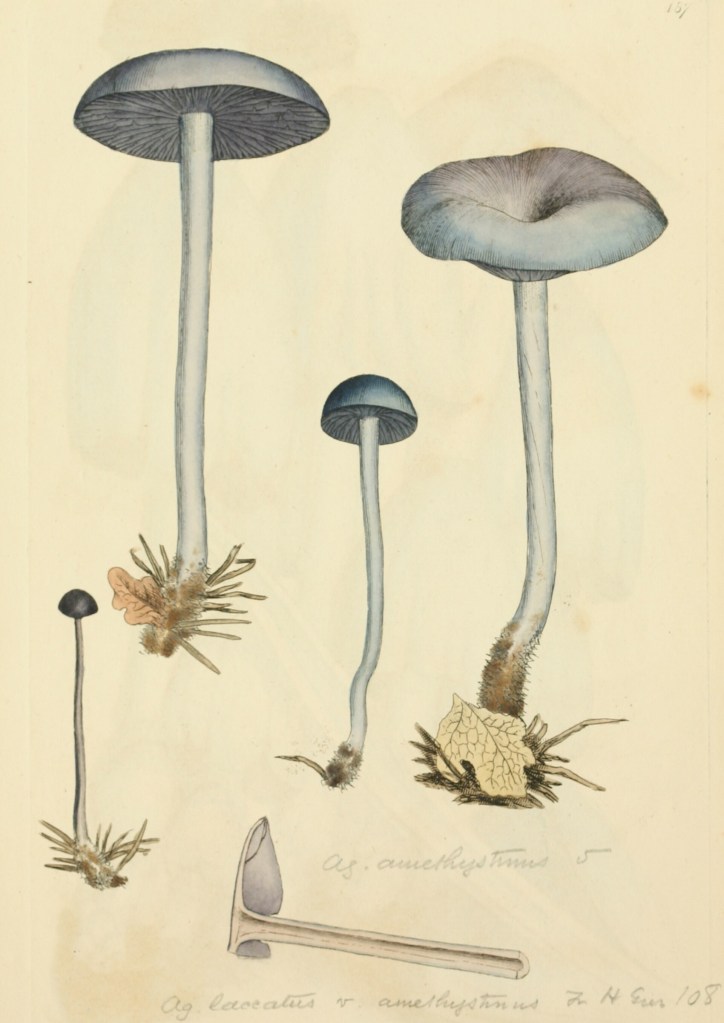
The species was first described in 1778 by the English botanist William Hudson as Agaricus amethystinus and in 1884 the British mycologist Mordecai Cubitt Cooke transferred it to the genus Laccaria, giving us the current name Laccaria amethystina. Amethystina refers to the characteristic purple colour, while laccaria alludes to the lacquered or shiny appearance of the fresh caps, the common name ‘deceiver’ neatly captures the species’ changeable appearance.
In the damp autumnal woods of the Northwest this tiny jewel-like fungus is a welcome addition, keep a sharp eye on the leaf litter and you too may espy its tiny amethystine form among the leaves, and while you look who knows; you may find other treasures as well!
The Deceiver
Wandering ‘round the autumn wood,
poking ‘bout the leafy litter.
Looking for the fungal treasures,
that appear when t’wind turns bitter.
Here I spy a purple jewel,
bright against the dry dead leaves,
best be careful if I pick it,
‘cause this mushroom oft deceives!
Thank-you for reading. If you enjoyed this piece and would like to support further articles on the wildlife and history of the Northwest, you can buy me a coffee here.
Alex Burton-Hargreaves
(September 2026)

