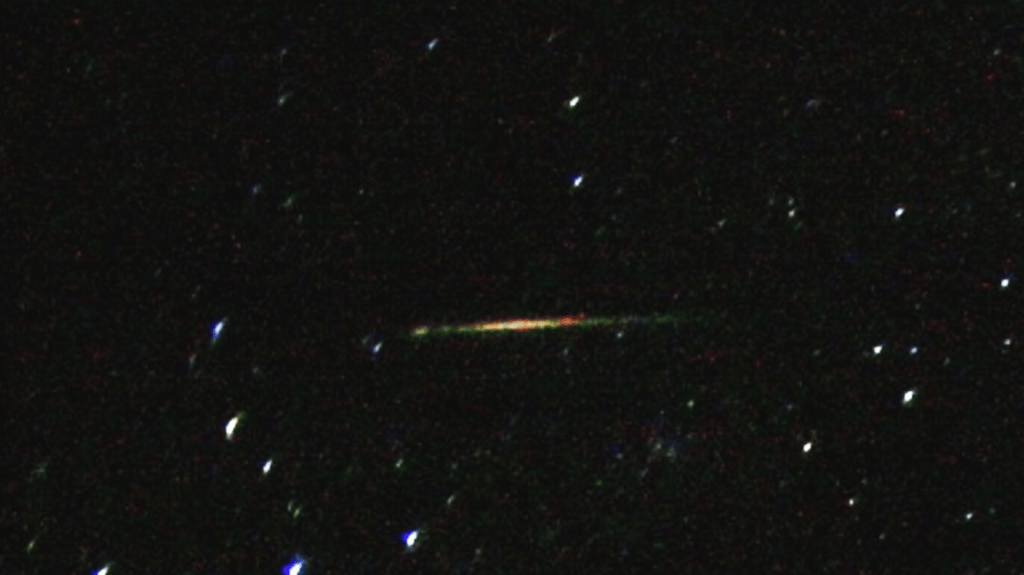
Orionid rains,
Child of Halley’s Comet glow,
Incandescent dance
The Orionid meteor shower, one of autumn’s most reliable displays of “shooting stars”, remains active across British skies until the 7th of November this year. Its peak occurred on the nights of the 21st and 22nd of October, but activity continues (though at lower rates) for another couple of weeks, giving observers in northwest England more chances (if the weather cooperates that is).
These fast-moving meteors are cosmic debris from Halley’s Comet. As Earth ploughs through the dusty trail left by the famous comet, named after the English astronomer and mathematician Edmond Halley (1656–1742), particles the size of sand grains or smaller burn up in the atmosphere at about 41 miles per second. They often leave glowing trains that linger for a few seconds and can occasionally produce bright fireballs. The shower’s radiant, the point from which the meteors appear to stream, sits in the constellation Orion, near the bright reddish star Betelgeuse, hence their name ‘Orionids’.
I have wondered why they aren’t called the “Betelgeusids”, but apparently a strict naming convention set by the International Astronomical Union (IAU) stipulates that meteor showers must be named after the entire constellation from which they appear to originate, not a single individual star within that constellation.
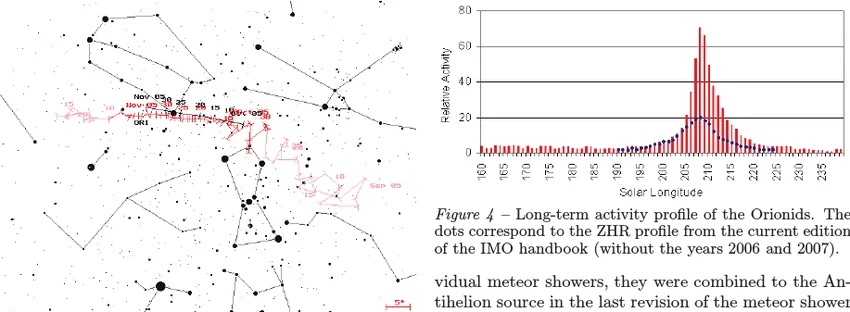
Radiant position of the Orionids from data of the International Meteor Organisation’s (IMO) Video Meteor Database.
When and How to Watch
The radiant of the Orionids rises in the late evening and climbs higher through the night, reaching its best position in the pre-dawn hours. For northwest England, the darkest and most productive window is typically after midnight, especially once the Moon has set. At the peak, a bright waxing gibbous Moon interfered somewhat but conditions improved after moonset around 3am. Rates under ideal dark skies can reach 10 to 20 meteors per hour near the peak but expect less now, and still fewer from light-polluted suburban areas.
No special equipment is needed, the naked eye is best. Give your eyes 20 to 30 minutes to adapt to the dark (avoiding phone screens or using a red-light filter) and look about halfway up the sky, 45 to 90° away from Orion itself, rather than staring directly at the radiant; meteors farther from the radiant produce longer, more dramatic trails. Face southeast to south after midnight as Orion climbs, wrap up warmly, bring a reclining chair or blanket, and be patient, as meteor watching is a waiting game.
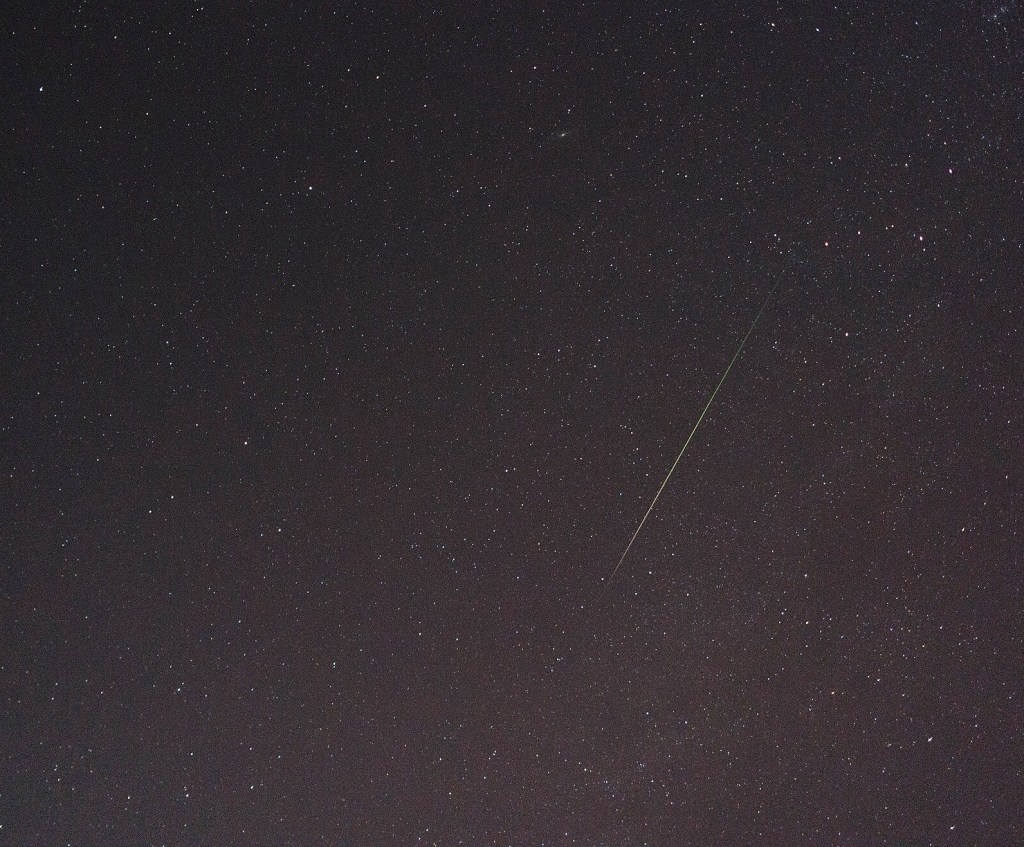
Best Spots in Northwest England
Light pollution from Manchester, Liverpool and other urban centres is the main obstacle to viewing any night-time phenomenon in northwest England, so you’re better off heading for darker rural or upland locations with open horizons such as:
- The Forest of Bowland
One of England’s darkest areas and home to several Dark Sky Discovery Sites. Try Gisburn Forest Hub, Slaidburn village car park, the Crook o’ Lune Picnic Site, or higher ground such as Bowland Knotts for wide-open views. Memorably I once watched the Orionids from the layby on the top of the road between Cowark and the Inn at Whitewell, I was cycling to work at around 5am and there are many quiet little spots like this in the area where you may be able to observe them.
- The Lake District
Exceptionally dark skies in many valleys and fells. Popular spots include car parks around Buttermere, Crummock Water, Gatesgarth, Glencoyne Bay on Ullswater, or quieter locations like Devoke Water. Make sure to check access and parking rules for overnight visits though.
Other options include Beacon Fell Country Park, which is worth visiting on any night of the year for its panoramic views over the Fylde plains, Arnside Knott, or more remote parts of the Yorkshire Dales and West Pennine Moors if you can get far enough from streetlights.
Always prioritise safety: stick to known paths or car parks, tell someone your plans, and watch the weather. Autumn nights in the northwest can turn cold, windy or wet surprisingly quickly.
(Robert Ince)
Practical Tips
- Check the latest Met Office or local forecasts, as clear weather is essential.
- Dress in layers, bring hot drinks, and use a red torch to preserve night vision.
- Meteors can appear anywhere, so scan a broad area of sky rather than fixing on one point.
- Photography tip: a wide-angle lens on a tripod with a relatively high ISO and exposures of 10 to 30 seconds can capture trails, but enjoy the show with your eyes first.
Northwest England’s mix of open countryside, uplands and relatively accessible dark-sky sites makes it a good place to catch night-sky sights like the Orionids. Bundle up, find a quiet spot under clear skies, and you may be rewarded with a few of Halley’s Comet’s leftover sparks streaking across the autumn night.
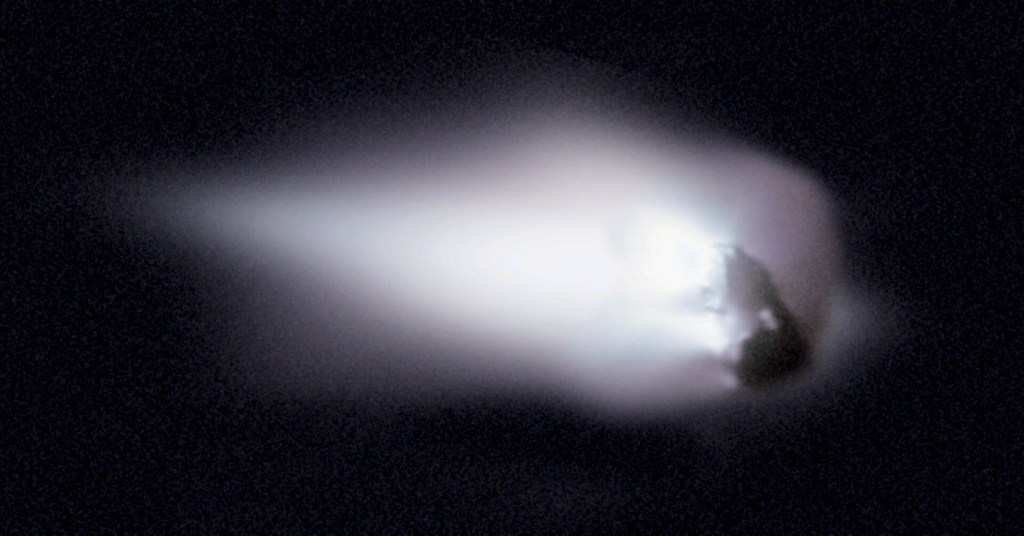
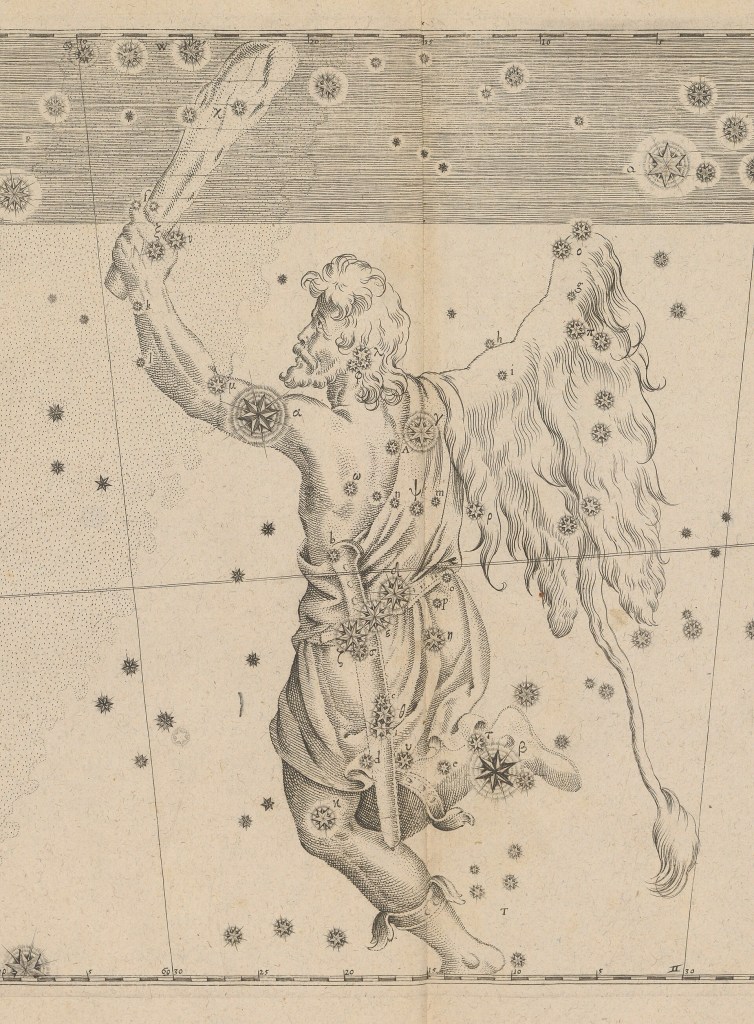
Print of the copperplate engraving for Johann Bayer’s Uranometria (1661) showing the constellation Orion
(United States Naval Observatory Library)
He made the earth upon it, and the sky, and the sea’s water,
and the tireless sun, and the moon waxing into her fullness,
and on it all the constellations that festoon the heavens,
the Pleiades and the Hyades and the strength of Orion
and the Bear, whom men also call the Wagon,
who turns about in a fixed place and looks at Orion
and she alone is never plunged in the wash of the Ocean.
(Homer’s Iliad, Book 18; the Shield of Achilles)
Thank-you for reading. If you enjoyed this piece and would like to support further articles on the wildlife and history of the Northwest, you can buy me a coffee here.
Alex Burton-Hargreaves
(October 27th 2026)

