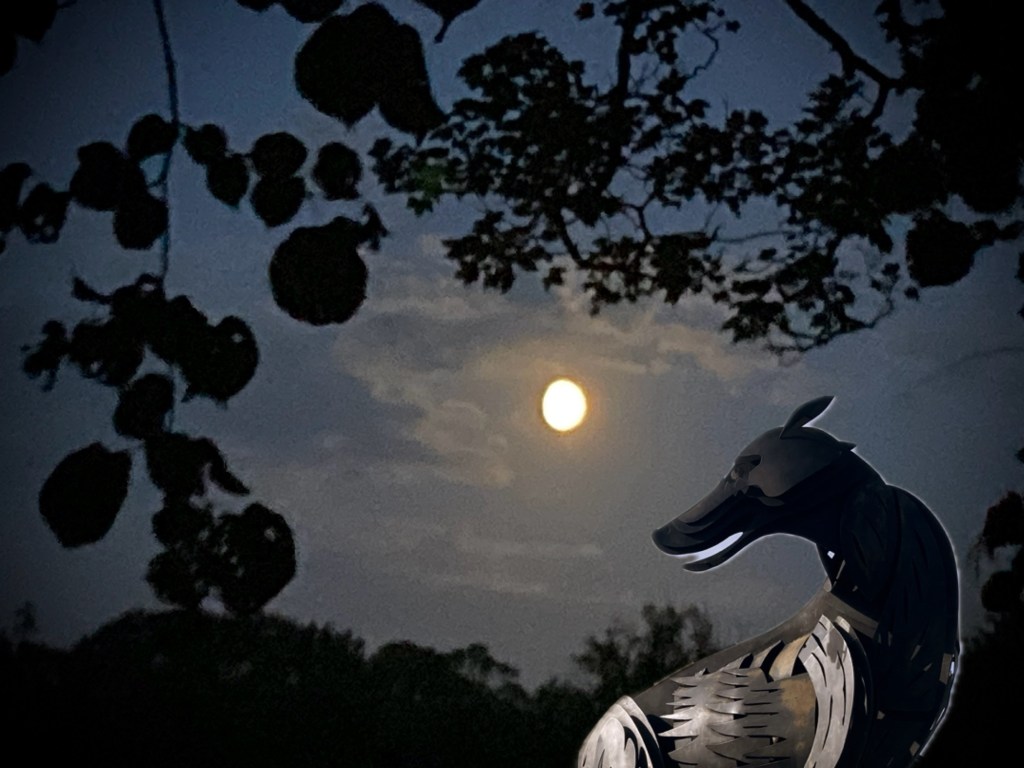
Great Britain is famously haunted by phantom black dogs, a great pack of monstrous mongrels seemingly spread to all four corners of the realm, but while East Anglia boasts its Black Shuck, Devon its Whisht Hounds, the Isle of Man the Moddey Dhoo and Wales its Cŵn Annwn; the Dogs of Annwn, Northwest England possesses an especially chaotic catalog of spectral canines.
These entities represent far more than mere spooky pooches however, for they are deeply tied to ancient fears of the wild and the beasts that still lurked there until not that long ago, and they remain today a living part of our culture that refuses to fade into the past.
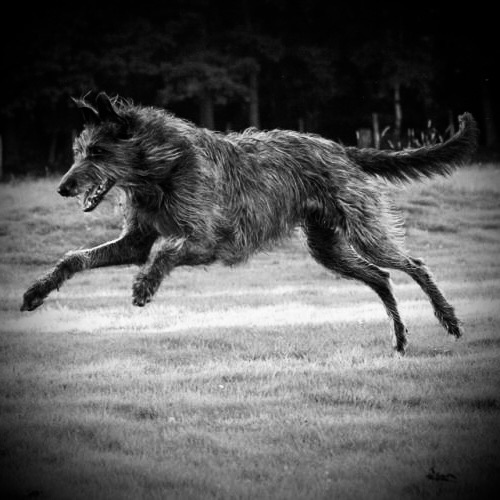
Following the Pack
Lancashire
In the Palatine county of Lancashire the most prominent contribution to this lore goes by the interchangeable names of Trash, or Skriker.
Unlike other phantom dogs that stalk their victims in absolute silence, Trash is instantly identified by the unmistakable, rhythmic sound of his feet. Observers describe a heavy, wet, splashing or squelching sound, as if the creature is padding through deep mud, even when the ground is bone-dry.
When visible, he appears as a massive, shaggy black hound with abnormally broad, backward-pointing feet. The alternative name of Skriker derives from the local dialect for a piercing screech or shriek, which the creature emits into the night air as a harrowing omen of death to anyone unfortunate enough to hear it.
Cumbria
As we follow the pack north the topography turns rugged and mountainous, and the spectral hounds become wilder and more fluid in form.
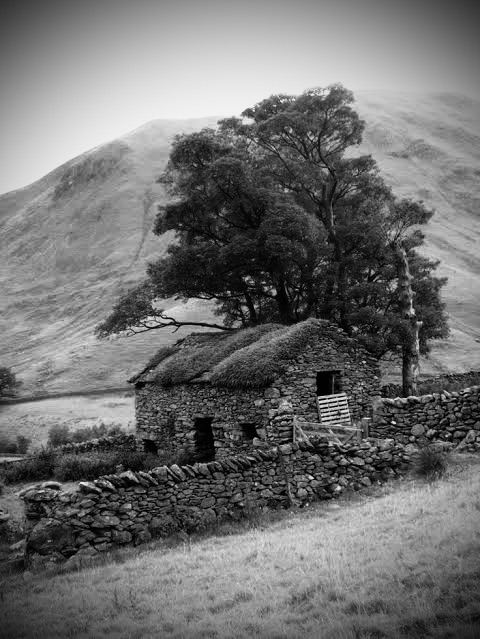
In the wilds of Westmorland, locals feared the Capelthwaite, a highly localised bogey-beast known to haunt a specific barn, terrifying livestock and travellers alike. The Capelthwaite was a shaggy shapeshifter that frequently assumed the form of a massive black dog but could just as easily transform into a calf or a horse, he was eventually banished by the local vicar.
Meanwhile, to the East, near the village of Hutton Roof, the terrifying Barghest is said to stalk the dark lanes that wind beneath the crags, pacing travellers just a few yards behind in the dark.
Further Abroad
In the High Pennines the Gabriel Ratchets prowl, a spectral, airborne pack travelling hidden in the thick mists of the moors. Their approach is heralded by a sound resembling a flock of yelping geese, and hearing them over a house was once considered an absolute guarantee of impending family tragedy.
In more urban areas, these legends shifted into boggart-dogs. The Manchester Barghest was uniquely feared for appearing entirely headless, while the Holden Boggart near Burnley was famous for laying in paths disguised as a discarded heap of old rags, violently exploding upward into a slavering black hound if a traveller dared kick it aside.
Dire-some Dogs
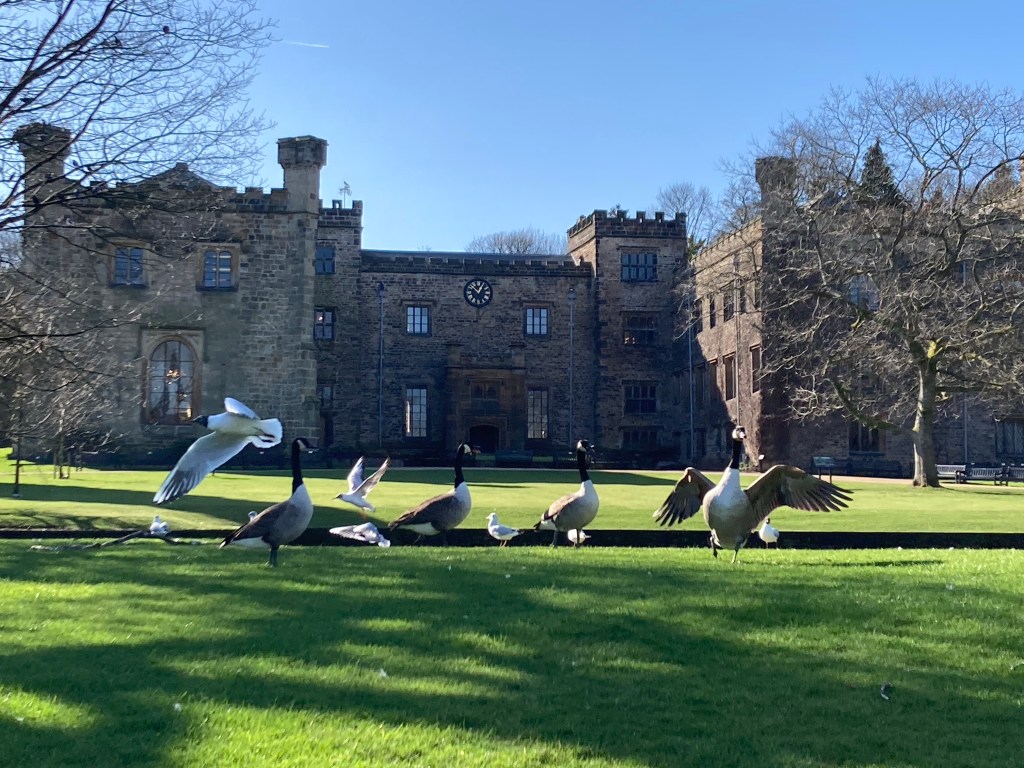
These dire-some dogs are often anchored to specific geographic locations. Near Burnley, a long-used crossroads in Towneley Park was abandoned due to the regular materialisation of Trash. One well-recorded nineteenth-century account notes a local man attempting to strike at the creature with a walking stick, only for his weapon to pass straight through the hound as if it were smoke, leaving the man struck down with a paralysing sickness for weeks.
Similarly, on misty nights near Todmorden, witnesses claimed a pack of hounds with eerie, human-like faces would run across the moors and seamlessly glide across the waters of the local Lee Dam.
These encounters did not die out with the Victorian era; contemporary folklore studies continue to collect modern reports of oversized, dark canines vanishing into thin air on isolated canal tow-paths, country lanes and old railway lines all across the country.
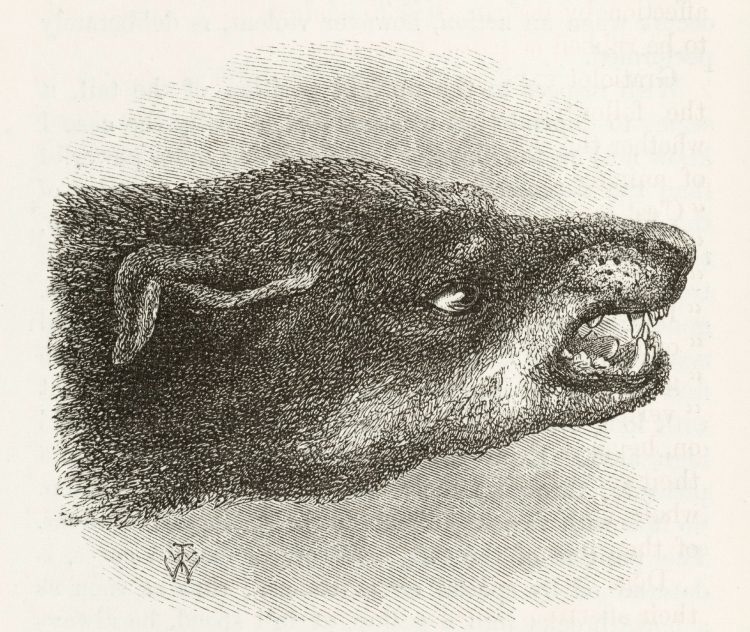
Snarling dog from Darwin’s Expression of Emotions in Man and Animals, 1872
Cultural Curs
The haunting nature of the North’s spectral dogs heavily influenced the golden age of English literature, particularly through authors who grew up on the edges of these very landscapes. Charlotte Brontë, raised on the isolated moors of the Yorkshire and Lancashire border, was intimately familiar with the northern Gytrash, a close cousin of Lancashire’s Trash. She explicitly wove local folklore of the Gytrash into Jane Eyre when her heroine encounters Mr. Rochester for the first time on a lonely, icy road, mistaking his approaching horse and dog for the solitary spirit her nursemaid used to warn her about.
Furthermore, Sir Arthur Conan Doyle drew heavily from northern hound lore communicated to him by colleagues at Stonyhurst College when conceiving the hound of the Baskervilles, and Bram Stoker’s depiction of Count Dracula being ship-wrecked at Whitby and escaping disguised as a large black dog, which then bounded up the famous 199 Steps toward St. Mary’s Churchyard, was directly inspired by coastal legends of the Barghest.
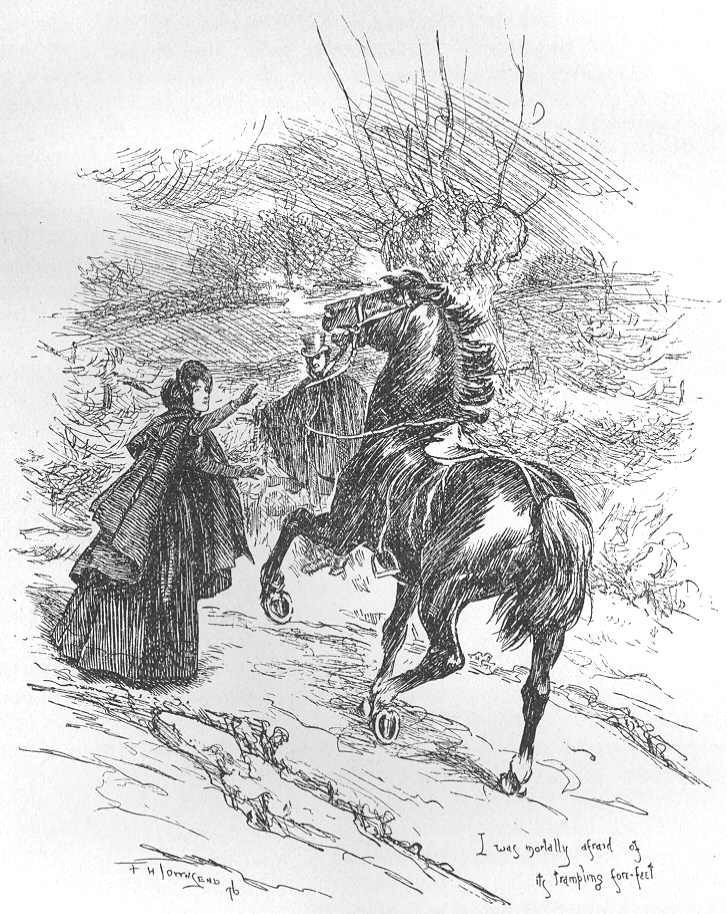
Illustration by F. H. Townsend, 1868-1920.
Why is the North so Populated with Spectral Hounds?
To understand why the North is so deeply populated by these creatures, folklorists point to it being a unique cultural and historical melting pot. The region was heavily settled by Anglo-Saxons, Norse Vikings, and native Celts, allowing the black dog to bridge the Celtic concept of liminal guardians with the Norse myth of Garmr and the hounds of Odin’s Wild Hunt. This explains why sightings are leashed to sites like bridges, crossroads, stiles, and old churchyards, places where the veil between the physical and spiritual worlds was believed to be paper-thin.
On a more practical level, some scholars note that coastal and rural communities actively encouraged these terrifying stories. By scaring locals into staying indoors after dark, smugglers and poachers could move their illicit goods along the dark lanes entirely unbothered, which perhaps cemented the phantom hound further as a permanent fixture of the northern night.
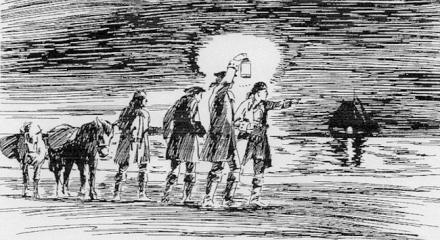
‘On most occasions “Trash” is described as having the appearance of a very large dog, with very broad feet, shaggy hair, drooping ears, and eyes “as large as saucers.” When walking, his feet make a loud splashing noise, like old shoes in a miry road, and hence the name of “Trash.” The appellation “Skriker” has reference to the screams uttered by the sprite, which are frequently heard when the animal is invisible. When followed by any individual he begins to walk backwards with his eyes fixed full on his pursuer, and vanishes on the slightest momentary inattention. Occasionally he plunges into a pool of water, and at times he sinks at the feet of the persons to whom he appears with a loud splashing noise, as if a heavy stone were thrown into the miry road. Some are reported to have attempted to strike him with any weapon they had at hand, but there was no substance to receive the blows, although the Skriker kept his ground.’
(From Lancashire Folk-lore, by John Harland and T. T. Wilkinson, 1867)
Thank-you for reading. If you enjoyed this piece and would like to support further articles on the wildlife and history of the Northwest, you can buy me a coffee here.
Alex Burton-Hargreaves
(October 30th 2026)

