The Survival Strategies of Freshwater Fish During Winter Floods and Spates
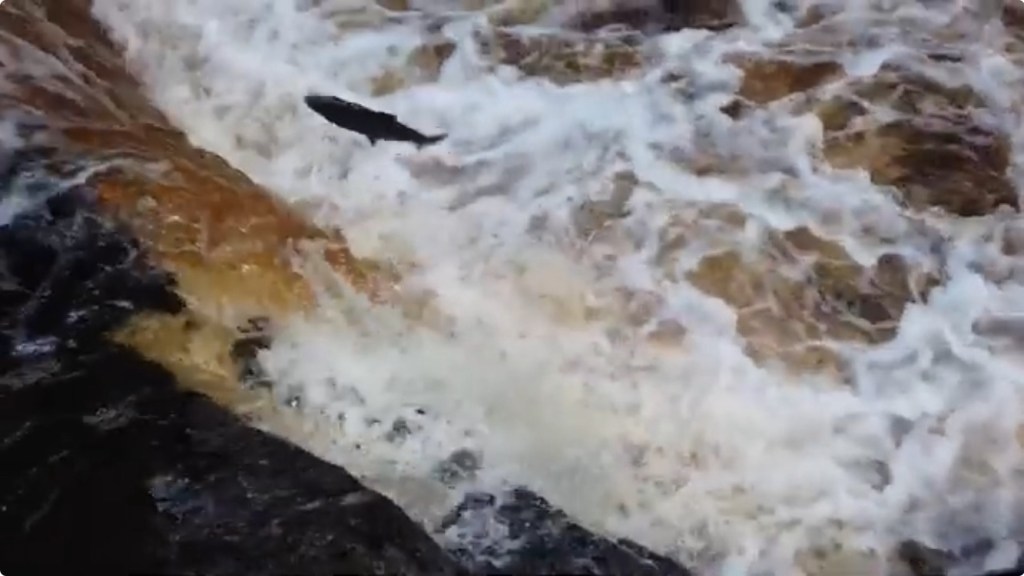
Rushing waters rise,
silver scales ride out the storm,
calm returns below.
British winters often bring heavy rain, snowmelt, and sudden rises in river levels known as spates. These events transform previously calm channels into powerful, turbid torrents that reshape habitats, mobilise sediments, and challenge the fish living within them. Far from being helpless though, Britain’s freshwater fish have evolved a range of behavioural responses that help them survive, and in some cases even benefit from, these conditions.
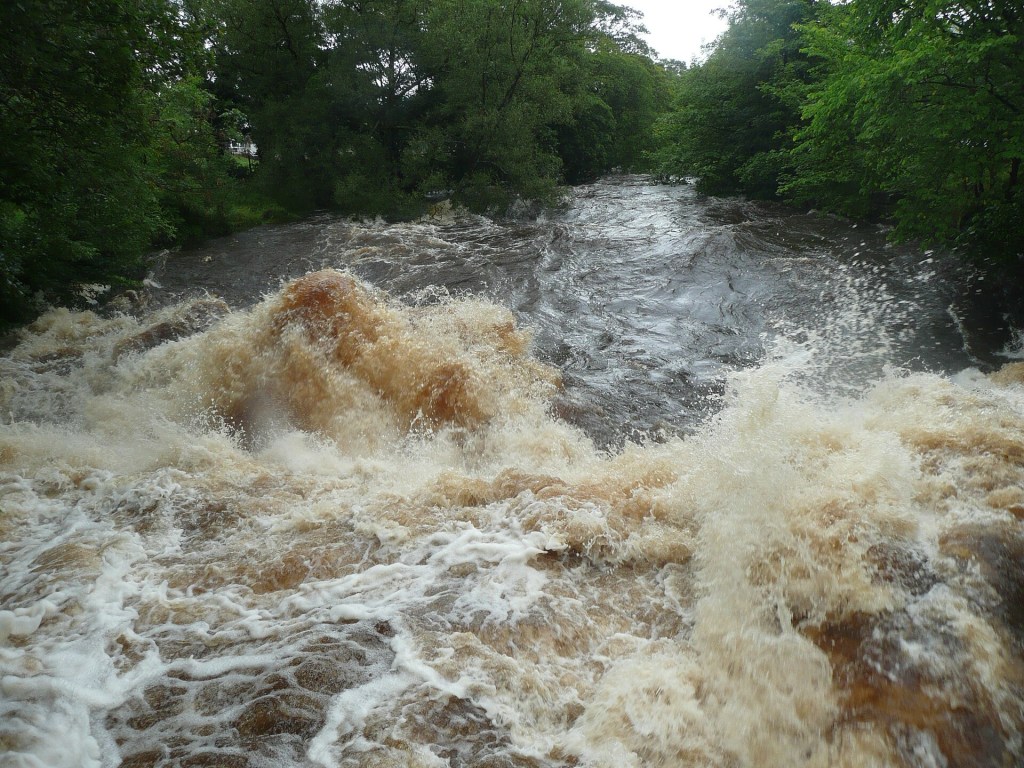
(Humphrey Bolton)
Seeking Refuge from High Waters
When rivers rise, the primary instinct for most fish is energy conservation. Fighting a strong current is metabolically costly, especially in cold water when metabolism is already slowed, fish therefore move into areas of lower velocity such as:
- Behind boulders, undercut banks, fallen trees, or bridge piers
- Into side channels, backwaters, and the lee of islands
- Along the edges of the main flow (the ‘crease’ where fast and slow water meet)
- Into small tributaries and side streams that become deeper and more accessible as the main river backs up
Large aggregations can form in these discrete refuge spots. Young-of-the-year fish are the most vulnerable because of their limited swimming strength; many are displaced or washed downstream, adult fish of most species are far better at finding and holding in slack water.
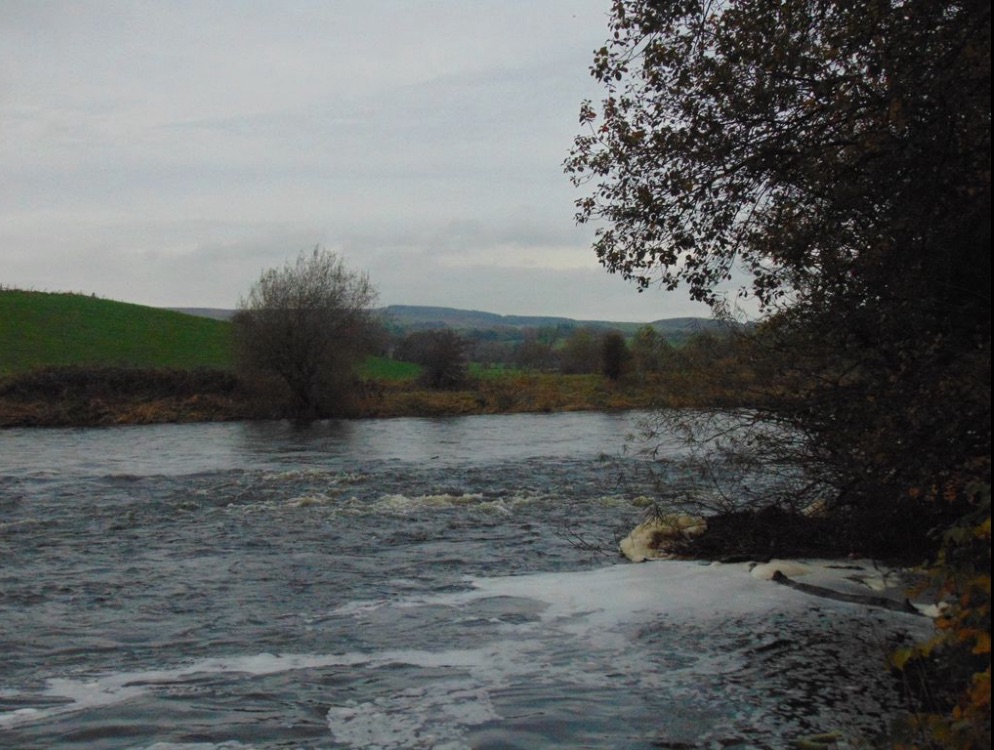
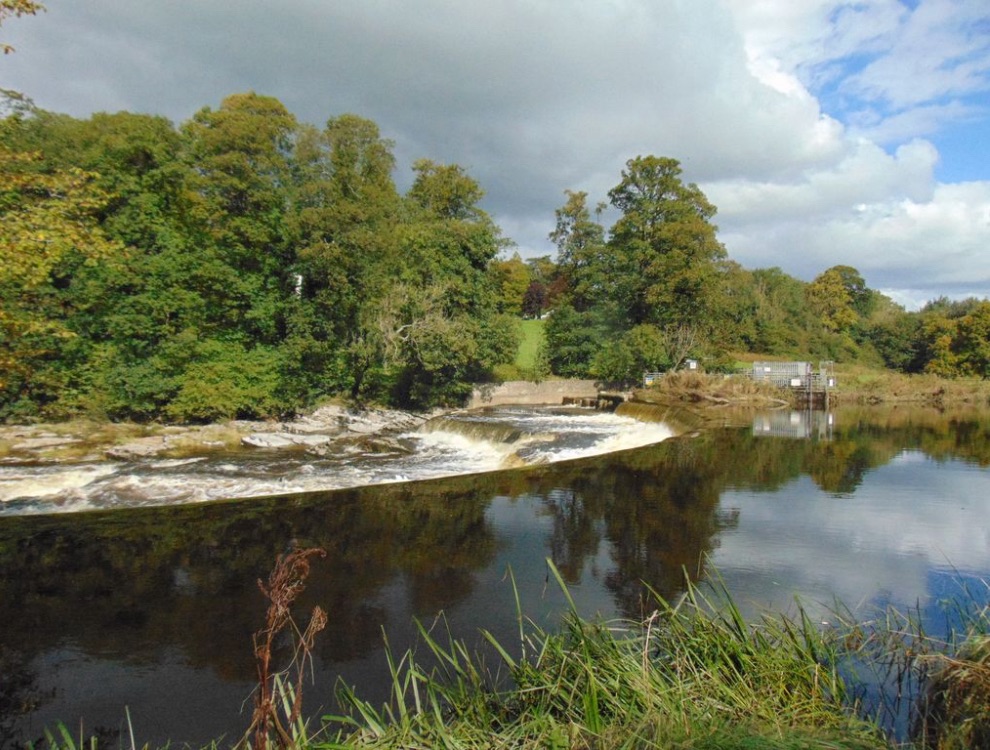
In a spate fish will take refuge in bank-side eddies like the patch of frothy water on the right of the image.
This is a perfect place to cast a fly when the river is high.
Sanctuary on the Floodplain
In lowland rivers with connected floodplains many fish deliberately leave the main channel. Radio-tracking studies on the River Frome (a southern English chalk stream) showed that Pike often move into flooded fields, drainage ditches, and millstreams during successive winter floods. Most stayed within 10 metres of the bank, though some travelled over 250 metres into ditches. Researchers concluded these movements were often driven by feeding opportunities (terrestrial invertebrates and other prey washed into the water) rather than pure refuge-seeking.
Similar lateral movements occur with coarse fish such as Roach, Bream, and Chub. Once the water begins to recede, most fish return to the main channel, though some become stranded in isolated pools or gravel pits if the topography traps them. Environment Agency teams sometimes rescue stranded fish after major floods.
(Walter Baxter)
Species-Specific Responses
Different groups of fish react in characteristic ways:
- Salmonids (Atlantic Salmon, Brown trout, Sea trout Grayling): High flows can help adults migrate upstream to spawning grounds by covering shallow riffles and allowing them to pass obstacles, at peak flood, however, they often pause and take refuge. Extreme winter floods can scour redds (nests) and wash out eggs or newly emerged fry, Trout and Salmon parr will seek marginal cover or tributaries.
- Barbel and Chub: These powerful fish often remain relatively active. Barbel in particular may continue feeding near the bank or on the crease during floods, taking advantage of food items washed downstream.
- Pike: As noted above, they frequently exploit flooded land for hunting.
- Bream, Roach, Dace and other shoaling cyprinids: These typically push into the quietest available water and may form dense aggregations until conditions improve.
- Recent telemetry studies on the River Severn have shown that Barbel and Bream can remain surprisingly mobile throughout winter, even in very cold water, rather than becoming completely quiescent.
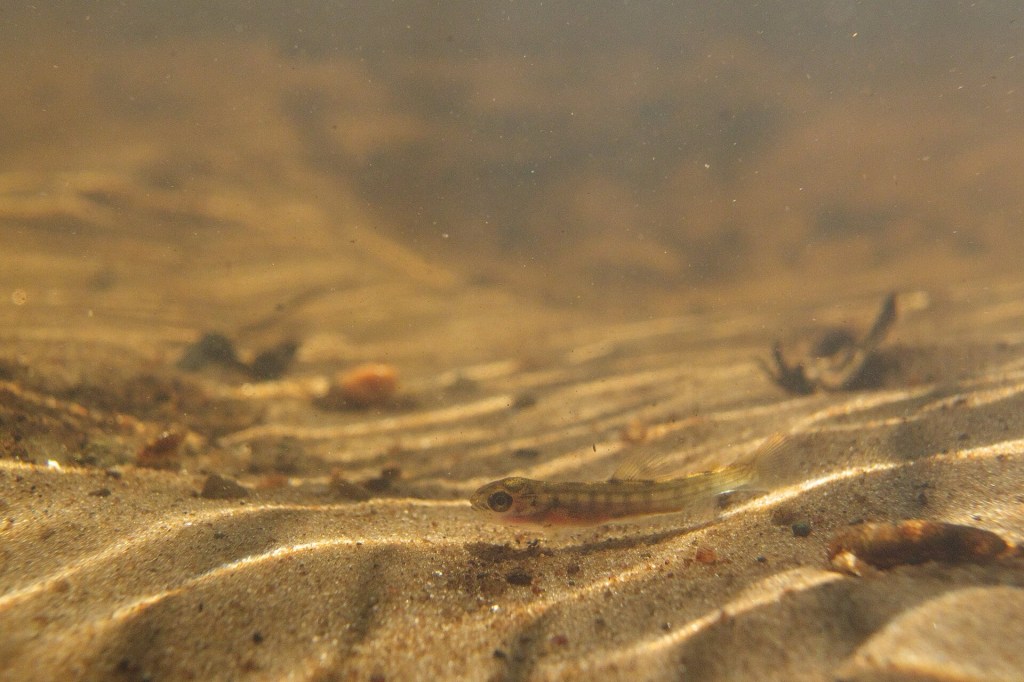
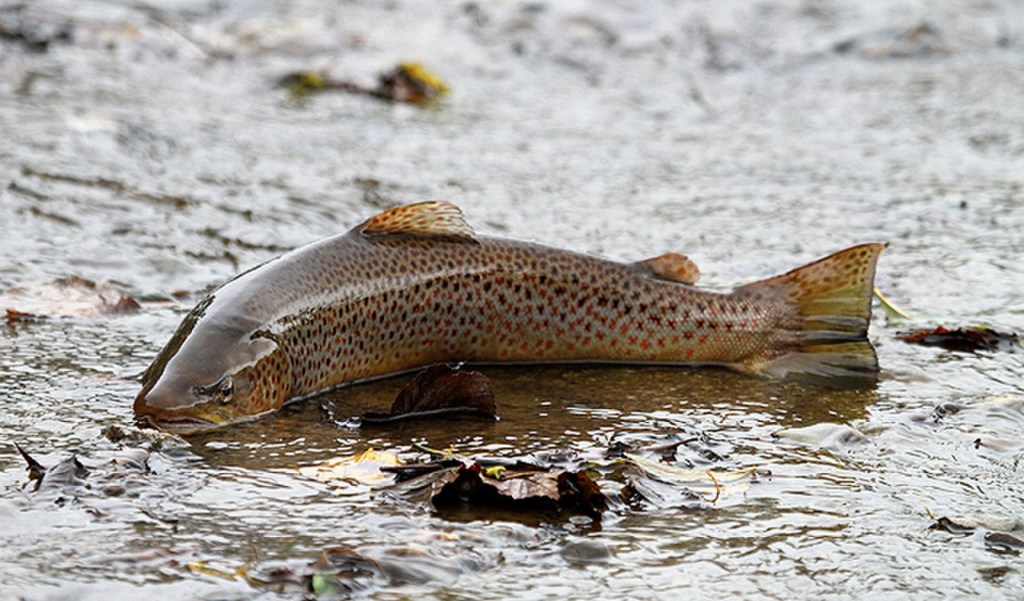
(Jürgen Karvak)
Benefits and Risks of Winter Floods
Floods are not purely destructive, they redistribute gravels, create new habitat features, flush fine sediments from spawning beds (sometimes improving egg survival), and can deliver a glut of food. Over evolutionary time, fish populations have adapted to the typical flood regimes of their rivers, moderate, well-timed winter spates are a normal part of the annual cycle.
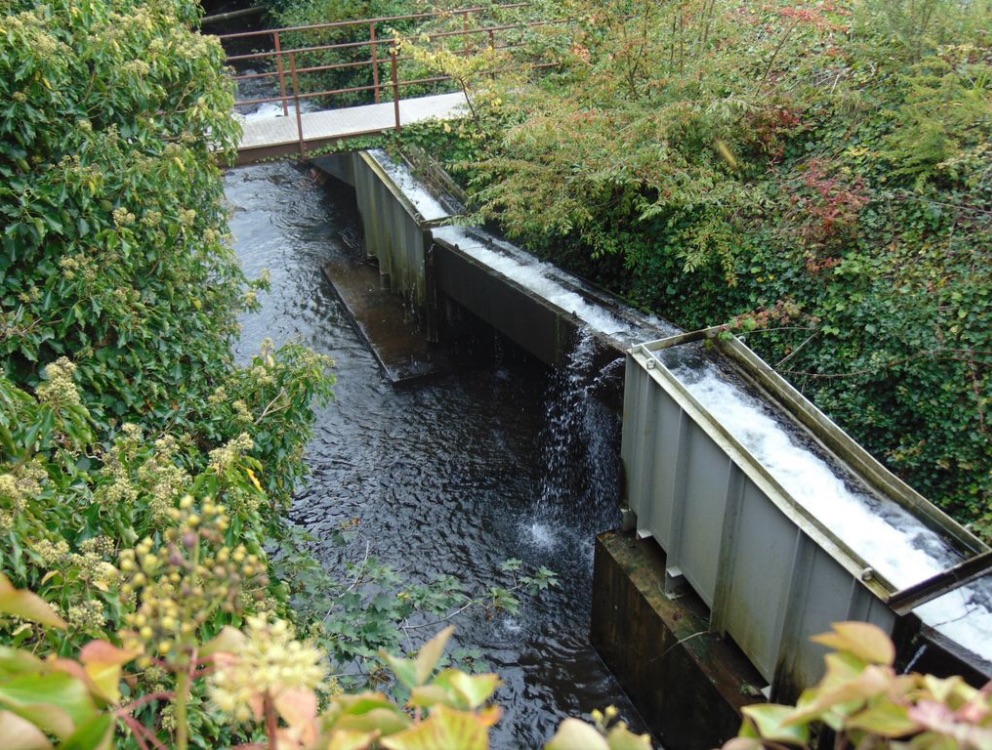
Problems arise when floods are extreme, repeated, or when human modifications intervene. Embankments, weirs, and flood storage schemes can prevent fish from reaching refuge areas or returning to the river unless fish passes are installed (see below) . Barriers that are normally impassable may become surmountable only during high water, temporarily restoring connectivity.
When the Waters Subside
As levels fall and the water begins to clear, fish gradually leave their refuges and resume more normal behaviour. Many species become more catchable to anglers on the ‘drop’ of a flood as they start feeding again on the abundance of dislodged invertebrates and terrestrial prey. Connectivity between the main channel and floodplain remains critical during this phase so that fish are not left stranded.
British freshwater fish are well adapted to the pulsed nature of winter flows (they wouldn’t survive here if they weren’t!). Their strategies: finding refuge, exploiting temporary new habitats, and adjusting their activity levels, allow them to weather all but the wildest of watercourses.
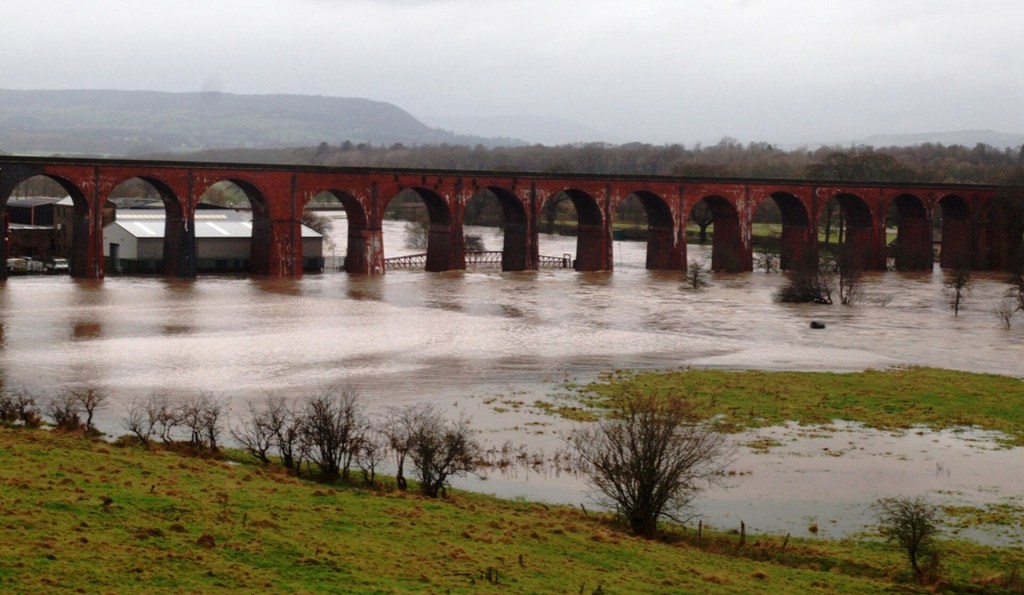
The Flood
John Clare, 1830
On Lolham Brigs in wild and lonely mood
I’ve seen the winter floods their gambols play
through each old arch that trembled while I stood
bent o’er its wall to watch the dashing spray
as their old stations would be washed away
crash came the ice against the jambs and then
a shudder jarred the arches – yet once more
it breasted raving waves and stood agen
to wait the shock as stubborn as before
– white foam brown crested with the russet soil
as washed from new ploughed lands – would dart beneath
then round and round a thousand eddies boil
on tother side – then pause as if for breath
one minute – and engulphed – like life in death
Main sources used:
- What happens to fish in severe floods? Fisheries.co.uk
- Habitat utilisation by pike Esox lucius during winter floods in a southern English chalk river (River Frome study)
- The effect of floods on trout, Wild Trout Trust
- Salmonids in the Floods, Atlantic Salmon Trust
- How to Catch More Fish in Flooded Rivers, Angling Times
- The winter movements of two fish species (barbel and bream) in a temperate lowland river (River Severn study)
- Where do trout go during floods?, Trout Resource
- Where fish go when our rivers get cold in winter, Angling Times
Thank-you for reading. If you enjoyed this piece and would like to support further articles on the wildlife and history of the Northwest, you can buy me a coffee here.
Alex Burton-Hargreaves
(November 20th 2026)

