The History of the Clock in the Tower of Clitheroe’s Library
All through this hour,
Lord, be my guide;
And by Thy power
No foot shall slide*
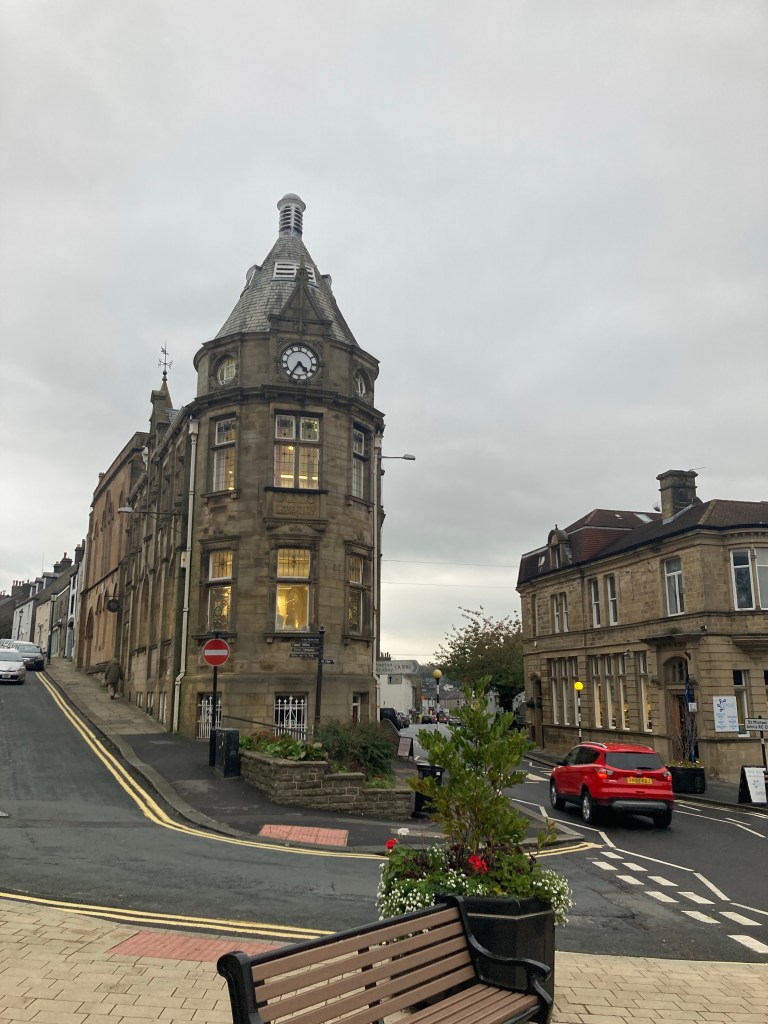
Clitheroe Library’s Clock is a prominent local landmark with a poignant history. Installed when the Carnegie library opened in 1905, it has marked time for the town for more than a century, yet despite it having been a familiar face for generations few know just how unique a timepiece it is.
The Library
Clitheroe Library stands on Church Street at the fork of roads near the Market Place and is a Carnegie library designed by the Blackburn architectural partnership Briggs and Wolstenholme.
It opened on the 21st of October 1905 after the town secured a £3,000 grant from Andrew Carnegie in 1903 and is designed in a distinctive ‘Loire’ style (evoking the châteaux of the Loire Valley), with a turret featuring a conical roof and clock.
Grade II listed since 1976 it still functions as a public library, and a major refurbishment in 1990 extended it into the adjacent early-19th-century Old Town Hall.
The clock was included in the final design as an integral part of the building’s design and purpose.
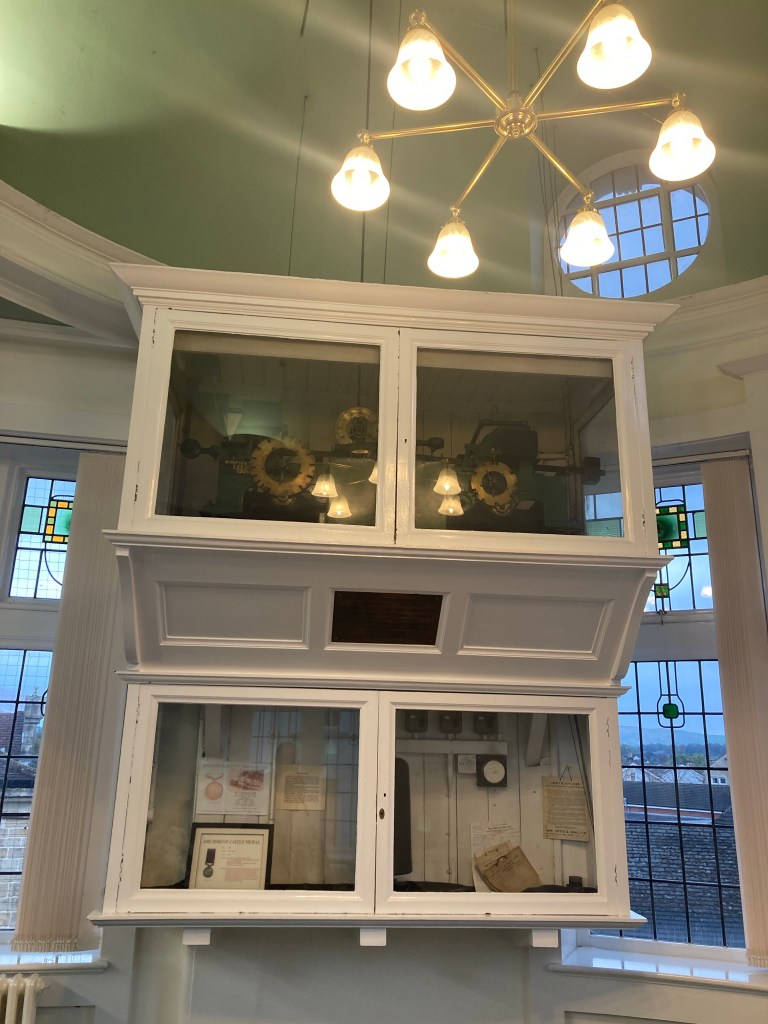
1. Mechanism in its glass case
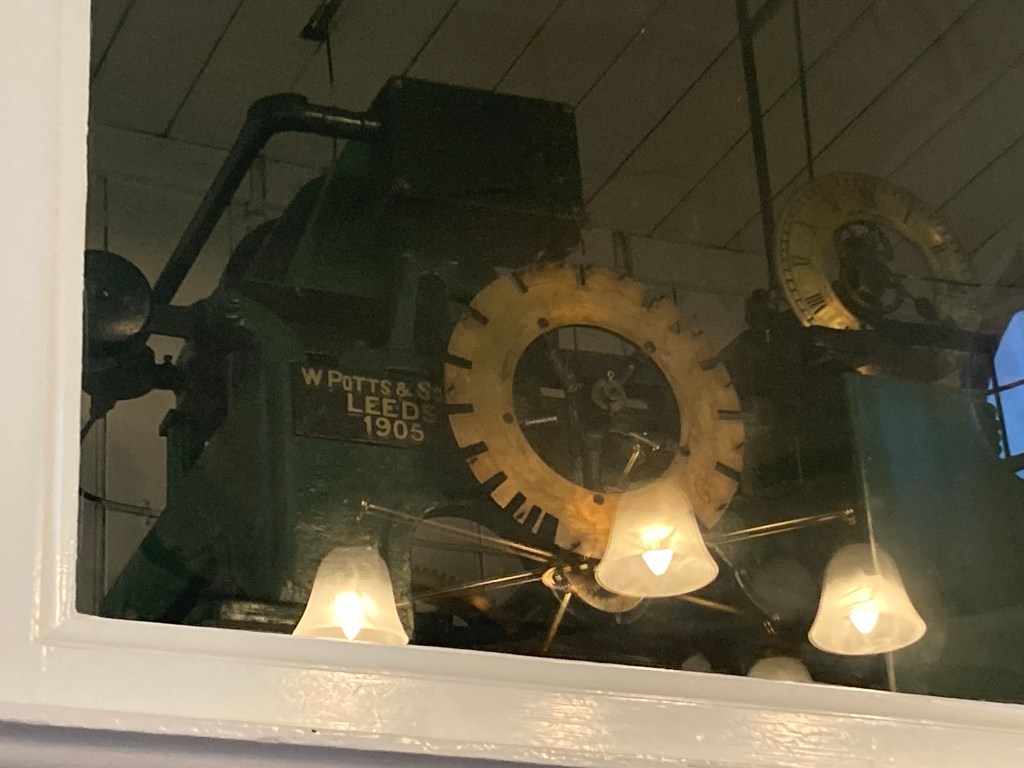
2. Close-up of mechanism
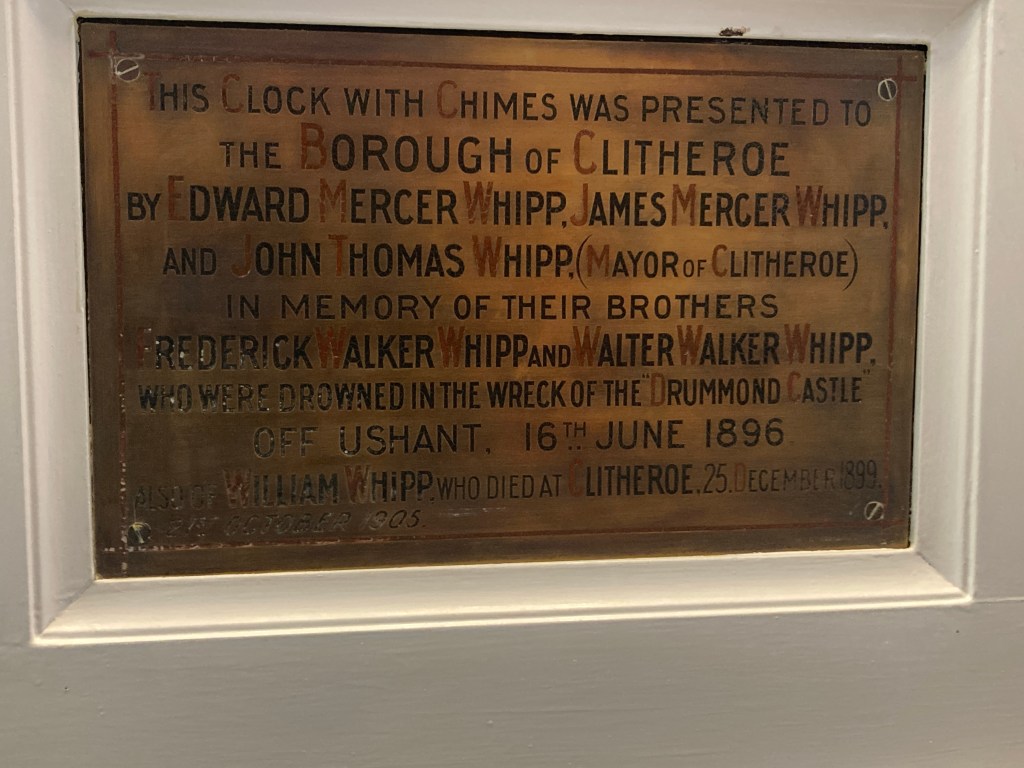
3.Commemorative plaque
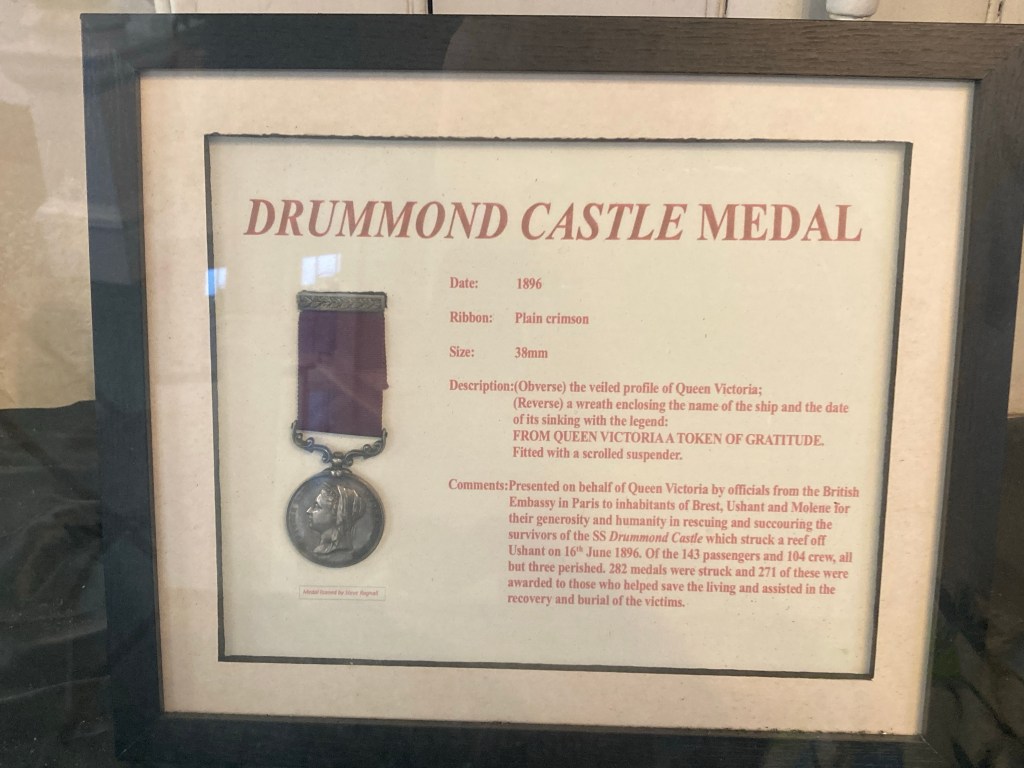
4: The Drummond Castle Medal
A Memorial Gift from the Whipp Family
The library’s clock was presented to the Borough of Clitheroe by three brothers: Edward Mercer Whipp, James Mercer Whipp, and John Thomas Whipp, in memory of their brothers Frederick Walker Whipp and Walter Walker Whipp. The two had drowned in the wreck of the ocean liner SS Drummond Castle off Ushant (near the island of Molène, Brittany) on the night of 16th June 1896. A third brother, William, had also died by the time of the donation and was included in the memorial.
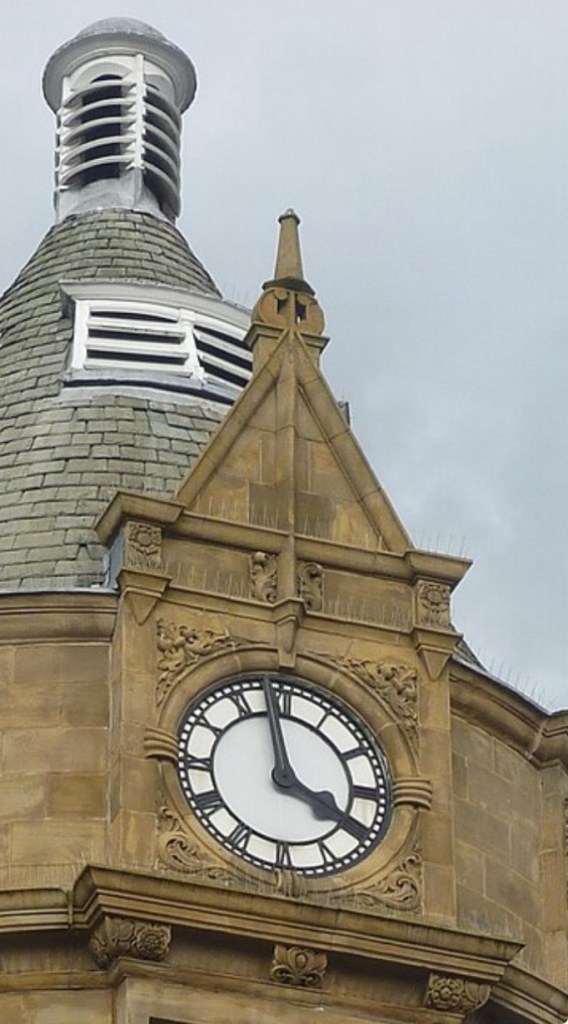
The Whipps were a local mill-owning family (Whipp Brothers of Victoria Mill, cotton spinners and manufacturers), John Thomas Whipp later served as Mayor of Clitheroe. At the library’s official opening ceremony on the 21st of October 1905, the Mayoress, Mrs J.T. Whipp, started the clock at the time of 2:43 p.m, a time she selected for very a poignant reason which will become apparent in the next paragraph.
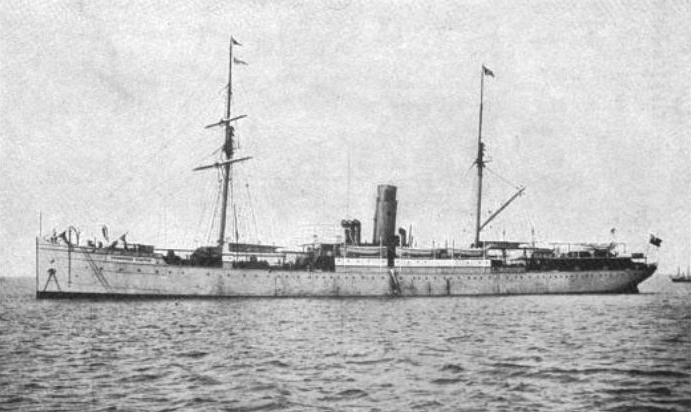
The Drummond Castle, a steamship of the Castle Line sailing from Cape Town toward London, struck rocks in fog and sank rapidly (within minutes). Of roughly 246 people on board, only three survived. The tragedy led to significant local and international response, including aid to the Breton islanders who recovered bodies and cared for the dead.
Twenty-nine victims were buried on Molène, where a commemorative clock was later installed in the church tower in 1897 at the islanders’ request (they had few personal timepieces).
The Clock Itself
The clock’s mechanism was manufactured and installed by the well-known Leeds firm William Potts & Sons (later William Potts & Co Ltd) and has Westminster quarter chimes (using four bells in a small turret) plus hour striking, they were cast by Taylor’s of Loughborough. The working mechanism is housed in a cabinet in an upper room of the library and is visible today, library staff hand-wound it until 1963, after which it was automated. The same firm that built it continues to service the mechanism.
For generations the clock regulated daily life in Clitheroe at a time when personal watches were less common, and it still does to a degree nowadays. Indeed some have noted that its quarter chimes are as familiar and important to residents as those of Big Ben are to Londoners, and thus it remains a living part of the town’s history even in the age of mobile phones.
by Ethan ‘the ringer’ Taylor
Recent Restoration
A commemorative plaque on the clock casing recorded the donation and the names of the Whipp brothers lost in the Drummond Castle disaster, but over the decades it became heavily tarnished and largely illegible. In 2022 the Clitheroe Civic Society, working with library staff, arranged its conservation by Harrison Coppersmiths of North Street, Clitheroe. The restored plaque was unveiled by the Rev. Andrew Froud after a tour of the library and an address by local historian Steve Ragnall.
The 2nd-floor room the clock mechanism is situated in is open to the public and often used for events such as civil marriage ceremonies, citizenship ceremonies, community gatherings, author talks, craft sessions, and cultural performances (such as concerts by Clitheroe Town Band).
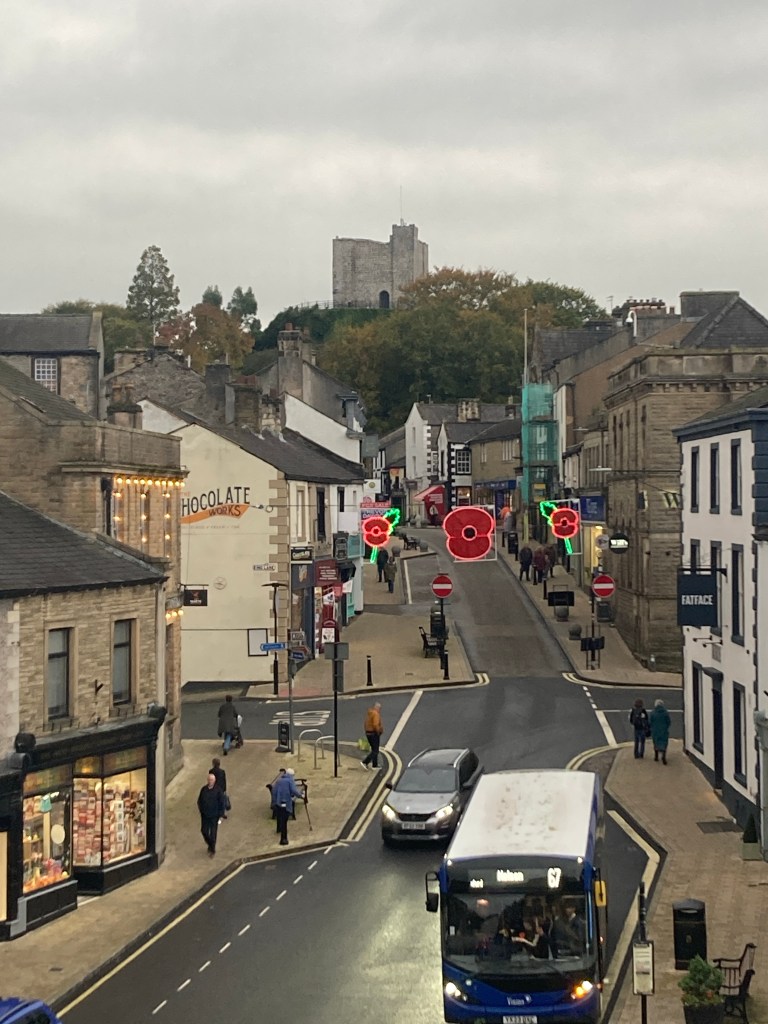
As a schoolkid I found that a seat by the window provided a very comfortable spot for doing my homework in peace and quiet (and spying on my schoolmates!). Today, 30-odd years later, looking out over the roof-tops towards Pendle and the castle, and accompanied by the gentle tick of the venerable old clock, I’ve found it to be the perfect place for sitting and writing pieces like the one you read here.
Oh, thou who dost these pointers see,
and hears’t the chiming hour,
say, do I tell the time to thee,
and tell thee nothing more;—
I bid thee mark life’s little day
by strokes of duty done;—
A clock may stop at any time,
but time will travel on.
(From The Church Clock, by Edwin Waugh)
*The rhyming hymn at the beginning of this article is usually inscribed near to a clock bearing Westminster quarter-chimes to be sang to the timing of the chimes.
Thank-you for reading. If you enjoyed this piece and would like to support further articles on the wildlife and history of the Northwest, you can buy me a coffee here.
Alex Burton-Hargreaves
(Nov 23rd 2026)

