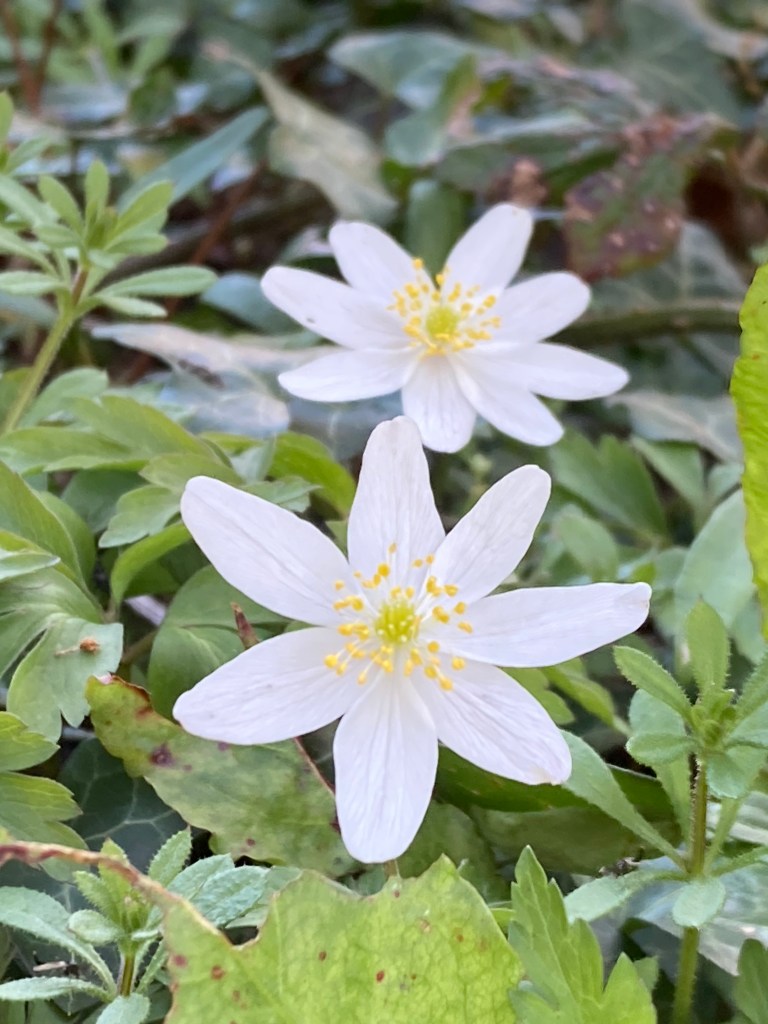
I was inspired to write this article after a short walk around the grounds of Gawthorpe Hall in Padiham yesterday, where Wood Anemone and another flower of the woodland floor which I have recently written about, Lesser Celandine, are abundant.
Plant of the Ancient Woods
The Wood Anemone, Anemone nemorosa, is a plant of the ancient woods, it is related to buttercups and grows in glades and on the edges of long established deciduous woods.
It flowers from March til June, producing beautiful white flowers with 6 or more petals with yellow anthers in the middle, the flowers have pink or purple streaks which can vary quite a lot from plant to plant. The leaves of the Anemone have at least 5 deep lobes and grow fairly low on the ground on reddish stems.
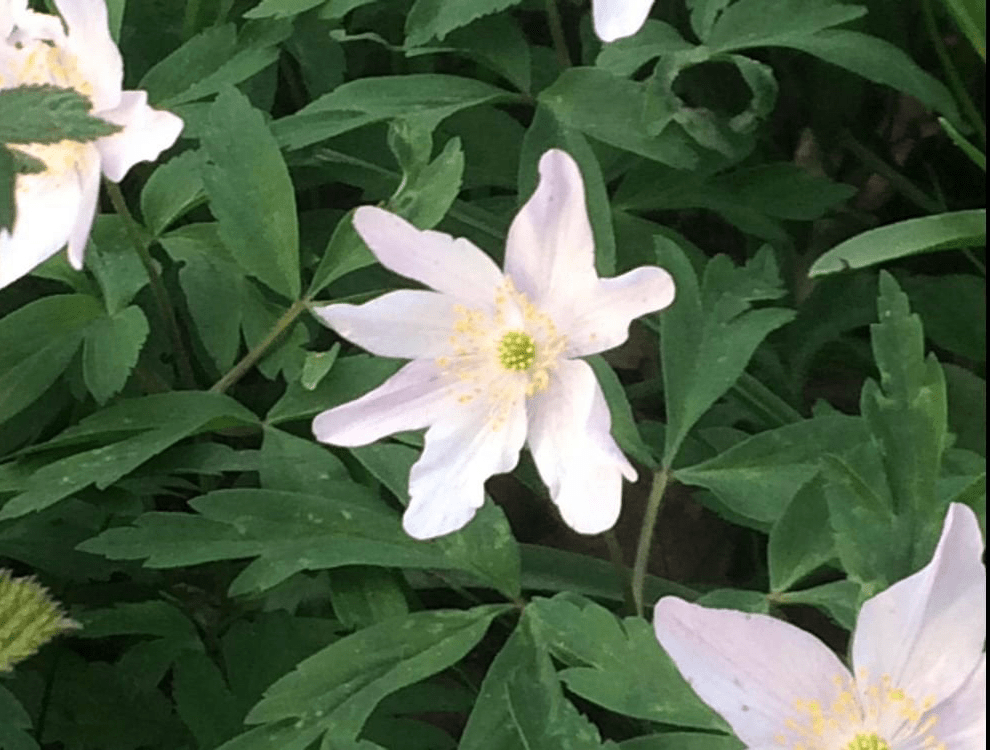
It is an unusual plant in that it produces seeds which are infertile and spreads slowly by its rhizomes instead, rhizomes are like roots but are actually stems growing just under the ground.
This slow spread means it is vulnerable to disturbance as it can’t re-establish itself very fast once removed from an area. In the 70s and 80s many hedgerows were grubbed up to expand farms and in some areas of the country this caused the wood anenome to become locally extinct.
The name ‘Anemone’ means ‘wind’ or ‘breath’ in Greek and the flower’s arrival in spring is supposed to accompany that of ‘Anemos’, the god of wind and change.
A B-H


2 thoughts on “The Wood Anemone”