A Brief History of Read Park and Hall in Lancashire
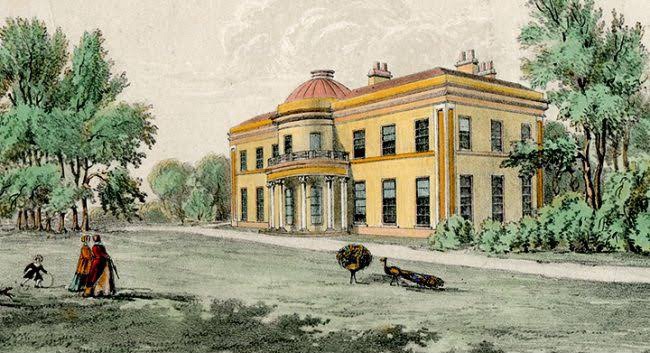
Tucked away on the outskirts of the quiet village of Read, in Lancashire’s Ribble Valley, sits Read Park, a 450 acre estate surrounding Read Hall, a Grade II listed manor house that has been a local seat of power for over half a millennia.
Through the centuries that Read Hall has stood looking over the local landscape it has played pivotal roles in many historically important incidents from the Dissolution of the Monasteries to the Pendle Witch Trials and the English Civil War.
Recently, the park has come under threat from a proposed development of 77 houses which, if approved, would cause irrevocable damage to this precious landscape.
This inspired me to write about the park’s rich history and its significance to both Lancashire and England, before it is changed forever.
The Nowell Family: From Medieval Roots to Tudor and Stuart Drama
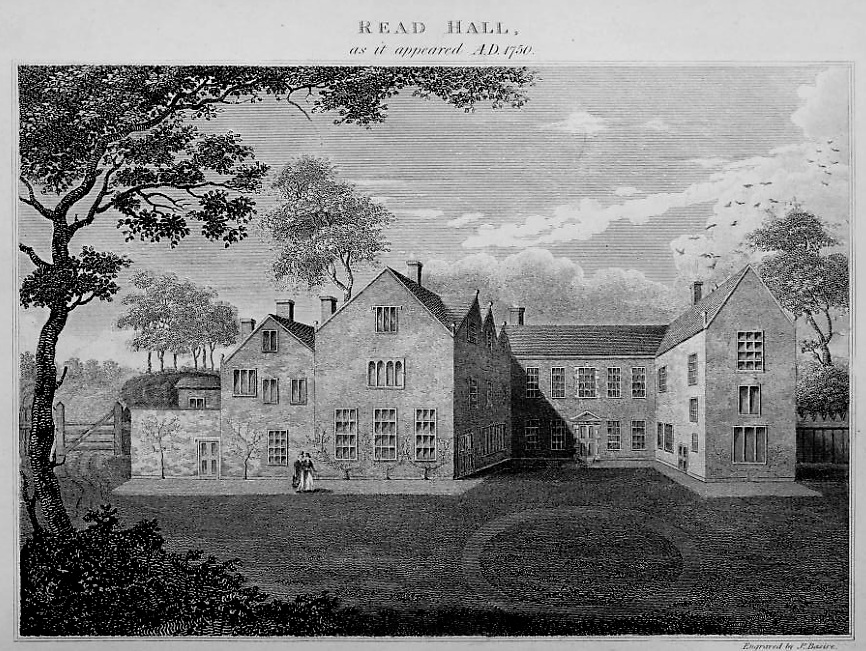
The Nowell family first made Read their home in the 14th century, but it was in the 16th century, following the Dissolution of Whalley Abbey, that Roger Nowell constructed the original hall. This early building, consisting of a three-storey hall arranged around three sides of a courtyard, formed the core of what would become one of Lancashire’s most notable gentry seats.
One of the most famous residents, born at the hall, was Alexander Nowell. An Elizabethan theologian and keen fisherman he sat as the Dean of St Pauls in London for over 40 years until his death in 1602.
He is popularly credited, thanks to Izaak Walton’s The Complete Angler, with inventing bottled beer during a fishing trip when he dropped his bottle of home-made ale by the river and upon finding it days later (reportedly on the 13th of July 1568) was surprised to find it had fermented and become carbonated.
Here is how the churchman, historian and writer Thomas Fuller described the incident in his 1622 work The History of the Worthies of England:
“…that leaving a Bottle of Ale (when fishing) in the Grasse; he found it some dayes after, no Bottle, but a Gun, such the sound at the opening thereof: And this is believed (Casualty is Mother of more Inventions than Industry) the Original of bottled-Ale in England.”
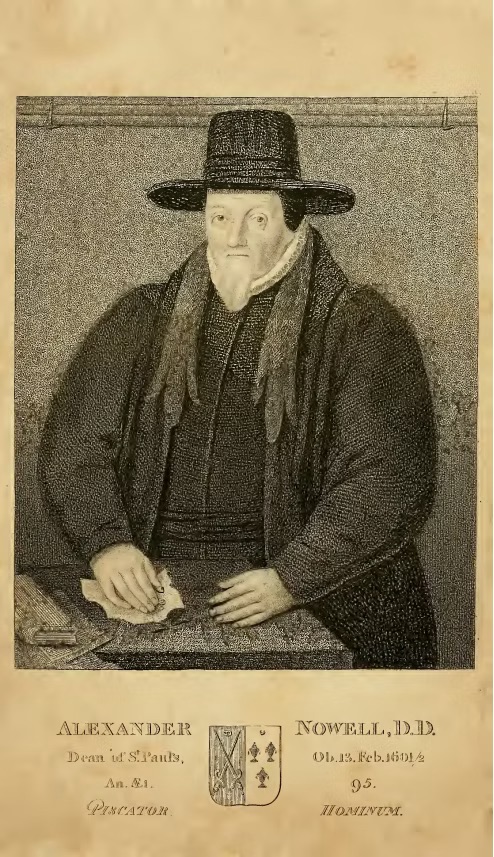
In his biography ‘Life of Alexander Nowell, Dean of St. Paul’s’ Izaak Walton said this of Alexander Nowell: “he is noted for his meek spirit, deep learning, prudence, and piety. This good man was observed to spend a tenth of his time in angling, and to bestow a tenth of his revenue, and usually all of his fish, amongst the poor who inhabited near to those rivers”
Witches and War
More soberingly a later Roger Nowell (1582-1623), who served as Sheriff of Lancashire in 1610, became infamous as the magistrate who played a central role in the 1612 Pendle Witch Trials. He committed the accused to Lancaster Castle, where they faced trial and execution, an episode that still haunts Lancashire folklore.
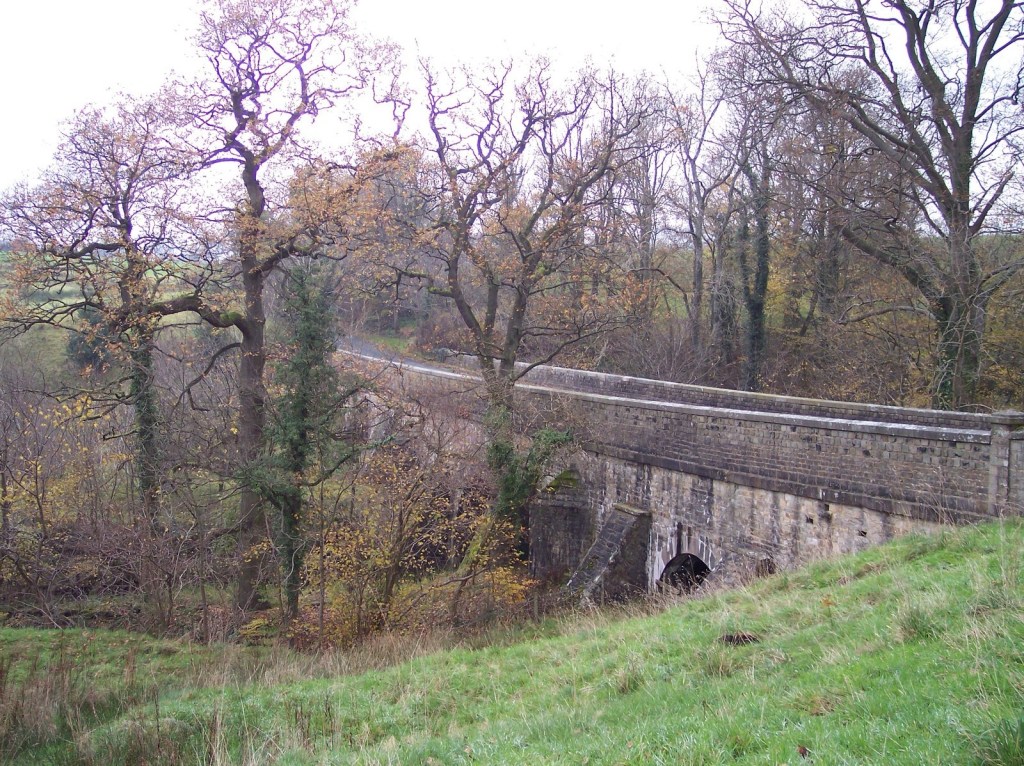
The family’s loyalty to the crown was tested again during the English Civil War when Roger Nowell’s grandson (also Roger, 1605–1695) raised a Royalist army at his own expense to defend Lathom House near Ormskirk. In 1643, the estate itself became a footnote in the conflict when Parliamentarian forces won the Battle of Read Bridge (sometimes called Read Old Bridge), a decisive skirmish fought nearby. A small Parliamentary detachment of around 400 men repelled a much larger Royalist force of 4,000 led by the Earl of Derby, helping secure Lancashire for Parliament.
The Nowell line continued for several more generations until the death of another Alexander Nowell in 1772. His widow and daughter (who disliked the hall and the parlous state of the road approaching it) returned to London, and the estate was sold, marking the end of nearly 400 years of Nowell ownership.
The 19th-Century Rebuild: Fort Family Elegance and Landscaped Splendour
In the early 19th century the estate entered a new golden age. Between 1818 and 1825, wealthy Manchester calico printer Richard Fort commissioned a complete rebuild of the hall.
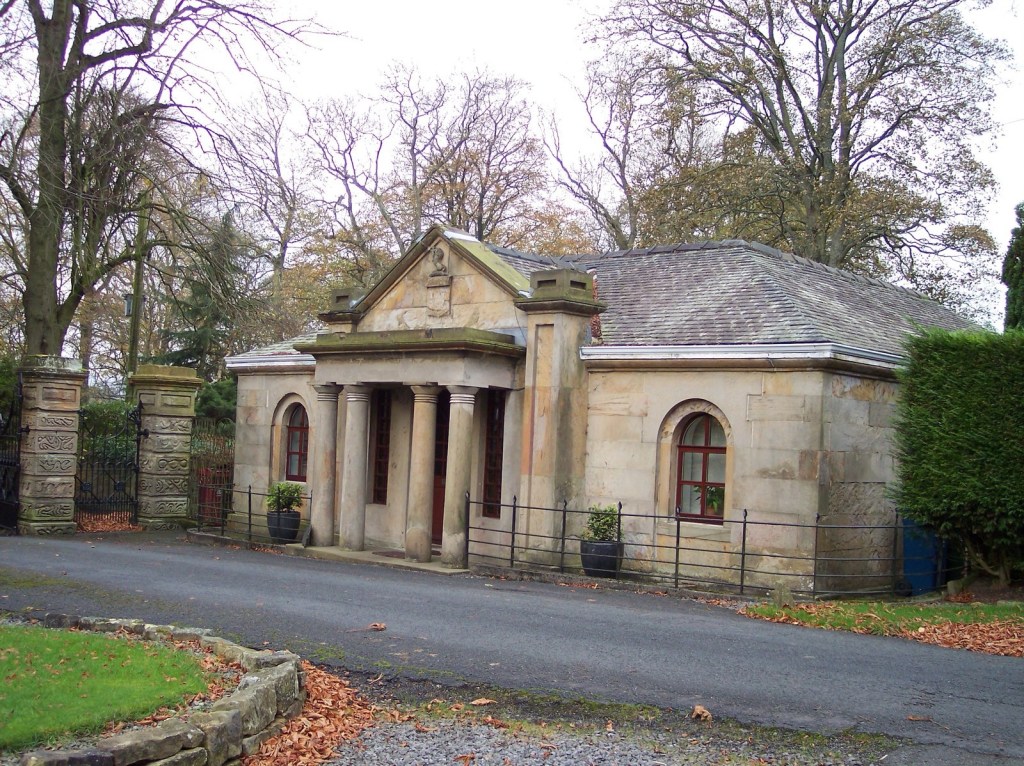
The architect was the young George Webster of Kendal (only 21 at the time), who designed a handsome sandstone ashlar manor with hipped slate roofs, two storeys plus attic, in a style blending Georgian restraint with emerging Picturesque*(1) influences. Webster also designed the accompanying Home Farm (a model farm later converted to residential use) and the Lodge on Whalley Road.
When Richard Fort died in 1829 the estate passed to his son John Fort (later MP for Clitheroe), then to grandson Richard Fort (1822–1868), who served as High Sheriff of Lancashire in 1854 and MP for Clitheroe from 1865 until his death. The Forts oversaw the creation of the current landscaped park, which features two lakes, a waterfall, woodland walks, a rockery, rose garden, terrace, fountain and specimen trees*(2), elements that still define the grounds today (until they are demolished to make way for a new housing estate that is).
The Park Today
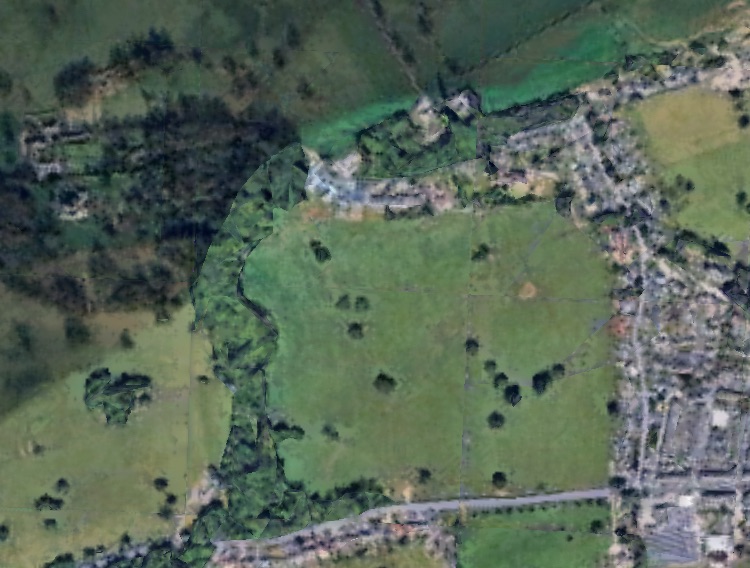
Today Read Park’s 450 acres encompass Hammond Ground on the northern edge of the village, private formal gardens close to the house and the broader parkland area. The hall itself is a protected Grade II listed building (designated in 1953), recognised for its architectural and historic interest.
While the estate remains in private hands it is accessible to the public via several public footpaths and is a site of great interest to local historians and ecologists.
The village of Read itself, once a township in the ancient parish of Whalley, grew alongside the estate in the 16th century along the medieval road between Whalley and Padiham, and the park’s history has always been inseparable from the village’s identity.
Though the grand hall and landscaped grounds may no longer be the stage for sheriffs, theologians, or battlefield dramas, they still play a main role in the county’s greater historical cast, and to smother this with yet another ill-considered, soul-less housing estate would diminish Lancashire’s heritage and character forever.
To learn more about the proposed development and the community fighting to stop it please visit Save Hammond Ground.
*(1) ‘Picturesque’ was an 18th and 19th-century aesthetic movement that emphasised irregularity, asymmetry, and a direct, harmonious relationship between buildings and their natural surroundings.
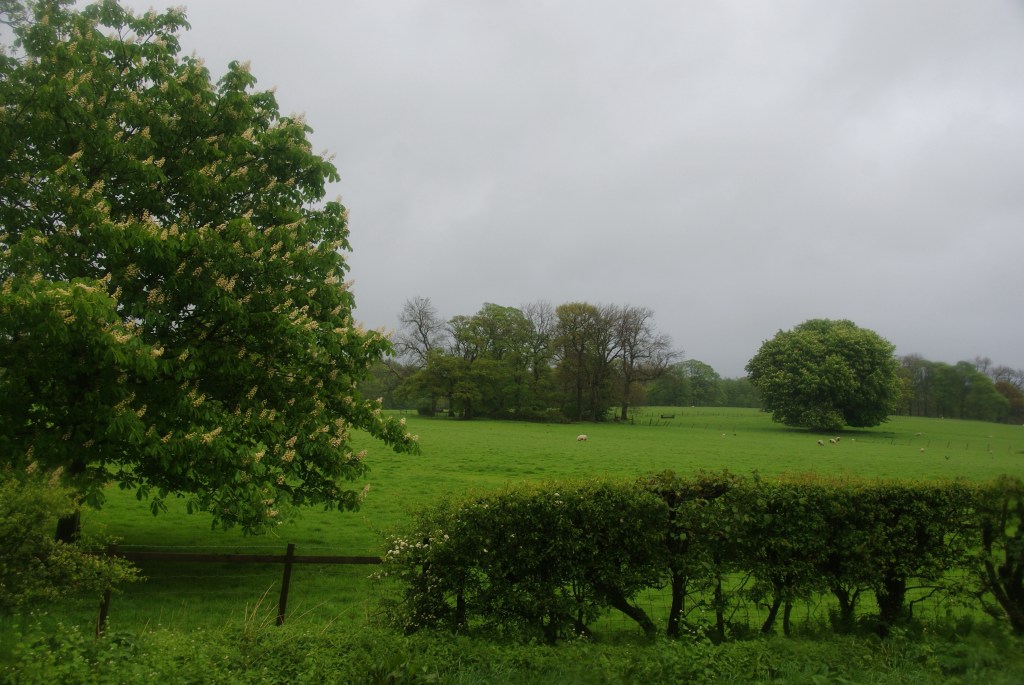
*(2) ‘Specimen trees’ are single trees strategically planted to enhance the landscape, they are very often Elm, Lime, Chestnut or Oak. Here specimen Oaks and Horse Chestnuts of great age and ecological value can can be seen from Whalley road on Hammond Ground, the area proposed for development.
Thank-you for reading. If you enjoyed this piece and would like to support further articles on the wildlife and history of the Northwest, you can buy me a coffee here.
Alex Burton-Hargreaves
(April 2026)

